Kazakhstan's First Kurultai Under a New Constitution
By Erlan Benedis-Grab
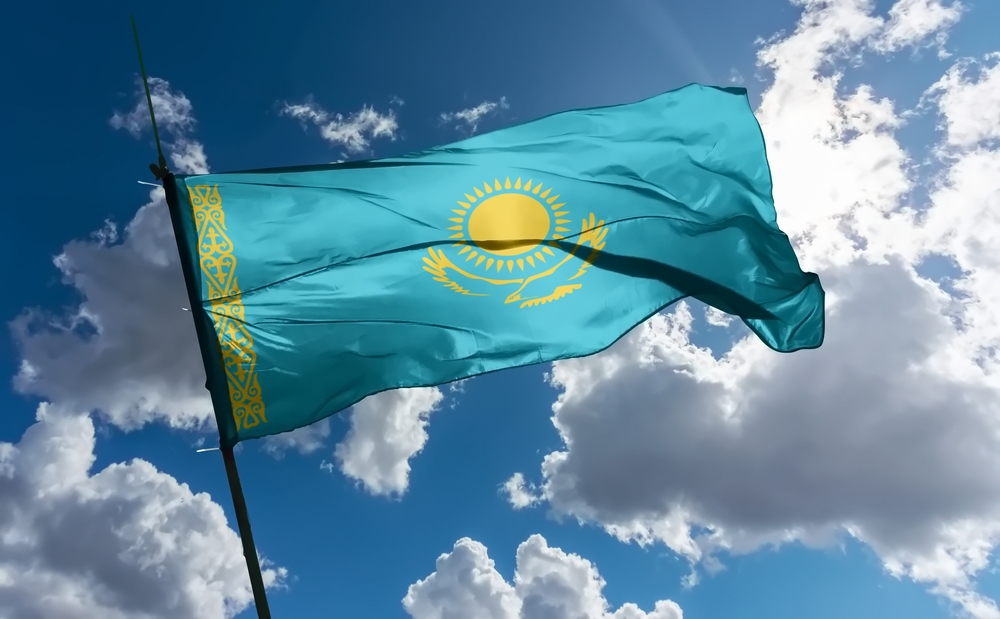
On August 23, 2026, Kazakhstan elected its inaugural session of the state Kurultai, following its establishment under Kazakhstan's constitutional changes approved in the March 15 referendum. Adilet, the party into which the long-ruling Amanat (previously Nur Otan) merged, took 71.17 percent of the vote nationwide and 110 seats out of 145, a decisive supermajority. Kazakhstan's constitutional changes created the post of Vice President, a new People's Council, and the consolidation of the bicameral legislative branch into a unicameral parliament under a party list system. The overwhelming victory for the ruling party confirms what the constitutional changes made close to inevitable: an expanded presidential authority under President Kassym-Jomart Tokayev, in which he can wield the system for a variety of purposes.
BACKGROUND:
The process of constitutional reform began as a suggestion for parliamentary reform. In his state of the nation address on September 8, 2025, President Kassym-Jomart Tokayev proposed abolishing the Senate and moving to a unicameral chamber elected entirely by party list. The process accelerated in early 2026. In January, Tokayev announced his intention to reform Kazakhstan’s constitution, establishing a Commission on Constitutional Reform chaired by Constitutional Court head Elvira Azimova, with Tokayev’s top deputy Erlan Karin as deputy chair. In February, Tokayev signed a decree, setting the referendum for March 15th. In March, voters approved the new constitution with an overwhelming majority of 87.15 percent. In July, the constitution took effect, terminating the bicameral parliament and triggering elections to the Kurultai on August 23.
Previously, Kazakhstan had a bicameral parliament consisting of the Mazhilis and Senate. The changes consolidated the two into a new unicameral parliament, called the Kurultai (meaning “assembly” or “gathering” of Turkic leaders). Additionally, the new parliament is elected entirely from a party list, replacing the previous mixed system of 70 percent party list and 30 percent single-member constituencies.
A new quasi-legislative consultative body, the Halyk Kenesi (People’s Council), has been established, combining the earlier People’s Assembly of Kazakhstan and the National Kurultai. It is supposed to be a technocratic body designed to develop policy recommendations from the public. It is composed of 126 members, directly appointed by the president. It has the power to prepare legislation for the Kurultai and propose nationwide referendums, yet its functional role is likely to be limited.
A vice presidency has also been created, with the vice president appointed by the president. This new position is first in the presidential line of succession, without necessarily making the vice president Tokayev’s successor.
The president will now nominate the Prime Minister, Supreme Court judges, and the Kurultai Speaker. Positions previously requiring Senate consent, including the heads of the Central Bank, the National Security Committee, and the Prosecutor General, now fall under presidential authority. These changes mark an institutional weakening of the parliament's authority.
The August 23 elections were the first contested by the Adilet (meaning justice) party, registered in June and led by Tokayev's former Chief of Staff, Aibek Dadebai. Following this, the ruling Amanat party, formerly Nur Otan, voted to merge itself into the Adilet party, making Adilet its successor as the ruling party of Kazakhstan.
With the apparatus of the Akorda clearly behind Adilet, it decisively captured 71.17 percent of the nationwide vote, taking roughly 110 of 145 seats. The OSCE commented that while the elections were orderly, they took place in an environment lacking political pluralism.
IMPLICATIONS:
Despite Tokayev’s promise of a “New Kazakhstan,” the constitutional changes affirm the dominance of Kazakhstan's super-presidential system. In this system, the president's formal powers so far exceed those of the legislature and the courts that no institution retains an effective check on him. The constitutional text now accommodates whatever Tokayev chooses to do with it, rather than constraining what he may do.
In his September 2025 address, Tokayev initially announced that reforms would take place in 2027. Instead, the whole rewriting process took around 6 months. Although Akorda framed it as a “broad nationwide discussion,” the constitutional text was likely engineered months or years before it was announced to the public. Given the rushed process, civil society in Kazakhstan, however limited, did not have enough time to mobilize significant opposition to the constitutional referendum.
Tokayev is 73, raising the question of succession. The position of the vice presidency can be construed as a post for Tokayev to test his successor, or to withdraw from the presidency incrementally.
However, even though Tokayev's presidential term ends in 2029, the Constitutional Court ruled that because the constitution was replaced outright rather than amended, terms served under the old charter do not count. Any election after the new text took effect counts as the first election. Kazakhstan’s single, non-renewable seven-year term remains untouched, but could carry Tokayev to 2036.
In appointing Erlan Karin as vice president, Tokayev chose someone whose political rise is tied to his own rule, rather than to the Nazarbayev-era patronage networks. Karin, a longtime presidential aide and former State Counselor, has been one of Tokayev’s most prominent political strategists. Yet the office could eventually offer Tokayev himself a post-presidential role. The obvious precedent is 2019, when Nazarbayev left the presidency but retained significant influence as Chairman of the Security Council. That way, Tokayev could wind down his leadership, passing the reins while securing his post-presidential position and retaining leverage.
Now, the elections to the Kurultai will be completely conducted through a closed party-list system, where the Adilet apparatus, and Akorda, handpicks their chosen candidates. Interestingly, this is a reversal of Tokayev’s own reforms submitted in 2022, mandating a 70/30 ratio for party-list vs single-seat constituencies. Its reversal signifies that Tokayev is past the early concessions of 2022, now rolling back the limited political reform of this period.
Neither system is entirely better or worse, but in Kazakhstan’s case this move clearly tightens presidential control over candidate selection. Candidates without the explicit support of the ruling Adilet party will be highly likely to be excluded from the new parliament.
Tokayev is also overhauling Kazakhstan's political machinery, merging Amanat with Adilet. Although Nur Otan was renamed Amanat in 2022, Tokayev wants a party that is unmistakably his own. Mazhilis MP Erlan Sariov put it succinctly, “Nazarbayev's fingerprints remain all over Amanat,” explaining why Tokayev would want a new party altogether. Yet there is no growth in pluralism, the party was molded from above rather than growing out of public demand. In truth, Tokayev gets a clean slate, a rebranded machine he can wield as he sees fit.
Turnout was reported at 74.08 percent, twenty points above the 54.21 percent of 2023. However, the OSCE noted “significant differences between voter activity observed and the official turnout data”. The election was contested by several parties: the agrarian Auyl, the perennial opposition Ak Zhol, the “modern” Respublica, the communist remnants of the People’s Party, and the “real” opposition Nationwide Social Democratic Party, but Adilet captured the majority vote. The manufactured nature of these parties and their general unwillingness to oppose the government’s line could not seriously pose a challenge.
CONCLUSIONS:
Akorda hopes to usher in a renewed Tokayev era with a new constitution, an updated parliament, and a decisive majority for the government, yet the core questions about Kazakhstan’s direction remain. Tokayev has reversed the chapter Kazakhstan opened during the turbulent year 2022 and the concessions then made by his government. The new constitution symbolizes that reversal; some changes are cosmetic, others engineer elite confidence in his rule. All of them empower him and the super-presidential system. Tokayev’s succession remains in question. The vice presidency can seat a successor, hold the chair for Tokayev himself, or stand by as he resets his own term, and the constitution now permits all three. Tokayev’s “New Kazakhstan” program may usher in increased modernization, efficiency and even transparency. It will not, however, undermine the dominance of the state. That approach may continue to bring prosperous autocratic development to Kazakhstan, but the public’s scorn over the lack of civic participation may build to a boiling point.
AUTHORS BIO:
Erlan Benedis-Grab is a Junior Fellow at the Central Asia-Caucasus Institute. He holds a dual B.A. in Economics and Central Eurasian Studies at Indiana University Bloomington, and his research focuses on Central Asia, International Trade, and Energy Politics. He can be reached at This email address is being protected from spambots. You need JavaScript enabled to view it. .
Eurasian Economic Union Summit: The Limits Of Geopolitical Integration
By Farkhod Tolipov
On May 29, 2026, the Supreme Eurasian Economic Council convened in Astana, Kazakhstan, bringing together representatives of the five Eurasian Economic Union (EAEU) member states and one observer state. Armenia was represented by its Deputy Prime Minister rather than the Prime Minister, while observer Uzbekistan was represented at the highest level by its President. Although the summit followed a largely routine agenda, discussions were overshadowed by speculation regarding Armenia’s potential withdrawal from the Union. In contrast, Uzbekistan maintained its traditionally supportive stance toward Eurasian integration. These developments suggest that the EAEU may have reached the limits of its current institutional composition and geopolitical configuration.

BACKGROUND:
The EAEU, established in 2015, succeeded the Eurasian Economic Community (EAEC), which existed from 2001 to 2014. Both organizations were founded with the objective of creating an economic foundation for deeper integration among the former Soviet republics. They emerged within the broader framework of the Commonwealth of Independent States (CIS), established in 1991 following the dissolution of the Soviet Union. While the USSR consisted of 15 union republics, the CIS began with 12 member states and has since contracted to eight. The EAEC comprised six member states, whereas the EAEU currently includes five.
When the CIS was established, many experts and politicians described it as a framework for the “peaceful divorce” of the former Soviet republics. In retrospect, this assessment appears largely correct. Rather than promoting deeper integration, the CIS, the EAEC, and the EAEU have experienced gradual contraction and persistent disagreements. In the context of Russia’s war against Ukraine, Moscow has sought to preserve the remaining cohesion of this declining integration project. As part of these efforts, it introduced so-called informal meetings of EAEU heads of state. This is the backdrop for the May 2026 EAEU summit in Astana.
The EAEU summit in Astana coincided with Vladimir Putin’s second state visit to Kazakhstan. Observers focused less on the outcomes of the visit than on President Kassym-Jomart Tokayev’s remarks during the official welcoming ceremony. Tokayev described Russians and Kazakhs as brotherly nations sharing a common history, cultural traditions, and mentality. Such a warm reception for a leader conducting a war against Ukraine and widely criticized by the international community may negatively affect Kazakhstan’s international reputation.
While Armenia was represented by its Vice Prime Minister, the summit was attended by the presidents of the four other EAEU member states as well as Uzbekistan. The agenda was largely routine, focusing on logistics, digitalization, free trade, and artificial intelligence. Beyond these issues, the leaders of the four member states adopted a special statement concerning Armenia, expressing concern over its possible withdrawal from the EAEU and its aspirations for EU membership. The statement was delivered to the Armenian Vice Prime Minister, who reaffirmed his country’s intention to remain in the EAEU while safeguarding its national interests and respecting those of the other member states.
President Putin emphasized the incompatibility of simultaneous membership in the EAEU and the EU and warned Armenia of the economic consequences of leaving the EAEU. His remarks, resembling an ultimatum, amounted to a clear signal that Russia would reconsider existing trade and economic arrangements with Armenia should it withdraw from the Union. This position once again highlighted the predominantly Russia-centered nature of the EAEU, rather than a genuinely multilateral integration framework among equal members. In contrast, Uzbek President Shavkat Mirziyoyev reaffirmed that closer cooperation with the EAEU remains a key foreign policy priority for Uzbekistan.
IMPLICATIONS:
The EAEU summit in Astana took place in a complex geopolitical setting. Earlier, on May 15, Kazakhstan hosted an informal summit of the Organization of Turkic States (OTS) in Turkistan. Among other issues, OTS leaders discussed cooperation in artificial intelligence and digitalization, the same topics featured on the EAEU agenda. This overlap raises questions about the compatibility of integration initiatives pursued by the two organizations. It remains unclear how AI and digitalization strategies developed within the potentially competing frameworks of the OTS and the EAEU can coexist.
The summit was preceded by Donald Trump’s visit to China and Putin’s subsequent visit, both demonstrating renewed geopolitical activism. For Central Asian states, these events underscored the significance of the US–Russia–China geopolitical triangle, whose rivalry they observe with growing concern. Against this backdrop, the EAEU summit of “five minus one” member states appeared overshadowed by broader great-power competition.
The EAEU summit in Astana was also preceded by a series of high-profile diplomatic initiatives by Uzbekistan. In April, Saida Mirziyoyeva, Head of the Presidential Administration, visited Washington, D.C., for the launch of the American–Uzbek Business and Investment Council. On May18, she traveled to London, where she met British officials, international investors, and representatives of the London Stock Exchange following the IPO of the Uzbekistan National Investment Fund (UzNIF). On May 24, she visited New Delhi and held talks with U.S. Secretary of State Marco Rubio on trade and investment cooperation. These developments reflected Uzbekistan’s active engagement with Western partners in the weeks preceding the EAEU summit.
On April 15, President Mirziyoyev received a Russian delegation led by Sergey Kiriyenko, First Deputy Chief of Staff of the Presidential Administration and former head of Rosatom. According to official reports, the talks focused on implementing previously reached agreements and deepening the Uzbek–Russian strategic partnership and alliance. Against the backdrop of Uzbekistan’s intensive diplomatic engagement with Western partners, the EAEU summit in Astana appeared relatively modest and somewhat ad hoc. This reflected Russia’s preference for advancing its interests through bilateral relations rather than through the Union’s multilateral framework.
Rather than presenting itself as a dynamic and cohesive economic bloc, the EAEU revealed its geopolitical dimension. During the summit, Putin suggested that developments in Armenia could follow a trajectory similar to that of Ukraine. While such a scenario appears unlikely, this rhetoric may prove counterproductive. Russian pressure on Armenia is likely to deepen anti-Russian sentiment among Armenians and further strengthen the country’s orientation toward Europe.
For Central Asia, regional integration is challenged by Russia’s continuing geopolitical ambitions. While the EAEU has experienced contraction, regional cooperation in Central Asia is expanding, exemplified by Azerbaijan’s accession to the Community of Central Asia last year. Thus, while Armenia and Georgia seek closer integration with the EU, Azerbaijan strengthens its role within the Central Asian regional framework. In this evolving geopolitical environment, the OTS gains a new opportunity to emerge as a viable alternative to the EAEU.
CONCLUSIONS:
Zbigniew Brzezinski once predicted that the EAEU would struggle to survive beyond 10–20 years, arguing that its ideological foundation, Eurasianism, was both outdated and geopolitically unsustainable. This ideology has found limited resonance in Central Asia and other former Soviet republics. From this perspective, the EAEU masks a tacit divergence between its member states and an increasingly assertive Russia.
The EAEU seems to have reached its peak in composition and geopolitical design. It becomes quite obvious that its makeup can be only five members or even less, and that the EAEU is losing its attractiveness. It looks like another “C5” (to use the Central Asian “C5+1” formula), however, it would become a “C5-1” if Armenia should withdraw, possibly returning to “C5” if Uzbekistan would join. This again underscores the geopolitical nature of the EAEU and the limited attractiveness of Eurasianism. Central Asia should take note of Russia’s ultimatum to Armenia and its increasingly belligerent posture toward former Soviet republics.
In November 2025, the 7th Consultative Meeting of Central Asian Heads of State was held in Tashkent, where participants agreed to transform the Consultative Meetings into the Community of Central Asia (CCA). Azerbaijan became a full member of the new organization. The 8th summit, expected to take place in Turkmenistan this year, will be the first meeting of the newly established Community. However, the membership of Kazakhstan and Kyrgyzstan in the EAEU, and Uzbekistan’s observer status, risk reducing the CCA to a largely symbolic project. As a result, the concept of the CCA remains vague, its institutional model underdeveloped, and its future trajectory uncertain.
AUTHOR’S BIO:
Dr. Farkhod Tolipov holds a PhD in Political Science and is Director of the Research Institution “Knowledge Caravan”, Tashkent, Uzbekistan
Why Are Central Asian Countries Accelerating Their Strategic Initiatives In Afghanistan
By Nargiza Umarova
During the first week of February, the leaders of Kazakhstan and Uzbekistan paid state visits to Pakistan. For Islamabad, these visits represented a new stage in relations with the Central Asian states, based on shared interests in trade, transport logistics, industrial production, and military affairs. Thus, the prospect of Pakistan becoming a key link in the emerging regional connectivity architecture is becoming increasingly realistic, which could accelerate the development of joint infrastructure projects with the active participation of Afghanistan.
BACKGROUND:
Due to its geographical isolation from the open seas, Central Asia is extremely interested in making effective use of Pakistan’s transit capabilities, particularly its maritime infrastructure, which has undergone extensive development in recent years thanks to China’s Belt and Road Initiative. The Pakistani ports of Karachi and Gwadar are seen by regional countries as an alternative outlet to the Indian Ocean, complementing Iran’s southern ports. The fastest route to Pakistan is via neighboring Afghanistan, where large-scale infrastructure projects involving Uzbekistan, Turkmenistan and Kazakhstan are underway. Despite continuing tensions on the Afghan–Pakistani border and the conflictual nature of relations between New Delhi and Islamabad, these states are accelerating their strategic initiatives in Afghanistan.
On January 27, Kazakhstan’s ambassador to Pakistan announced that Astana was prepared to cover the full cost of constructing the western Trans-Afghan Railway, from Torghundi to Herat, Kandahar and Spin Boldak, with an extension to Chaman in Pakistan’s Balochistan province and on to the country’s seaports. The preliminary cost of the project is approximately US$ 7 billion, and the route’s length will be 687 kilometers. Construction is expected to be completed within three years.
This decision is clearly driven by Kazakhstan’s desire to strengthen its position in north-south transit transport, encompassing existing routes through Iran and emerging transport corridors crossing Afghanistan.
Meanwhile, Astana expresses support for the creation of the Kabul Corridor along the Termez-Naibabad-Maidanshahr-Logar-Kharlachi route proposed by Uzbekistan in 2018. In July 2025, the Uzbekistan-Afghanistan-Pakistan (UAP) railway project entered a new stage of development when a trilateral intergovernmental framework agreement on the joint development of the project’s feasibility study was signed. On February 4, 2026, Uzbekistan ratified the agreement and agreed with Pakistan to begin field studies on the transport corridor.
The UAP project is paving the way for a new north-south trade route through Kazakhstan, Uzbekistan and Afghanistan. This route will provide the fastest land connection between Europe, Russia and South Asia, eliminating the need for sea crossings. Against this backdrop, Tashkent has proposed the creation of a multimodal corridor connecting Belarus, Russia, Kazakhstan, Uzbekistan, Afghanistan and Pakistan, which is three times shorter than sea delivery routes. Following the launch of the Kabul Corridor, the 5,532-kilometer trade route to South Asia will be entirely rail-based. This will enable Kazakhstan to receive an additional transit flow of up to 20 million tons per year — the same amount as Uzbekistan. The projected transit volumes for Kyrgyzstan and Tajikistan are estimated at 5 million tons per year, thanks to the attraction of Chinese cargo.
IMPLICATIONS:
Astana’s participation in transit traffic from Belarus to Pakistan was discussed during bilateral talks held during Kazakh President Kassym-Jomart Tokayev’s state visit to Pakistan on February 4 , 2026. The parties also discussed the prospects for the Turkmenistan-Afghanistan-Pakistan (TAP) Railway Corridor.
Kazakhstan joined the initiative to construct a railway from Torghundi to Spin Boldak in Kandahar Province, which represents an alternative to the Kabul Corridor, in 2024 at the invitation of the Turkmen side. In July 2025, Astana and Kabul signed a memorandum to implement the project. Kazakhstan has announced that it will allocate US$ 500 million towards the construction of a railway line to Herat and the necessary accompanying infrastructure, including a logistics hub in northern Afghanistan. The stake has now been raised to cover the entire budget for the Western Trans-Afghan Route.
Astana’s active interest in the TAP project may be linked to current dynamics regarding the development of the Turkmenistan-Afghanistan-Pakistan-India (TAPI) gas transport corridor. Work began on laying the Afghan section of the 1,840-kilometer pipeline in December 2024. It is expected to reach Herat Province by the end of 2026.
Russia is paying close attention to TAPI, viewing it as an opportunity to diversify and stabilize its energy exports following the loss of the premium European market. In this context, Kazakhstan can expect to earn transit profits, providing additional expectations for the profitability of the railway from Torghundi to Spin Boldak, as the two transport routes will clearly be synchronized.
On February 1, 2026, a meeting was held in Herat between Mullah Abdul Ghani Baradar, Afghanistan’s Deputy Prime Minister for Economic Affairs, and Rashid Meredov, Turkmenistan’s Foreign Minister. They discussed the progress in constructing the TAPI gas pipeline, the power line between Turkmenistan, Afghanistan and Pakistan, and the Torghundi-Herat railway.
Both Ashgabat and Kabul are seeking to accelerate the TAPI project. At a recent meeting between Turkmenistan’s Ambassador, Khoja Ovezov, and Afghanistan’s Minister of Mines and Petroleum, Hedayatullah Badri, they noted the rapid pace of work on the Afghan section of the gas pipeline. It is reported that part of the route has already been prepared for pipe installation.
According to Afghan authorities, the Saudi Arabian company Delta International is interested in investing in the purchase of gas under the TAPI project, expanding Turkmenistan’s major gas fields and constructing and extending the gas pipeline from Guzara District of Herat Province to Spin Boldak District of Kandahar Province, and then on to the Indian border. The project would also involve building a large, modern gas hub at Pakistan’s Gwadar port.
CONCLUSIONS:
The dynamic development of relations with Afghanistan presents Central Asian states with the challenge of strengthening mutual coordination to ensure their infrastructure initiatives have complementary political and economic effects. To this end, it is advisable to hold regular consultations at the level of the heads of the Ministries of Foreign Affairs and other relevant ministries in the region, to agree on a unified negotiating position when interacting with the governments of Afghanistan and Pakistan, and to ensure the involvement of all five republics in interregional connectivity projects.
AUTHOR’S BIO:
Nargiza Umarova is a Head of the Center for Strategic Connectivity at the Institute for Advanced International Studies (IAIS), University of World Economy and Diplomacy (UWED) and an analyst at the Non-governmental Research Institution ‘Knowledge Caravan’, Tashkent, Uzbekistan. Her research activities focus on developments in Central Asia, trends in regional integration and the influence of great powers on this process. She also explores Uzbekistan’s current policy on the creation and development of international transport corridors. She can be contacted at This email address is being protected from spambots. You need JavaScript enabled to view it. .
From Declarations To Corridors: Rethinking Economic Integration In Central Asia
By Rafis Abazov
For more than three decades, economic integration in Central Asia has been shaped by ambitious declarations, multilateral communiqués, and periodic summit diplomacy. Yet tangible outcomes have often lagged behind political rhetoric. The emerging shift from abstract integration models toward corridor-based, infrastructure-driven cooperation marks a potentially decisive turning point. Recent developments between Kazakhstan and Kyrgyzstan—notably the revival of the Almaty–Bishkek Economic Corridor with support from the Asian Development Bank (ADB) and the creation of industrial and logistics hubs along their shared border—suggest that Central Asia may finally be moving from declarative regionalism to functional economic integration.
BACKGROUND:
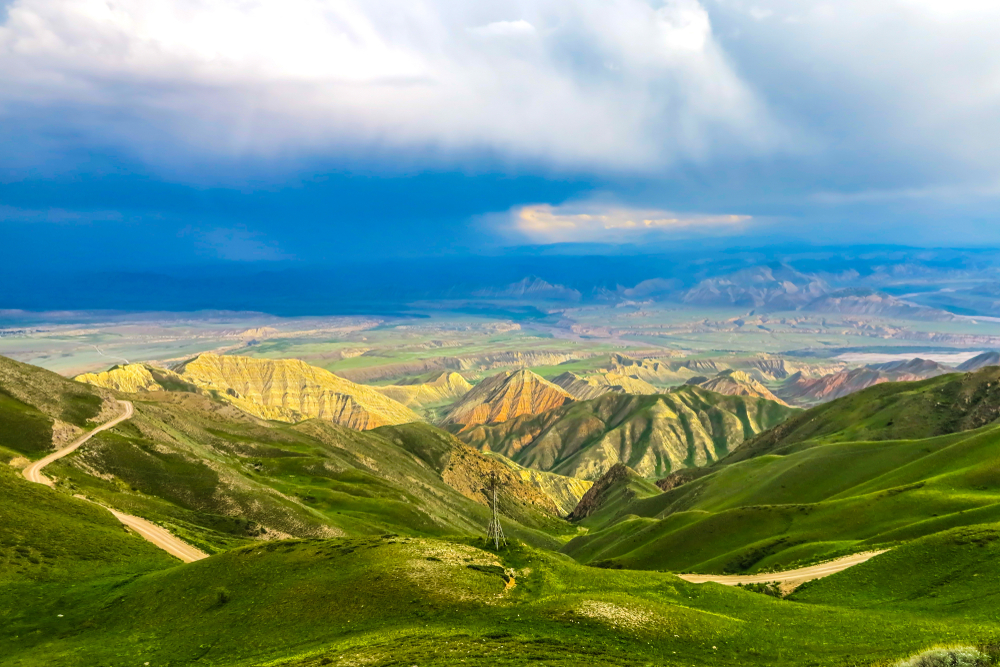
Since independence, Central Asian states have repeatedly endorsed the idea of regional economic integration. Initiatives ranging from customs cooperation to Central Asian Economic Union (CAEU) were designed to lower barriers, stimulate trade, and create a single economic space. In practice, however, these frameworks often lacked operational depth. Divergent regulatory regimes, weak cross-border infrastructure, and limited coordination between national development strategies constrained their impact. Kazakhstan and Kyrgyzstan provide a revealing case. Despite geographical proximity and strong historical ties, economic cooperation long remained below potential. According to official data, bilateral trade turnover remained under US$ 2.0 billion in 2025, yet this figure still represented only a fraction of what integrated logistics, industrial cooperation, and value-chain development could deliver. Another indicator underscores this gap: more than 70 percent of bilateral trade consisted of raw materials and low value-added goods, highlighting the structural limitations of existing trade patterns. Against this backdrop, corridor-based integration has emerged as a pragmatic alternative. Rather than attempting to harmonize entire economies at once, economic corridors focus on specific geographic axes where infrastructure, trade facilitation, industrial policy, and investment can be aligned. This logic underpins the renewed focus on the Almaty–Bishkek Economic Corridor, one of the most densely populated (with population about 4.4 million people) and economically dynamic cross-border zones in Central Asia. The Almaty–Bishkek Economic Corridor (ABEC) was initially conceptualized in the mid-2010s as a pilot for cross-border integration. Supported by the ADB, the corridor connects two major urban agglomerations—Almaty and Bishkek—located less than 250 kilometers apart. Together, they account for a significant share of both countries’ GDP, population, and industrial capacity.
IMPLICATIONS:
The renewed political momentum behind ABEC is notable. In 2025, the official visit of President Kassym-Jomart Tokayev to Kyrgyzstan elevated economic corridor development to the level of strategic priority. The visit reaffirmed both governments’ commitment to moving beyond symbolic cooperation toward concrete joint projects, particularly in logistics, agri-processing, and light manufacturing. Perhaps the most innovative element of the new integration model is the creation of joint industrial trade and logistics complexes (ITLCs) along the Kazakhstan–Kyrgyzstan border. Unlike traditional free trade zones, these hubs are designed as shared economic spaces, with coordinated infrastructure, customs regimes, and investment incentives. The first pilot hub in the Kordai area represents a qualitative shift. It is not merely a transit point but a platform for joint production, storage, processing, and distribution. By co-locating enterprises from both countries, the hub aims to shorten supply chains, reduce logistics costs, and encourage value-added manufacturing. Early estimates suggest that efficient corridor operations could reduce cross-border transport costs by 15–20 percent, significantly improving competitiveness for small and medium-sized enterprises on both sides, create thousands of jobs, and increase bilateral trade turnover to US$ 3.0 billion by 2030. Importantly, these hubs are embedded in a broader political framework. Their creation followed mutual state visits, meetings of the Kazakh–Kyrgyz Intergovernmental Council, and sustained high-level engagement. This alignment between political leadership and technical implementation has been largely absent in earlier regional initiatives.
The shift from declarations to corridors carries broader implications for Central Asia’s integration trajectory. First, it reframes free trade agreements as enabling instruments rather than endpoints. Free Trade Agreements (FTAs) alone do not generate trade; infrastructure, logistics, and industrial cooperation do. The Kazakhstan–Kyrgyzstan experience suggests that FTAs are most effective when embedded in spatially defined economic corridors with clear investment pipelines. Second, corridor-based integration offers scalability. Success along the Almaty–Bishkek axis could be replicated along other strategic routes, linking Central Asia more effectively to South Asia, China, and the Caucasus. In this sense, corridors function as building blocks for a wider regional economic space. Third, the model strengthens resilience. By promoting regional value chains and reducing dependence on distant markets, corridor integration can buffer Central Asian economies against external shocks. For landlocked countries, improved cross-border connectivity is not a luxury but a strategic necessity. Finally, the political economy dimension is crucial. Sustained leadership engagement—illustrated by the 2025 presidential visit and repeated intergovernmental consultations—signals a recognition that economic integration requires long-term commitment, institutional coordination, and trust-building. This is a departure from the episodic diplomacy that characterized earlier phases of regional cooperation.
CONCLUSIONS:
ADB-supported assessments emphasized several corridor advantages: proximity to markets, complementary labor and production structures, and existing transport links that could be upgraded at relatively low cost. Recent investments have focused on modernizing border crossing points, improving road and logistics infrastructure, and harmonizing customs and sanitary standards. These “soft infrastructure” reforms are as critical as physical upgrades, reducing transaction costs and uncertainty for businesses.
This ADB’s evaluation illustrates the choices for Central Asian republics. The region can continue to produce integration declarations with limited practical impact, or it can invest in functional mechanisms that deliver measurable economic outcomes. The evolving partnership between Kazakhstan and Kyrgyzstan suggests that the latter path is increasingly viable. By anchoring integration in corridors, logistics hubs, and targeted industrial cooperation, the two countries are experimenting with a new model of regionalism—one that is pragmatic, incremental, and results-oriented. Supported by institutions such as ADB and reinforced by high-level political will, this approach moves integration from aspiration to implementation. If sustained and expanded, corridor-based integration could redefine economic cooperation across Central Asia. It offers a way to translate geography into advantage, proximity into productivity, and political goodwill into shared growth. In doing so, it may finally allow the region to move from declarations to durable economic corridors—and, ultimately, toward a genuinely integrated economic space.
AUTHOR’S BIO:
Rafis Abazov, PhD, is a director of the Institute for Green and Sustainable Development at Kazakh National Agrarian Research University. He is author of The Culture and Customs of the Central Asian Republics (2007), An Effective Project Manager (2025) and some others. He has been an executive manager for the Global Hub of the United Nations Academic Impact (UNAI) on Sustainability in Kazakhstan since 2014 and facilitated the International Model UN New Silk Way conference in Afghanistan and other Central Asian countries.
China Reshapes Central Asia's Russia-Dominated Nuclear Landscape
By Syed Fazl-e-Haider
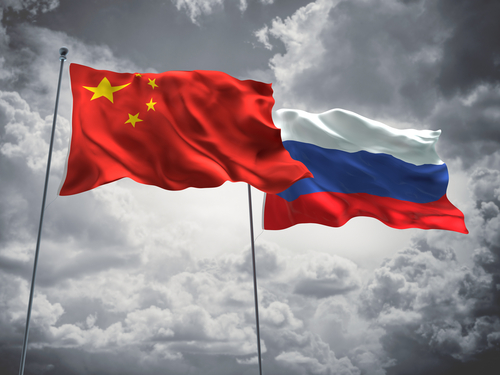
China is reshaping Central Asia’s nuclear energy sector, challenging Russia’s long-standing dominance in the region. In September 2025, Uzbekistan explored a contingency agreement with China National Nuclear Corporation (CNNC), amid concerns that the contract signed in June with Russia’s state-owned nuclear monopoly, Rosatom, for the construction of nuclear power units might face delays. While Rosatom leads the consortium responsible for building Kazakhstan’s first nuclear power plant, CNNC has emerged as the principal alternative competitor. Under current plans, CNNC would assume a leading role in the construction of Kazakhstan’s second and third nuclear power plants.
BACKGROUND: Nuclear energy has been a central instrument through which Russia has sustained its presence in Central Asia. Experts argue that nuclear power projects tend to create long-term dependencies for host states, particularly when nuclear energy constitutes a significant share of national electricity generation. Such projects also entail security risks, including the potential for sabotage. A 2023 study on Russian nuclear energy diplomacy published by the Norwegian Institute of International Affairs notes that “Central Asia has a special place in Russian nuclear energy diplomacy because of the post-Soviet heritage, meaning that Rosatom’s operations in the region are easier and smoother than elsewhere.”
Moscow’s invasion of Ukraine in February 2022 intensified Russia’s diplomatic isolation, undermining its dominance in Central Asia’s nuclear energy sector. As a sanctioned and increasingly isolated Russia gradually loses its influence in the region’s nuclear landscape, Beijing is capitalizing on the opportunity to secure new clients for its nuclear reactor technology.
During a visit to Uzbekistan in 2018, Russian President Vladimir Putin signed an agreement with Tashkent for the construction of a 2.4-gigawatt nuclear power plant, valued at approximately US$ 11 billion. However, the project failed to progress as planned and was revised in 2024, when the two sides concluded a new agreement for a facility comprising six small reactors, each with a capacity of 55 megawatts (MW).
In June 2024, Russia concluded an agreement with Uzatom to carry out a feasibility study on constructing a nuclear power plant comprising two to four VVER-1000 reactors in Uzbekistan. In 2023, Kyrgyzstan held discussions with Rosatom on a small nuclear power plant with a capacity of 110 MW. However, the talks failed to progress after Bishkek lost interest.
In June 2025, Kazakhstan announced the selection of Rosatom to lead the construction of the country’s first nuclear power plant. In a separate statement, however, Astana also confirmed that CNNC would head the development of the country’s second nuclear facility. In August 2025, Kazakhstan’s First Deputy Prime Minister Roman Sklyar further stated that CNNC would also lead the construction of the country’s third nuclear power plant. In September 2025, Uzbekistan’s nuclear agency, Uzatom, unveiled an upgrade plan for its two small nuclear reactors (RITM-200N), scheduled for completion by 2030, and for two large nuclear units (VVER-1000) by the mid-2030s. By pursuing a multi-vector diplomatic strategy, Uzbekistan has signed nuclear energy agreements with both Russia and China.
China’s nuclear energy cooperation in Central Asia is expanding rapidly. In September 2025, Beijing–Tashkent nuclear cooperation featured prominently in a meeting between Uzbek President Shavkat Mirziyoyev and Shen Yanfeng, Chairman of CNNC, held on the sidelines of a Shanghai Cooperation Organization (SCO) summit in China. Following the Mirziyoyev–Yanfeng meeting, new mining agreements valued at US$ 5 billion, including a uranium mining deal, were announced.
IMPLICATIONS: Energy-constrained Central Asian states, such as Kyrgyzstan and Uzbekistan, have looked to Rosatom, the world’s leading constructor and exporter of nuclear reactors. International sanctions imposed on Russia over its war in Ukraine have cast uncertainty over Rosatom’s future. As a result, Russia’s clients in Central Asia are increasingly turning to China as an alternative partner for nuclear energy cooperation. It was against this backdrop that Tashkent, in September 2025, discussed a contingency agreement with China for the construction of nuclear power plants, supplementing a deal signed with Rosatom in June 2025. While Kazakhstan’s first nuclear power plant is being built by Russia, China is set to lead the construction of the country’s second and third nuclear facilities.
China’s growing involvement in the nuclear energy sector is significantly eroding Russia’s long-standing dominance in the region. CNNC has emerged as a strong competitor to Russia’s Rosatom in nuclear projects in Uzbekistan and Kazakhstan, as both Central Asian states expand their nuclear energy programs.
CNNC is posing strong competition to Russia’s Rosatom on cost considerations in nuclear energy projects. For Kazakhstan’s first nuclear power plant, CNNC sought to attract Kazakh authorities by proposing the construction of two nuclear units with a combined capacity of 2.4 gigawatts at a cost of US$ 5.47 billion, a significantly lower bid. The comparatively lower cost of Chinese nuclear reactors gives China a competitive advantage over Russia in Central Asia, where affordability is a critical factor in ensuring the financial sustainability of host countries.
China’s policy of sharing nuclear technology and granting host countries full control over the nuclear fuel cycle emphasizes energy independence in states developing nuclear power projects. This approach is particularly attractive to Central Asian countries and gives China a competitive advantage over Russia. In Kazakhstan, for example, this policy aligns with Astana’s long-term objective of reducing dependence on external powers in the nuclear energy sector, and CNNC has offered technology transfer along with full control of the fuel cycle. By contrast, Russia follows a model that retains control over fuel supply and requires the repatriation of spent fuel for the duration of a plant’s operation in non-nuclear states.
Faster delivery timelines are another factor that make China more attractive to Central Asian countries than Russia in nuclear energy projects. Chinese companies typically complete nuclear power projects in seven years or less, whereas Rosatom generally requires between six and nine years to construct nuclear reactors.
Despite China’s competitive advantages in cost and delivery speed, Chinese nuclear projects involve technical and environmental risks. China does not provide Central Asian states with a long-term, reliable solution for radioactive waste management. Consequently, in the absence of advanced and transparent safety protocols, safety concerns remain a major obstacle to China’s nuclear ambitions in the region.
In September 2025, Almassadam Satkaliyev, Chairman of Kazakhstan’s Atomic Energy Agency, emphasized the importance of ensuring safe operations at nuclear facilities. He stated that Kazakhstan would continue to develop the nuclear fuel cycle, from uranium mining and nuclear fuel production to electricity generation at nuclear power plants, while strictly adhering to the country’s international obligations regarding the peaceful use of nuclear energy.
CONCLUSIONS: Despite international sanctions imposed in response to the war in Ukraine, Russia is making concerted efforts to maintain its influence over nuclear energy projects in Central Asia. However, sanctions have increasingly eroded Russia’s primary source of leverage, nuclear cooperation, allowing China to challenge Moscow’s long-standing dominance in the region’s nuclear energy sector.
China’s nuclear power initiatives are poised to solidify its long-term strategic influence in Central Asia. These projects necessitate decades of engagement through fuel supply chains, technology transfer, and sustained operational oversight.
China is reshaping Central Asia's nuclear landscape by leveraging cost competitiveness, technology transfer, and expedited project timelines to erode Russia's traditional dominance in energy cooperation. However, despite these advantages, concerns persist regarding China’s comparatively lax safety standards.
AUTHOR’S BIO: Syed Fazl-e-Haider is a Karachi-based analyst at Wikistrat. He is a freelance columnist and the author of several books. He has contributed articles and analysis to a range of publications. He is a regular contributor to Eurasia Daily Monitor, Jamestown Foundation. Email: This email address is being protected from spambots. You need JavaScript enabled to view it. .
Visit also