Representation at the Inter-Parliamentary Union: Sahiba Gafarova’s Bid for the Presidency
By Simona Scotti
The region of Central Asia and the Caucasus has never been represented at the helm of the Inter-Parliamentary union. This year, however, this could change. Azerbaijan’s Speaker of Parliament, Sahiba Gafarova, is making a bid for the presidency. Aside from being the first person from the region at the position, she would also be only the fourth woman to have this prestigious role. Building on her national profile as well as numerous international engagements, Gafarova has also applied parliamentary diplomacy with her counterpart in Armenia.
Read Representation at the Inter-Parliamentary Union: Sahiba Gafaova’s Bid for the Presidency
From Soviet Pipelines to Eurasian Energy Corridors: Russian Gas Exports to Iran Through Azerbaijan
By Vali Kaleji
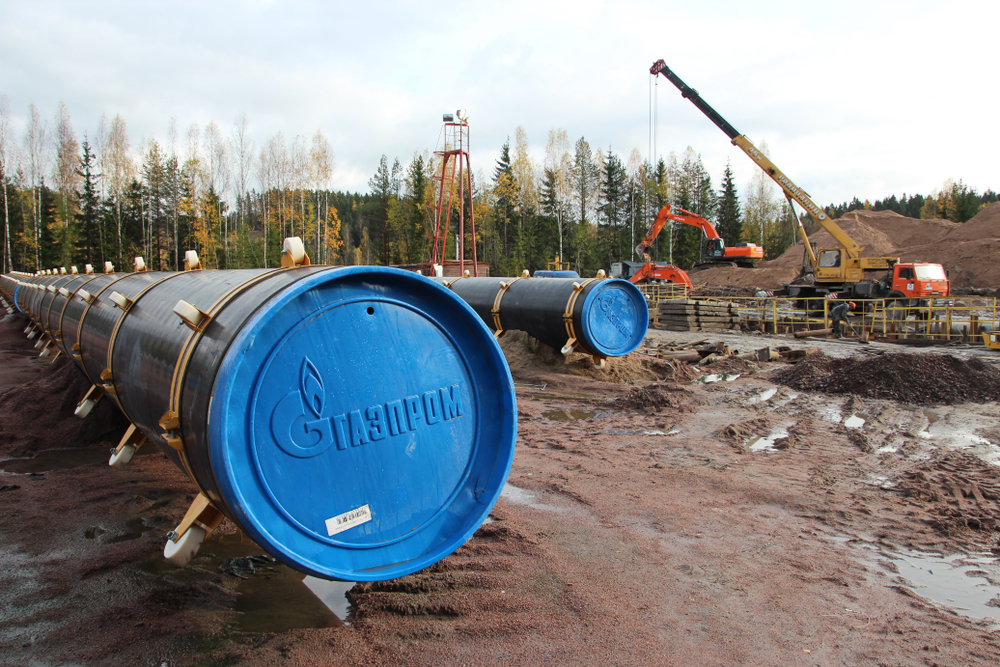
Russia and Iran are moving closer to implementing a long-negotiated natural gas agreement. Officials from both countries have confirmed that Azerbaijan has been selected as the preferred transit route for Russian gas exports to Iran, a route that recalls Iran's natural gas exports to the Soviet Union through the same corridor in the 1970s. The project will constitute part of the broader geopolitical and geoeconomic reconfiguration of Eurasia following the Ukraine war, in which Russia seeks to redefine its energy export routes while Iran seeks not only to reduce its domestic natural gas imbalance but also to strengthen its geoeconomic and transit position within regional energy networks.
BACKGROUND:
Energy cooperation between Iran and Russia dates back to the Soviet era. In January 1966, Iran and the Soviet Union signed a gas agreement under which Iran exported 10 billion cubic meters (bcm) of natural gas annually from its southern gas fields to the Soviet Caucasian republics through a pipeline terminating at Astara, now on the Iran–Azerbaijan border. In return, the Soviet Union agreed to build the Isfahan Steel Plant and the Arak Machine Manufacturing Plant. The pipeline became operational in 1970, but gas exports ceased in 1980 following the Islamic Revolution and the Iran–Iraq War. Although exports briefly resumed in 1989, the collapse of the Soviet Union in 1991 ended this framework of cooperation.
Rather than expanding energy ties with the Russian Federation, Iran subsequently developed cooperation with the newly independent states of Central Asia and the South Caucasus, including gas imports from Turkmenistan, oil swap arrangements with Kazakhstan and Azerbaijan, gas exports to the Nakhichevan Autonomous Republic, and the Iran–Armenia Gas-for-Electricity Swap agreement.
Despite UN sanctions, Iran and Russia reached an “oil-for-goods” agreement in 2014 under which Russia would purchase Iranian oil in exchange for Russian goods and equipment. The arrangement lost momentum after the 2015 Joint Comprehensive Plan of Action (JCPOA) enabled Iran to increase oil exports and regain access to international markets.
The U.S. withdrawal from the JCPOA in 2018 and the reimposition of sanctions, combined with Western sanctions on Russia following its invasion of Ukraine, created new incentives for bilateral energy cooperation. In July 2022, the National Iranian Oil Company (NIOC) and Russia’s Gazprom signed a US$ 40 billion memorandum of understanding covering joint investment in oil and gas projects, including gas pipelines and swap arrangements. In June 2024, Gazprom and the National Iranian Gas Company (NIGC) signed an agreement on Russian gas supplies to Iran, with Tehran aiming to import up to 20 bcm annually. During 2025, negotiations focused on pricing, financing, volumes, and transportation routes. Azerbaijan emerged as the preferred transit corridor, with Russian gas expected to enter Iran through the Astara border crossing, replicating the route used during the Soviet era. Russian Energy Minister Sergei Tsivilev confirmed this route in January 2025. Russia has proposed an initial supply of about 2 bcm annually, potentially expanding to 55 bcm in later phases.
During a meeting with Iranian Oil Minister Mohsen Paknejad on 13 July, Tsivilev also emphasized that the main provisions of the contract had been settled, and that the agreement would be finalized in the near future.
Azerbaijan has taken a cautious position. Unlike Russia and Iran, whose officials have repeatedly commented on the project, Baku has largely refrained from public statements regarding the proposed Russian gas exports to Iran. This silence may reflect the fact that Azerbaijan has become one of the EU's key natural gas suppliers, particularly since the outbreak of the Ukraine war, and does not wish to create the impression that it is serving as a new export route for Russian gas under the current sanctions regime. Azerbaijan may also prefer to avoid taking a public position until the commercial and legal arrangements of the project have been finalized.
From a technical and operational perspective, two key pipelines could potentially facilitate gas supplies from Russia to Azerbaijan and Iran. The 200km Novo-Filya (Russia) – Baku Gas Pipeline was built during the Soviet era, with a capacity of 10 bcm per year. It runs along the Caspian Sea coast and can operate in reverse mode, forming part of the larger Mozdok-Hajigabul gas pipeline system. The 1,474.5km Hajigabul (Azerbaijan) – Astara – Abadan (Iran) Gas Pipeline is another Soviet-era construction, connecting Azerbaijan to Iran. It has a capacity of 10 bcm per year but is currently inactive.
To enable significant Russian gas supplies, substantial investments in modernizing the entire pipeline system would likely be necessary. By mid-2026, imports have not yet begun, as negotiations continue over commercial terms, infrastructure development, Iran’s role in gas swaps and re-exports, and transit arrangements with Azerbaijan.
IMPLICATIONS:
The most immediate implication of the prospective Russian gas exports to Iran is its contribution to mitigating Iran’s gas imbalance in the country’s northern regions during the cold autumn and winter seasons. Although Iran possesses the world’s second-largest natural gas reserves after Russia and, in 2025, its total annual natural gas production exceeded 280 bcm, equivalent to approximately 7 percent of global natural gas production. The rapid growth in domestic consumption, the deterioration of parts of its infrastructure, two decades of extensive economic sanctions, and a lack of foreign investment in the development of gas fields and refinery capacity have created a structural imbalance between gas production and consumption. As a result, in recent years Iran has faced a daily gas shortage of 200–300 million cubic meters (mcm) during peak consumption periods. During the recent U.S. and Israeli war against Iran, parts of the South Pars gas facilities and processing plants were targeted, resulting in the loss of approximately 230 mcm of gas production capacity and further exacerbating the country’s energy imbalance.
The gas imbalance in northern Iran is particularly acute during the cold autumn and winter seasons because most of the country’s oil and gas resources, as well as its refineries, are located in the southern regions. Hydrocarbons must therefore be transported by pipeline to Iran’s densely populated northern provinces, a process that is both costly and associated with energy losses. At the same time, Iran has not developed the oil and gas resources of the Caspian Sea for a variety of reasons. Under these circumstances, gas imports from Russia, as well as Turkmenistan, enable Iran to increase gas supplies to its northern regions during the cold autumn and winter months.
A second implication, strongly emphasized by supporters of the project in Iran, is the use of surplus Russian gas, after meeting demand in the northern regions, to increase Iran’s gas exports to Iraq, Turkey, Armenia, Pakistan, and Oman, thereby strengthening Iran’s position as a regional energy hub. The realization of this objective, however, will largely depend on a final agreement between Iran and the U.S., the lifting of UN sanctions, and the removal of unilateral U.S. sanctions against Iran.
A third implication is the deepening of strategic interdependence between the two countries. Alongside the expansion of close political relations, the conclusion of the 20-year Comprehensive Strategic Partnership Agreement between Iran and Russia, the strengthening of bilateral and multilateral economic and trade cooperation within the Eurasian Economic Union (EAEU), the International North–South Transport Corridor (INSTC), and military-defense cooperation, energy will constitute a new dimension in Tehran–Moscow relations. Nevertheless, competition between Iran and Russia in the regional gas market, particularly in the South Caucasus and especially in Armenia, cannot be overlooked in the context of routing Russian gas exports to Iran through Azerbaijan. In fact, rather than routing the pipeline through Georgia and Armenia, both of which are consumers of natural gas, Russia has opted for Azerbaijan, a producer and exporter of natural gas, in order to ensure that Gazprom’s long-term commercial interests are not threatened.
A fourth implication is the strengthening of Azerbaijan’s role and position between Iran and Russia in both transit—the International North–South Transport Corridor (INSTC)—and energy, through the export of Russian gas to Iran. This development has been shaped by a number of factors, including sanctions on both Iran and Russia, the Free Trade Agreement between Iran and the Eurasian Economic Union (EAEU), the changing geopolitical environment resulting from the war in Ukraine, the recent U.S. and Israeli war against Iran, and Iran’s growing energy imbalance. Although the fluctuating nature of Iran’s and Russia’s relations with Baku could affect the sustainability of Russian gas exports to Iran, the re-export of part of the imported gas from Iran to Pakistan, a close partner of Azerbaijan, could disincentivize Baku from disrupting or suspending Russian gas transit to Iran.
CONCLUSIONS:
Whereas Iran exported natural gas to the Soviet Union in the 1970s, this trend has reversed over the past six decades. If implemented, Russian gas exports to Iran would form part of the broader geopolitical and geoeconomic reconfiguration of Eurasia following the Ukraine war. Russia seeks to redefine its energy export routes, while Iran aims to reduce its domestic gas imbalance and strengthen its geoeconomic and transit role within regional energy networks. However, the project’s success will depend on political cooperation between Tehran and Moscow, Azerbaijan’s role as the main transit route, international sanctions, its economic viability, and developments in global energy markets.
Within Iran, opinions on Russian gas imports remain divided. Supporters argue the project would reduce winter gas shortages in northern Iran, increase gas exports to neighboring countries, and reinforce Iran’s position as a regional energy hub. Critics, however, view Russia as Iran’s principal competitor in regional and global gas markets, noting that discounted Russian oil and gas have already displaced Iranian exports, particularly in China and India. Russia has similarly expanded its share of Iran’s steel export markets through lower prices. Consequently, if Iran–U.S. negotiations lead to sanctions relief and expanded Iranian energy exports, Russia may already have secured a significant portion of Iran’s potential export markets.
AUTHOR’S BIO:
Vali Kaleji, based in Tehran, Iran, holds a Ph.D. in Regional Studies, Central Asian and Caucasian Studies. He has published numerous analytical articles on Eurasian issues for the Eurasia Daily Monitor, the Central Asia-Caucasus Analyst, The Middle East Institute and the Valdai Club. He can be reached at This email address is being protected from spambots. You need JavaScript enabled to view it. .
Could Floods in Dagestan Trigger a Tectonic Shift?
By Laura Linderman and Lydia Sawatsky
The catastrophic flooding that struck Dagestan and northern Azerbaijan in late March and early April 2026, the worst rainfall event the republic has seen in over a century, has done more than damage homes and infrastructure. It has exposed the limits of Russian state capacity on its southern periphery at a moment when Moscow's grip on the wider Caucasus is already loosening, and it has done so along the precise ethnic and territorial seam where the Kremlin has long kept what the Chechen analyst Inal Sherip has called the "Lezgin card" in reserve. The Kremlin's belated and rhetorically defensive response, set against a more coherent Azerbaijani posture to the same storm, will accelerate Baku's strategic recalibration away from Moscow and rearrange political loyalties along the Lezgin cross-border zone in ways Russia has no current means to repair.
BACKGROUND:
Between March 27 and April 8, an unusually intense Caspian cyclone delivered rainfall to Dagestan and northern Azerbaijan that meteorologists in both countries have described as a record-breaking event of a scale not seen in 107 years. At an April 9 meeting on the disaster, Vladimir Putin himself observed that "since meteorological observations began, in 1882, such figures have never been recorded in the region." By that point, at least seven people had been confirmed dead in Dagestan, more than 6,200 had been evacuated, around 1.5 million had been affected in some way, and over 6,000 residential buildings had been damaged or submerged. The Gedzhukh reservoir dam in Derbentsky district was overtopped on April 5, sweeping cars off the federal motorway. Sections of the Caucasus federal motorway and the North Caucasus Railway were severed, and three substations in Makhachkala (Primorskaya, Vostochnaya, and Makhachkala-110) were flooded and temporarily knocked offline. Yuri Chaika, the Presidential Plenipotentiary in the North Caucasus Federal District, put initial damage at over one billion rubles. On April 7, Putin directed the elevation of the regional emergency to federal status, with the formal designation issued by the government commission on April 9.
The same storm did not stop at the international border. In Azerbaijan, it caused fatal flooding in Baku's Yeni-Ramana settlement on March 27 and 28, the death of a man swept away by floodwaters in Gusar district on April 5, and the collapse of a house in Baku's Sabunchu district on the night of April 7. The worst-affected Azerbaijani districts (Gusar, Khachmaz, and Quba) are precisely those where the country's Lezgin minority is most heavily concentrated.
The official Russian response combined high-profile federal visits with a striking reluctance to take responsibility. Emergency Situations Minister Alexander Kurenkov, Construction Minister Irek Faizullin, and Natural Resources Minister Alexander Kozlov all traveled to Dagestan. Sergei Melikov, the head of Dagestan, nevertheless attributed the loss of life among motorists swept off the federal motorway to local "carelessness," and blamed flooding in Makhachkala on "reckless" real estate development. Residents were not persuaded. Novaya Gazeta Europa quoted a resident of Mamedkala who said that the only reason fatalities had not run into the dozens was that locals were pulling each other from the floodwaters themselves. Moscow's instinct to manage the crisis through televised commission meetings rather than visible mobilization on the ground reflects a federal centre that is overstretched, not one choosing restraint.
IMPLICATIONS:
The political significance of the floods extends beyond the disaster itself, because they have arrived at a moment when several reinforcing trends across the Caucasus are converging.
The first is the visible thinness of Russian state capacity outside the Kremlin's core priorities. In the same week Moscow elevated the Dagestan emergency, it absorbed the loss of its last functioning railway ferry across the Kerch Strait to Ukrainian drone strikes. Federal budget transfers, once routine for the North Caucasus, are now constrained by wartime spending and sanctions. Chronic unemployment, entrenched corruption, underdeveloped infrastructure, and reliance on heavy-handed security policies remain unresolved across the North Caucasus, continuing to fuel local grievances. The entire Kadyrov model of patronage-based stability rests on a federal balance sheet that is no longer flush, and the perception of decline now circulates openly in exile and opposition spaces. In late April, the former Chechen deputy prime minister Ruslan Kutaev, who now leads the Assembly of Peoples of the Caucasus, publicly claimed that "everyone knows Putin has lost" and that the great majority of Kadyrov's forces would switch sides at the right moment. The claim is contested, but its open airing is itself a marker of what exile figures now feel free to assert.
The second is the changing posture of Baku. Azerbaijan, hit by the same storm, has handled its response more conventionally. The country has its own constraints; residents in Baku's Yeni-Ramana settlement blocked a road in late March to protest inadequate drainage after rainfall killed two people near a damaged power cable, and Baku city authorities attributed some of the worst flooding to housing built without compliance with safety codes. But Baku has not attributed specific deaths to the carelessness of the dead. Through its Ministry of Emergency Situations, it has evacuated more than 450 people from flood zones, issued regular briefings, announced an expansion of its agricultural insurance regime to cover flood losses on April 8, and on April 28 President Ilham Aliyev allocated 85.9 million manat (approximately 50 million USD) from his reserve fund for flood relief. The political tone in Azerbaijani state media has been one of administrative competence and immediate action rather than recrimination.
This contrast matters because Azerbaijan has spent the past eighteen months systematically distancing itself from Moscow. Following the December 2024 destruction of Azerbaijan Airlines Flight 8243 by Russian air defenses over Grozny, and the June 2025 Yekaterinburg raids in which two ethnic Azerbaijani brothers died in Russian custody, Baku closed the Russian House, suspended Sputnik Azerbaijan, sued Russia internationally, and at the February 2026 Munich Security Conference President Aliyev publicly accused Moscow of three deliberate strikes on Azerbaijani diplomatic facilities in Kyiv. The trajectory has only accelerated. On April 25, four days after the federal emergency was declared in Dagestan, Aliyev hosted Volodymyr Zelensky in Gabala on the Ukrainian leader's first visit to the South Caucasus since the Russian invasion of Ukraine began, and the two presidents signed six bilateral agreements concentrated on defense-industrial cooperation, joint production, and the deployment of Ukrainian drone specialists in Azerbaijan. Every image of Russian inadequacy on Azerbaijan's northern doorstep validates Baku's strategic choice.
Baku's confidence rests on more than rhetoric. The early-2026 strikes on Iran have reduced the third regional power with traditional interests in the borderlands to silence born of weakness rather than restraint, and the Iran war has paralysed the International North-South Transport Corridor through banking and insurance restrictions, redirecting Eurasian cargo to the Trans-Caspian route through Azerbaijan and Kazakhstan, where demand surged 450 to 500 percent in a single week. Baku has also kept its land borders, including with Russia, closed since the COVID-19 pandemic, retaining the closure for political reasons. There are no longer direct flights from Baku to any Dagestani or Chechen city. That Azerbaijan can simultaneously absorb a war next door, manage the diversion of Eurasian transit through its own ports, and project administrative competence in a domestic flood response is itself a measure of how far the regional balance has shifted.
The third element, and the most underappreciated, is the cross-border ethnic dimension. The areas of Dagestan worst affected, Derbentsky and Magaramkentsky districts and the southern coastal belt, are the historic homeland of the Lezgin people, who number roughly 800,000 in southern Dagestan and between 180,000 and 260,000 in northern Azerbaijan. As Sherip notes, demographics heighten fragility: Dagestan alone hosts an Azerbaijani community of roughly 120,000, more than a third of the population of Derbent, while Azerbaijan hosts approximately 250,000 Lezgins and Avars, meaning any cross-border incident would almost inevitably spill across the frontier. Sergei Melikov, notably, is the first ethnic Lezgin to head Dagestan; with a Lezgin father and a Russian mother, he was born in Orekhovo-Zuyevo near Moscow and made his career in the federal security services, with no ties to Dagestan or its local elites before Putin appointed him acting head in October 2020. The Samur River that forms much of the international border is itself part of the flood story. Moscow has historically managed this frontier by holding the "Lezgin card" in reserve, quietly cultivating the Sadval movement and other Lezgin nationalist organizations in the 1990s as leverage against Baku and then letting them wither when Azerbaijani concessions were required. The flood inverts this calculation. A perception that Moscow neither protects nor compensates Lezgins on its side of the border, while Baku at least musters a coherent administrative response on its side, is the kind of fact that reshapes long-term political loyalties at the margins.
The fourth element is recent political memory. The September 2022 anti-mobilization protests in Makhachkala and Endirei were the largest in the North Caucasus and the first significant public unrest in the republic in a decade. They were touched off by the same dynamic now visible in the flood response: a federal centre that extracts more from Dagestan than it provides. The flood does not, by itself, manufacture a protest movement. But the conditions that produced 2022 (the perception of federal extraction, official contempt for local life, and the absence of meaningful Dagestani representation in Moscow's calculations) are all reinforced by what Dagestanis are seeing this month. Dagestan has been disproportionately mobilized for the war in Ukraine, has been chronically underfunded for infrastructure, and is now being told by its own governor that its dead were simply careless.
CONCLUSIONS:
The Dagestan floods of 2026 will not, in themselves, dislodge Sergei Melikov or destabilize the Russian Federation's hold on its southern periphery. Melikov's regional security apparatus remains coherent, and the federal centre has committed visible resources. What the floods will do is accelerate trends already in motion. Baku will read the contrast between the two responses as further confirmation that its strategic distancing from Moscow carries declining costs, a reading already legible in the Gabala signings of April 25. Yerevan, watching from across the South Caucasus, will draw the same conclusion: that a Russian state which cannot compensate flood victims on its own southern periphery is unlikely to provide the security guarantees it has long been asked to provide. The Lezgin cross-border community will quietly absorb the lesson that the federal centre will mobilize cameras before it mobilizes pumps. Western policymakers, who have spent the past year recalibrating their approach to the South Caucasus in the wake of the TRIPP framework and Vice President Vance's February 2026 visit to the region, will find that Moscow's regional credibility has eroded slightly further in a part of the Russian Federation where that erosion was supposed to be impossible. As AFPC Senior Fellow Mamuka Tsereteli has argued, the war in Ukraine has produced a paradox for American strategy: it has reduced Russia's long-term strategic power even as it has hardened Moscow into a more risk-tolerant adversary. The window for Western policymakers to lock in this regional shift remains open, but it will not stay open forever. The floodwaters in Dagestan will recede in the coming weeks. The political water table in the Caucasus has shifted by a measurable amount, and it is shifting in the same direction in which the rivers are running, south, away from a centre that no longer commands them.
AUTHOR’S BIO:
Laura Linderman is a Senior Fellow and Director of Programs at the Central Asia-Caucasus Institute at the American Foreign Policy Council, and a nonresident fellow at the Atlantic Council's Eurasia Center. Lydia Sawatsky is a researcher at the Central Asia-Caucasus Institute.
Türkiye-Armenia Border Reopening: A Turning Point For The South Caucasus
By Alpaslan Özerdem and Olesya Vartanyan
After more than three decades of closure, the Türkiye-Armenia border may soon reopen. A string of recent developments, including the launch of Turkish Airlines flights to Yerevan, agreements to simplify visa procedures, and moves toward direct land trade, suggest that normalization is shifting from cautious diplomacy toward practical implementation. If it does, it would mark one of the most consequential geopolitical shifts in the South Caucasus since the end of the Cold War. Yet reopening the border will require careful political management. Without it, renewed contact could generate friction rather than stability.
BACKGROUND:
The land border between Türkiye and Armenia has been closed since 1993. Ankara shut the crossing in solidarity with Azerbaijan during the first war over Nagorno-Karabakh. Since then, the border has symbolized one of the most enduring geopolitical divides in the region. For communities on both sides, the closure produced long-term economic and social consequences. Armenia’s access to regional markets has remained constrained, while eastern Turkish border regions have also faced limited cross-border economic opportunities.
Regional dynamics began shifting after the 2020 war between Armenia and Azerbaijan, which altered the political balance in the South Caucasus and created new incentives for diplomatic engagement. In the aftermath of the war, Ankara and Yerevan appointed special envoys in 2021 to explore the possibility of restoring diplomatic relations and reopening the border.
Since then, negotiations have progressed slowly but steadily. Several confidence-building measures have been agreed and some already implemented. These include agreements allowing third-country citizens to cross the border, the resumption of direct flights between Istanbul and Yerevan, and discussions on facilitating trade and travel. In early 2026, the pace of normalization accelerated visibly. In March, Turkish Airlines launched regular scheduled flights on the Istanbul-Yerevan route. The two governments agreed to simplify visa procedures, and reports emerged that direct land trade between Türkiye and Armenia would begin as part of a broader US-led Caucasus peace push. Last December Bloomberg reported that Ankara was weighing a full reopening of the border within six months, while senior Turkish officials publicly expressed optimism, stating that they hoped “everything develops quickly.”
Physical preparations also indicate growing readiness. Armenia has renovated the Margara checkpoint on its side of the border, declaring the facility technically ready for operation. Türkiye has likewise upgraded infrastructure at the Alican crossing. These preparations suggest that the technical conditions for reopening could be met relatively quickly if political decisions align.
Still, reopening the border remains politically sensitive. For Türkiye, the process remains closely linked to the broader relationship between Armenia and Azerbaijan, particularly negotiations over a comprehensive peace agreement following the collapse of the self-declared Nagorno-Karabakh authorities in 2023. Since last August, when the two countries signed several accords at the White House, Baku and Yerevan have taken a number of steps forward, including facilitating transit trade to Armenia through Azerbaijan and Armenia’s recent agreement with the United States on the TRIPP transit route, which will facilitate the operation of a transit route between Azerbaijan and its enclave of Nakhchivan in southern Armenia. These are promising steps, but a final peace agreement is still pending, which Türkiye must take into consideration.
Ankara has long coordinated its approach toward Armenia with Baku. Turkish policymakers have repeatedly emphasized that normalization should not undermine Azerbaijan’s strategic interests, and progress in Türkiye-Armenia relations has often moved in parallel with developments in Armenia-Azerbaijan negotiations. How close are the parties to a final agreement on the border? The string of practical steps in early 2026 suggests the process has crossed a threshold from symbolic confidence-building to operational preparation. Yet the absence of a finalized Armenia-Azerbaijan peace deal means that Ankara retains a political brake on the timeline. A stall or deterioration in those talks could slow or freeze the border track; conversely, a breakthrough could accelerate it rapidly.
Domestic political considerations also matter. In Armenia, normalization with Türkiye remains controversial for segments of society deeply affected by historical grievances, and the issue will feature in the country’s upcoming June parliamentary elections. In Türkiye, policymakers must balance diplomatic engagement with Armenia against their longstanding strategic partnership with Azerbaijan.
IMPLICATIONS:
If and when the border reopens, the effects will extend well beyond bilateral relations. Armenia has long depended on limited transit routes through Georgia and Iran to access external markets. Opening the Turkish border would provide an alternative corridor, linking Armenia more directly to European and Middle Eastern trade networks. It would also reinforce Türkiye’s role as a regional connector between the South Caucasus and broader Eurasian markets. In this context, reopening the border aligns with wider connectivity initiatives such as the Middle Corridor, which aims to strengthen east-west trade routes across the region.
Russia’s influence in the South Caucasus has weakened since the start of the war in Ukraine and the collapse of its peacekeeping mission in Nagorno-Karabakh in 2023. As Moscow’s role recedes, regional actors are increasingly seeking alternative economic and diplomatic partnerships. In parallel, instability in the Middle East, including conflict involving Iran, has heightened uncertainty along key transit routes. For Armenia, which has relied on access through Iranian territory, reopening the Turkish border would reduce dependence on a single corridor and provide greater strategic flexibility.
On the other hand, the expansion of trade and transit routes associated with reopening the Türkiye-Armenia border could deepen regional interdependence and, in turn, support longer-term peace between Armenia and Azerbaijan. Durable reconciliation rarely rests on diplomatic agreements alone; it often emerges when economic cooperation and shared interests make renewed conflict increasingly costly. Expanded trade, transportation links, and cross-border mobility can help create these incentives by encouraging regional actors to view cooperation not as a concession but as mutual gain.
At the local level, decades of closure have left many towns near the frontier economically stagnant. Renewed cross-border access could stimulate transportation links, tourism, and commercial exchange. Armenian producers would gain easier access to Turkish markets, while Turkish businesses could expand trade with Armenia and potentially beyond. However, regions that have been economically isolated for decades may struggle to adjust quickly to new competitive pressures, and if cross-border trade develops unevenly, local communities could perceive the reopening as disruptive rather than beneficial.
The practical challenges of reopening should not be underestimated. Local authorities, customs agencies, border police, and regulatory bodies on both sides have never previously operated together. Communities along the frontier have lived in close geographical proximity but political separation for decades. In the Armenian village of Margara, residents have long lived within sight of the Turkish side of the river without direct contact. Renewed engagement may generate economic and cultural exchange, but it could also expose differences in administrative practices, expectations, and social attitudes that will require careful management on both sides.
CONCLUSIONS:
The reopening of the Türkiye-Armenia border represents more than a bilateral diplomatic milestone. It reflects a broader transformation in the political landscape of the South Caucasus. The rapid accumulation of practical steps in early 2026, from flights to visa agreements to land trade, indicates that the process has moved beyond the realm of aspirational diplomacy. Yet the outcome is not guaranteed. The process remains closely linked to developments in Armenia-Azerbaijan relations, domestic political considerations in both countries, and evolving regional geopolitics. Whether Ankara ultimately opens the border before or after a finalized Armenia-Azerbaijan peace deal will be a critical signal of how much Türkiye is willing to decouple the two tracks. Whether the border ultimately becomes a bridge between the two societies or simply another contested frontier will depend on how effectively these challenges are addressed not only in the coming months, but in the longer term.
AUTHOR’S BIO:
Alpaslan Özerdem is Dean of the Carter School for Peace and Conflict Resolution at George Mason University. Olesya Vartanyan is a conflict analyst specializing in South Caucasus security and peace processes and a PhD student at George Mason University.
Azerbaijan's Silent Retreat From The Russian Frontier
By Lydia Sawatsky
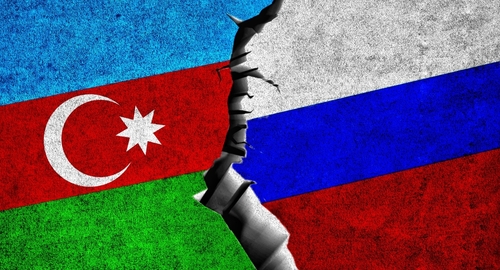
Azerbaijan is increasingly stepping away from Russian influence as Russia’s military dominance in the Caucasus slips due to its involvement in the war in Ukraine. Baku has responded to these changing dynamics through a series of policy measures, including border closures, restrictions on Russian soft power, and surveillance of Russian-aligned organizations. This shift has only grown more visible in recent weeks as Vice President JD Vance made a historic visit to Armenia and Azerbaijan, and President Aliyev met Ukrainian President Zelensky for the third time at the Munich Security Conference. At Munich, Aliyev publicly accused Russia of deliberately striking the Embassy of Azerbaijan in Kyiv on three separate occasions, underscoring just how strained the Baku/Moscow relationship has become.
BACKGROUND:
Historical episodes of Soviet and Russian military intervention in Azerbaijan, including the Soviet Union’s crackdown on Azerbaijani protesters in Baku in January 1990 and Moscow’s long-standing support for Armenia, have reinforced Azerbaijan’s efforts to safeguard its sovereignty. Azerbaijan has often maneuvered around the consequences of openly opposing Kremlin positions by maintaining a cautious and cordial relationship with Moscow despite recurring tensions. Even when differences emerged over regional conflicts or broader geopolitical alignments, Baku prioritized diplomatic stability within the structural constraints imposed by Russia’s dominant role in the South Caucasus.
Azerbaijan gained regional confidence as Turkey stepped into the role of security guarantor. The alliance with Turkey signaled to Baku that it would not face regional threats alone. The Shusha Declaration promised military support against any foreign aggression. Military cooperation with Turkey intensified after Iran’s direct provocation of Azerbaijan by conducting a military exercise on the border simulating a military crossing of the Araz River. In response, Turkish troops, along with the Turkish Chief of the General Staff, participated in a similar joint drill to cross the river. Turkey’s promise of military aid and quick responses to military provocations reinforced Azerbaijan’s sense of security and showed Russia’s declining role as the primary regional power in the Caucasus.
Despite diverging interests, Baku largely accommodated Moscow’s continued involvement in regional security affairs to preserve stability. Following Azerbaijan’s victory in the Second Karabakh War in 2020, Russia rapidly deployed “peacekeeping” forces to the region. Similarly, the 2022 Declaration of Allied Cooperation with Russia, signed two days before the Ukraine war, is most revealing for the reaction it provoked rather than its substance, as it sparked concerns that Azerbaijan was drifting back into Moscow’s sphere of influence. In practice, however, Baku’s foreign policy remained largely unchanged, showing how Azerbaijan used symbolic accommodation to create misleading perceptions of alignment.
Russia’s withdrawal of its peacekeeping forces from Karabakh in 2024, largely driven by mounting military demands in Ukraine, marked a critical turning point in Azerbaijan’s assessment of its regional environment. The redeployment signaled a reduced Russian capacity to sustain its military presence in the region, giving Baku a window to increase its autonomy. While Azerbaijan did not pursue openly anti-Russian policies, Moscow’s growing preoccupation elsewhere encouraged a more assertive approach to Azerbaijani national sovereignty.
Beyond the military realm, Russia’s persecution of ethnic minorities has grown more visible due to widespread social media use, as reports of unlawful arrests of Azerbaijani citizens, beatings across Russia, and Chechnya’s deportation of Azerbaijani nationals to forcibly fight in Ukraine have become increasingly more common. Azerbaijanis have become more vocal in voicing their anger, with one journalist going so far as to call for the destruction of the Embassy of Russia in Baku.
Azerbaijan’s frustration with Russia intensified significantly after Russia shot down Azerbaijan Airlines Flight 8243 over Grozny, the capital of Chechnya, in December 2024, allegedly mistaking the passenger aircraft for a Ukrainian drone. After the plane was hit, Russian authorities denied it permission to land and redirected it to the Kazakh city of Aktau, an action analysts suggest was meant to cover up the incident, possibly hoping the plane would crash into the Caspian Sea. The previously maintained cordial and diplomatic relationship between Chechnya and Azerbaijan devolved so rapidly that when Chechen leader Ramzan Kadyrov tried to call Azerbaijani president Ilham Aliyev on December 30, Aliyev refused his call.
The crash of the Azerbaijani airline and the diplomatic fallout underscore why this matters for Azerbaijan. The incident exposed the risks of non-transparent and highly centralized security structures operating near its border. Azerbaijan’s refusal to allow the issue to be dismissed and its insistence on formal acknowledgment and compensation reinforced Baku’s insistence on formal state accountability rather than relying on informal crisis management.
As Azerbaijani-Russian relations were slowly returning to normal, Azerbaijan agreed to the US-backed TRIPP plan, moving towards closer economic ties with the U.S. and the West. Aliyev further raised the stakes at the February 2026 Munich Security Conference, publicly accusing Russia of deliberately striking Azerbaijan's Kyiv embassy three times in 2025, even after Baku had provided the coordinates of its diplomatic missions. Azerbaijan again directly and publicly criticized Russia, with little of the political cordiality that Azerbaijan has extended towards Russia in the past.
IMPLICATIONS:
These developments have coincided with a broader set of Azerbaijani policy adjustments. Azerbaijan's government is clearly considering the potential instability caused by its policies toward Russia. To mitigate the fallout, Azerbaijan is heavily restricting contact and influence with Russia in numerous ways.
Despite its geographic proximity to Russia, Azerbaijan has separated itself significantly from its neighbor in the last few years. Azerbaijan closed its borders with all neighbors in 2020 during the COVID pandemic and has kept each of them closed for political reasons, severing many regional ties. Citizens who once crossed the border regularly to shop or visit relatives now face near-total separation. There are no longer direct flights from Baku International Airport to the Dagestani cities of Grozny, Makhachkala, or Derbent, forcing travelers to travel instead through Moscow, often with long layovers. This not only makes it more difficult to travel but also significantly raises the financial burden, with an average ticket costing around $500, which is more than the average monthly salary for most Azerbaijanis, especially outside the capital. This means that there is much less flexibility in migration across the border.
Azerbaijani attitudes toward Russification and Kremlin narratives have also shifted dramatically. Leaked Kremlin documents dated to December 2025 acknowledge this reality, noting that Russian-speaking Azerbaijani citizens now face increased security surveillance and that organizations protecting Russian minority interests have been eliminated or restricted to the purpose of promoting interethnic harmony between Russians and Azerbaijanis.
Russia’s inability to pivot away from Ukraine or divert resources to the Caucasus has driven Azerbaijan’s move away from its neighbor and toward greater independence. This strategy will protect Azerbaijan from potential unrest in Russia spilling over into its borders and accelerate Azerbaijan's pivot away from Russian soft power toward diverse global partnerships. The border closures, flight cancellations, and restrictions on Russian influence are more than temporary precautions: they reflect a permanent change.
Azerbaijan has already structurally insulated itself from Russia’s northern periphery, and recent shocks have only revealed how far that decoupling has gone. Recent tensions did not create Azerbaijan’s distancing, but exposed Azerbaijan’s preexisting insulation strategy as it enacted restrictions on cross-border movement, limited soft power influence, and asserted itself diplomatically. Russia is an increasingly unpredictable and unstable partner, and though Azerbaijan remains economically and geographically tied to Russia, it can now better pursue multi-vector diplomacy and diversification. Azerbaijan’s recent actions and diplomatic posture suggest not a geopolitical realignment, but a calculated effort to reduce exposure to instability stemming from Russia while preserving functional interstate relations.
CONCLUSIONS:
Ultimately, Azerbaijan’s response to Russia’s declining power is a policy of calculated insulation. This shift is structural rather than merely reactionary, as the permanent closure of land borders and the dismantling of transport links to the North Caucasus serve as a physical barrier against potential Russian instability and soft power.
Measures such as increased surveillance of Russian-speaking citizens and the removal of pro-Kremlin interest groups indicate a shift away from Russian soft power toward a new era of regional cooperation with Central Asia and Turkey, as well as Western-led global partnerships. Vice President J.D. Vance's February 2026 visit to the South Caucasus signals the kind of high-level Western engagement that Azerbaijan and its neighbors are now actively courting. While the fundamental, pragmatic ties between Baku and Moscow are unlikely to fully rupture, Azerbaijan is working harder than ever to decouple its security from Russia’s influence. While Azerbaijan is unlikely to fully sever its ties with Russia, given enduring geographic and economic constraints, its current diplomatic trajectory marks an unprecedented departure from decades of accommodating Russian regional dominance, opening a timely window for deeper Western engagement and the advancement of a more durable strategic partnership in the South Caucasus.
AUTHOR’S BIO:
Lydia Sawatsky is a researcher with American Foreign Policy Council’s Central Asia-Caucasus Institute. A recent graduate of Wheaton College, she grew up in Sumqayit, Azerbaijan, and has spent extensive time in the Caucasus and Central Asia. She previously worked with International Literacy and Development (ILAD) in Baku, Azerbaijan, researching access to education for Afghan and Pakistani refugees residing in the country.
Visit also