Representation at the Inter-Parliamentary Union: Sahiba Gafarova’s Bid for the Presidency
By Simona Scotti
The region of Central Asia and the Caucasus has never been represented at the helm of the Inter-Parliamentary union. This year, however, this could change. Azerbaijan’s Speaker of Parliament, Sahiba Gafarova, is making a bid for the presidency. Aside from being the first person from the region at the position, she would also be only the fourth woman to have this prestigious role. Building on her national profile as well as numerous international engagements, Gafarova has also applied parliamentary diplomacy with her counterpart in Armenia.
Read Representation at the Inter-Parliamentary Union: Sahiba Gafaova’s Bid for the Presidency
Armenia After the Vote: Democratic Legitimacy in a Fragmented South Caucasus
By Mathieu Lemoine
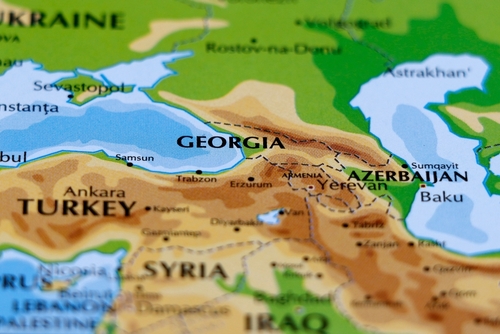
Armenia’s June 2026 parliamentary elections were not only a contest over government formation. It was a test of whether democratic politics can provide legitimacy for a painful post-Karabakh recalibration. Prime Minister Nikol Pashinyan’s Civil Contract party won 49.81 percent of the vote, enough to continue governing, but not the two-thirds majority required to initiate constitutional change on its own. The result strengthens Pashinyan’s mandate to pursue peace with Azerbaijan and diversify Armenia’s foreign policy, but it does not remove the structural pressures shaping the South Caucasus.
BACKGROUND:
The election was Armenia’s first parliamentary vote since Azerbaijan’s 2023 takeover of Nagorno-Karabakh and the displacement of its Armenian population. It followed years of declining confidence in Russia’s security guarantees, growing Armenian engagement with the EU and the U.S., and a difficult peace process with Azerbaijan. The campaign therefore unfolded at the intersection of domestic legitimacy, post-war trauma and regional realignment.
Civil Contract’s victory confirmed that Armenian voters were not prepared to return the pre-2018 political elite to power. It also showed that Russia-oriented opposition forces, despite mobilizing dissatisfaction over Karabakh and Pashinyan’s concessions, could not convert that discontent into a governing majority. Strong Armenia received 23.29 percent of the vote, while the Armenia Alliance also remained well behind the ruling party, leaving Civil Contract with a clear lead and the ability to form a government. At the same time, the vote should not be read as a simple plebiscite on “the West.” Pashinyan campaigned on peace, sovereignty and a more balanced foreign policy, not on a clean rupture with Russia.
From an electoral perspective, the process mattered because Armenia’s foreign policy shift depends on the government’s ability to claim democratic legitimacy. International observers assessed the vote as competitive and generally well administered, while also noting a confrontational campaign environment and external pressure. Reuters also reported concerns over selective justice linked to prosecutions and arrests of opposition figures before the vote. This combination is important. The election produced a usable mandate, but not an uncontested political consensus.
IMPLICATIONS:
The first implication is that an electoral mandate is not a peace settlement. Pashinyan can now argue that voters endorsed continuity: negotiations with Azerbaijan, normalization with Türkiye and strategic diversification away from overdependence on Russia. Yet the most difficult questions remain outside the immediate reach of an ordinary parliamentary majority. Azerbaijan has demanded that Armenia amend its constitution to remove what Baku regards as an implicit reference to Nagorno-Karabakh. Pashinyan’s party did not secure the parliamentary strength needed to call a constitutional referendum on its own. This creates a gap between electoral legitimacy and constitutional capacity.
That gap will shape the next phase of negotiations. The Armenian government can continue talks, but it cannot easily present constitutional change as a purely technical step. For many Armenians, Karabakh is not only a legal issue but a national trauma. Any move perceived as closing the historical and political question of Karabakh will be vulnerable to opposition mobilization. In this sense, the election authorized a direction, but not every concession that may be required to complete it.
The second implication concerns Azerbaijan’s leverage. The vote strengthened the Armenian government domestically, but it did not alter the asymmetry created by Azerbaijan’s military advantage since 2020 and 2023. Border incidents and reports of renewed ceasefire violations, particularly around sensitive areas such as Syunik, show that negotiations continue under pressure rather than in a neutral environment. This matters because the unresolved implementation of transit arrangements, including the Trump Route for International Peace and Prosperity, leaves room for competing interpretations over sovereignty, customs, security and access between Azerbaijan proper and Nakhchivan.
Armenia can endorse connectivity as part of a peace agenda. Indeed, Pashinyan’s “Crossroads of Peace” logic depends on turning Armenia from a blockaded state into a regional connector. But if transit arrangements remain ambiguous or delayed, connectivity can also become a source of coercion. Syunik is not only a transport question. It is Armenia’s southern link to Iran, a sensitive zone in Azerbaijani-Turkish strategy, and a red line for Tehran. This is why the regional significance of Armenia’s election lies less in the result itself than in whether the government can convert its mandate into enforceable arrangements that preserve Armenian sovereignty while enabling regional trade.
The third implication is that Russia’s role is weakened but not eliminated. Moscow’s credibility as Armenia’s security patron has been severely damaged since 2020 and 2023, a reassessment reflected in Pashinyan’s own statement that Armenia’s reliance on Russia for security had been a “strategic mistake.” During the election campaign, Russian pressure appeared not only as geopolitical rhetoric but as a factor in the electoral environment: observers cited public threats and trade pressure, while media reporting also pointed to information operations aimed at influencing the vote. That is precisely why the Armenian case is instructive for the wider post-Soviet space: external influence no longer operates only through formal alliances, military bases or economic dependence. It also works through the campaign environment, information space, diaspora networks and the use of economic vulnerability.
The election showed that Russian pressure can be politically counterproductive. It did not prevent Pashinyan’s victory and may have reinforced his claim to be defending Armenian sovereignty. But Russia retains tools that can complicate Armenia’s post-election trajectory. Armenia remains economically exposed to Russia through trade, energy, labor migration and remittances. It also remains formally entangled in Russian-led institutions, even as the political basis for that alignment erodes. The region is therefore not simply becoming “post-Russian.” It is becoming less ordered, less predictable and more coercive.
The fourth implication concerns the West. The EU, the U.S. and several European states have more room to support Armenia after the election. Western political backing can strengthen Armenia’s institutional resilience, reduce isolation and support negotiations. But political support is not the same as hard security guarantees. Armenia’s strategic problem is not that it has chosen one patron over another. It is that the old patron has lost legitimacy, while no new actor is prepared to replace it as a security guarantor.
This creates a difficult policy environment for Yerevan. Armenia must deepen cooperation with Western partners without provoking expectations that cannot be met. It must maintain relations with Iran without undermining its Western outreach. It must manage Russia without returning to dependency. And it must negotiate with Azerbaijan from a weaker position while persuading Armenian society that peace is not capitulation. Elections can legitimize this course, but they cannot substitute for a security architecture.
For the South Caucasus, the broader lesson is that the regional order is moving beyond Russian-centered conflict management without yet acquiring a stable replacement. Azerbaijan is more powerful. Türkiye is more central. Iran is defensive about corridor politics and border changes. Russia is weakened but still disruptive. Western actors are more present but cautious. In this environment, Armenia’s election is regionally significant because it tested whether democratic legitimacy can support a small state’s strategic adaptation under pressure.
CONCLUSIONS:
Armenia’s election should not be interpreted only as a geopolitical choice between Russia and the West. It is better understood as a case of democratic mandate under strategic constraint. Pashinyan now has renewed legitimacy to pursue peace, normalization and diversification. Yet this legitimacy does not by itself resolve the constitutional question, Azerbaijan’s leverage, Russian coercive tools, uncertainty over transit arrangements, or the lack of enforceable Western security guarantees.
The vote therefore clarifies Armenia’s direction but not its destination. It gives the government political authority to continue, but the durability of that authority will depend on whether peace and connectivity produce tangible security rather than new vulnerabilities. If Armenia can translate electoral legitimacy into a credible settlement, stronger institutions and diversified partnerships, the 2026 election may become a turning point in the South Caucasus. If not, it may be remembered as a mandate that clarified the country’s intentions without resolving the regional pressures surrounding them.
The central lesson extends beyond Armenia. In a fragmented South Caucasus, elections can authorize strategic change, but they cannot replace security architecture. Democratic legitimacy is a necessary resource for Armenia’s post-Karabakh recalibration. It is not, on its own, a guarantee that the region will become more stable.
AUTHOR’S BIO:
Mathieu Lemoine is a governance, rule of law and public sector reform professional with experience across UNDP, USAID, OSCE, EU institutions and election observation missions. He has worked extensively on governance, elections, civil society and regional dynamics in Central Asia, Eastern Europe and the South Caucasus.
Pashinyan Won: Armenia’s Fate Is Still Up for Grabs
By Joseph Epstein
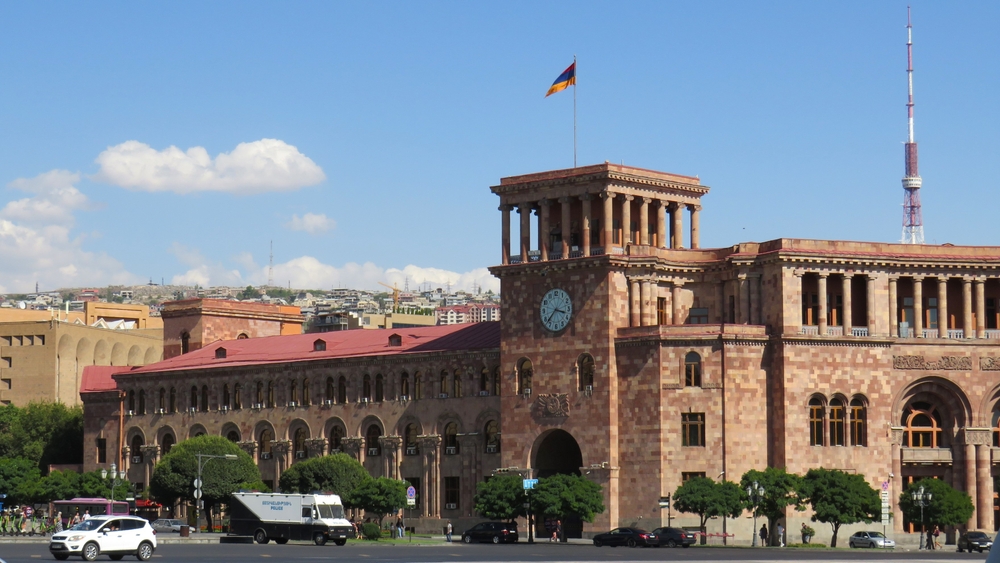
On June 7, Armenian Prime Minister Nikol Pashinyan’s Civil Contract party won the country’s parliamentary elections with just under 50 percent of the vote, enough under Armenia’s electoral system to govern alone with a comfortable majority. The nearest challenger, the Strong Armenia bloc fronted by Russian-Armenian billionaire Samvel Karapetyan, trailed near 23 percent, and every opposition force that cleared the threshold campaigned on some version of repairing ties with Moscow. Civil Contract cast the vote as a choice between a return to Russia’s orbit and a more independent Armenia drawn toward the West, and the electorate sided with the latter. Yet the win alone will not seal Armenia’s fate. The country must still pass the constitutional change widely seen as the final barrier to normalization with Azerbaijan and Turkey, and Pashinyan’s victory does not mean Russia will quietly concede a country it has dominated for two centuries.
BACKGROUND:
Armenia under Pashinyan has moved steadily away from Russia, above all since the 2020 defeat to Azerbaijan in the Second Karabakh War, a forty-four-day conflict that cost Yerevan roughly three-quarters of the territory Armenian forces had held since the early 1990s. The remainder of Karabakh fell in September 2023, when Azerbaijan retook the enclave and more than one hundred thousand ethnic Armenians fled. Out of that collapse Pashinyan built the vision he calls “Real Armenia” versus “Historic Armenia”: the argument that unless the country relinquishes irredentist claims on its neighbors, it will never enjoy genuine independence.
Pashinyan is often cast as the ideological successor to Armenia’s first president, Levon Ter-Petrosyan, who late in his tenure pushed for a settlement with Azerbaijan to end Armenia’s isolation and strip Russia of its ability to leverage the conflict. He warned, almost prophetically, that Armenia would one day be forced to ask for what it was then rejecting and would not receive it, “as it has happened more than once in our history.” That push cost him his office and triggered the rise of the Karabakh-born politicians who ruled until the Velvet Revolution brought Pashinyan to power in 2018. Ter-Petrosyan was right too early, and Armenia paid for it in 2020.
Pashinyan, who early in his premiership pushed for unification with Karabakh, reversed course entirely after the war, concluding that the only way forward was a deal with the stronger party. That trajectory produced the breakthrough of August 8, 2025, when Trump hosted Pashinyan and Azerbaijani President Ilham Aliyev at the White House, where the two leaders initialed a peace agreement and committed to a U.S.-brokered connectivity project across southern Armenia.
One obstacle remains, and it is constitutional. Armenia’s constitution, through a preamble invoking the 1990 Declaration of Independence and, with it, the 1989 act of “reunification” with Karabakh, still carries an implicit claim to territory that the entire international community—Armenia included—recognizes as Azerbaijani, and over which Baku reestablished full control in 2023. Removing that language is less an Azerbaijani demand than a load-bearing element of the peace process itself: so long as a founding document lays claim to a neighbor’s recognized land, the conflict cannot be considered definitively closed.
IMPLICATIONS:
The step is not the aberration its critics suggest. Other democracies have rewritten founding texts to settle territorial disputes: Ireland surrendered its constitutional claim to Northern Ireland by referendum in 1998 under the Good Friday Agreement, and a reunifying Germany renounced its claims east of the Oder-Neisse line to normalize relations with Poland. What makes Armenia’s case hard is procedure and politics, not principle. Its Constitutional Court has ruled the preamble immutable, so the only path is an entirely new constitution, ratified by national referendum. Civil Contract has the votes, and a draft shorn of the preamble was finalized in March 2026. The referendum, expected around 2027, is the real test, and Pashinyan’s task is to sell it at home as the completion of the peace rather than a capitulation to it. Clear that hurdle, and Armenia gains overland access to Europe and Central Asia.
Moscow, however, will not concede, and recent reporting shows how much it was willing to spend even as its war in Ukraine strained its resources. OCCRP traced an influence operation, through leaked documents, to Russia’s Social Design Agency—already sanctioned in Washington, London, and Brussels—working under the direction of the Presidential Administration. The agency ran a dedicated outlet aimed at Armenian dual citizens living in Russia, a bloc its own planning documents called potentially decisive, blending fabricated scandals with AI-generated content. The Insider identified the officials managing the Armenia portfolio and the officers dispatched to Yerevan, alongside a plan to bus Russian Armenians in to swing the result.
The influence campaign ran in parallel with economic coercion. At an April Kremlin meeting, Putin told Pashinyan that Armenia could not belong to both the EU and the Russia-led Eurasian Economic Union, citing discounted gas as leverage. Moscow then restricted imports of Armenian produce, flowers, mineral water, and alcohol on pretextual grounds and threatened to scrap the 2013 agreement guaranteeing duty-free gas, oil, and diamonds. At the Union’s summit in Astana in late May, Putin invoked the “Ukrainian scenario” and demanded that Yerevan choose. Armenia’s own history supplies a darker warning: in October 1999, gunmen stormed the National Assembly and killed Prime Minister Vazgen Sargsyan and Speaker Karen Demirchyan, whose reformist coalition had just sidelined then-President Kocharyan, who consolidated power in the aftermath—a reminder that an inconvenient reform government can be removed by means other than the ballot box. Russia retains real leverage over Armenia’s economy and a meaningful share of its population, and it has now demonstrated its capacity to run sophisticated active measures inside the country.
Against that pressure, U.S. engagement has been unprecedented. In February, JD Vance became the first sitting U.S. vice president to visit Armenia, advancing a civil nuclear deal and offering Yerevan a place in a U.S.-led critical minerals bloc. In late May, Secretary of State Marco Rubio signed a strategic partnership charter and the corridor framework in Yerevan, and days later Trump issued his “complete and total endorsement” of Pashinyan—the first time a U.S. president has openly backed a leader squarely within Russia’s traditional sphere. The centerpiece is the Trump Route for International Peace and Prosperity (TRIPP), a roughly twenty-seven-mile corridor through Armenia’s Syunik province that would link the main body of Azerbaijan to its Nakhchivan exclave and onward to Turkey, built and operated by a development company in which the U.S. holds 74 percent for an initial forty-nine-year term. Passage of the constitutional change would give Washington its strongest position in the South Caucasus since independence and, through TRIPP, a chokepoint of the Middle Corridor just as securing non-Chinese supply lines for critical minerals has become a first-order priority.
CONCLUSIONS:
Armenia’s voters made the choice Civil Contract asked of them and handed the U.S. a strategic opening that did not exist a year ago. But an election is not a settlement. The referendum still lies ahead, carrying a real chance of failure, and Russia has shown it will spend, subvert, and coerce to keep Armenia within its grip; it will not stop because one vote went against it. For Washington, the work is beginning rather than ending. The endorsements and signing ceremonies were the easy part. Converting them into a durable foothold means seeing the constitutional process through, hardening Armenia against the next wave of Russian active measures, and breaking ground on TRIPP before the window closes. Pashinyan has staked his country’s future on the West, and the U.S. has every reason, and a narrowing amount of time, to ensure that bet pays off.
AUTHOR’S BIO:
Joseph Epstein is the Director of the Turan Research Center, a Senior Fellow at the Yorktown Institute, an Expert at the N7 Foundation, and a Research Fellow at Bar-Ilan University’s Begin-Sadat Center for Strategic Studies.
Pashinyan's Victory And Armenia's Geopolitical Choice
By Irakli Laitadze
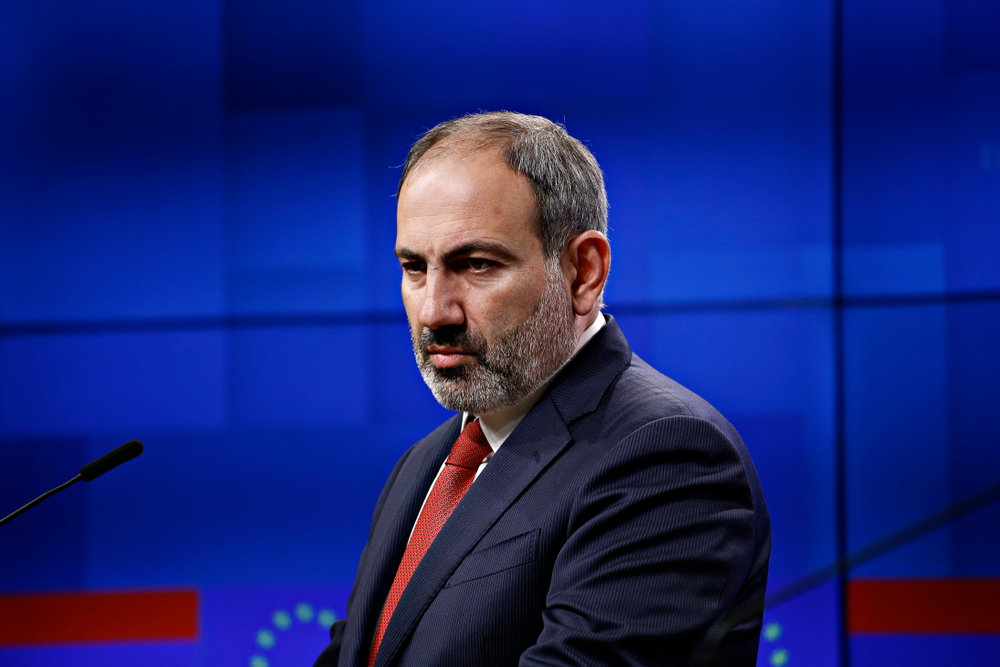
On June 7, Armenia held general elections with significant implications for both the country and the South Caucasus. Incumbent Prime Minister Nikol Pashinyan’s Civil Contract party won 49.81 percent of the vote. Although falling short of a majority, the result still enables Pashinyan to form and lead the new government. The victory of Civil Contract is not merely an outcome of domestic politics. It signifies a rupture with Russia’s sphere of influence and the institutionalization of a pro-Western course. The collapse of the pro-Russian opposition, despite unprecedented pressure from Moscow, indicates that Armenian citizens made a strategic choice in favor of genuine sovereignty and European integration. This choice is likely to produce long-term changes not only in Armenia but also in the security architecture of the South Caucasus.
BACKGROUND:
Armenia approached the 7 June elections amid intense geopolitical turbulence. The country stood at a crossroads between two incompatible trajectories: deeper Euro-Atlantic integration or a return to Russia’s sphere of influence. Understanding this choice requires examining developments in the recent past.
Following its defeat in the 2020 Karabakh War, Armenia completely lost control of Nagorno-Karabakh in September 2023. The country was confronted with a harsh reality: Russia, its ally and partner within the Collective Security Treaty Organization (CSTO), failed to defend Armenia during the conflict. As a result, Prime Minister Pashinyan’s government intensified the already ongoing process of deepening ties with the EU and the U.S. In March 2026, the Armenian parliament adopted a bill initiating the process of accession to the EU. Consequently, the elections effectively became a referendum on Armenia’s foreign policy orientation and security strategy.
Russia responded with increased pressure. The election campaign was effectively transformed into an open confrontation between Moscow and Yerevan. Russian officials publicly warned that continued pursuit of a pro-Western course could expose Armenia to a scenario similar to that experienced by Ukraine.
The regional dimension is equally important. The South Caucasus is a region where the interests of Russia, Turkey, Iran, the U.S., the EU, and increasingly China intersect. Armenia has traditionally been a stronghold of Russian influence in the region: Russian forces are stationed at the 102nd Military Base in Gyumri, an aviation component is based at Erebuni Air Base, and Armenia remains a member of the CSTO. Yerevan’s drift away from Moscow represents more than the loss of an ally; it is a strategic setback that could reshape the regional balance of power. This explains why the stakes were far higher than those of a regular parliamentary election.
IMPLICATIONS:
Russia’s attempt to influence the election outcome was not only unsuccessful but also counterproductive. In addition to extensive use of bots, disinformation, and fake news, reports suggest that Moscow was covertly preparing operations aimed at preventing Pashinyan’s re-election, allegedly including scenarios involving his physical elimination.
Russian economic pressure was systematic and sustained. Moscow banned imports of Armenian Jermuk mineral water, halted sales of Armenian brandy and wine, and reduced imports of meat and fish products. On the eve of the elections, Russia sent an official letter signaling its intention to suspend exports of gas, oil, and diamonds. Rosselkhoznadzor, Russia’s federal veterinary and phytosanitary agency, also banned imports of Armenian tomatoes, cucumbers, potatoes, and dried fruits. To influence the vote, plans were reportedly discussed to organize travel to Armenia for around 100,000 Russia-based Armenians.
The pro-Russian camp was represented by two key figures: Samvel Karapetyan and Ruben Vardanyan. Both embodied an alternative to Armenia’s Western-oriented course. Karapetyan, a Russian-Armenian billionaire and leader of the Strong Armenia electoral bloc, lived in Moscow until last year and, in addition to Armenian citizenship, held Russian and Cypriot citizenship. He allegedly maintains links with Russia’s Federal Security Service (FSB). Since June 2025, Karapetyan has been under house arrest on charges of encouraging the seizure of state institutions. Moscow openly demanded his release and participation in the parliamentary elections, turning the issue into a political instrument of pressure on Yerevan.
Another key figure was Ruben Vardanyan, a Russian-Armenian billionaire who left Moscow to become State Minister of the self-proclaimed Republic of Nagorno-Karabakh. Arrested by Azerbaijani authorities while leaving Nagorno-Karabakh through the Lachin Corridor, he is currently serving a prison sentence in Azerbaijan (Meduza). Vardanyan became both a symbol of the lost Armenian Karabakh and a reminder of the failure of the pro-Russian course, which ultimately provided Armenia with neither security nor genuine independence.
The election results reflected the Armenian public’s increasingly negative attitude toward Russia. Samvel Karapetyan’s Strong Armenia alliance received 23.29 percent of the vote, while the Armenia bloc, led by former President Robert Kocharyan, a veteran of the First Nagorno-Karabakh War and a prominent advocate of close ties with Moscow, won 9.93 percent. Combined, the main pro-Russian forces secured only about two-thirds of the support received by Pashinyan’s Civil Contract party.
Western countries, particularly the U.S., expressed unusually strong support for Nikol Pashinyan. On May 27, U.S. President Donald Trump publicly endorsed Pashinyan on Truth Social. The previous day, U.S. Secretary of State Marco Rubio and Armenian Foreign Minister Ararat Mirzoyan signed several bilateral cooperation agreements, including a Comprehensive Strategic Partnership Charter. On June 4, following a telephone conversation with Pashinyan, European Commission President Ursula von der Leyen announced that Brussels was preparing additional support measures for Armenia, including €50 million in financial assistance.
The 8th Summit of the European Political Community (EPC) was held in Yerevan on 4 May 2026, with the participation of Ukrainian President Volodymyr Zelensky. The event served as a clear signal of Armenia’s emerging European orientation and identity. Almost simultaneously, Turkey partially lifted the trade restrictions on Armenia that had been in place since 1993. The easing of this economic embargo marks a significant step toward the normalization of Armenian–Turkish relations and has the potential to reshape the region’s economic architecture.
A stable, pro-Western Armenia would be better positioned to finalize a peace agreement with Azerbaijan and secure the full lifting of Turkey’s long-standing economic blockade. Under such circumstances, Armenia’s withdrawal from the CSTO could become a realistic prospect in the near future. This step would deprive Russia of the principal legal framework underpinning its military presence in Armenia, further accelerating the country’s geopolitical reorientation.
Armenia is expected to continue developing its relations with the EU while maintaining membership in the Eurasian Economic Union, as confirmed by Prime Minister Pashinyan. This reflects tactical pragmatism rather than an ideological compromise: Armenia remains dependent on Russian gas imports and on the large Armenian diaspora residing in Russia. Nevertheless, the country’s strategic orientation toward Europe appears to have been firmly established.
CONCLUSIONS:
The elections of 7 June may prove to be a point of no return in the history of post-Soviet Armenia. Despite political pressure, economic coercion, and extensive Russian involvement, Armenian voters endorsed a genuinely sovereign choice and reaffirmed the country’s commitment to a pro-Western path of development.
Russia suffered a strategic defeat, as neither Karapetyan nor Kocharyan succeeded in challenging the pro-Western majority of Armenian voters. The Kremlin’s unprecedented pressure, including threats of a “Ukrainian scenario” and the use of economic coercion, failed to weaken Nikol Pashinyan and his supporters. Instead, these measures contributed to their further mobilization and strengthened Pashinyan’s image as a defender of Armenian sovereignty and statehood.
The electoral victory of Civil Contract and its parliamentary majority provide Armenia’s pro-European course with a clear democratic mandate to advance further along the path of European integration.
Armenia is entering a phase of profound transformation in its security architecture, moving from dependence on Russia toward a more diversified and multilateral security framework. This realignment is likely to reshape not only Armenian domestic and foreign policy but also the broader balance of power in the South Caucasus. For the first time in the post-Soviet era, Armenia, and, to a lesser extent, the wider region, is beginning to move beyond the logic of Russian dominance. The date of June 7, 2026, may be remembered as the day Armenia chose its own future.
AUTHOR’S BIO:
Irakli Laitadze is an Adjunct Professor at Ilia State University (Tbilisi, Georgia) and Senior Fellow of the think-tank EU Awareness Centre (Brussels). He was previously a career diplomat, serving as a senior Counsellor in the Mission of Georgia to the EU and Director of the EU Political Department, Ministry of Foreign Affairs of Georgia. After his diplomatic service, he was the CFO in GMT Hospitality and CEO of Publishing House Artanuji. He holds degrees from Tbilisi State University, the Diplomatic School of Madrid (Diploma), and Cambridge University (MBA), and a Ph.D. (Magna cum laude) from Tbilisi Free University.
Eurasian Economic Union Summit: The Limits Of Geopolitical Integration
By Farkhod Tolipov
On May 29, 2026, the Supreme Eurasian Economic Council convened in Astana, Kazakhstan, bringing together representatives of the five Eurasian Economic Union (EAEU) member states and one observer state. Armenia was represented by its Deputy Prime Minister rather than the Prime Minister, while observer Uzbekistan was represented at the highest level by its President. Although the summit followed a largely routine agenda, discussions were overshadowed by speculation regarding Armenia’s potential withdrawal from the Union. In contrast, Uzbekistan maintained its traditionally supportive stance toward Eurasian integration. These developments suggest that the EAEU may have reached the limits of its current institutional composition and geopolitical configuration.

BACKGROUND:
The EAEU, established in 2015, succeeded the Eurasian Economic Community (EAEC), which existed from 2001 to 2014. Both organizations were founded with the objective of creating an economic foundation for deeper integration among the former Soviet republics. They emerged within the broader framework of the Commonwealth of Independent States (CIS), established in 1991 following the dissolution of the Soviet Union. While the USSR consisted of 15 union republics, the CIS began with 12 member states and has since contracted to eight. The EAEC comprised six member states, whereas the EAEU currently includes five.
When the CIS was established, many experts and politicians described it as a framework for the “peaceful divorce” of the former Soviet republics. In retrospect, this assessment appears largely correct. Rather than promoting deeper integration, the CIS, the EAEC, and the EAEU have experienced gradual contraction and persistent disagreements. In the context of Russia’s war against Ukraine, Moscow has sought to preserve the remaining cohesion of this declining integration project. As part of these efforts, it introduced so-called informal meetings of EAEU heads of state. This is the backdrop for the May 2026 EAEU summit in Astana.
The EAEU summit in Astana coincided with Vladimir Putin’s second state visit to Kazakhstan. Observers focused less on the outcomes of the visit than on President Kassym-Jomart Tokayev’s remarks during the official welcoming ceremony. Tokayev described Russians and Kazakhs as brotherly nations sharing a common history, cultural traditions, and mentality. Such a warm reception for a leader conducting a war against Ukraine and widely criticized by the international community may negatively affect Kazakhstan’s international reputation.
While Armenia was represented by its Vice Prime Minister, the summit was attended by the presidents of the four other EAEU member states as well as Uzbekistan. The agenda was largely routine, focusing on logistics, digitalization, free trade, and artificial intelligence. Beyond these issues, the leaders of the four member states adopted a special statement concerning Armenia, expressing concern over its possible withdrawal from the EAEU and its aspirations for EU membership. The statement was delivered to the Armenian Vice Prime Minister, who reaffirmed his country’s intention to remain in the EAEU while safeguarding its national interests and respecting those of the other member states.
President Putin emphasized the incompatibility of simultaneous membership in the EAEU and the EU and warned Armenia of the economic consequences of leaving the EAEU. His remarks, resembling an ultimatum, amounted to a clear signal that Russia would reconsider existing trade and economic arrangements with Armenia should it withdraw from the Union. This position once again highlighted the predominantly Russia-centered nature of the EAEU, rather than a genuinely multilateral integration framework among equal members. In contrast, Uzbek President Shavkat Mirziyoyev reaffirmed that closer cooperation with the EAEU remains a key foreign policy priority for Uzbekistan.
IMPLICATIONS:
The EAEU summit in Astana took place in a complex geopolitical setting. Earlier, on May 15, Kazakhstan hosted an informal summit of the Organization of Turkic States (OTS) in Turkistan. Among other issues, OTS leaders discussed cooperation in artificial intelligence and digitalization, the same topics featured on the EAEU agenda. This overlap raises questions about the compatibility of integration initiatives pursued by the two organizations. It remains unclear how AI and digitalization strategies developed within the potentially competing frameworks of the OTS and the EAEU can coexist.
The summit was preceded by Donald Trump’s visit to China and Putin’s subsequent visit, both demonstrating renewed geopolitical activism. For Central Asian states, these events underscored the significance of the US–Russia–China geopolitical triangle, whose rivalry they observe with growing concern. Against this backdrop, the EAEU summit of “five minus one” member states appeared overshadowed by broader great-power competition.
The EAEU summit in Astana was also preceded by a series of high-profile diplomatic initiatives by Uzbekistan. In April, Saida Mirziyoyeva, Head of the Presidential Administration, visited Washington, D.C., for the launch of the American–Uzbek Business and Investment Council. On May18, she traveled to London, where she met British officials, international investors, and representatives of the London Stock Exchange following the IPO of the Uzbekistan National Investment Fund (UzNIF). On May 24, she visited New Delhi and held talks with U.S. Secretary of State Marco Rubio on trade and investment cooperation. These developments reflected Uzbekistan’s active engagement with Western partners in the weeks preceding the EAEU summit.
On April 15, President Mirziyoyev received a Russian delegation led by Sergey Kiriyenko, First Deputy Chief of Staff of the Presidential Administration and former head of Rosatom. According to official reports, the talks focused on implementing previously reached agreements and deepening the Uzbek–Russian strategic partnership and alliance. Against the backdrop of Uzbekistan’s intensive diplomatic engagement with Western partners, the EAEU summit in Astana appeared relatively modest and somewhat ad hoc. This reflected Russia’s preference for advancing its interests through bilateral relations rather than through the Union’s multilateral framework.
Rather than presenting itself as a dynamic and cohesive economic bloc, the EAEU revealed its geopolitical dimension. During the summit, Putin suggested that developments in Armenia could follow a trajectory similar to that of Ukraine. While such a scenario appears unlikely, this rhetoric may prove counterproductive. Russian pressure on Armenia is likely to deepen anti-Russian sentiment among Armenians and further strengthen the country’s orientation toward Europe.
For Central Asia, regional integration is challenged by Russia’s continuing geopolitical ambitions. While the EAEU has experienced contraction, regional cooperation in Central Asia is expanding, exemplified by Azerbaijan’s accession to the Community of Central Asia last year. Thus, while Armenia and Georgia seek closer integration with the EU, Azerbaijan strengthens its role within the Central Asian regional framework. In this evolving geopolitical environment, the OTS gains a new opportunity to emerge as a viable alternative to the EAEU.
CONCLUSIONS:
Zbigniew Brzezinski once predicted that the EAEU would struggle to survive beyond 10–20 years, arguing that its ideological foundation, Eurasianism, was both outdated and geopolitically unsustainable. This ideology has found limited resonance in Central Asia and other former Soviet republics. From this perspective, the EAEU masks a tacit divergence between its member states and an increasingly assertive Russia.
The EAEU seems to have reached its peak in composition and geopolitical design. It becomes quite obvious that its makeup can be only five members or even less, and that the EAEU is losing its attractiveness. It looks like another “C5” (to use the Central Asian “C5+1” formula), however, it would become a “C5-1” if Armenia should withdraw, possibly returning to “C5” if Uzbekistan would join. This again underscores the geopolitical nature of the EAEU and the limited attractiveness of Eurasianism. Central Asia should take note of Russia’s ultimatum to Armenia and its increasingly belligerent posture toward former Soviet republics.
In November 2025, the 7th Consultative Meeting of Central Asian Heads of State was held in Tashkent, where participants agreed to transform the Consultative Meetings into the Community of Central Asia (CCA). Azerbaijan became a full member of the new organization. The 8th summit, expected to take place in Turkmenistan this year, will be the first meeting of the newly established Community. However, the membership of Kazakhstan and Kyrgyzstan in the EAEU, and Uzbekistan’s observer status, risk reducing the CCA to a largely symbolic project. As a result, the concept of the CCA remains vague, its institutional model underdeveloped, and its future trajectory uncertain.
AUTHOR’S BIO:
Dr. Farkhod Tolipov holds a PhD in Political Science and is Director of the Research Institution “Knowledge Caravan”, Tashkent, Uzbekistan
Visit also