The First Phase of the TAPI Gas Pipeline: From Serhetabat, Turkmenistan to Herat, Afghanistan
By Vali Kaleji
The construction of the first phase of the Turkmenistan–Afghanistan–Pakistan–India Gas Pipeline (TAPI) gas pipeline constitutes a key component of the Taliban's broader strategy to revive significant energy transfer and transit projects that were suspended following their return to power. The successful implementation of these initiatives is expected to enhance the internal legitimacy of the Islamic Emirate of Afghanistan. However, unlike the preceding two decades, the leadership of Pakistan and India have not participated in the construction of the first phase of the TAPI gas pipeline. Adopting a pragmatic and incremental approach, the Taliban leadership has chosen to advance this energy transfer project in collaboration with Turkmenistan in a phased manner. It appears that Pakistan and India have cautiously opted to wait and watch regarding their involvement in the TAPI gas pipeline.
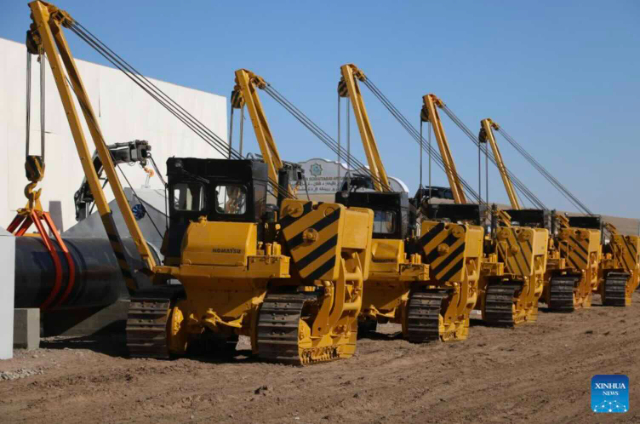
BACKGROUND: The transfer of Turkmenistan’s gas resources to Afghanistan, Pakistan, and India has faced numerous challenges over the past three decades and remains unimplemented. This initiative has been referred to by various names over time, including “Trans Afghan” (1995), “Consortium of Central Asia Gas Pipeline, CentGas” (1997), “Trans-Afghan Gas Pipeline, TAGP” (2002), and TAPI (2010). These projects proposed the construction of a 1,814 kilometer pipeline to transport natural gas from the Galkynysh gas field in Turkmenistan, the world’s second-largest gas field, through Afghanistan and Pakistan to India. The Afghan section of the pipeline, spanning 816 kilometers, will traverse the provinces of Herat, Farah, Nimroz, Helmand, and Kandahar. The pipeline will enter from Quetta in Balochistan and pass through Dera Ghazi Khan, Multan and Fazilka, a city at Indian border 150 kilometers from Multan. From Fazilka, the pipeline will enter India.
The pipeline was designed with an estimated annual transmission capacity of 33 billion cubic meters (bcm). It will supply 5 percent of the gas to Afghanistan, 47.5 percent to Pakistan, and 47.5 percent to India during its 30-year operational period. Afghanistan will receive 500 million cubic meters of gas for the first decade, 1 bcm in the second decade, and 1.5 bcm in the third decade.
To implement the TAPI pipeline project, Afghanistan’s President Ashraf Ghani, Turkmenistan’s President Gurbanguly Berdimuhamedov, Pakistan’s Prime Minister Nawaz Sharif, and India’s Vice President Hamid Ansari convened in 2015, in Turkmenistan’s remote Karakum Desert, to inaugurate the proposed pipeline. However, the construction was hindered by several factors, including financial constraints, insecurity in Afghanistan, and the terrorist activities of groups such as the Taliban, ISIS, and Al-Qaeda. Additionally, persistent tensions between Afghanistan and Pakistan, as well as between Pakistan and India, further obstructed the project’s progress.
A decade later, on September 10, 2024, the construction of the Serhetabat-Herat section of TAPI was inaugurated on the border of Turkmenistan and Afghanistan. The ceremony was attended by Turkmenistan’s President Serdar Berdimuhamedov and Chairman of the Halk Maslahaty, Gurbanguly Berdimuhamedov, as well as the Acting Chairman of the Cabinet of Ministers of Afghanistan, Mullah Mohammed Hasan Akhund.
Unlike the earlier inauguration, the leaders of Pakistan and India were notably absent from this event. The ceremony marked the commencement of TAPI’s first phase, spanning from Serhetabat (formerly Gushgy) in Turkmenistan to Herat in Afghanistan. The subsequent three phases are planned to extend the pipeline from Herat to Helmand, from Helmand to Kandahar, and finally from Kandahar to the Pakistan border.
Adopting a pragmatic and phased approach, the Taliban leadership has chosen to advance the TAPI project in collaboration with Turkmenistan in four distinct stages. This incremental strategy enables the Taliban regime to demonstrate its political resolve, operational capacity, and ability to ensure the security of the project to Turkmenistan, Pakistan, and India.
Over the past two years, the Taliban has achieved significant milestones, including the completion of the first phase of the TAP-500 energy system project (Turkmenistan-Afghanistan-Pakistan), the inauguration of the Herat Noor-ul-Jihad Substation and Turkmenistan electricity transmission project, the opening of a 177-meter railway bridge on the Serhetabat–Torghundi railway at the Turkmenistan-Afghanistan border, the initiation of the Shatlyk-1 gas compressor station construction at the Shatlyk field in Mary Province, the launch of a fiber-optic communication line along the Serhetabat-Herat route, and the commencement of the 22-kilometer Torghundi-Sanabar railway construction, marking the first segment of the Torghundi-Herat railway.
These accomplishments have likely bolstered the Taliban’s confidence as they proceed with the implementation of the first phase of TAPI.
IMPLICATIONS: The project is a critical element of the Taliban’s broader strategy to revive significant energy transfer and transit projects, including CASA-1000 (the Turkmenistan-Afghanistan-Pakistan electricity transmission line), the Lazorde project (linking Afghanistan, Turkmenistan, Azerbaijan, Georgia, and Turkey), the Chabahar port transit initiative (connecting Afghanistan, Iran, and India), and the Uzbekistan-Afghanistan railway route. These projects, which were suspended following the Taliban's return to power, are expected to generate employment and income for various provinces in Afghanistan, thereby bolstering the Taliban’s domestic legitimacy.
In line with these efforts, the Taliban declared a public holiday in Herat province on September 11, 2024, coinciding with the inauguration of TAPI’s first phase. This move appears to reflect a deliberate effort at public diplomacy or propaganda, aimed at showcasing the Taliban’s commitment to national development and infrastructure revival.
If TAPI becomes operational, it will create jobs for over 12,000 Afghans, and the project could generate approximately US$ 1 billion annually in revenue for the country. This gas supply will be crucial for meeting the energy needs of urban and rural areas, as well as supporting industrial and production centers in densely populated and strategically important regions such as Herat, Helmand, and Kandahar.
Furthermore, the successful implementation of significant energy transfer and transit projects, such as TAPI, holds the potential to strengthen the Taliban’s diplomatic and economic ties with neighboring countries. Such developments are particularly critical for the Taliban leadership, given its international isolation.
An important aspect of the TAPI project is the decision to construct its four phases without reliance on international financial aid. Both Turkmenistan and the Taliban recognize that, given the lack of international recognition of the Islamic Emirate of Afghanistan, securing financial assistance or loans from institutions such as the Asian Development Bank is not feasible. This constraint likely influenced the decision to proceed with the phased implementation of TAPI exclusively within Afghanistan, excluding the active participation of India and Pakistan at this stage.
The construction and operation of the pipeline are overseen by TAPI Pipeline Company Limited (TPCL), based in Dubai. TPCL is a joint venture between Turkmenistan, Afghanistan, Pakistan, and India, with each country holding a stake in the project. The state-owned company Turkmen Gas holds a dominant 85 percent share in TPCL, while the remaining 15 percent is equally distributed among Afghanistan, Pakistan, and India. Consequently, it is anticipated that TPCL will finance the construction of the four phases of the TAPI pipeline within Afghanistan.
Should the pipeline be extended to Pakistan and India, the financing strategy would likely involve not only allocating the respective shares of Pakistan and India from TPCL but also securing additional funding through financial institutions such as the Asian Development Bank to support the broader extension.
Another significant implication of TAPI, even if limited to its four phases within Afghanistan, is the increased diversification of Turkmenistan’s gas export destinations and routes. Over the past three decades, Turkmenistan has developed gas export pipelines along three primary routes: northern (Russia), eastern (China), and western (Iran and Turkey). The implementation of TAPI would establish a new southern route, enhancing Turkmenistan’s gas export network. This diversification is expected to strengthen Turkmenistan’s position in the regional gas market, providing the country with greater leverage and bargaining power in negotiations.
Additionally, Turkmenistan remains attentive to the dynamics of its competitors, particularly Iran. International sanctions imposed by the UN Security Council in the past, along with unilateral sanctions by the U.S. in recent years, have significantly curtailed Iran’s foreign investment, production, and export capacity. These sanctions have also stalled major gas transmission initiatives, most notably the Peace Pipeline (Iran-Pakistan-India). In this context, the successful implementation of TAPI could position Turkmenistan as a more reliable and influential player in the regional energy market, capitalizing on opportunities that competitors like Iran have been unable to pursue.
However, Turkmenistan will need to secure additional foreign investment to expand its gas production capacity to ensure a sustainable supply for its growing base of gas-consuming customers. The country’s ability to meet this challenge will be crucial as it seeks to maintain its role as a reliable energy supplier in an increasingly competitive regional and global market.
This challenge will become even more pronounced if Turkmenistan succeeds in implementing the Trans-Caspian Gas Pipeline project in collaboration with Azerbaijan, Turkey, and the European Union. Such a project, aimed at supplying gas to European markets, would further strain Turkmenistan’s production capacity. The increased demand would necessitate significant investments in infrastructure and technology to scale production while ensuring the reliability and sustainability of its gas exports across multiple routes and to diverse markets.
CONCLUSIONS: The full implementation of TAPI will hinge on several critical factors. These include the political will of the leaders of the four participating countries—Turkmenistan, Afghanistan under Taliban leadership, Pakistan, and India—along with the ability to ensure security throughout all stages of construction and operation. Particular attention must be given to mitigating threats from groups such as ISIS and Al-Qaeda. Additionally, effective operation and distribution of gas through rural and urban areas, as well as the mobilization of the substantial financial resources required for this ambitious project (estimated at US$ 7 to 8 billion), are essential for its success.
Moreover, the project must remain insulated from the complex and often contentious disputes between Pakistan, Afghanistan, and India. The successful completion of the current four phases of TAPI is seen as a critical test for the Taliban-led Islamic Emirate in demonstrating its capability to execute such a significant energy transfer initiative after three decades of delay.
Pakistan and India are seemingly opting to wait and watch to assess the feasibility and progress of the project under the Taliban’s stewardship. Should the Taliban successfully implement these initial phases, Pakistan and India can be anticipated to join efforts to extend the project further.
AUTHOR’S BIO: Vali Kaleji, based in Tehran, Iran, holds a Ph.D. in Regional Studies, Central Asian and Caucasian Studies. He has published numerous analytical articles on Eurasian issues for the Eurasia Daily Monitor, the Central Asia-Caucasus Analyst, The Middle East Institute and the Valdai Club. He can be reached at
This email address is being protected from spambots. You need JavaScript enabled to view it.
.
Russian Influence in Turkmenistan: Rapprochement or Pragmatism?
Slavomir Horak
January 19, 2024
Turkmenistan underwent a serious rapprochement with Russia in recent years, particularly after the establishment of a ruling tandem with Serdar Berdimuhamedow as a formal president and his father, Gurbanguly Berdimuhamedow, who retained significant influence in Turkmenistan’s domestic and foreign policy. Due to a few viable alternatives, Russia represents the balancing factor for Turkmenistan towards the increasing Chinese influence over the country and the principal supporter of the regime. On the contrary, Turkmenistan remains a loyal partner in the region for Russia, where the most significant players (Kazakhstan and Uzbekistan) expressed their cautious approach towards Russia's advance in Ukraine.

A New Spring for Caspian Transit and Trade
Svante E. Cornell and Brenda Shaffer
October 17, 2023
Major recent shifts, starting with the Taliban victory in Afghanistan and Russia’s war in Ukraine have led to a resurgence of the Trans-Caspian transportation corridor. This corridor, envisioned in the 1990s, has been slow to come to fruition, but has now suddenly found much- needed support. The obstacles to a rapid expansion of the corridor’s capacity are nevertheless considerable, given the underinvestment in its capacity over many years.

Decreasing Water Levels in the Caspian Sea: Causes and Implications
By Vali Kaleji
October 13, 2023
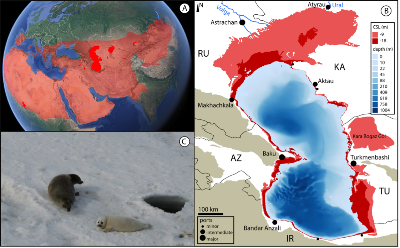
Various reports indicate that the water level of the Caspian Sea has decreased by one meter in recent years and could drop by 9 to 18 meters (30 to 59 feet) by the end of the 21st century. Although climate change contributes to this process, Russia’s construction of dams on the Volga River has played an important role in reducing the amount of water entering the Caspian Sea. This will have significant and serious implications, including a decline of the sea water level, a considerable retreat of the sea and increase of the land and coastal area especially in upstream countries (Russia and Kazakhstan), challenges to the operation of ports and shipping, as well as environmental consequences, particularly the drying of protected areas and wetlands.
Energy Crisis Places Turkmenistan in the Geopolitical Spotlight
By Natalia Konarzewska
March 10, 2023
Isolated but natural gas-rich Turkmenistan has recently become a subject of geopolitical competition owing to the energy crisis in Europe and Western energy sanctions imposed on Russia as a consequence of its invasion of Ukraine. During a mid-December 2022 tripartite meeting in Turkmenistan between the presidents of Turkmenistan, Azerbaijan and Turkey, Turkish president Recep Tayyip Erdogan sought to make the case for Ashgabat to join the Organization of Turkic States and to start exporting its gas via the Caspian Sea and Turkey to Europe. Turkmenistan, however, prefers to remain neutral and maintain positive relations with Moscow, which would be at risk if the country decided to export its gas to Turkey bypassing Russia. Moreover, Russia’s plans to divert its trade and gas export routes towards Asian markets potentially offers a prominent role for Turkmenistan.
Visit also