By Dmitry Shlapentokh
April 24, 2024
Recently, Kazakhstan’s President Kassym-Jomart Tokayev delivered a public address wherein he underscored the significance of the Golden Horde, also known as Ulus Jochi, to Kazakhstan. He emphasized that Kazakhstan stands as the true descendant of the Golden Horde, equating its historical importance to that of the Roman Empire. Tokayev emphasized the importance of ensuring international recognition of this fact. Additionally, he announced the commissioning of a comprehensive multi-volume history of Kazakhstan, with a dedicated volume specifically focusing on Ulus Jochi and its pivotal role in shaping Kazakhstan’s history. Tokayev’s recent revival of this ideology suggests that Kazakhstan, in stark contrast to Russia and implicitly other post-Soviet states, espouses principles of tolerance and peaceful coexistence.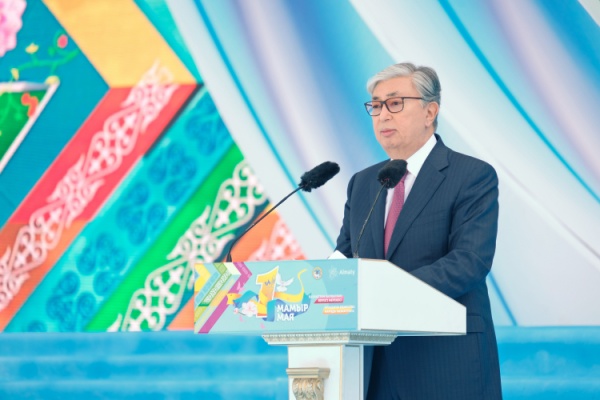
By Vali Kaleji
March 28, 2024
The development of military and defense relations between Azerbaijan and Pakistan and Armenia and India is an important consequence of the political arrangement and the balance of forces after the Second Karabakh War. However, Pakistan’s non-recognition of Israel has prevented Baku from forming a “quadruple alliance” with its three strategic allies, including Turkey, Israel and Pakistan. Armenia, after defeat in the war and amid dissatisfaction with its traditional ally Russia and the Collective Security Treaty Organization (CSTO), views India, France and Iran as new strategic options, however, Iran prefers Armenia to maintain its traditional and strategic relations with Russia. The tripartite cooperation between Armenia, Iran and India focus efforts on “soft balancing” (economic-transit) instead of “hard balancing” (military-security), against the tripartite ties of Azerbaijan, Turkey and Pakistan in the South Caucasus.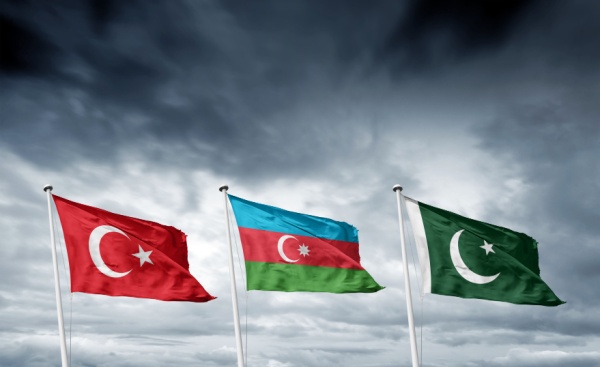
By Intigam Mamedov
March 21, 2024
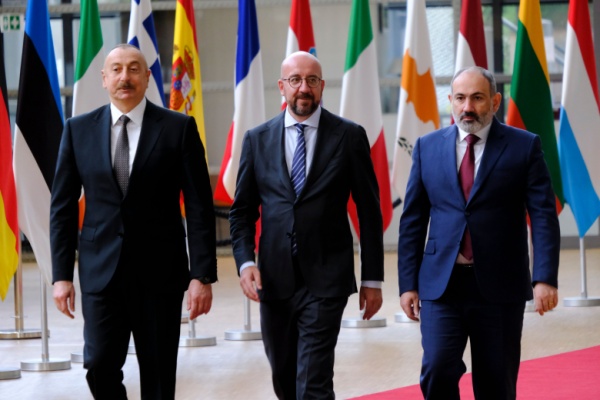
On February 13, 2024, a new border skirmish took place between Armenia and Azerbaijan, months after Baku regained its territories in Nagorno-Karabakh. While the sides accuse each other of provocations, such incidents could also lead to larger clashes. While a peace deal is needed in order to put an end to the decades-long conflict, reaching an agreement will take time. Meanwhile, to encourage it, both states should now focus on trust-building initiatives, particularly in the humanitarian, economic, and environmental areas. Such short-term initiatives have the potential to assist and stimulate the evolution of new narratives on peaceful coexistence – a challenging but vital task for current and future generations.
By Mehmet Fatih Oztarsu
February 27, 2024
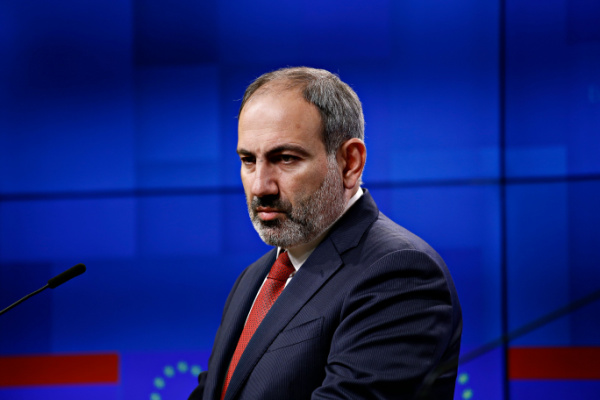
Armenian Prime Minister Nikol Pashinyan seeks a new path forward following Azerbaijan’s seizure of Nagorno-Karabakh and the radical shift in regional dynamics in the South Caucasus. His initiatives aim to revitalize Armenia and resolve longstanding issues, forging a new regional posture. However, domestic divisions and external challenges complicate his efforts. Azerbaijan has not responded to his calls for alternative cooperation while he remains skeptical of Azerbaijan’s overtures. Therefore, Pashinyan prefers to deal with Armenia’s domestic priorities and move carefully towards regional cooperation.
Feature Articles
|
Earlier Articles
|
|
Forums and Events |
Latest From the Turkey Analyst
|
Hot Topics
|
Most read this month
|




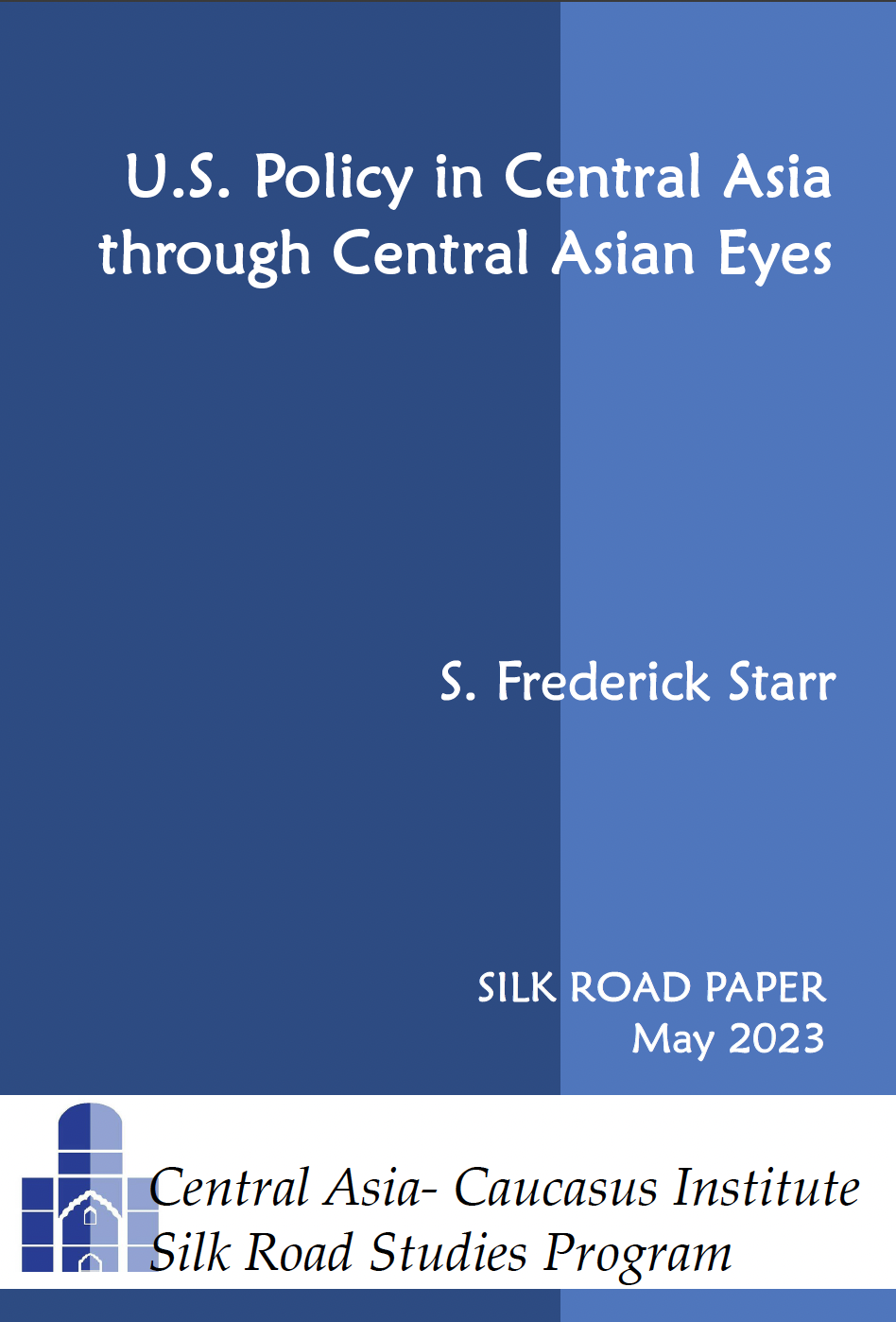 Silk Road Paper S. Frederick Starr, U.S. Policy in Central Asia through Central Asian Eyes, May 2023.
Analysis Svante E. Cornell, "Promise and Peril in the Caucasus," AFPC Insights, March 30, 2023.
Oped S. Frederick Starr, Putin's War In Ukraine and the Crimean War), 19fourtyfive, January 2, 2023
Oped S. Frederick Starr, Russia Needs Its Own Charles de Gaulle, Foreign Policy, July 21, 2022.
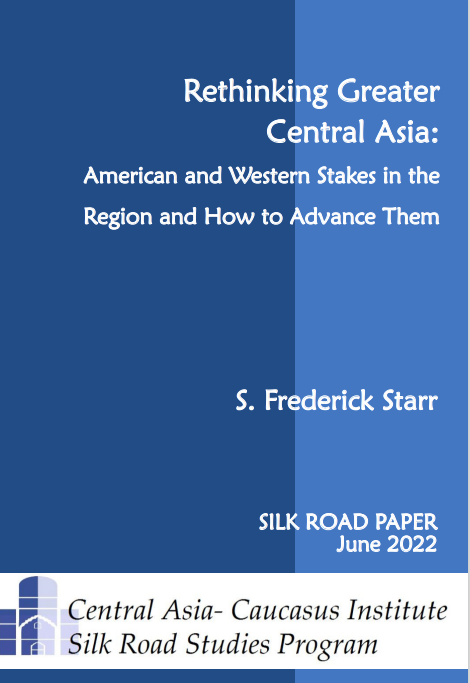 Silk Road Paper S. Frederick Starr, Rethinking Greater Central Asia: American and Western Stakes in the Region and How to Advance Them, June 2022
Oped Svante E. Cornell & Albert Barro, With referendum, Kazakh President pushes for reforms, Euractiv, June 3, 2022.
Oped Svante E. Cornell Russia's Southern Neighbors Take a Stand, The Hill, May 6, 2022.
Silk Road Paper Johan Engvall, Between Bandits and Bureaucrats: 30 Years of Parliamentary Development in Kyrgyzstan, January 2022.
Oped Svante E. Cornell, No, The War in Ukraine is not about NATO, The Hill, March 9, 2022.
Analysis Svante E. Cornell, Kazakhstan’s Crisis Calls for a Central Asia Policy Reboot, The National Interest, January 34, 2022.
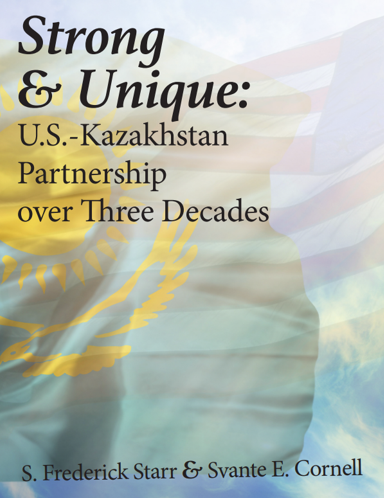 Book S. Frederick Starr and Svante E. Cornell, Strong and Unique: Three Decades of U.S.-Kazakhstan Partnership, Central Asia-Caucasus Institute, December 2021.
Silk Road Paper Svante E. Cornell, S. Frederick Starr & Albert Barro, Political and Economic Reforms in Kazakhstan Under President Tokayev, November 2021.
The Central Asia-Caucasus Analyst is a biweekly publication of the Central Asia-Caucasus Institute & Silk Road Studies Program, a Joint Transatlantic Research and Policy Center affiliated with the American Foreign Policy Council, Washington DC., and the Institute for Security and Development Policy, Stockholm. For 15 years, the Analyst has brought cutting edge analysis of the region geared toward a practitioner audience.
Sign up for upcoming events, latest news and articles from the CACI Analyst