Kadyrov, Moscow and Rohingya
By Emil A. Souleimanov & Huseyn Aliyev
October 24, 2017, the CACI Analyst
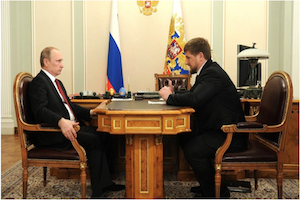
In late August, Chechnya’s ruler Ramzan Kadyrov issued several statements on his Instagram profile appealing to fellow Muslims to support publicly the case of persecuted Myanmar (Burmese) Muslims, Rohingya, while prompting Russian authorities to take an international stand on their behalf. Shortly thereafter, unapproved mass demonstrations, inspired or organized by Kadyrov, took place in downtown Moscow and Grozny, during which siloviki treated protesters unexpectedly gently. Kadyrov went so far as to make a controversial statement challenging Russia’s international stance on the issue. Kadyrov soon softened his tone, yet his appeals were unprecedented – even by the standards of Chechnya’s strongman. They outraged many in Russia, pointing to Kadyrov’s impunity not only for actions on the domestic and federal scenes, but increasingly also for meddling in Russia’s international affairs.
“CACI Analyst, February 19, 2014”
Putin Makes the Circassian Issue Part of Russia's Relations with the West
By Valeriy Dzutsev (the 19/02/2014 of the CACI Analyst)
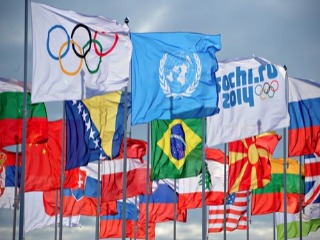
As the international community started to pay greater attention to the North Caucasus because of the Sochi Olympics, ethnic minorities’ complaints in the region significantly increased. In particular, the Circassians became highly vocal about their grievances. Given the authoritarian and increasingly nationalist regime in the Kremlin, the Russian government perceives the rise of activism among Circassians as a security threat. The Olympics served for Moscow as a certain type of litmus test that pointed to the areas of Russia’s vulnerability in the North Caucasus. Now, the aggrieved minorities and the central government appear to be entering a path of confrontation in already volatile region.
Moscow Takes Counterproductive Security Measures Ahead of Sochi
By Valeriy Dzutsev (the 22/01/2014 issue of the CACI Analyst)
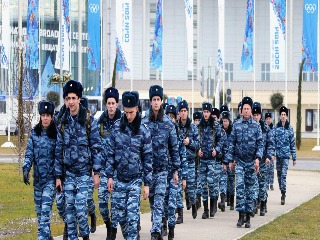
As the attacks of the North Caucasian insurgency appear to move closer to the region of the Winter Olympics in Sochi, the government further increases the security precautions. Apart from the failings of the Russian security services, the attacks highlight the growing support for the insurgents among the general population in the North Caucasus. Nearly extreme measures taken by Moscow to shield the Olympics from the North Caucasian insurgents further contribute to the isolation of this region from the rest of Russia and the rise of ethnic tensions. The situation around the Olympics looks increasingly odd as the sport event appears to be destined to take place in an area surrounded by a war zone.
Volgograd Bombings Demonstrate the Inability of Russia's Security Services
By Emil Souleimanov (the 08/01/2014 issue of the CACI Analyst)
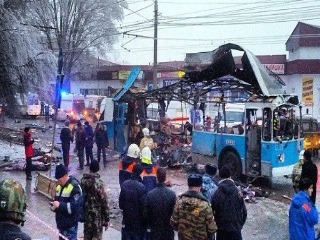
On the eve of the New Year's celebrations, two subsequent terrorist attacks hit Volgograd, located around 900 kilometers southeast of Moscow and around 650 kilometers northeast of Sochi. Leaving at least 34 dead and dozens injured, the Volgograd bombings raised questions regarding the ability of Russian intelligence and security services to properly anticipate and forestall terrorist attacks, and doubts about their capacity to ensure the security of the upcoming Winter Olympics. Additionally, the Volgograd bombings indicated a certain evolution of Russia's Jihadist underground that might have repercussions for the nation's security in the years to come.
Visit also




Staff Publications
 Silk Road Paper S. Frederick Starr, U.S. Policy in Central Asia through Central Asian Eyes, May 2023.
Analysis Svante E. Cornell, "Promise and Peril in the Caucasus," AFPC Insights, March 30, 2023.
Oped S. Frederick Starr, Putin's War In Ukraine and the Crimean War), 19fourtyfive, January 2, 2023
Oped S. Frederick Starr, Russia Needs Its Own Charles de Gaulle, Foreign Policy, July 21, 2022.
 Silk Road Paper S. Frederick Starr, Rethinking Greater Central Asia: American and Western Stakes in the Region and How to Advance Them, June 2022
Oped Svante E. Cornell & Albert Barro, With referendum, Kazakh President pushes for reforms, Euractiv, June 3, 2022.
Oped Svante E. Cornell Russia's Southern Neighbors Take a Stand, The Hill, May 6, 2022.
Silk Road Paper Johan Engvall, Between Bandits and Bureaucrats: 30 Years of Parliamentary Development in Kyrgyzstan, January 2022.
Oped Svante E. Cornell, No, The War in Ukraine is not about NATO, The Hill, March 9, 2022.
Analysis Svante E. Cornell, Kazakhstan’s Crisis Calls for a Central Asia Policy Reboot, The National Interest, January 34, 2022.
 Book S. Frederick Starr and Svante E. Cornell, Strong and Unique: Three Decades of U.S.-Kazakhstan Partnership, Central Asia-Caucasus Institute, December 2021.
Silk Road Paper Svante E. Cornell, S. Frederick Starr & Albert Barro, Political and Economic Reforms in Kazakhstan Under President Tokayev, November 2021.