Georgia’s Democratic Reversal: The Danger of an Unquestioned Consensus
By Ambassador David Dondua
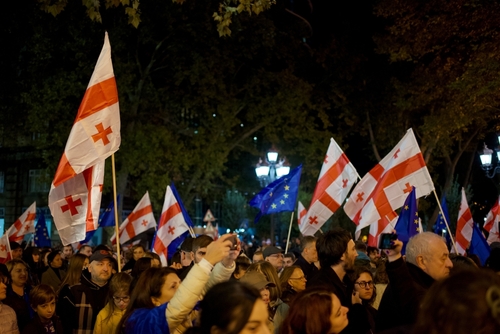
Georgia’s democratic backslide has shocked observers at home and abroad. Once a “beacon of democracy” and a frontrunner of European integration, the country has lost its standing within the European democratic family in a remarkably short time. While this shift may appear sudden, it reflects deeper vulnerabilities—lessons that matter not only for Georgia but also for other small states navigating similar geopolitical crossroads.
BACKGROUND:
The rapid erosion of Georgia’s democratic and pro-Western trajectory cannot be explained by a single decision, policy, or political figure. Rather, it is the result of a complex combination of factors. At the most general level, it reflects the success of a long-term Russian hybrid and cognitive operation against Georgian society, an operation that ultimately proved much more effective than the 2008 military invasion.
As a result of the August 2008 Russo-Georgian war, Russia occupied only 20 per cent of Georgia’s territory. In the decade that followed, however, Moscow achieved something far more consequential. Through sustained political influence, economic leverage, disinformation, and elite capture, it gradually penetrated Georgia’s state institutions. Government, parliament, the presidential administration, courts, security services, police, armed forces, and the foreign service all became vulnerable to influence. Most importantly, Russia succeeded in distracting the country from its European integration trajectory and sowing mistrust toward democratic reforms and Western aspirations. Strategically, this amounted to the cognitive occupation of the entire state.
Blaming this reversal solely on Russian hybrid attacks, the pro-Russian stance of the ruling Georgian Dream government, or the role of the de facto ruler, billionaire Bidzina Ivanishvili, would be too simple. The reality is more complex. Among the many political, social, and institutional factors that shaped Georgia’s vulnerability, one has remained largely unrecognized, rarely discussed, and almost entirely absent from public debate.
In the late 1980s, as the collapse of the Soviet Union became inevitable, Georgian society engaged in intense debates about the future of the independent state. Constitutional arrangements, models of governance, economic systems, currency, and even sporting affiliations were openly discussed. One issue, however, was never truly debated: the foreign policy orientation of independent Georgia.
On this question, there appeared to be complete consensus. Becoming part of the West was treated as self-evident—almost sacred. It was widely perceived as the fulfilment of centuries-long aspirations to align Georgia with Europe. No alternatives were discussed, not because they were examined and rejected, but because few dared to articulate them. In a diverse, multi-ethnic society that had lived under Russian rule for more than two centuries, it is unlikely that such alternatives were entirely absent. Yet for the next three decades, this unchallenged consensus shaped both Georgia’s foreign and domestic policy.
IMPLICATIONS:
From today’s perspective, this unquestioned consensus appears to have been a missed opportunity for deeper and informed societal consolidation. This observation should not be misunderstood as questioning Georgia’s European choice. The author firmly believes that the European path was and remains the right choice for Georgia. Yet accepting this choice without deep public reasoning, open discussion, or even heated debate left society ill-prepared to fully understand and defend it.
Georgian society is often characterized by emotional radicalism, reinforced by a lack of democratic traditions. This leaves limited space for critical reflection. As a result, key aspects of EU and NATO integration were rarely discussed in a fact-based and accessible way. Public support, therefore, remained largely emotional rather than knowledge-based.
This gap became visible whenever misinformation spread. Claims that EU regulations would ban or severely restrict traditional agricultural products, force the uprooting of vineyards—widely perceived as an attack on Georgia’s cultural heritage—or exclude most of local goods from European markets due to strict quality standards repeatedly triggered public outrage. Such narratives exposed how shallow public understanding often was, despite consistently high levels of declared support for European integration.
Insufficient effort was made to explain to citizens that compromise is inherent in joining any international organisation. Government officials and even NGOs promoting the EU and NATO integration often avoided discussing trade-offs and long-term costs. Citizens were rarely told that today’s difficulties are frequently the price of tomorrow’s benefits—choices that can only be made consciously by an informed society.
Following the adoption of the Deep and Comprehensive Free Trade Area (DCFTA), the state should have launched a large-scale educational effort to demonstrate how this instrument could be applied in practice, particularly for small entrepreneurs and rural communities. While some initiatives were undertaken, largely with donor support, they were insufficient. For many citizens, European integration remained an abstract promise rather than a lived experience.
A fundamental contradiction of Georgia’s post-independence politics is that all Georgian governments over the past three and a half decades have claimed to be pro-Western and have promised the population a European democratic future, including NATO membership. Even the current ruling party, Georgian Dream, publicly declared the same until recently. Yet in practice, the actions of all those governments, without exception, have often fallen short of democratic standards, at times even sharply contradicting them.
Against this backdrop, today, the ruling party has deliberately cast Europe as a convenient scapegoat for almost all of the country’s past and current difficulties, whether stemming from poor governance, institutional weaknesses, corruption, reform costs, or external developments beyond Georgia’s control. Georgian Dream has transformed ordinary challenges into a political weapon to erode public trust in democratic reforms and derail the country’s European path.
As noted above, in every election, including the watershed 2012 vote, virtually all political actors pledged a European future to voters; even marginal candidates openly backed or courted by the Kremlin used pro-Western rhetoric. Unlike in Ukraine, Moldova, or Armenia, where societies were exposed to competing geopolitical visions and, over time, could observe different policy orientations, compare outcomes, and distinguish between credible and non-credible strategic paths, Georgian voters were never offered a genuine choice. They were offered reassurance that the European path was uncontested and secure. This monopoly of a single geopolitical orientation meant that alternatives were neither seriously articulated nor openly debated. Paradoxically, the absence of pluralism later became a vulnerability: because the European choice was never collectively debated and consciously affirmed, it failed to generate a strong sense of public ownership.
Today, pro-Russian actors exploit this gap by asking: “Who decided that Georgia must choose Europe?” The ruling Georgian Dream has increasingly reinforced this narrative by claiming that the European course was imposed on Georgia by some phantom foreign forces.
At the same time, fully replacing Europe with Russia remains politically tricky in the short term, given prevailing public attitudes. Instead, the government has sought to cultivate the idea of “state neutrality” as an ostensibly safer alternative to Western integration, one that promises stability while allowing Georgians to preserve their traditions, identity, and way of life without external pressure. Packaged in this way, neutrality appears as a return to normalcy and sovereignty. Such a narrative can gain traction precisely because the European path was never thoroughly debated, internalised, and embraced on the basis of knowledge.
In reality, however, neutrality functions as a transitional narrative rather than a genuine option. Given Georgia’s geography, security environment and economic dependencies, let alone historical experience, neutrality is simply not workable. In practice, abandoning Western integration is the fastest route to renewed subordination to Russia and the gradual erosion of Georgian statehood.
CONCLUSIONS: Georgia’s democratic and geopolitical setback is not the result of abandoning Europe overnight. It is the consequence of failing to cultivate deep understanding, ownership, and resilience around the European choice over three decades. Strategic orientations cannot survive on consensus alone; they require constant explanation, public debate, and civic education.
For years, Georgia proudly cited overwhelming public support for European integration. Yet emotional endorsement without understanding is fragile. A society that genuinely comprehends how Western institutions function and what integration realistically entails is far more resilient to manipulation. In retrospect, 50 or even 40 per cent of firm, knowledge-based support would have been more durable than 80 per cent of symbolic approval. This underscores that the key to Georgia’s recovery lies not in numbers alone but in cultivating genuine understanding and ownership among citizens.
This moment, however, is not irreversible. What was insufficiently addressed in the past can still be corrected. Periods of crisis often force societies to replace inherited assumptions with conscious choices. Continued engagement by Georgia’s Western partners is therefore essential—not less, but more focused on education, communication, and societal resilience.
Europe has not disappeared from Georgia’s collective identity. If reinforced through knowledge rather than slogans, it can still serve as the foundation for democratic recovery and a sustainable return to the European path.
AUTHOR’S BIO: Ambassador David Dondua is a diplomat and political analyst. He serves as Chairman of the EU Awareness Centre, a Brussels-based think tank focused on European integration, democratic resilience, and countering hybrid threats in Eastern Europe and the South Caucasus.
Is a Tribunal for Kadyrov More Than Wishful Thinking?
By Marat Iliyasov
Ramzan Kadyrov, Kremlin-backed Chechen leader, faces serious allegations. A German NGO, the European Centre for Constitutional and Human Rights, accuses him of leading LGBTQ+ purges in Chechnya; Georgia alleged that he plotted journalist Giorgi Gabunia’s murder; while Ukraine accuses his forces of committing war crimes. Reports also link him to kidnappings, torture, and the murder of Chechen opposition figures and bloggers across Europe and Turkey. These accusations could place Kadyrov alongside internationally tried criminals such as former president of Serbia Slobodan Milošević or the Deputy Führer of the Nazi Party Rudolf Hess. But…, is this scenario plausible?
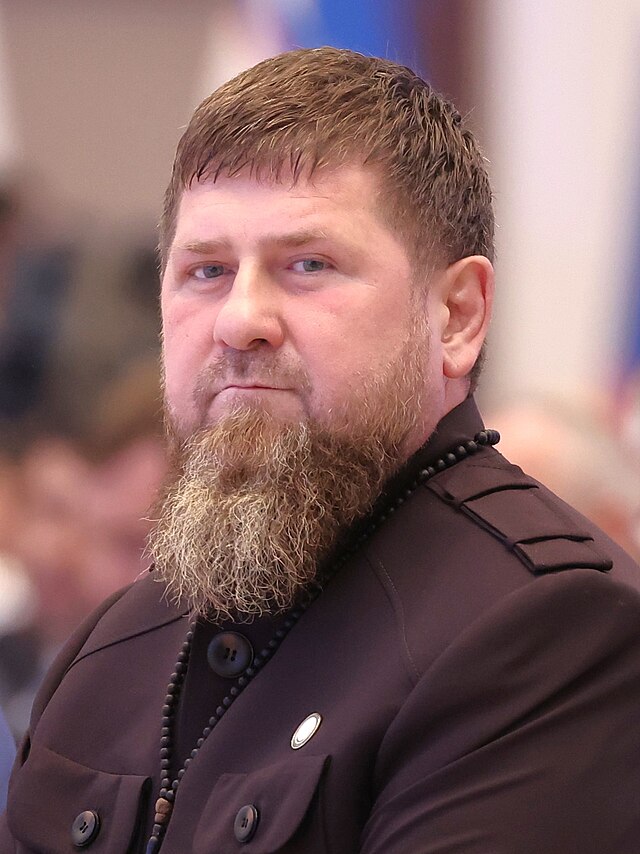
Photo source: tatarstan.ru
BACKGROUND: To begin with, it is important to examine how the International Criminal Court (ICC) and ad hoc tribunals are formed, who can submit a case to the ICC, and which individuals can be indicted.
The establishment of international tribunals and ICC are rooted in international law and the broader aim of creating a more just and accountable world. This development began after WWII, when military and political leaders from Nazi Germany and Imperial Japan were tried for their war crimes. These tribunals set a crucial precedent purported to halt crimes against humanity that concern the international community.
The Cold War (1946-1991) between the US and the USSR severely curtailed the enforcement of international justice. Crimes committed during this era often went unpunished because the perpetrators had the backing of these superpowers, which could effectively obstruct investigations or prosecutions via the UN Security Council. Without the willingness and cooperation of world powers and the countries involved, tribunals either could not be created or lacked enforcement mechanisms. For example, it took decades to try the Khmer Rouge’s crimes committed in 1970s in Cambodia. It became possible only when the Cambodian government finally supported the idea of establishing the Extraordinary Chambers in the Court of Cambodia (ECCC).
The fall of Communism in 1991 triggered more international armed conflicts and consequently war crimes. It also created new opportunities for international justice. The tribunals for former Yugoslavia, Rwanda, and Sierra Leone strengthened the possibility of prosecuting high-ranking officials for crimes against humanity. Notably, these courts succeeded in convicting former Serbia's President Slobodan Milošević and former Liberian President Charles Taylor—figures once deemed untouchable. These trials, same as the tribunals for Rwanda, Yugoslavia, and Liberia were made possible by key shifts in the internal power structures of these countries.
Even today, the willingness and collaboration of the domestic power structures remain the most important element in determining the feasibility of initiating a case. To prosecute Kadyrov, such cooperation would be required from Russia, which has consistently demonstrated its unwillingness to collaborate with the international bodies. Therefore, building a case against Kadyrov could potentially achieve only limited success, similar to the international tribunal for Lebanon. Established in 2009 to prosecute Hezbollah members for the assassination of Lebanon's Prime Minister Rafic Hariri in 2005, this special tribunal convicted and sentenced the identified culprits in absentia. This means that they can be punished only if captured, which renders this trial largely symbolic.
IMPLICATIONS: Various actors could theoretically initiate proceedings against Kadyrov, including the United Nations Security Council (UNSC), prosecutors from the International Criminal Court (ICC), national governments appealing for UN intervention, international organizations such as Amnesty International, and supreme courts of foreign countries invoking the principle of universal jurisdiction to prosecute war criminals.
However, the likelihood of any of these actors successfully leading such an initiative against Kadyrov and bringing him to justice remains low. The UNSC could act only if Russia, as a permanent member of the Council, either refrains from using its veto or initiates the process itself—both of which are highly unlikely. Russia has a long history of misusing its veto power in the UNSC and is a country where the rule of law is frequently breached. Moreover, given Kadyrov’s strong ties to Russian President Vladimir Putin, it is nearly inconceivable that Russia would support or initiate such efforts.
Initiatives could also come from international organizations, the ICC, national governments, or national courts of foreign countries under the principle of universal jurisdiction. To build a case, these initiators must gather substantial evidence and secure the cooperation of experts and witnesses. The ICC’s 2023 indictment of Vladimir Putin for war crimes demonstrates the institution's willingness to take bold action, such as cases initiated by Ukraine for war crimes committed on its territory by the Russian military. However, this does not guarantee that Kadyrov will be brought to court. The ICC's arrest warrant for Putin demonstrates the limitations of international justice. The warrant has neither been enforced, nor has it prevented him from visiting countries where he should have been arrested.
Another question to consider is: what crimes could Kadyrov be prosecuted for? He has long been accused of systematically violating human rights in Chechnya and beyond. Journalistic investigations and witness testimonies suggest that he has personally overseen or ordered acts of torture, extrajudicial killings, the persecution of LGBTQ+ individuals (including the execution of dozens during an alleged "purification" campaign), enforced disappearances, and repression of dissent. If substantial evidence—including testimonies, forensic analyses, and classified documents—supports these claims, he could be directly prosecuted.
However, gathering such proof would be extremely difficult. Despite the existence of survivors and witnesses, most would be reluctant to testify due to fears of retaliation against themselves or their family members still living in Chechnya. Given that witness protection programs in the EU and the US do not cover the relatives of witnesses, it is hard to imagine any foreign government taking the risk of extracting multiple family members from Chechnya, resettling them elsewhere, and supporting them financially. Without such assurances, convincing people to testify against Kadyrov and prove his involvement in these crimes would be an immense challenge.
Another set of crimes Kadyrov could potentially be tried for are war crimes in Ukraine. Since Russia's 2022 invasion of Ukraine, Kadyrov’s forces—known as the Kadyrovtsy—have faced multiple accusations of violating the rules and regulations of international humanitarian law, known as jus in bello. These allegations could support the building of a case against Kadyrov under the principle of command responsibility. However, given difficulties of documenting of documenting crimes during wartime, it is unlikely that sufficient evidence implicating Kadyrov in issuing direct orders to commit war crimes will ever be found.
Lastly, it is important to note that Kadyrov's troops are part of the broader Russian military. This means that any tribunal would need to address not only Kadyrov, but also the entire Russian military command and political leadership. This brings us back to the minimal likelihood of such a scenario, given the strong political resistance from the Russian leadership against international justice.
CONCLUSION: Establishing an international tribunal against Kadyrov faces considerable legal, technical, and political obstacles. The biggest of these is the lack of willingness and cooperation from the Russian leadership, which shields Kadyrov from legal consequences both domestically and internationally. The likelihood of Russian collaboration, even if international bodies were to initiate a case against Kadyrov, is minimal. This is largely because Kadyrov’s case cannot be investigated in isolation from the Russian political leadership. Therefore, creating an international tribunal for Kadyrov is a highly unlikely scenario. It cannot happen without a significant overhaul of Russia's power structures, as historical examples of successful international tribunals demonstrate.
AUTHOR BIO: Marat Iliyasov is a Visiting Assistant Professor at the College of the Holy Cross. His focus is post-Soviet politics and conflicts in wider Eurasia.
Coordinating the Corridors
S. Frederick Starr
March 20, 2025
This article was originally delivered as a speech in March 2025 at an Asian Development Bank conference on connectivity and trade under their Central Asia Regional Economic Cooperation Program.
Read Coordinating the Corridors (PDF)

Is Georgia at risk of losing its European perspective?

By Beka Chedia
November 26, 2021, the CACI Analyst
On August 31, Georgian authorities announced that they declined a loan of 75 million Euros from the EU, since they already had sufficient resources and did not the assistance from the EU. This was preceded by a warning from the European Council President Charles Michel about the potential freezing of macro financial aid unless Georgia makes progress in democratic reforms. The Georgian authorities thus sent a tough political message to Brussels, objecting to Brussel’s interference in the country’s domestic political process. Due to the crisis in relations with the EU, Georgia faces a real danger of losing its European perspective.
Russia Moves to Strengthen its Profile in Central Asian Gas Politics, Threatens Trans-Caspian
By Azad Garibov
October 24, 2019, the CACI Analyst
With a promise to increase gas imports from Central Asia and to resume gas purchases from Turkmenistan after a three-year break, Russia’s energy giant Gazprom became increasingly active in Central Asian gas politics in the summer of 2019. This stands in contrast to Russia’s relative passivity in this area over the last decade, as its significantly lowered imports of gas from the region has allowed China to become the dominant player in Central Asia’s gas market. However, Russian gas export to Europe has hit record levels for several consecutive years, implying an opportunity to revive the practice of re-exporting Central Asian gas to Europe.
Visit also