The Nagorno-Karabakh conflict at the center of Russia-Armenia relations

By Erik Davtyan
May 13th, the CACI Analyst
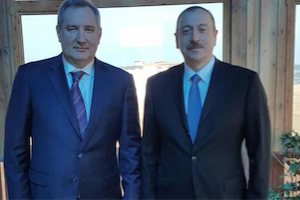
The unprecedented escalation of the Nagorno-Karabakh conflict on April 2-5 is the topic of a process of intense discussions between Russian and Armenian authorities. After the Chiefs of Staff of Armenia’s and Azerbaijan’s armed forces, Yuri Khachaturov and Najmaddin Sadigov, reached an oral ceasefire agreement in Moscow, Russia immediately activated its policy toward the conflict, including several high-level visits to Yerevan and Baku for discussions with the respective authorities.
The "Four-Day War": new momentum for Nagorno-Karabakh resolution?

By Zaur Shiriyev
May 2nd, 2016, The CACI Analyst
In early April, the escalation of hostilities between Armenia and Azerbaijan resulted in a so-called “four-day war”, which was ended by a truce reached under Russia’s auspices. The expectation was that after the end of this short war, international engagement would increase, with the re-energizing of the Minsk Group. But so far, Moscow is the only active party. The Russian Foreign Minister, Sergey Lavrov, is conducting “shuttle diplomacy” between Yerevan and Baku, the results of which will become clear in the coming weeks.
Fighting in Nagorno-Karabakh and the ineffectiveness of the Minsk Group

By Eduard Abrahamyan
April 27th, 2016, The CACI Analyst
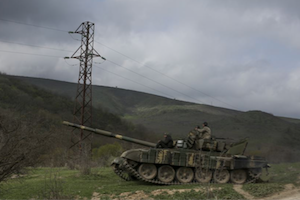
The recent unprecedented escalation around Nagorno-Karabakh highlighted deep systemic shortcomings in existing international mediation initiatives. The OSCE Minsk Group, dedicated to settling the conflict between Azerbaijan and Armenia, has become largely irrelevant in the new operational situation. The intense fighting erupted on April 2 and lasted for four days until a Russia-brokered ceasefire between the adversaries was mutually agreed upon on April 5. The fighting put an end to the 22-year-old ceasefire regime, and the security environment of the South Caucasus. The escalation was clearly a consequence of a shift in the military balance of power, consistently fueled by Russia’s distribution of advanced offensive arms to Azerbaijan and the evident impracticability of the Minsk Group. 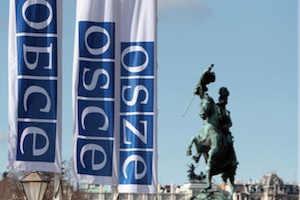
Azerbaijan and the Syrian anti-terror coalition

By Zaur Shiriyev
April 12th, 2016, The CACI Analyst
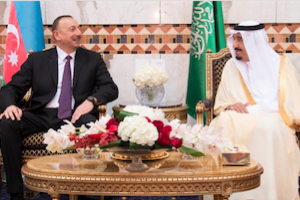
Saudi Arabia’s attempt to persuade Azerbaijan to join its anti-terror coalition comprised of Islamic countries has created problems for Baku due to fierce opposition to this coalition from Iran and Russia. Azerbaijan’s leadership subsequently attended the international donor conference on Syria’s future, seeking to become part of an international platform that will limit the country’s involvement to humanitarian affairs. However, while Azerbaijan’s interests and capacity to engage in international discussions about Syria are limited, the involvement of Azerbaijani fighters in the terrorist organization calling itself the Islamic State (ISIS) may require Baku to join some kind of international anti-terrorism coalition in the future, aimed at supporting intelligence sharing and cooperation with the aim of preventing recruitment of Azerbaijani jihadists.
Azerbaijan in search of new economic model

By Fariz Ismailzade
March 11th, 2016, The CACI Analyst
After a decade of transformational economic growth, reduced oil prices forced Azerbaijan to a double devaluation of its national currency, significant reduction of public spending, slowdown of GDP, and most importantly, panic in the domestic market among both the general population and the business community. The government responded with several anti-crisis programs and measures, aimed at stimulating national economy, supporting local production and easing the business climate for the local entrepreneurs. President Ilham Aliyev has called 2016 “a year of deep economic reforms.” It remains to be seen whether the country will be able to shift gears and transform its economy to achieve sustainable growth from non-oil sectors.
Visit also