Uzbekistan's Caucasus Turn: What Mirziyoyev’s Tbilisi Visit Means for the Middle Corridor and the CKU Railway
By Kodirjon Eshonkulov
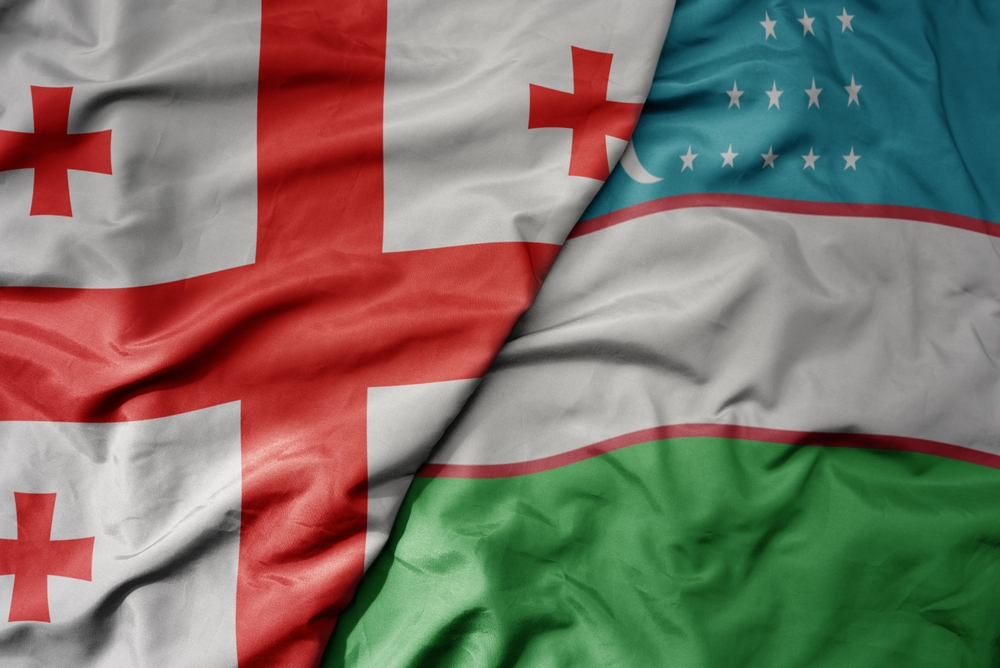
On July 2–3, 2026, President Shavkat Mirziyoyev paid Uzbekistan's first presidential state visit to Georgia in 23 years, elevating bilateral ties to a strategic partnership. Coming weeks after a similar upgrade with Kazakhstan and a wave of Georgian ministerial visits across Central Asia, the trip is not a bilateral curiosity but a marker of a structural shift: Central Asian states are actively re-anchoring their westward connectivity strategy in the South Caucasus, and doing so on terms decoupled from the European Union's political relationship with Tbilisi. For the future of the China–Kyrgyzstan–Uzbekistan (CKU) railway and Middle Corridor connectivity, the durability of this Caucasus terminus may matter as much as the eastern infrastructure itself.
BACKGROUND:
Uzbekistan and Georgia established diplomatic relations in 1994, formalized a year later through a Treaty of Friendship and Cooperation, and have since maintained a modest but steadily expanding relationship built on trade, direct Tashkent–Tbilisi and Tashkent–Batumi flights, and cultural exchange through Tbilisi's Georgian Cultural Center Megobroba, active since the same year. Bilateral trade reached roughly US$ 270 million by the end of 2025, a meaningful but still marginal figure relative to Uzbekistan’s overall trade portfolio. Momentum built gradually: Georgian Prime Minister Irakli Kobakhidze visited Tashkent in March 2025, and Days of Georgian Culture were held in Tashkent this past March.
What distinguishes the July 2026 visit is both its symbolism and its timing. Mirziyoyev’s trip was the first at head-of-state level in over two decades, and it produced a Joint Declaration establishing a strategic partnership, alongside sectoral memoranda spanning economy, healthcare, agriculture, finance, customs, education, ICT, and culture. Crucially, it did not occur in isolation. It followed Georgian Dream ministers’ consecutive June visits to Kyrgyzstan, Tajikistan, and Kazakhstan, and preceded Kazakhstan’s own strategic partnership agreement with Georgia (signed June 30 in Astana) by only days. A visit by Turkmenistan’s president to Tbilisi is reportedly also being prepared. Taken together, this is not a single bilateral gesture but a coordinated Georgian campaign to institutionalize relations across the entire Central Asian core, and a reciprocal Central Asian interest in securing a reliable Caucasus foothold. Beyond official protocol, the visit registers concretely at the level of Uzbekistan’s exporting businesses. Investment and Trade Minister Laziz Qudratov described how domestic manufacturers in textiles, food processing, and household appliances plan to complete final production stages inside Georgia’s Poti free economic zone before re-exporting to third-country markets — a practical illustration of how exporters, not only diplomats, are recalibrating around the Caucasus route. Local reporting on the visit also cited a nearly US$ 400 million prospective portfolio of hotel and residential projects tied to the deepening exchange. Georgian President Mikheil Kavelashvili, for his part, publicly framed the partnership as reinforcing Middle Corridor connectivity between the South Caucasus and Central Asia, suggesting the recalibration is felt on both sides of the route rather than driven solely from Tashkent.
IMPLICATIONS:
The logic behind this convergence is best understood through the lens of the Middle Corridor, the Trans-Caspian trade route linking Central Asia and China to Europe via the Caspian Sea, the South Caucasus, and the Black Sea, explicitly designed to bypass Russian territory. Since 2022, the corridor has moved from a secondary alternative to a strategic necessity for Eurasian trade planners, precisely because the northern route through Russia carries mounting sanctions risk and reputational cost. For Uzbekistan, this matters concretely: the CKU railway, once operational, will generate westward-bound freight that needs a credible onward path to European markets. Georgia's Black Sea ports, Poti and Batumi, are the corridor’s terminal gateway. A CKU line that ends without a secure, upgraded, and diplomatically stable corridor beyond the Caspian is a truncated asset. Mirziyoyev’s visit, and the accompanying attention to industrial, logistics, and tourism cooperation, should be read as an attempt to secure that missing western half of the chain.
This is where the visit’s timing against Georgia’s own geopolitical trajectory becomes analytically significant. Georgia’s EU accession process has been effectively frozen since 2024, following the Georgian Dream government’s foreign-agents legislation and its own decision to suspend accession talks until 2028. The European Council has described the process as being at a “standstill,” and the EU has cut assistance and partially suspended visa facilitation. Yet, notably, working-level cooperation between Georgian officials and their EU, NATO, and U.S. counterparts has reportedly continued largely undisturbed, and Brussels has kept investing in interconnection projects that run through Georgian territory, including Black Sea undersea cable plans advanced via a Romania-Georgia memorandum earlier this year.
This produces what might be called a decoupling of infrastructural and normative logics. Political-value alignment between Tbilisi and Brussels has deteriorated, but the geographic and commercial rationale for treating Georgia as an indispensable transit state has not, incentivizing Central Asian capitals to deepen engagement with Georgia on infrastructure, trade, and logistics. This gives Tashkent room to pursue a transactional, interest-based diplomacy toward the Caucasus, a pattern consistent with Uzbekistan’s broader post-2016 foreign policy style, which has generally prioritized connectivity and economic diversification over alignment with any single bloc’s political conditionality.
Armenia constitutes another important part of the equation. Georgia is currently viewed, including by Armenian officials, as the most EU-oriented state in the South Caucasus and as a de facto gateway for Armenia’s own European aspirations. Should Armenian-Azerbaijani normalization progress, particularly regarding transit arrangements sometimes referenced as the Zangezur corridor, a second Caucasus route could eventually supplement the existing Azerbaijan–Georgia axis, further reducing Central Asia’s dependence on any single transit state and adding redundancy to the Middle Corridor architecture. For now, however, the corridor’s practical backbone remains the Azerbaijan–Georgia pairing, with Uzbekistan’s new strategic partnership effectively buying insurance on the Georgian half of that pairing.
CONCLUSIONS:
Mirziyoyev’s Tbilisi visit should not be filed away as routine diplomatic housekeeping. It is best understood as one node in a broader, near-simultaneous Central Asian recalibration toward the South Caucasus, running parallel to, and largely independent of, the EU’s own frozen political relationship with Georgia. The distinction matters: it suggests that the Middle Corridor’s institutional foundations are being built on transactional infrastructure diplomacy rather than shared democratic conditionality, a divergence that may serve Central Asian connectivity interests in the near term but could complicate future efforts to fold these corridors into EU-backed connectivity frameworks such as Global Gateway. For the CKU railway’s long-term commercial viability, the durability of Uzbekistan’s new Georgian partnership, and the corridor’s insulation from further South Caucasus political volatility, will matter as much as the completion of the tracks themselves.
AUTHOR’S BIO:
Kodirjon Eshonkulov is an independent researcher specializing in Central Asian geopolitics, transboundary infrastructure politics, international relations with Europe and a recent graduate of Ajou University’s Graduate School of International Studies in South Korea. He was worked as a political correspondent on Uzbekistan’s social and political reforms after 2017. He has published several articles in The Times of Central Asia about Uzbekistan’s water scarcity problem and its relations with Afghan Taliban government on the Koshtepa canal.
The Taliban’s Drone Program and Pakistan’s Counter-UAV Challenge
By Umair Jamal
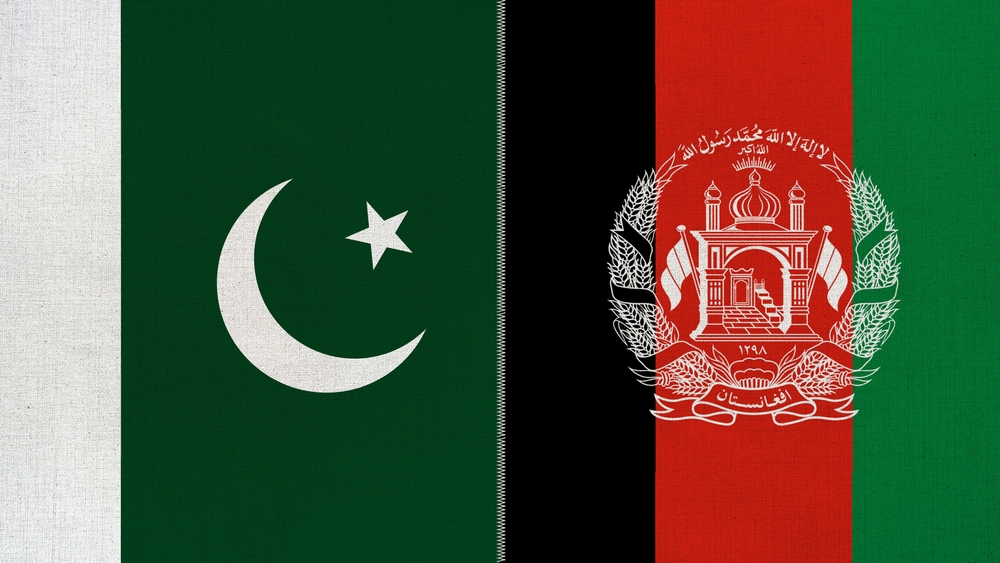
The Afghan Taliban’s growing investment in drone technology is seemingly a response to their conventional military limitations. Rather than a surprising development, it reflects a broader global trend where actors with limited resources use affordable drone systems to challenge better-equipped opponents like Pakistan. This capability not only strengthens the Taliban’s asymmetric warfare options but also raises serious concerns about technology proliferation to other militant groups, including the Tehrik-i-Taliban Pakistan (TTP), and its impact on regional stability.
BACKGROUND:
Since returning to power in August 2021, the Taliban have faced severe constraints, including the lack of a functional air force and heavy international sanctions. It seems they have turned to unmanned aerial vehicles (UAVs) as a feasible and cost-effective solution for surveillance and limited strike missions.
According to ACLED data, the Taliban first began using drones in a military capacity in February this year, with at least 12 recorded instances of strikes into Pakistan. These have included cross-border attacks targeting Pakistani security posts, with some attempts reaching deeper into Pakistani territory. Initially employed for propaganda, the platforms have evolved into weaponized systems.
The Taliban are actively working to build domestic drone production capabilities. Reports point to front companies such as Dinit Technology offering lucrative contracts to engineers and robotics experts in Afghanistan to join the program. Moreover, recruitment efforts have also targeted universities, with Taliban officials showing interest in student drone projects.
The Daily Mail recently reported that the Taliban are using a former Special Air Service (SAS) base in Logar Province as the primary test site for the new drones. According to one report, the Taliban are now sourcing electronic and mechanical parts – GPS modules, electric motors, flight control systems, and sensors – from black markets and smuggling networks for these purposes as the group lacks any formal agreement with any country. Although designed for civilian use, these items are reportedly being repurposed to produce increasingly sophisticated drones capable of medium-altitude flight, reconnaissance, and precision strikes.
Local production and maintenance facilities are seemingly being established at a rapid pace. For many Afghans, these developments may be viewed with a mix of nationalist sentiment and concern about prolonged conflict as advancing drone capabilities could draw increased foreign attention and potentially intensify conflict in the region. Communities near the border regions of Pakistan and Afghanistan are already experiencing the direct effects of heightened tensions and increased militarization.
IMPLICATIONS:
The Taliban’s drone program is a clear example of how emerging technologies enable resource-limited actors to challenge conventionally superior opponents.
This logic has become increasingly evident during Russia’s war in Ukraine, where drones have proved highly effective against better-resourced forces. Arguably, the same advantage applies to both state and non-state actors, explaining why both the Taliban and groups like the TTP are heavily investing in drone capabilities.
For Pakistan, which has traditionally relied on conventional military superiority, this development poses a direct challenge. For instance, cross-border drone activity has already increased pressure on border defenses and air surveillance systems.
Pakistan, like many countries heavily invested in traditional military hardware, has lagged in developing effective counter-drone technologies. Its defense doctrine and procurement have historically prioritized conventional assets such as fighter jets, tanks, and artillery systems, leaving gaps in addressing low-cost and asymmetric threats like modified commercial drones.
This technological lag has become particularly evident in recent border incidents, where Pakistani forces have struggled to consistently detect and neutralize small and low-flying UAVs used by the Taliban and TTP. As a result, Islamabad has had to rely on ad-hoc measures and international partnerships to bolster its counter-drone capabilities, highlighting the urgent need for greater investment in specialized electronic warfare, radar systems, and drone-jamming technologies tailored to the evolving regional threat landscape.
There are concrete examples that illustrate the growing threat. For instance, the TTP has repeatedly used commercial, suicide, and quadcopter drones against Pakistani security forces in multiple operations along the border regions, demonstrating their increasing tactical sophistication.
The conflict took a stark turn in December 2025 when the TTP formally announced the creation of its own dedicated Air Force unit. This development reflected a heavily altered operational reality on the ground. Data from Pakistan’s Inter-Services Public Relations (ISPR) acknowledged that security forces faced over 400 quadcopter and drone-related militant incidents in late 2025 alone. This sudden surge has opened critical gaps in Pakistan’s conventional military defense. While the state’s defense apparatus can effectively neutralize high-value projectiles using localized electronic jamming, it struggles against the stark asymmetry of commercial off-the-shelf drones costing a mere US$ 200 to US$ 1,000 per unit. By deploying these cheap systems at volume, the TTP usually employs saturation strategies that threaten to overwhelm the military’s conventional electronic jammers and physical defense systems.
From Pakistan’s perspective, the TTP’s growing use of drones has become a serious operational challenge for law enforcement in Khyber Pakhtunkhwa (KP). Senior KP police officials have acknowledged that commercial and quadcopter drones are increasingly used for surveillance of security convoys and to guide suicide attacks, making traditional policing methods inadequate. At times, the TTP follow a saturation strategy, employing drones and militants armed with sophisticated infantry weapons, stretching the presence of security forces, and then attacking through heavy blasts, e.g. car bombs.
This evolving threat has forced provincial police in Pakistan’s KP province to accelerate modernization efforts, including procurement of anti-drone systems, electronic jamming equipment, and specialized training for rapid response units. Moreover, police forces in KP province that face attacks from TTP have undertaken modernization efforts, with provincial police setting up a dedicated drone training school in Nowshera. Recently, the Khyber Pakhtunkhwa Police received 76 AI-powered drones with advanced surveillance and thermal imaging technology.
The pressure from TTP drone-enabled operations has compelled law enforcement agencies to shift from conventional ground-focused tactics toward integrated counter-drone strategies, highlighting the urgent need to bridge critical capability gaps along the border regions. The Khyber Pakhtunkhwa police claimed in July that it foiled 341 drone attacks by TTP militants with the help of modern technology in the last six months.
The Afghan Taliban, for their part, have actively employed modified commercial drones not only for reconnaissance but also as counter-attack tools in response to Pakistani conventional strikes. They have publicly framed these operations as their de facto Air Force missions. For instance, the Taliban have allegedly used drones to hit ISIS-K elements in Baluchistan, reportedly in retaliation to Pakistani cross-border actions.
These drone strikes seemingly serve a dual purpose. They provide the Taliban with a much-needed ability to project strength and respond to external pressure, while also offering valuable propaganda material. For a regime facing domestic criticism for its inability to counter Pakistani incursions, drone operations have become a political lifeline as they help the Taliban portray themselves as capable defenders and boosting regime legitimacy. Repeated operations also allow the Taliban to improve target location accuracy and operational effectiveness
One of the most critical implications of this development is the extreme difficulty, perhaps impossibility, of controlling proliferation. Arguably, cheap and dual-use drone technology is far easier to acquire and modify than advanced weapons systems. Components are widely available on global black markets, with reports suggesting the Taliban acquire parts through smuggling networks, possibly involving suppliers from the broader region and beyond. International efforts to restrict access are likely to have limited impact given the commercial nature of the technology.
This proliferation risk extends beyond the Taliban. If the group continues advancing its program, expertise and components could spread to other militant factions operating from Afghan soil. This can further intensify cross-border militancy and complicate counter-terrorism efforts for Pakistan and Central Asian states.
More broadly, the program highlights the global challenge of dual-use technology proliferation. Even isolated regimes like the Taliban can develop disruptive tools through commercial channels. This adds to existing instability in South and Central Asia and tests the effectiveness of current international export control regimes.
CONCLUSIONS:
The Taliban’s pursuit of a domestic drone program represents a logical and predictable adaptation to their strategic constraints. While still evolving, these capabilities demonstrate how asymmetric tools are reshaping modern conflict.
The spread of this technology to groups like the TTP, combined with the lag in counter-drone defenses among regional powers, creates a more dangerous security environment.
As these capabilities mature, they risk heightening border tensions, increasing militarization, and generating new challenges for stability across South and Central Asia.
In this regard, greater international attention to monitoring dual-use technologies and fostering regional cooperation on counter-drone measures will be essential to mitigating these risks. Ultimately, the trajectory of the Taliban’s drone program may significantly influence the future security landscape of the region.
AUTHOR’S BIO:
Umair Jamal is a Ph.D. candidate at the University of Otago, New Zealand, and an analyst at Diplomat Risk Intelligence (DRI). His research focuses on counterterrorism and security issues in Pakistan, Afghanistan, and the broader Asia region. He offers analytical consulting to various think tanks and institutional clients in Pakistan and around the world. He has published for several media outlets, including Al-Jazeera, Foreign Policy, SCMP, The Diplomat, and the Huffington Post.
Russia’s Double Game in Afghanistan and Central Asia
By Stephen Blank
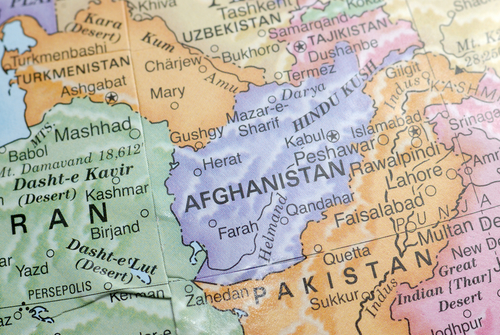
The Pakistan-Afghanistan war, on top of the war against Iran, is forcing Moscow to attempt to balance its security and economic interests in and beyond Central Asia with both Pakistan and Afghanistan. Pakistan is critical to Russia because it provides an alternative to Iran, allowing Moscow’s transcontinental trade project INSTC to move forward and offering a gateway to Asia. Concurrently, Moscow has upgraded its ties with the Taliban in Afghanistan both to deter ISIS-K terrorists and to secure broader geostrategic aims. Yet it also increasingly appears that Moscow is willing to offer Afghanistan arms, ostensibly to deter terrorists. However, in the broader regional context, this move underscores Moscow’s propensity for playing a double game with and against its partners.
BACKGROUND:
The Iran war and Pakistan’s war with Afghanistan threaten the further erosion of Russian influence in Central Asia. Consequently, Russia has embarked on what can only be called a double game vis-à-vis Pakistan and Afghanistan. Pakistan has attacked Afghanistan because it claims Afghanistan harbors the Tehrik-e-Taliban Pakistan (TTP) terrorist group, which performs attacks against Pakistan. This complaint is more than a little ironic given Pakistan’s own long-standing and well-known record of sponsoring terrorism against India. More significant, however, is the fact that this charge, if true, signifies that Kabul has escaped Islamabad’s tutelage. However, the war also disrupts Russia’s ambition to sell Russian gas to South and Southeast Asia through pipelines traversing Afghanistan and Pakistan.
At the same time, Russia has steadily built a “full-fledged” and “pragmatic” partnership with Afghanistan to prevent it from sponsoring terrorist groups like ISIS-K and their targeting of Russia and Central Asia, where Russia still claims to be the ultimate security manager. According to Sergei Shoigu, Secretary of Russia’s Security Council, full-fledged partnership includes bilateral defense and security cooperation. Indeed, Shoigu openly proclaimed Russia’s opposition to any third-party military presence in Afghanistan or neighboring countries, a shot across both Pakistan’s and the U.S.’s bow and a sign of its ambition to establish a protectorate over Afghanistan.
However, Russia’s interests transcend defense. The war against Iran has ruptured the feasibility of Russia’s, Iran’s and India’s major transit, trade and connectivity route through Central Asia and then through Russia to Europe, the INSTC (multi-modal International North-South Transportation Corridor). The other existing corridor, the increasingly lucrative Middle Corridor or TITR (Trans-Caspian International Transport Route) from China to Central Asia and then to the Caucasus and Europe bypasses Russia. Thus, since failure to find an alternative to Iran for INSTC will have dire geoeconomic and geopolitical consequences for Russia, it has turned to Pakistan for help. Pakistan cannot afford exclusion from transcontinental trade routes and has agreed to explore connecting its port at Gwadar either by land or by sea to INSTC.
IMPLICATIONS:
Moscow typically has sought to have a foot in both camps in every conflict scenario throughout the Global South and the Pakistan-Afghan war is no exception. But this case is far more central to Moscow’s interests than its power projection in for example Africa or the Middle East. In order to maintain its self-appointed “leading position” in Central Asia, it is crucial for Russia to exercise leverage over Afghanistan to deter an outbreak of Islamic terrorism targeting either Central Asia or Russia.
Likewise, it is critical to Russia’s economic health and continuing ability to finance its war against Ukraine and its heavily strained state budget that it continues to find Asian markets for its oil and gas. Doing so also entails developing trade routes like INSTC to Pakistan, India and Southeast Asia, especially given its desire to be acknowledged as an independent Asian power. Therefore, balancing between Pakistan and Afghanistan while developing alternatives to Iran’s connectivity have become requirements of Russian policies to realize vital Russian interests, especially as its economy is reeling and its position in Central Asia erodes.
Further erosion is inevitable if Islamic terrorism “migrates” to Central Asia without Moscow being able to deter or stop it. By the same token, exclusion from transcontinental trade routes will undermine Moscow’s ideological and rhetorical pretense of hegemony, and demonstrate that Russia lacks the means in terms of tangible material capability to back up its arguments or sustain a position that answers to Central Asia’s most pressing questions, i.e. economic development.
Concurrently, if Russia cannot develop let alone sustain viable, economically justifiable outreach to South and Southeast Asia, its hard-won influence and standing in those countries will diminish by an order of magnitude, negating its claims of being an Asian power and making it still more dependent on China.
Despite its vital need to keep the balance between Pakistan and Afghanistan, many recent reports suggest that Moscow is secretly negotiating an arms deal with the Taliban. Ostensibly, the aim would be to use the weapons to suppress ISIS-K and prevent further terrorist strikes in Central Asia and or Russia. While this makes sense if leveraging Russia’s Central Asian position and ambitions vis-à-vis Afghanistan are the priority; in reality, it highlights the priority of security over economic development in Russian policy. It also illustrates the abiding temptation to make secret deals involving the security services or force structures as primary instruments of foreign policy.
Given the Taliban’s track record, it is unlikely that it can or will hold up its end of the bargain. Moreover, should these reports be true this news will enrage Pakistan and likely torpedo efforts to have it join INSTC. That trade project, unlike the Middle Corridor, never got off the ground and is therefore already being eclipsed. This has gravely serious and negative implications for Russia and is likely to aggravate all the trends making for the decline of Russian power in the Caucasus and Central Asia as well as South and Southeast Asia.
An arms deal with the Taliban will further entrench the belief among governments who monitor Russian behavior that Moscow is cannot be relied on as a partner. It will also confirm the notion held by many Western governments that Russia, like the Soviet Union, remains a sponsor of state terrorism and must, at best, be kept at arm’s length.
CONCLUSIONS:
Thus Russia continues to play a double game towards its partners, attempting to have both an empire and prosperous foreign trade relations, even though their logics are quite incompatible. Moscow also has yet to grasp that it cannot denounce and support terrorism at the same time without paying an incommensurate price for its quest after short-term gains. In Central Asia, Russia still seeks to pursue wildly contradictory aims without paying the price for doing so. If Moscow does, in fact, arm the Afghan government, it will once again be playing with dynamite.
AUTHOR’S BIO:
Stephen Blank is a Senior Fellow with the Foreign Policy Research Institute, www.fpri.org.
Tatarstan's Afghanistan Channel: Russia's Regional Instrument In Central Asia's Realignment
By Eldaniz Gusseinov, Rassul Kospanov
The Pakistan–Afghanistan war has accelerated Kabul's economic reorientation toward Central Asia, a structural shift that Uzbekistan and Kazakhstan have moved most visibly to institutionalize. Less visible, but strategically consequential, is the parallel track that Russia has been constructing through the Republic of Tatarstan. Over the course of 2024 and 2025, Tatarstan has signed memoranda worth US$ 183 million with Afghan private-sector counterparts, doubled bilateral trade to US$ 51 million in the first eleven months of 2025, and prepared a trilateral Russia–Turkmenistan–Afghanistan transport corridor agreement for signature at KazanForum 2026. The pattern suggests that Moscow has delegated a substantial component of its Afghan engagement to a subnational actor as a calibrated instrument of paradiplomacy, a model that carries implications for how external powers compete for position in the emerging trans-Afghan corridor system.
BACKGROUND:
Tatarstan's suitability as Moscow's Afghan channel rests on a combination of confessional, communal, and institutional factors that no other Russian federal subject combines. The republic's Islamic identity provides a register of communication with the Taliban authorities that federal Russian institutions cannot easily replicate.
Kazan hosts the annual Russia–Islamic World: KazanForum, which since 2023 has carried federal status and functions as one of the few large-format venues where Taliban officials are received. An additional advantage is the presence of a historically established Tatar diaspora in Afghanistan. A notable Tatar community has lived in the country since the nineteenth century, having been formed largely by merchants and trading intermediaries from the Russian Empire who gradually settled in Afghan cities and integrated into local society.
Today, descendants of this diaspora are concentrated primarily in the northern provinces of Balkh, Samangan, and Baghlan, providing Kazan with an important human infrastructure for engagement that predates the events of 2021. In March 2021, the Afghan government formally recognized "Tatar" as a nationality category in civil documentation, which anchored the community's relationship with Kazan more durably than informal ties had previously allowed.
The institutional architecture developed in parallel. In 2023, a Russian business center affiliated with the Kazan-based Charitable Patriotic Fund of Muslims opened in Kabul. Russia became the first country to open a business representative office in Afghanistan after August 2021.
Tatarstani firms entered the market before the federal center had resolved the legal status of the Taliban movement, which remained on Russia's list of banned organizations until April 2025, when the Supreme Court suspended the ban and Russia became the first state to formally recognize the government in Kabul.
During that pre-recognition period, Tatarstan's engagement operated in a space that federal diplomacy could not formally occupy, and the institutional relationships established during those years have persisted after recognition.
As CEO of the Charitable Patriotic Foundation of Muslims of Russia, Rustam Khabibullin headed the business representative office. Even before the Taliban movement came to power, the patriotic foundation of Muslims had maintained relations with Afghanistan, in particular with Afghans of Tatar origin. Trade volumes reflect the accumulated weight of this engagement.
Tatarstan–Afghanistan commerce doubled in the first eleven months of 2025 to US$ 51 million, accounting for roughly 10 percent of total Russian–Afghan trade. Tatarstan exports petroleum products, grain, KAMAZ trucks, and specialized equipment; Afghanistan exports dried fruits and minerals.
In May 2025, Deputy Prime Minister Abdul Ghani Baradar led an Afghan delegation to Kazan for meetings with Rais Rustam Minnikhanov and federal ministers.
In August 2025, a Tatarstani delegation headed by Deputy Prime Minister Oleg Korobchenko travelled to Kabul, the first regional Russian delegation of such standing to visit in the post-2021 period.
IMPLICATIONS:
The paradiplomatic model offers Moscow operational flexibility that formal diplomacy cannot match, even after recognition. Industrial cooperation, equipment supplies, and energy projects can be advanced through Kazan without elevating every transaction to state-to-state protocol.
The confessional and historical background that Tatarstan brings to the engagement is quite unique. Recognition has regularized the legal environment without altering the functional logic that made Kazan the preferred channel in the first place.
The federal center has therefore continued to route substantial engagement through the republic rather than absorbing the Afghan file fully into the standard Ministry of Foreign Affairs framework.
This model also has historical precedents. During the Soviet period, Moscow often used Kazakhstan and Uzbekistan as showcase republics of the “Soviet East” — modernized Muslim-majority regions meant to demonstrate the compatibility of socialism with development, secular governance, and industrial progress.
Tashkent in particular hosted Afro-Asian conferences and served as a symbolic bridge to the decolonizing world, while Kazakhstan projected an image of industrial modernity and frontier development. In this sense, the current use of Tatarstan as Russia’s preferred Afghan channel reflects not an innovation, but a revival of an older practice: governing external peripheries through carefully selected internal Muslim intermediaries.
The trilateral Tatarstan–Turkmenistan–Afghanistan transport corridor scheduled for signature at KazanForum 2026 in May represents the most consequential element of this architecture. The route is conceived as an alternative to the International North-South Transport Corridor, whose Iranian segment has been disrupted by regional conflict.
Nuruddin Azizi, the Afghan Minister of Industry and Trade, has been one of the driving forces behind the project from Afghanistan, and Oleg Korobchenko, Tatarstan's Deputy Prime Minister and Minister of Industry and Trade, has overseen the Tatarstani component through regular meetings with the Afghan side. First shipments are planned from Tatarstan. Khabibullin has identified Afghanistan as Tatarstan's leading importer of halal-certified goods. In 2024, companies in Tatarstan exported US$ 37 million worth of halal products to Afghanistan. This figure is 20 times higher than in 2023.
If the corridor materializes, it will deepen Russian participation in the trans-Afghan railway architecture that Uzbekistan and Kazakhstan have been actively advancing. Uzbekistan's project, which runs from Termez through Mazar-i-Sharif toward South Asian ports via the Salang Pass. Kazakhstan's alternative route, with approximately US$ 500 million committed including a logistics hub in Herat, follows the technically simpler Turgundi–Herat–Kandahar–Spin Boldak corridor across western Afghanistan.
A parallel track runs through Uzbekistan's Surkhandarya region, where the Aritom free economic zone in Termez borders Afghanistan and offers multimodal logistics including rail, road, and river port. At the Russia–Uzbekistan interregional conference held in Termez in autumn 2026, Tatarstani and Surkhandarya officials advanced a cooperation framework covering industrial localization, agro-processing, and transit through Aritom toward Afghan and broader South Asian markets. The Uzbek side has positioned the zone as a 250-million-consumer gateway; Tatarstan's two industrial parks at Chirchik and Jizzakh, where more than half of resident firms are Russian, provide a productive base that can be articulated with the transit infrastructure at Termez. The architecture allows Russian exports to reach Afghan markets either through the Turkmen corridor or through Uzbek infrastructure, which diversifies the operational risk inherent in a single route.
Energy and resource cooperation extends the model further. At the Tatarstan Oil and Gas Chemical Forum, the Taliban's acting Minister of Mines and Petroleum Hedayatullah Badri publicly invited Tatarstani firms to invest in Afghan hydrocarbon projects, while the acting Minister of Energy and Water Resources Abdul Latif Mansur proposed Tatarstani participation in the Panjshir-to-Kabul water transfer project. Memoranda on exploration, extraction, and processing of oil and gas were signed in Kazan in 2025, and KER-Holding has advanced proposals for coal-fired power generation in Afghanistan. This is a role that China lost when its oil extraction project in northern Afghanistan was cancelled, and which Kazakhstan is now beginning to contest through Kazatomprom's and Kazakhmys's exploration activities in Laghman.
The labor migration track, opened in late 2025, adds a further dimension. Kabul has formally proposed directing Afghan labor migrants to Tatarstan, with an initial cohort of approximately 1,000 workers for the agricultural sector and potential expansion across industries. This inverts the direction of the Afghan exodus of the 2021–2024 period and establishes a formal channel through which Afghan labor enters Russia via a subnational agreement, a configuration that the federal labor migration framework has not previously accommodated.
The limits of the model are also visible. Banking infrastructure remains the principal operational constraint. Rustam Khabibullin has publicly identified transaction commissions of approximately 30 percent as a substantial barrier to Russia–Afghanistan commercial settlement and has proposed that Russia develop an international payments system modelled on hawala for transactions with member states of the Organisation of Islamic Cooperation. Nur Ahmad Agha, the chairman of Da Afghanistan Bank, is expected to attend the first congress of OIC national bank representatives at KazanForum 2026, which has been identified as the venue for this discussion. Without a payments architecture that can absorb Afghan transactions at scale, the trade volumes reported will remain concentrated in a narrow band of fuel, grain, and equipment.
CONCLUSIONS:
Tatarstan's Afghan engagement is neither a humanitarian gesture nor a purely commercial venture. It is the operational layer of Russian policy in a region where the confessional and communal dimensions of the relationship carry weight that standard diplomatic instruments cannot supply.
Russia's formal recognition of the Taliban government in April 2025 regularized the legal environment without displacing the Tatarstani channel, because the republic's combination of Islamic identity, a diaspora community in northern Afghanistan, an institutional platform in KazanForum, and a productive industrial base constitutes an instrument that no federal subject of Russia could replicate.
The trilateral corridor agreement prepared for May 2026 and the parallel track through Surkhandarya indicate that the model is scaling from bilateral commerce toward regional transit infrastructure. Whether Tatarstan's engagement consolidates into a durable Russian presence in Afghanistan will depend on the resolution of payment-system constraints and on whether Moscow formalizes the paradiplomatic arrangement through a trade representation in Kabul.
The broader significance lies in what the case illustrates: in the northward reorientation of Afghanistan that began with the closure of the Pakistani corridor, external powers are not only competing through state-level instruments but through the subnational channels that carry confessional, communal, and industrial advantages.
AUTHOR’S BIO:
Eldaniz Gusseinov is Head of Research and сo-founder at the political foresight agency Nightingale Int. and a non-resident research fellow at Haydar Aliyev Center for Eurasian Studies of the Ibn Haldun University, Istanbul. Rassul Kospanov is a Senior Researcher at the National Analytical Center under Nazarbayev University, where he coordinates socio-political research projects and prepares analytical reports and policy recommendations for central and local government bodies. His work focuses on political processes in Kazakhstan and across Central Asia, as well as issues of regional cooperation.
Afghanistan: Sandwiched Between Wars On Two Fronts
By Sudha Ramachandran
Afghanistan currently finds itself in an exceptionally precarious position. To the west, neighboring Iran has become an active war zone, while to the east, Pakistan has initiated what it describes as an “open war” against Afghanistan. After decades of conflict, Afghanistan’s capacity to manage the far-reaching consequences of the situation in Iran remains severely limited. The country’s already fragile economy is being further strained by rising global oil prices. At the same time, its access to maritime trade routes via Pakistan has been effectively closed for several months, while alternative trade corridors through Iran, the only viable substitute, are increasingly under threat. The likelihood of a substantial influx of refugees, including returning Afghan nationals, is expected to exacerbate an already critical humanitarian situation. Concurrently, the Taliban authorities are closely observing how the Iranian government responds to external pressures aimed at regime change.
BACKGROUND:
On the night of February 21-22, Pakistan launched “Operation Ghazab Lil Haq” against Afghanistan. Islamabad said that its missile and air strikes were targeting camps and hideouts of the Tehreek-e-Taliban Pakistan and the Islamic State of Khorasan Province based on Afghan soil. Over the past month, Pakistan’s strikes have intensified and expanded in terms of the nature of targets and their geography. If initially Islamabad targeted border posts and alleged terrorist camps in Afghanistan’s border provinces, soon it was hitting Taliban military assets and ammunition depots as well as civilian targets, including a drug rehabilitation hospital in Kabul.
Meanwhile, Afghanistan’s western neighbor, Iran, came under devastating missile and air strikes launched by the U.S. and Israel on February 28. Since then, leadership compounds, military infrastructure, and economic and energy locations, including the country’s oil production and storage facilities have been destroyed. Top Iranian political and military leaders have been killed in the strikes as have hundreds of civilians. The war has spread beyond Iran. Tehran retaliated to the U.S.-Israel attacks by hitting Israeli targets as well as U.S. bases and oil infrastructure in Gulf Cooperation Council (GCC) countries. South Asia was soon drawn into the war when the U.S. torpedoed an Iranian warship, IRIS Dena, 40 nautical miles off the Sri Lankan coast. On March 20, Iranian missiles reached deep into the Indian Ocean to target the U.S.-UK base in Diego Garcia. The war could draw in more countries, such as Pakistan. The destruction of production and refining infrastructure in the Gulf and Iran’s blocking of the Strait of Hormuz have led to fuel shortages and surging prices worldwide. What started as a war on Iran has set economies across continents ablaze.
Among the countries that will be hit the hardest by the Iran war is Afghanistan. Several factors make it particularly vulnerable. It is Iran’s neighbor; the two countries share a 921 km-long border. Afghanistan is also a landlocked country, dependent on Iran and Pakistan for access to ports. Importantly, Afghanistan was ravaged by war for decades and internationally isolated since the Taliban captured power in August 2021. Its capacity to withstand the impact of the war in West Asia was limited to begin with. This capacity is being further weakened by Pakistan’s ongoing military strikes on Afghanistan.
IMPLICATIONS:
The Taliban regime strongly condemned the U.S.-Israeli airstrikes on Iran, describing them as an “act of aggression.” Following the assassination of Iranian Supreme Leader Ayatollah Ali Khamenei, it expressed its condolences to the Iranian government and people. Especially since the Taliban came to power in August 2021, relations between Iran and Afghanistan have grown, especially with regard to trade. Although there are several issues of conflict between the two, anti-Americanism serves as glue. The Taliban’s chief spokesperson, Zabihullah Mujahid, has said in the past that if Tehran requests assistance in the event of a U.S. attack, Afghanistan is ready and willing to extend help.
So far, Afghanistan has not been hit by Iranian or U.S/Israeli drones or missiles. Indeed, it is western and south-western Iran that has borne the brunt of U.S. and Israeli strikes. Eastern Iran, which borders Afghanistan, has escaped being hit so far. It is therefore an attractive safe haven for those fleeing western Iranian cities and towns. These internally displaced people can be expected to cross into Afghanistan and Iran’s other eastern neighbors should the war intensify, prolong or spread to eastern Iran. Afghanistan is already grappling with the economic burden imposed by the mass deportation of an estimated 5.4 million Afghan refugees from Iran and Pakistan since October 2023. The new refugee flows from Iran will substantially intensify the humanitarian crisis in Afghanistan. Persecution of Afghan refugees in Iran is set to increase as Iranians have often suspected that they are spying for Israel. Such perceptions are likely to intensify. They will be hounded by Iranian police and people, forcing them to join the exodus into Afghanistan.
Afghanistan’s weak economy is poised to fray further amid fuel shortages and surging prices. Given its low capacity for manufacturing, Afghanistan has depended on Iran for consumer goods. Afghanistan’s landlocked status has made it dependent on Pakistan and Iran for access to the sea, however, as access to Pakistani ports has been shut off, Afghan dependence on Iranian markets and trade corridors to the sea have deepened. Although Iranian border posts remain open to Afghan goods, the trade corridor through Iran to the sea is insecure as it runs through the conflict zone. While it continues to function, it is vulnerable to missile strikes as the war in Iran intensifies. There is a risk that Chabahar port could be bombed. The closure of the Iranian trade corridor would bring the Afghan economy to its knees and shatter Afghan lives and livelihoods. Afghanistan will have to strengthen its trade and transit ties with other Central Asian states.
Notwithstanding its condemnation of the U.S and Israeli strikes on Iran, Pakistan has benefited somewhat from the war in Iran. As the international community is preoccupied with the West Asia crisis, it has ignored the Pakistani military strikes on Afghanistan. Pakistan has therefore escaped global opprobrium for the horrific suffering its strikes have caused to Afghan civilians. Meanwhile, the Taliban regime is watching how Pakistan is responding to the crisis in West Asia. Should the Saudis decide to join the war against Iran, Pakistan, which has a mutual defense pact with Riyadh, is obligated to join the Saudis. Drawn into the West Asian crisis, the Pakistani military would need to halt its ongoing “open war” against Afghanistan. A termination of ‘Operation Ghazab Lil Haq’ would be welcomed by Afghanistan.
Taliban leaders will also be watching Iran closely to see how pressure from outside in the form of military strikes and war impacts an authoritarian regime. Will decapitation and war trigger unrest and lead to regime change? Or will it strengthen national unity and see the population rally behind the regime against the foreign invader? In the event of regime change in Iran, its leaders could seek sanctuary in Afghanistan.
CONCLUSIONS:
The conflict involving Iran has arisen at a particularly challenging moment for Afghanistan, which is simultaneously facing missile and air strikes from Pakistan. As a landlocked state, Afghanistan is especially vulnerable to external disruptions; its economic difficulties are likely to intensify due to fuel shortages linked to the conflict in Iran and the resulting constraints on access to seaports. In addition to its geographic proximity to the West Asian conflict zone, Afghanistan’s already limited institutional and economic capacity is expected to come under severe strain. This pressure will be exacerbated by a further economic downturn and by the anticipated influx of refugees, including returning Afghan nationals, from Iran.
AUTHOR’S BIO:
Dr Sudha Ramachandran is an independent South Asian political and security analyst. She is also South Asia editor at The Diplomat. Her articles have appeared in publications like The Diplomat, Asia Times, China Brief and Terrorism Monitor.
Visit also