The End of Tandem: Power Consolidation and Emerging Risks in Kyrgyzstan
By Aigerim Turgunbaeva
On February 10, 2026, President Sadyr Japarov abruptly dismissed his longtime ally and security chief Kamchybek Tashiev while the latter was undergoing medical treatment in Munich, Germany. At the time, the move appeared sudden but limited in scope. Two months on, it has become clear that this decision marked the beginning of a far more consequential transformation. On April 29, formal charges including high treason were brought against Tashiev, effectively sealing the end of the informal tandem that had defined Kyrgyz politics for over five years.
What followed was not merely a leadership reshuffle, but the systematic dismantling of the informal tandem that had structured Kyrgyzstan’s political system since the 2020 upheaval. The trigger appears to have been a petition signed by 75 public figures on February 9 calling for early presidential elections. Within days, key elements of Tashiev’s institutional base were reconfigured; within weeks, his network came under sustained pressure; and by early April, the arrest of his brother Shairbek Tashiev on corruption charges underscored the depth of the ongoing purge.
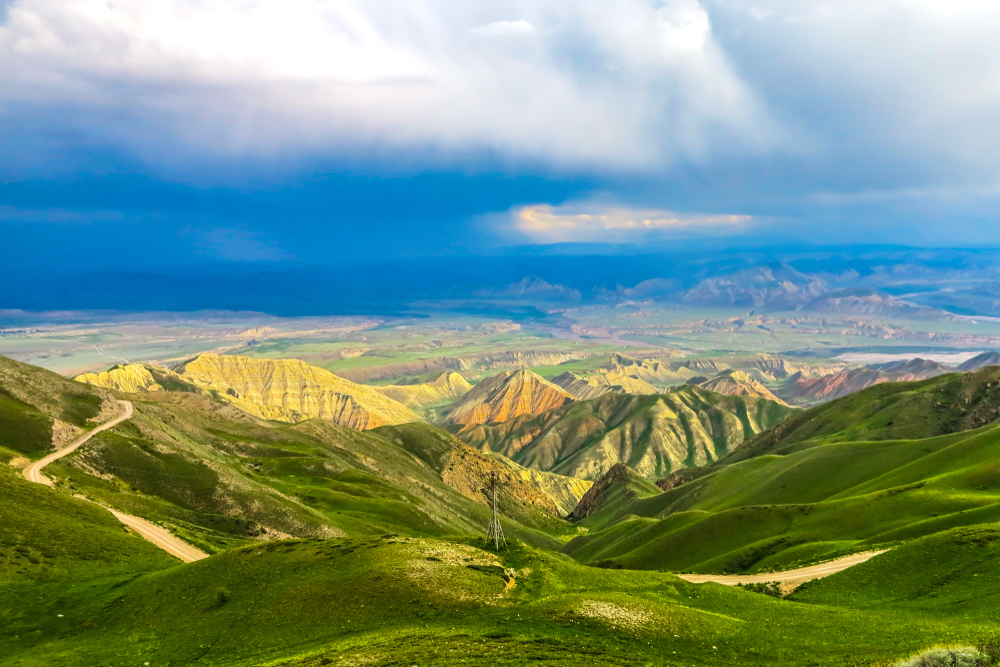
Photo by AlexelA, February 7, 2019
BACKGROUND:
The removal of Tashiev did not simply eliminate a powerful figure. It disrupted a governance mechanism that balanced regional elites, distributed control over the security apparatus, and contained intra-elite competition. In its place, a more centralized and personalized presidential vertical is taking shape. This consolidation may enhance short-term governability yet it also raises deeper questions about systemic resilience.
Following the October 2020 political upheaval, Kyrgyzstan’s executive system coalesced around an informal dual structure. By 2021, this arrangement, widely referred to domestically as eki dos (“two friends”), had become the de facto governing model of the post-revolutionary order.
At its core, the tandem between Japarov and Kamchybek Tashiev represented an informal division of political labor rather than a codified institutional framework. Japarov retained formal constitutional authority and served as the public face of the state. Tashiev, appointed head of the State Committee for National Security (GKNB) in October 2020 and later elevated to deputy chairman of the Cabinet of Ministers, gradually consolidated control over the security apparatus, anti-corruption campaigns, and elite discipline. By 2022, the GKNB had dramatically expanded its mandate into economic, educational, and even diplomatic spheres.
By 2023–2024, the tandem had evolved into a key stabilizing mechanism for managing Kyrgyzstan’s persistent regional cleavages. Japarov, widely associated with northern networks, and Tashiev, whose base was rooted in Osh and Jalal-Abad, together helped contain long-standing north–south tensions, bridging geographic and clan-based divisions that had historically fueled political instability.
This political arrangement coincided with notable macroeconomic stabilization and rapid growth. Between 2022 and 2025, Kyrgyzstan recorded average annual real GDP growth of approximately 10.2 percent — one of the highest rates in the region — with growth reaching 11.1 percent in 2025. Nominal GDP approximately doubled over the period, driven by remittances, cross-border trade, and state reassertion over strategic assets including the Kumtor gold mine.
By 2025, however, the same personalization that had enabled short-term stability exposed the system’s structural vulnerability. As Tashiev’s institutional profile grew, at times appearing to rival the president’s, latent tensions within the duumvirate became harder to ignore. What had begun as a complementary partnership gradually transformed into a delicate balance whose rupture would reshape the entire political architecture.
The breakdown did not occur as a single rupture, but as a carefully sequenced series of moves. The process was triggered on February 9, 2026, when a group of 75 prominent public figures, intellectuals, and former officials published an open petition calling for early presidential elections. The very next day, President Japarov dismissed Tashiev from his positions as GKNB chairman and deputy cabinet chief. At the time, Tashiev was in Munich receiving medical treatment, a circumstance that allowed the dismissal to be executed swiftly and with minimal immediate resistance.
The official justification cited the need to “optimize state structures and improve administrative efficiency.” However, the speed and coordination of subsequent steps pointed to a deeper recalibration. Within days, key elements of the GKNB’s institutional portfolio, border security, protective services, and several operational departments, were restructured and transferred to direct presidential oversight or newly appointed loyalists.
Throughout late February and March, pressure expanded to Tashiev’s broader network. A wave of dismissals and corruption investigations targeted officials linked to his circle. On March 16, the State Tax Service released a widely publicized video accusing members of the Tashiev family of large-scale corruption. This reconfiguration fundamentally changed the mechanics of the post-tandem order. The sequence reached a symbolic climax on April 1 with the arrest of Shairbek Tashiev, signaling that the purge had extended beyond formal institutional roles into the informal family-based networks underpinning the tandem’s influence. By early May, the dual governance structure had been replaced by a more centralized configuration, with key security and elite-management functions brought under direct presidential control.
IMPLICATIONS:
The dismantling of the tandem has not been accompanied by institutional pluralization. Instead, it has accelerated the emergence of a more vertically integrated and personalized executive structure. Under the tandem, regional and factional elites could navigate between two centers of power. In the new single-center model, that balancing function has been internalized within the presidency. The space for autonomous maneuvering by mid-level and regional actors has noticeably narrowed.
The most immediate fault line concerns regional political balance. Tashiev’s strong southern base, particularly in Osh, Jalal-Abad, and Batken, helped integrate southern elites into the national power structure and reduced perceptions of northern dominance. His removal risks generating a sense of marginalization among influential southern networks, especially if future cadre or economic policies are perceived as favoring northern interests.
A second vulnerability lies within the security apparatus. The post-February restructuring has concentrated decision-making and personnel appointments within a single presidential vertical. While this may improve operational unity, it also raises risks of groupthink and loyalty-based rather than competence-based appointments, as well as potential fractures if mid-level security officers begin to question their long-term prospects under the new order.
A third risk relates to elite cohesion. With patronage concentrated in one node, loyalty becomes more brittle and hypersensitive to signals of favoritism or weakness at the top. Open opposition remains unlikely in the near term, but latent uncertainty or quiet realignment toward alternative centers of influence could gradually erode regime cohesion.
The new model also carries implications for economic management. While the tandem period delivered impressive growth, averaging around 10.2 percent annually between 2022 and 2025, much of this expansion relied on informal elite bargains, selective redistribution, and state oversight of strategic sectors. The removal of the secondary power center risks disrupting these arrangements, potentially affecting investor confidence and the predictability of the business climate.
Kyrgyzstan’s shift toward a more centralized and personalized executive model reflects broader patterns across Central Asia. In systems where stability has historically depended on informal balancing mechanisms, the removal of such mechanisms tends to increase reliance on centralized authority that is rarely replaced by institutionalized checks and more often succeeded by further personalization. Kyrgyzstan’s abrupt transition from a dual-center model adds a distinct and cautionary variation to this regional pattern.
The real test will come when the new model faces its first significant stress in the form of an economic slowdown, renewed regional tensions, or questions of political succession, without the informal safety valve the tandem once provided. Concerns about potential instability disrupting joint infrastructure projects, including the China–Kyrgyzstan–Uzbekistan railway, have circulated among regional capitals. For major external powers, including Russia, China, and Western actors, the Kyrgyz case serves as a reminder that predictability in Central Asia often rests more on personal leadership coherence than on robust institutions.
CONCLUSIONS:
Ultimately, the dismantling of the Japarov-Tashiev tandem marks not only the end of a specific five-year political arrangement, but Kyrgyzstan’s transition to a more singular and vertically integrated model of governance. The central question going forward is not whether this model will consolidate authority — it already has — but whether it can sustain long-term stability without the informal balancing mechanisms that previously underpinned it. In the volatile political ecology of Central Asia, such experiments in personalization carry both the promise of stronger executive control and the latent risk of heightened fragility.
AUTHOR’S BIO:
Aigerim Turgunbaeva, is a journalist and researcher focusing on Central Asia. Aigerim writes about press freedom, human rights, and politics in the former Soviet space, and delves into China’s interests in the region for publications including Reuters, The New York Times, The Diplomat, The Guardian, and Eurasianet.
From Declarations To Corridors: Rethinking Economic Integration In Central Asia
By Rafis Abazov
For more than three decades, economic integration in Central Asia has been shaped by ambitious declarations, multilateral communiqués, and periodic summit diplomacy. Yet tangible outcomes have often lagged behind political rhetoric. The emerging shift from abstract integration models toward corridor-based, infrastructure-driven cooperation marks a potentially decisive turning point. Recent developments between Kazakhstan and Kyrgyzstan—notably the revival of the Almaty–Bishkek Economic Corridor with support from the Asian Development Bank (ADB) and the creation of industrial and logistics hubs along their shared border—suggest that Central Asia may finally be moving from declarative regionalism to functional economic integration.
BACKGROUND:
Since independence, Central Asian states have repeatedly endorsed the idea of regional economic integration. Initiatives ranging from customs cooperation to Central Asian Economic Union (CAEU) were designed to lower barriers, stimulate trade, and create a single economic space. In practice, however, these frameworks often lacked operational depth. Divergent regulatory regimes, weak cross-border infrastructure, and limited coordination between national development strategies constrained their impact. Kazakhstan and Kyrgyzstan provide a revealing case. Despite geographical proximity and strong historical ties, economic cooperation long remained below potential. According to official data, bilateral trade turnover remained under US$ 2.0 billion in 2025, yet this figure still represented only a fraction of what integrated logistics, industrial cooperation, and value-chain development could deliver. Another indicator underscores this gap: more than 70 percent of bilateral trade consisted of raw materials and low value-added goods, highlighting the structural limitations of existing trade patterns. Against this backdrop, corridor-based integration has emerged as a pragmatic alternative. Rather than attempting to harmonize entire economies at once, economic corridors focus on specific geographic axes where infrastructure, trade facilitation, industrial policy, and investment can be aligned. This logic underpins the renewed focus on the Almaty–Bishkek Economic Corridor, one of the most densely populated (with population about 4.4 million people) and economically dynamic cross-border zones in Central Asia. The Almaty–Bishkek Economic Corridor (ABEC) was initially conceptualized in the mid-2010s as a pilot for cross-border integration. Supported by the ADB, the corridor connects two major urban agglomerations—Almaty and Bishkek—located less than 250 kilometers apart. Together, they account for a significant share of both countries’ GDP, population, and industrial capacity.
IMPLICATIONS:
The renewed political momentum behind ABEC is notable. In 2025, the official visit of President Kassym-Jomart Tokayev to Kyrgyzstan elevated economic corridor development to the level of strategic priority. The visit reaffirmed both governments’ commitment to moving beyond symbolic cooperation toward concrete joint projects, particularly in logistics, agri-processing, and light manufacturing. Perhaps the most innovative element of the new integration model is the creation of joint industrial trade and logistics complexes (ITLCs) along the Kazakhstan–Kyrgyzstan border. Unlike traditional free trade zones, these hubs are designed as shared economic spaces, with coordinated infrastructure, customs regimes, and investment incentives. The first pilot hub in the Kordai area represents a qualitative shift. It is not merely a transit point but a platform for joint production, storage, processing, and distribution. By co-locating enterprises from both countries, the hub aims to shorten supply chains, reduce logistics costs, and encourage value-added manufacturing. Early estimates suggest that efficient corridor operations could reduce cross-border transport costs by 15–20 percent, significantly improving competitiveness for small and medium-sized enterprises on both sides, create thousands of jobs, and increase bilateral trade turnover to US$ 3.0 billion by 2030. Importantly, these hubs are embedded in a broader political framework. Their creation followed mutual state visits, meetings of the Kazakh–Kyrgyz Intergovernmental Council, and sustained high-level engagement. This alignment between political leadership and technical implementation has been largely absent in earlier regional initiatives.
The shift from declarations to corridors carries broader implications for Central Asia’s integration trajectory. First, it reframes free trade agreements as enabling instruments rather than endpoints. Free Trade Agreements (FTAs) alone do not generate trade; infrastructure, logistics, and industrial cooperation do. The Kazakhstan–Kyrgyzstan experience suggests that FTAs are most effective when embedded in spatially defined economic corridors with clear investment pipelines. Second, corridor-based integration offers scalability. Success along the Almaty–Bishkek axis could be replicated along other strategic routes, linking Central Asia more effectively to South Asia, China, and the Caucasus. In this sense, corridors function as building blocks for a wider regional economic space. Third, the model strengthens resilience. By promoting regional value chains and reducing dependence on distant markets, corridor integration can buffer Central Asian economies against external shocks. For landlocked countries, improved cross-border connectivity is not a luxury but a strategic necessity. Finally, the political economy dimension is crucial. Sustained leadership engagement—illustrated by the 2025 presidential visit and repeated intergovernmental consultations—signals a recognition that economic integration requires long-term commitment, institutional coordination, and trust-building. This is a departure from the episodic diplomacy that characterized earlier phases of regional cooperation.
CONCLUSIONS:
ADB-supported assessments emphasized several corridor advantages: proximity to markets, complementary labor and production structures, and existing transport links that could be upgraded at relatively low cost. Recent investments have focused on modernizing border crossing points, improving road and logistics infrastructure, and harmonizing customs and sanitary standards. These “soft infrastructure” reforms are as critical as physical upgrades, reducing transaction costs and uncertainty for businesses.
This ADB’s evaluation illustrates the choices for Central Asian republics. The region can continue to produce integration declarations with limited practical impact, or it can invest in functional mechanisms that deliver measurable economic outcomes. The evolving partnership between Kazakhstan and Kyrgyzstan suggests that the latter path is increasingly viable. By anchoring integration in corridors, logistics hubs, and targeted industrial cooperation, the two countries are experimenting with a new model of regionalism—one that is pragmatic, incremental, and results-oriented. Supported by institutions such as ADB and reinforced by high-level political will, this approach moves integration from aspiration to implementation. If sustained and expanded, corridor-based integration could redefine economic cooperation across Central Asia. It offers a way to translate geography into advantage, proximity into productivity, and political goodwill into shared growth. In doing so, it may finally allow the region to move from declarations to durable economic corridors—and, ultimately, toward a genuinely integrated economic space.
AUTHOR’S BIO:
Rafis Abazov, PhD, is a director of the Institute for Green and Sustainable Development at Kazakh National Agrarian Research University. He is author of The Culture and Customs of the Central Asian Republics (2007), An Effective Project Manager (2025) and some others. He has been an executive manager for the Global Hub of the United Nations Academic Impact (UNAI) on Sustainability in Kazakhstan since 2014 and facilitated the International Model UN New Silk Way conference in Afghanistan and other Central Asian countries.
Russia’s Offer to Build an SMR in Kyrgyzstan and its Implications
By Sergey Sukhankin
In late 2025, during his visit to Kyrgyzstan, Russia’s President Vladimir Putin declared Russia’s readiness to build a small modular nuclear power reactor (SMR) in Kyrgyzstan, thereby signaling Moscow’s intention to move beyond traditional trade relations toward projects in long-term strategic infrastructure. Russia’s proposal may be justified by the need to address Kyrgyzstan’s persistent problem of frequent energy shortages, caused by rising consumption, aging energy infrastructure, and overreliance on hydropower as the primary source of electricity generation. At a deeper level, however, the initiative reflects Moscow’s post-2022 strategy, premised on exporting high-technology solutions to politically friendly states and anchoring influence through capital-intensive projects with multi-decade life cycles, such as SMRs. Undoubtedly, if successfully constructed, an SMR could strengthen Kyrgyzstan’s energy security. Yet, it would also exacerbate the country’s strategic dependence on Russia by locking it into long-term technological, financial, and regulatory reliance, rendering the project arguably more geopolitical in nature than economic.

BACKGROUND:
Kyrgyzstan’s energy system has long suffered from structural fragility stemming from the country’s overarching dependence on hydropower: more than 90 percent of electricity generation derives from this source, largely produced by the Toktogul cascade. Exposed to multiple risks and weaknesses, such as droughts, aging Soviet-era infrastructure, and rapidly growing domestic demand, the system has shifted from experiencing occasional electricity deficits to facing a structural crisis. In 2023, the government introduced a state of emergency in the energy sector, explicitly acknowledging the inability of existing generation capacity and demand-management tools to ensure uninterrupted supply. Experts note that persistent electricity shortages could further undermine Kyrgyzstan’s socio-economic stability and, in the longer term, generate political repercussions posing serious challenges to the country’s leadership. Nevertheless, Kyrgyzstan appears unable to address this challenge independently. Beyond economic constraints, particularly the high fixed costs associated with hydropower generation, recent water shortages have further exacerbated the problem. In this context, Kyrgyz authorities have expressed interest in developing nuclear energy projects, with external financial support, as a potential solution to the country’s long-term electricity supply challenges.
This interest emerged in parallel with Russia’s broader strategic effort to diversify its export portfolio beyond raw materials. In this context, Moscow has actively promoted the deployment of an SMR in Kyrgyzstan as part of a wider push to export high-value energy technologies. The origins of this initiative can be traced to early 2022, when Rosatom, Russia’s state-owned nuclear corporation, and the Kyrgyz Ministry of Energy signed a non-binding memorandum on cooperation in the peaceful use of nuclear energy. Beyond signaling technical cooperation, the memorandum laid the groundwork for potential SMR construction and the gradual development of a national regulatory framework, indicating a long-term and structurally embedded approach rather than a short-term energy solution. Following the outbreak of war between Russia and Ukraine in February 2022 and Russia’s exposure to an expanding array of international (Western) sanctions, the idea gained renewed momentum.
Given Kyrgyzstan’s highly specific socio-political environment, distinct from that of other Central Asian states, public opinion on nuclear energy is an issue the ruling elite cannot afford to ignore. Available evidence suggests that societal attitudes toward nuclear power remain ambivalent. According to public opinion surveys conducted in 2024, 58 percent of respondents expressed support for the development of nuclear energy, while 38 percent voiced categorical opposition. Support is largely driven by expectations that nuclear power could help meet the country’s growing electricity demand and create new employment opportunities. At the same time, significant concerns persist regarding nuclear safety, environmental risks, seismic vulnerability, and the state’s institutional capacity to regulate complex and high-risk technologies. As a result, nuclear energy remains a politically sensitive and potentially contentious issue within Kyrgyzstan’s domestic political landscape.
IMPLICATIONS:
Should the Kyrgyz political leadership respond positively to Russia’s proposal, the country would face a combination of potential benefits and risks, which can be broadly categorized as follows.
First, meeting energy needs and ensuring system stability. From an energy-security perspective, the emergence of an SMR could positively affect Kyrgyzstan’s electricity balance. Unlike hydropower, nuclear generation provides continuous baseload output independent of seasonal water availability. Russian officials have indicated that Kyrgyzstan could be offered a plant based on the RITM-200N reactor design, with total capacity ranging from approximately 110 to 440 MW, depending on configuration. This output could supply electricity to between 66,000 and 352,000 households simultaneously. Even at the lower end of this range, such capacity could reduce imports and ease pressure on hydropower assets during dry periods. That said, to fully realize these benefits, Kyrgyzstan would need to meet several conditions: the establishment of a comprehensive regulatory framework, an independent nuclear safety authority, trained operators, emergency-response systems, and long-term arrangements for fuel supply and waste management. For Kyrgyzstan, this would entail either creating much of this infrastructure from scratch or delegating these functions to Russia, a choice that would inevitably deepen institutional dependence on Russia.
Second, the issue of economic costs and long-term dependence. Although SMRs are often presented as cheaper and more flexible than conventional large nuclear plants, they remain capital-intensive projects with long payback periods. In practice, this would require Kyrgyzstan to assume long-term financial obligations while ceding significant control over critical components of its energy system to a foreign state with a documented record of using energy as a geopolitical instrument of pressure. Moreover, dependence would extend well beyond construction, encompassing fuel supply, maintenance, software, spare parts, and periodic upgrades. For Kyrgyzstan, this would narrow future strategic options and increase the cost of diversifying away from Russian technology for decades to come.
Third, implications for domestic politics. Nuclear projects frequently face public resistance even in countries with strong institutions. In Kyrgyzstan, where trust in state decision-making is limited and political competition is intense, an SMR could become a focal point for opposition mobilization, particularly in the event of an incident or if Russia were perceived as leveraging Kyrgyzstan’s dependence. Without transparent consultations, credible safety assurances, and clearly articulated local benefits, the project risks appearing as an externally imposed geopolitical arrangement rather than a sovereign national development choice.
Fourth, intra-regional geopolitical effects. The Central Asian “water–energy–food” nexus is inherently conflict-prone due to divergent seasonal priorities: upstream states, particularly Kyrgyzstan and Tajikistan, seek to maximize winter electricity generation, while downstream countries depend on summer water flows for irrigation. From a policy perspective, the deployment of an SMR could offer a structural advantage by providing reliable winter baseload generation, thereby reducing reliance on hydropower and creating space for more predictable and cooperative water–energy arrangements with Kazakhstan and Uzbekistan. However, this opportunity entails significant trade-offs. An SMR would deepen long-term technological and financial commitments to an external partner and could become entangled in regional and extra-regional geopolitical bargaining. If politicized, the project risks undermining trust, constraining policy flexibility, and further securitizing energy governance in Central Asia rather than contributing to its stabilization.
CONCLUSIONS:
Russia’s proposal to build an SMR in Kyrgyzstan represents a pivotal choice that extends well beyond energy policy. While the project could substantially enhance electricity security and reduce vulnerability to hydrological shocks, it would also bind Kyrgyzstan to long-term technological, financial, and regulatory dependence on Russia. In a politically pluralistic and socially sensitive environment, such dependence entails significant domestic and regional risks. Ultimately, the project’s impact will depend on whether Kyrgyz authorities can balance short-term energy gains against strategic autonomy, address public concerns transparently, and prevent the SMR from becoming an instrument of geopolitical leverage rather than a catalyst for sustainable development.
AUTHOR’S BIO: Dr. Sergey Sukhankin is a Senior Fellow at the Jamestown Foundation and the Saratoga Foundation (both Washington DC) and a Fellow at the North American and Arctic Defence and Security Network (Canada). He teaches international business at MacEwan School of Business (Edmonton, Canada). Currently he is a postdoctoral fellow at the Canadian Maritime Security Network (CMSN).
From Rivalry to Recognition: The OTS's Evolving Approach to Tajikistan
By Lindsey Cliff
The Organization of Turkic States has evolved its approach toward Tajikistan, shifting from explicit support for Kyrgyzstan during border conflicts to more inclusive language. Early OTS statements emphasized brotherly solidarity with Kyrgyzstan while implicitly attributing blame to Tajikistan, prompting sharp criticism from Dushanbe. Following diplomatic progress culminating in the March 2025 Kyrgyz-Tajik border treaty, OTS rhetoric shifted significantly. The organization’s March 2025 statement on the trilateral Khujand summit explicitly included Tajikistan among three brotherly nations, marking the first time such fraternal language extended to a non-Turkic state. This evolution reflects practical necessity—avoiding alienation of a major regional state—and organizational maturation as the OTS launches its plus framework for engaging non-member states.

BACKGROUND:
Tajikistan has been the topic of six official OTS statements since 2021—all in the context of the Tajik-Kyrgyz border conflict. Through these statements runs a common thread: member solidarity among Turkic states. Yet the rhetoric has evolved significantly, tracking changes in the situation on the ground and reflecting the OTS's maturation as a regional organization.
Understanding this evolution reveals how the OTS is navigating the tension between its ethnolinguistic foundation and the practical requirements of regional cooperation. The trajectory of OTS statements on Tajikistan offers insight into whether the organization can transcend ethnic boundaries to become an inclusive platform for regional stability.
The early statements from 2021-2022 established clear patterns. The April 2021 statement, issued during border clashes, referred to "brotherly Kyrgyzstan, the founding member of the Turkic Council," explicitly emphasizing ethnic and cultural kinship while omitting similar recognition of Tajikistan. The statement appealed to shared Islamic and cultural identity as the moral basis for peace: "In the holy month of Ramadan, we need to do our utmost to further unite and put aside our differences." This extended an intra-Turkic appeal rather than adopting a neutral, diplomatic tone.
The statement emphasized "the contribution of the Kyrgyz side to the re-establishment of peace," without mentioning Tajikistan's efforts, implying the ongoing conflict was the fault of Tajikistan's failure to commit to peace. The closing line committed the Secretariat to remain "in close contact with the Government of brotherly Kyrgyzstan," signaling preferential solidarity with the Turkic side of the conflict.
The January 2022 statement followed similar patterns. Again, the OTS expressed "support to the efforts of the Kyrgyz Republic to find a peaceful solution" while calling for dialogue "based on mutual understanding, mutual respect, good neighborliness and coexistence." The contrast was striking: "good neighborliness and coexistence" for Tajikistan versus "brotherly" solidarity for Kyrgyzstan. The September 2022 statement went further, explicitly condemning "the aggression with the use of heavy military weapons against civilians and civilian infrastructure" while expressing support for "the efforts of the Kyrgyz Republic, founding member of the OTS, for a peaceful solution."
IMPLICATIONS:
The Tajik government clearly noticed this pattern. Following the September 2022 statement, Tajikistan's Ministry of Foreign Affairs condemned the OTS Secretary General's statement as "hindering the efforts of the Tajik and Kyrgyz sides to resolve all bilateral issues exclusively by political and diplomatic means." The Ministry called the OTS statement "deeply regrettable, as it is at odds with the goals declared by the Organization, one of which is to make a joint contribution to ensuring peace and stability throughout the world."
This response illustrates the practical impact of one-sided statements. The Tajiks claimed the OTS impeded progress on peaceful diplomatic solutions through its skewed narrative. For an organization aspiring to regional significance, alienating a key Central Asian state posed obvious problems. Tajikistan shares borders with Kyrgyzstan, Uzbekistan, Afghanistan, and China, making its exclusion from regional cooperation mechanisms a significant limitation.
The turning point came with actual progress in the border dispute. On March 13, 2025, the Presidents of Kyrgyzstan and Tajikistan signed a Treaty on the State Border in Bishkek. The OTS issued two statements on this development that marked a subtle but significant shift in rhetoric. The statements welcomed the agreement warmly and noted it was "achieved through diplomacy and dialogue." While these statements still didn't explicitly call Tajikistan "brotherly," they avoided the one-sided emphasis of earlier statements.
More significant was the March 31, 2025 statement on the trilateral summit of Kyrgyzstan, Uzbekistan, and Tajikistan in Khujand. For the first time, the OTS Secretary General referred to "three brotherly nations," explicitly including Tajikistan in the fraternal vocabulary previously reserved for Turkic states. The statement called the summit "epochal" and praised "the unwavering efforts of the three brotherly nations in deepening regional partnership."
This represented a genuine shift—but one that maintained certain boundaries. The concluding sentence pledged support for "unity and cooperation among Turkic and neighboring states," still categorizing Tajikistan as neighboring rather than fully integrated. Tajikistan was offered a relationship within the already-defined Turkic community rather than recognition as its own self-defined actor. Nevertheless, the shift from implicit antagonist to "brotherly nation" marked significant evolution.
CONCLUSIONS:
What explains this shift? The most obvious factor is the changed situation on the ground. As long as armed clashes continued along the Kyrgyz-Tajik border, the OTS faced pressure to support its member state. Once diplomatic progress produced actual agreements, the organization could adopt more inclusive language without appearing to abandon Kyrgyzstan.
The OTS's broader ambitions also likely influenced this evolution. At the 2025 Gabala Summit, the organization launched the "OTS plus" framework to structure relationships with non-Turkic states. Maintaining openly hostile rhetoric toward Tajikistan while proposing inclusive mechanisms would appear contradictory. The trilogy of summits—Kyrgyz-Tajik bilateral agreement, Kyrgyz-Uzbek-Tajik trilateral summit, and the OTS Gabala summit—created momentum toward regional cooperation that required softer rhetoric.
Uzbekistan's role may have been particularly important. As the OTS member bordered by Tajikistan and the country hosting the trilateral summit, Uzbekistan had clear interests in promoting inclusive regional cooperation. Uzbekistan's enthusiastic embrace of OTS membership from 2019 onward coincided with President Mirziyoyev's broader policy of improving relations with all neighbors. Uzbekistan likely advocated internally for more inclusive OTS approaches to Tajikistan.
The evolution of OTS rhetoric on Tajikistan thus reflects both practical necessity and organizational maturation. An organization aspiring to regional significance cannot indefinitely alienate major regional states. The shift from implicit antagonism to tentative inclusion suggests the OTS recognizes this reality. Whether "OTS plus" will genuinely integrate non-Turkic states as equal partners, or merely formalize their status as perpetual outsiders, remains to be seen. But the trajectory of OTS statements on Tajikistan—from pointed solidarity with Kyrgyzstan to inclusive "brotherly" language—indicates the organization is navigating tensions between its ethnic foundation and regional cooperation requirements.
For policymakers both within and outside the region, this evolution merits attention. It suggests the OTS may prove more flexible and pragmatic than its ethnolinguistic foundation initially implied. How the organization manages the tension between Turkic identity and inclusive regionalism will significantly impact its effectiveness as a platform for addressing shared challenges in security, transportation, and economic development.
AUTHOR’S BIO: Lindsey Cliff is a junior fellow at the American Foreign Policy Council, who is also pursuing a Master’s degree at Georgetown University in Eurasian, Russian, and East European Studies.
Kyrgyzstan and Tajikistan Resolve Final Border Dispute: A Historic but Fragile Peace
By Aigerim Turgunbaeva
On March 31, the presidents of Kyrgyzstan, Tajikistan, and Uzbekistan met in the Tajik city of Khujand to officially announce that all territorial disputes between their countries had been resolved. While future tensions cannot be ruled out, the region’s leaders now seem to believe that cooperation brings more benefits than conflict. For the Ferghana Valley, that shared outlook may be the strongest hope for lasting peace.
BACKGROUND: On March 13, Kyrgyz President Sadyr Japarov and Tajik President Emomali Rahmon signed a landmark treaty in Bishkek that definitively demarcates the entire 1,000-kilometer border between the two countries. The signing ended decades of intermittent clashes and unresolved territorial disputes rooted in the Soviet-era administrative boundaries. The agreement has been heralded as a major achievement in Central Asia’s regional integration efforts. Yet, the circumstances under which the deal was brokered—notably the lack of transparency, absence of public debate, and suppression of dissent—raise important questions about governance, public trust, and the future of cross-border relations.
The border between Kyrgyzstan and Tajikistan has long been a source of friction, shaped by convoluted Soviet-era administrative divisions that ignored ethnic, geographic, and cultural realities. When both countries gained independence in 1991, these internal lines hardened into contested international borders. Enclaves, disputed villages, and overlapping claims turned the border zone—particularly Kyrgyzstan’s Batken region—into a hotbed of tension.As scholars have noted, Soviet planners in the 1920s and 1930s deliberately drew borders in ways that divided ethnic groups in order to weaken potential nationalist movements, creating enduring fault lines.
Violent clashes over land, roads, and water access occurred frequently, notably in 2014, 2021, and 2022. The 2022 conflict, which left more than 100 people dead and forced over 100,000 Kyrgyz citizens to flee their homes, was the deadliest to date. Civilian infrastructure, including schools and homes, was destroyed, exacerbating mistrust and trauma. Yet this tragedy also marked a turning point, prompting both governments to prioritize renewed negotiations. Talks resumed in late 2022 and intensified through 2023 and 2024, culminating in the March 2025 agreement.
Years of border-related violence left deep scars on both Kyrgyz and Tajik communities. Skirmishes often began with disputes over water access or road usage but escalated quickly due to the presence of military and paramilitary forces in civilian areas. Armed confrontations resulted in civilian casualties, displacement, and destruction of property. The 2021 and 2022 conflicts in particular revealed how unresolved borders and competing nationalist narratives can turn small incidents into full-scale battles.
These events created a humanitarian crisis, especially on the Kyrgyz side. Thousands were displaced multiple times, while cross-border trade and local economies ground to a halt. Despite multiple ceasefires and ad hoc agreements, durable peace remained elusive until the new treaty.
IMPLICATIONS: The treaty signed in Bishkek demarcates the full 972-kilometer boundary and resolves all outstanding territorial claims. While the full text of the agreement remains undisclosed, officials have confirmed that contentious zones like the Tajik exclave of Vorukh and surrounding Kyrgyz villages like Dostuk were key components of the deal. Reports suggest that land swaps and security guarantees played central roles in achieving consensus. Ceremonial gestures — including the reopening of checkpoints and reciprocal presidential visits — symbolized a new era of cooperation. Both governments framed the agreement as a diplomatic triumph.
The March 2025 agreement is notable not just for what it achieves, but how it came to be. After over three decades of deadlock, the treaty represents the first time that both governments have fully delineated and mutually accepted their shared border. While the specifics of the final map have not been made public, officials claim that all 972 kilometers have been agreed upon, including previously disputed enclaves and water-sharing arrangements.
Unlike past negotiations, which were often derailed by public outrage and nationalist pressures, the latest talks were conducted in near-total secrecy. Kyrgyz President Japarov pursued a top-down approach, sidelining parliamentary debate and civil society in favor of closed-door diplomacy with Dushanbe. Critics argue that this strategy undermined democratic oversight. At least two prominent Kyrgyz activists — including opposition figure Ravshan Jeenbekov — were detained for criticizing the deal and calling for public input on territorial concessions.
Despite these concerns, the breakthrough likely stemmed from a convergence of political incentives. For Japarov, resolving the border conflict bolsters his image as a strong and pragmatic leader, particularly after facing domestic backlash over economic stagnation and governance issues. For Rahmon, the agreement strengthens Tajikistan’s security and eases pressure on a regime that has faced increasing scrutiny over human rights abuses and political repression.
Moreover, international pressure and quiet diplomacy may have played a role. Both Russia and China—key players in the region—have interests in stabilizing Central Asia’s volatile borderlands. Beijing in particular has invested heavily in cross-border infrastructure and trade routes under its Belt and Road Initiative, and further conflict between Kyrgyzstan and Tajikistan risked disrupting its regional ambitions. Despite both countries being CSTO members, Russia has kept its distance from the Kyrgyz-Tajik conflict. After invading Ukraine, Moscow lost interest in regional mediation. In October 2022, President Putin admitted Russia had “no intention of playing a mediating role,” offering only Soviet-era maps to aid negotiations. The Kremlin’s reluctance stems from earlier setbacks. A 2020 offer to mediate was met with a protest from Tajikistan, and Moscow’s failure to resolve the Armenia-Azerbaijan conflict made it cautious about another potential diplomatic failure in its perceived sphere of influence. Russia’s limited role has highlighted Uzbekistan’s emergence as a key regional mediator. Since 2018, President Mirziyoyev has led efforts to revive regional dialogue through Central Asian summits without outside powers like Russia or China. By 2025, Tashkent had helped reopen communication between Rahmon and Japarov — who until recently would not even shake hands. Uzbekistan’s active diplomacy was especially visible in early 2025, when the prime ministers of all three countries met to discuss border issues.
The Kyrgyz-Tajik border accord could set a precedent for resolving similar disputes in Central Asia. Yet, the long-term success of the Kyrgyz-Tajik deal remains uncertain. Much depends on how the treaty is implemented on the ground. Villagers affected by the redrawn boundaries have voiced concerns about losing access to farmland, water sources, and ancestral homes. Without robust compensation mechanisms or inclusive dialogue, displaced or dissatisfied communities may become flashpoints for renewed tensions.
In Kyrgyzstan, the lack of transparency has already fueled public distrust. Some residents of Batken—the region most impacted by the deal—have protested what they see as the government’s unilateral ceding of territory without adequate consultation. Japarov’s administration has struggled to control the narrative, resorting to arrests and censorship to stifle dissent. If local grievances are ignored, the agreement could backfire, becoming a source of instability rather than peace.
Regionally, the agreement may also shift the balance of power. Tajikistan, a historically more authoritarian state, appears to have secured favorable terms in some contested areas, raising concerns in Kyrgyzstan about unequal negotiations.
Nonetheless, the border agreement represents a significant, if imperfect, step forward. It removes a major source of armed conflict, potentially allowing both governments to redirect resources toward economic development and infrastructure. It also provides a foundation for cross-border cooperation on water management, trade, and regional security, if both sides are willing to engage beyond security optics.
Whether this peace holds will depend not only on maps and treaties, but on how governments engage their citizens in building a shared future across once-divisive lines.
AUTHOR’S BIO: Aigerim Turgunbaeva is a journalist and researcher focusing on Central Asia. Aigerim writes about press freedom, human rights, and politics in the former Soviet space, and delves into China’s interests in the region for publications like The Diplomat, The Guardian, Reuters, Eurasianet.
Visit also