Brokers on the Bloc: Central Asian Alignment Through Collective Security
By John DiPirro
Russia’s diminishing influence in the South Caucasus, highlighted by the nascent Azerbaijan-Armenia rapprochement, has opened political and security space for new actors to shape the regional order not just in the South Caucasus, but across Eurasia—including, most notably, in Central Asia. Türkiye’s expanding military-industrial presence and institutional influence give it the unique opportunity to develop a strong relationship with the Central Asian states. But it cannot do so alone. Azerbaijan, positioned between Türkiye and Central Asia, can serve as a bridge between the two, translating Turkish capacity into Central Asian contexts.

Georgia on Trump's Mind
By Stephen Blank
It would currently be very much in the U.S. interest to reinvigorate relations with Georgia. Despite Georgia’s growing submission to Russian policy, its mounting anti-democratic repression, and pervasive corruption, opportunities exist that can justify a U.S. policy initiative towards the country. Specifically, Trump can emulate his achievement of inserting U.S. influence over trade routes like the Zangezur corridor to resuscitate the U.S. effort to develop Georgia’s Anaklia port complex on the Black Sea. Success would establish a lasting U.S. presence and provide a counterbalance to Sino-Russian influence. An enduring U.S. trade presence and even management of the primary land and sea corridors linking the Caucasus to both Central Asia and Europe could facilitate a far-reaching strategic transformation throughout these regions.
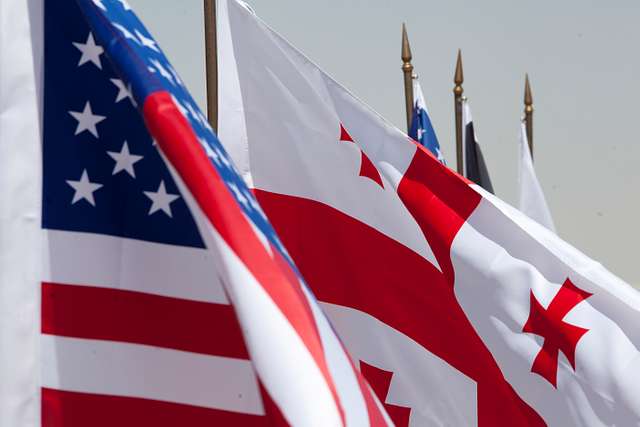
Image Credit: PICRYL
BACKGROUND: The U.S. is moving quickly to build on President Trump’s intervention in the war between Armenia and Azerbaijan and its resolution. A U.S. delegation recently travelled to Armenia to begin the implementation of the Trump Route for International Peace and Prosperity (TRIPP), which Washington, Baku, and Yerevan agreed to in August. The delegation has just announced an initial investment of US$145 million to begin building this road, thus confirming Washington’s presence in the Caucasus. Beyond this intervention, the administration is strengthening ties with Kazakhstan and Uzbekistan and may even be planning a trip there.
In Georgia, an enduring U.S. presence at Anaklia would have repercussions beyond its possible impact on Georgia’s domestic politics. Due to Ukraine’s success in driving the Black Sea Fleet out of the battle theater, Russia is building a strategic naval hub at Ochamchire in Abkhazia, which will clearly be an enduring threat to Georgia. Likewise, China’s large investments throughout the Black Sea region aim to obtain lasting economic-political influence over the entire littoral. Both these processes will clearly aim to exclude Western influence from Georgia and beyond. A U.S. presence in Anaklia would provide a check on both powers’ ambitions and preserve an option for all the states of the Caucasus and the Black Sea littoral in general. Even if the Trump Administration has no interest in or incentive to influence Georgian democratization, it does seek to expand U.S. economic presence in both the Caucasus and Central Asia to check China and Russia. Since Central Asia’s economic-political growth depends on its ability to trade in an unhampered way with the West through secure economic corridors leading to Europe, a U.S. presence in Anaklia, together with TRIPP and an enhanced U.S. position in Central Asia, likewise augments the economic-political independence of Central Asian states.
Several years ago, Georgia rejected plans that were already in place for a Western firm to build the port at Anaklia and awarded the contract to the China Communications Construction Company (CCCC). Yet despite that decision and the fact that the China Railway Tunnel Group is building a highway that would connect Western Georgia to Russia, and Chinese workers are constructing an East-West highway across Georgia, no port has been built. A report by Civic Idea, an independent Georgian think tank, points out that China’s interest in this deep-water port coincides with its presence at the port of Poti, which is part of the larger Free Industrial Zone. In both these cases, the report cited strong evidence of Georgian corruption at China’s expense, leading to delays in construction at Anaklia, even as the Western presence has been excluded.
IMPLICATIONS: Therefore, an opportunity exists for a U.S. initiative to recapture the contract for building a port at Anaklia. While this would require a strong negotiating team, it is nevertheless conceivable and desirable not only for the West but for other Central Asian and South Caucasus states. At present, the idea of the Middle Corridor seems to be the most likely vehicle for connecting China, Central Asia, and the Caucasus with Europe. TRIPP provides a major impetus to land-based trade for this intercontinental project. However, a passage through Anaklia not only benefits Georgia by connecting it to the Middle Corridor; it also offers a maritime route for shippers in both Europe and Asia that would increase trade and connectivity. The opportunity of sending bulk cargoes through the Black Sea would permit traders to reach more markets than those accessible exclusively by land-based trade and transport flows. Cargoes requiring maritime transport could originate in China or Central Asia, or in Romania, Bulgaria, Ukraine, and Russia (once peace is achieved in the current Russian war against Ukraine), and be shipped at reduced cost to any other member of the corridor. This would stimulate economic exchanges and reduce shipping costs, facilitating mutual cooperation on safeguarding either or both extensions of this corridor, thereby improving regional cooperation and security among the members.
Central Asian states, which are all seeking to utilize the Caspian Sea for expanded international trade to Europe, would profit greatly from a reliable, secure maritime passage westward. Uzbekistan, which is doubly landlocked, has called for a global pact guaranteeing transit and the creation of an international logistics forum for landlocked states. It is negotiating with its neighbors to buy ships and operate ferries on the Caspian Sea to buy and sell goods and overcome existing bottlenecks. To the extent that it can move cargoes to and from its neighbors on the Caspian Sea, the opening of a secure and reliable route from the Caspian ports of Azerbaijan to the Black Sea and thence to Europe or to reverse that process would constitute an enormous stimulus to its economy and those of its neighbors. Similarly, a reliably functioning port in Anaklia that is not beholden to Russo-Chinese or Georgian corruption would enhance Georgia’s economy, along with those of Armenia and Azerbaijan. TRIPP will undoubtedly stimulate Central Asian economic integration with Armenia and Azerbaijan, and a reliable maritime trade route through Anaklia will also similarly redound to Georgia’s benefit.
A secure U.S. position in Anaklia and its accompanying infrastructure also has potentially profound strategic implications. It would prevent both China and Russia from monopolizing Black Sea trade and geopolitics. Even if this port ultimately services large-scale Chinese trade going to Europe or from there to China, a U.S. presence would limit the amount of influence that China can wield in Georgia and beyond its borders. It would contribute to ensuring a stable series of long-term protocols that will benefit Georgia, along with other South Caucasus states and Central Asian traders. The economic benefits of a well-managed port complex would provide positive political incentives for Georgia, while the established presence of U.S. interests would act to deter Russia’s threat of military action and make it harder for Russia to operate militarily in the Black Sea.
Persuading the Trump Administration to make an offer to Georgia that it cannot refuse regarding Anaklia is admittedly a hard sell, especially when the Black Sea is a war zone and Georgian Dream is seeking to neutralize the domestic opposition with Moscow’s support. Nevertheless, inaction increases the costs to Washington and its allies, especially after putting down a marker in the Caucasus by investing in TRIPP. If Anaklia and the maritime arm of intercontinental trade and connectivity through the Caucasus are dominated by U.S. adversaries, they will use that opportunity to undermine TRIPP and negate its benefits. That outcome will surely undermine the Administration’s continuing investment in regional peace and could catalyze a return to warfare. Moreover, inaction also permits China and Russia to throttle the Administration’s now rising interest in Central Asia, as expressed in rumors of a presidential visit. It would also dash the hopes of Central Asian states for a more vigorous relationship of mutual benefit with Washington and Europe.
CONCLUSIONS: The Chinese and Russian rivalries with the U.S. are global. They are not confined to Taiwan, Ukraine, or even Europe. Moscow and Beijing are contesting U.S. power, influence, and values globally, not least in Central Asia and the Caucasus. Therefore, it is arguably in the interest of Washington and those states that wish to partner with it to enhance their partnerships when opportunities present themselves, even if economic and political risk is involved. A Western initiative linking Washington with interested European and Eurasian states regarding Anaklia is therefore probably less risky than has been imagined. The benefits of offering to develop Anaklia as a major port center managed according to international standards outweigh these risks in the new regional environment, thus meriting serious consideration.
AUTHOR’S BIO: Stephen Blank is a Senior Fellow at the Foreign Policy Research Institute, www.fpri.org.
Bidzina Ivanishvili: Governing from the Shadows
By Gabriel Chubinidze and Stephen F. Jones
Ivanishvili is the linchpin in the current Georgian political system. If we are to understand the nature of Georgia’s political system today, we need to examine Ivanishvili's personality and history more closely. In Georgia, outsized personalities have always played a decisive role in politics and have consistently abused their power. Ivanishvili is no different. But we argue that he has gone beyond his predecessors, Eduard Shevardnadze and Mikheil Saakashvili, to create an illiberal and anti-European system which leaves no political space for either party opponents or civil society activists. Currently, almost all of Georgia’s major opposition party leaders are in prison. We call it a quasi-dictatorship. In 2025 Ivanishvili’s Georgia has moved closer to the model of Alexandr Lukashenko in Belarus than the illiberal model established in Hungary of Victor Orban.
Read Bidzina Ivanishvili: Governing from the Shadows

The Strategic Dilemma of Secondary Sanctions in Central Asia and the South Caucasus

By Charlotte Krausz
President Trump's recent imposition of 25 percent tariffs on India for importing Russian oil signals a potential expansion of secondary sanctions to other Russian energy customers. The policy shift threatens to extend punitive measures to post-Soviet states in Central Asia and the South Caucasus that remain heavily dependent on Russian energy infrastructure. While aimed at curtailing Russia's war revenues, such measures could paradoxically drive these strategically important regions closer to Moscow's orbit, undermining years of U.S. and EU engagement in the region.
BACKGROUND: In his statements, Trump has criticized countries that import oil and accused them of funding the “Russian war machine.” By stopping Russia’s revenues from its largely petrostate-based war economy, the U.S. seeks to thwart Russian advances in Ukraine and punish Putin. Yet imposing high tariffs on countries dependent on Russia for their energy supply, especially on post-Soviet states in Central Asia and the South Caucasus, could have far worse ramifications for U.S. and EU aspirations in the region and drive former Soviet republics closer to Russia once more
A key example of this policy shift occurred in the first days of August 2025, when President Trump imposed a 25 percent tariff (later raised to 50 percent) on India for being a major buyer of Russian oil. Randhir Jaiswal, a spokesman for the Foreign Ministry of India, said that “the targeting of India is unjustified and unreasonable.” Given that India buys one-third of its crude oil from Russia, India is unlikely to change course, and the tariffs have badly damaged relations with India. The move is especially surprising given Trump’s past cordial relationship with Modi and the Biden administration's geopolitical courting of India. Biden even hosted Modi for a state dinner in June 2023.
In a recent opinion piece in The Washington Post, Andriy Yermak, Ukraine’s chief of the presidential office, praised the high tariffs on India. Yermak declared that it was a “great first step” but called for more pressure and for a “full economic blockade” of Russia. While Ukraine understandably wants everything possible to be done to end the war and bring peace, not all avenues will lead to the desired outcome. The decision for Europe to get off Russian oil following the full-scale invasion of Ukraine in 2022 was apparent and necessary. And though it led to an increase in energy costs and inflation, alternative energy sources were found, and Russia lost a vital stream of revenue. The expansion of these sanctions, this reasoning goes, will help the war effort and thwart Russia’s imperial ambitions.
But this strategy could be disastrous if poorly applied, especially in Central Asia and the South Caucasus, where countries are still dependent on Russia for energy needs. The energy landscape in Central Asia reflects decades of Soviet-era infrastructure and integration. Central Asian countries, except oil-rich Turkmenistan, remain highly reliant on Russian energy infrastructure and benefit from shared Soviet-era energy grids and the Eurasian Economic Union.
The South Caucasus presents a similar case. Georgia and Armenia, even more so, are largely dependent on Russian oil and have limited energy supply options. Georgia lacks domestic oil refineries and imports primarily from Russia and Azerbaijan, with Russian imports recently surpassing Azerbaijani supplies for the first time in eighteen years despite troubled bilateral relations. Armenia faces even greater constraints, with Gazprom maintaining a monopoly over natural gas imports and distribution. Natural gas made up 80 percent of Armenia’s energy imports in 2020. The rest comes from Iran in an electricity-for-natural trade deal. Armenia’s natural gas imports are delivered through the North-South Gas Pipeline via Georgia. Other regional pipelines bypass Armenia due to geopolitical conflicts with Azerbaijan and Turkey.
IMPLICATIONS: Following the closure of European markets to Russian oil after the 2022 invasion of Ukraine, Russian energy companies redirected their focus towards Central Asia, leading to an increase in Russian energy imports into the region. Russia and Central Asian countries rely on the same Soviet-era-built energy grid and EAEU membership. Russian investment in Central Asia’s energy infrastructure has expanded since 2022, including nuclear power plants in Uzbekistan and Kazakhstan and hydroelectric facilities elsewhere. Even Kyrgyzstan, despite being a renewable energy leader, plans to double its Russian oil imports by 2040.
Despite their energy dependence on Russia, both Armenia and Georgia have sought EU membership in the past. Both countries have undergone democratic revolutions, although their current political situations are tenuous. After Russia failed to defend Armenia from Azerbaijan’s September 2023 offensive, public opinion of Russia dramatically decreased, with two-thirds expressing a negative view and 40 percent viewing Russia as a threat. When the Georgian government withdrew from EU accession in November 2024, protests lasted for months demanding a reversal. Armenia and Georgia also share ties to Europe and the U.S. in terms of tourism, culture, and ethnic diasporas.
The U.S. imposing sanctions or high tariffs on countries in Central Asia and the Caucasus has the potential to undo decades of U.S. outreach to these regions. These could not separate their energy supplies from Russia without great harm to their own economies, nor would such a tradeoff be worth it to them. Antagonist trade policies would increase anti-American sentiment, inhibit future American investment, and thrust these post-Soviet states back into Moscow’s orbit.
Secondary sanctions on Russian oil importers are not assured to change the situation on the ground in Ukraine, which has been at a territorial standstill for months. Russia has proved more than capable of keeping its war machine growing and expanding under international sanctions. These approaches are less effective than simply supplying Ukraine directly with the weapons it needs to liberate territory and defend its skies.
Should the U.S. see strategic importance in weaning post-Soviet republics off Russian oil, it could encourage alternative energy routes and the use of renewable energy. Tajikistan and Kyrgyzstan are already at the forefront in renewables like wind and hydroelectric power. A key alternative route could source energy from Turkmenistan. Turkmenistan has the fourth-largest natural gas reserves in the world. As Michael Doran from the Hudson Institute explains, “We just need a few kilometers of pipeline to be built in order to connect up Turkmen gas to Azerbaijan, which can then flow comfortably to Europe across Georgia … Turkmen Gas could end the dependence of Europe on Russian gas.” In addition, the U.S.-brokered peace treaty between Armenia and Azerbaijan presents new energy options for Armenia. If Armenia’s borders with Azerbaijan and Turkey were to be opened, it could diversify its energy imports rather than remaining reliant on Russia.
CONCLUSIONS: Post-Soviet states in Central Asia and the Caucasus are caught between a revanchist Russia and growing ties with the West. Central Asia and the South Caucasus have much to offer the West, from energy deposits to critical minerals, emerging democracies, and tourism. A “full economic blockade” would not only be impossible to enforce but also detrimental to long-term U.S. interests.
The countries of the Central Asia and Caucasus regions are aware of the great power rivalries surrounding them. They understand their precarious situations and the importance of not antagonizing Russia. If the U.S. wants to have a presence in Central Asia and the South Caucasus in the decades to come, it must respect the inherent multilateralism of these regions. As the war in Ukraine drags on, Washington must decide to what extent it sees importance in stopping the flow of Russian oil. It must weigh the value of cutting Russian oil revenues against future relations with post-Soviet countries.
AUTHOR’S BIO: Charlotte Krausz is a researcher at the American Foreign Policy Council, a Washington-based think tank. She is an undergraduate at the University of St. Andrews studying International Relations and Persian.
Azerbaijan's Whirlwind Months of Diplomacy Highlight Its Growing Importance

By Emil Avdaliani
Azerbaijan, akin to nations in Central Asia and the Gulf, endeavors to balance relations among major powers in order to avoid exclusive alignment with any singular geopolitical axis. Baku’s recent diplomatic initiatives reflect this strategy, which has contributed to enhancing the nation’s regional standing: relations with Iran have improved, engagement with China has intensified, and the European Union now seeks deeper political cooperation with Baku.

BACKGROUND: Ever since the return of Nagorno-Karabakh to Azerbaijan in 2023 the country has pursued a much more diversified foreign policy by simultaneously building closer ties, beyond what it already had with Turkey and Russia, with China, Iran, the EU, the Persian Gulf countries, Pakistan, Israel and has moved to improve relations with the United States, which suffered during the Biden administration due to the latter’s emphasis on human rights and democracy building issues.
Since the reintegration of Nagorno-Karabakh into Azerbaijan in 2023, the country has adopted a markedly more diversified foreign policy, strengthening existing ties with Turkey and Russia while simultaneously deepening relations with China, Iran, the EU, the Persian Gulf states, Pakistan, and Israel, and taking steps to improve strained relations with the U.S., which had deteriorated under the Biden administration due to its prioritization of human rights and democratic governance.
This dynamic has become particularly pronounced in recent months. In April, Iranian President Masoud Pezeshkian visited Baku to engage in discussions aimed at enhancing bilateral relations. Similarly, in April, the EU’s foreign policy chief, Kaja Kallas, visited Baku, where she met with President Ilham Aliyev and Foreign Minister Jeyhun Bayramov; during the visit, both parties agreed to resume negotiations on a new partnership and cooperation agreement.
A significant shift occurred in Baku–Beijing relations when, in April, the two countries elevated their ties to the level of a comprehensive partnership during the Azerbaijani president’s visit to China. While the development of the Middle Corridor remains a priority, the agreement with Azerbaijan places additional emphasis on enhancing bilateral cooperation in investment and business. As the largest economy in the South Caucasus, Azerbaijan serves as a key entry point for China into the region.
Similarly, in April and May, Azerbaijan conducted meetings with Ukrainian officials—an uncommon move given Baku’s cautious stance on the war. However, in the context of increasingly strained relations with Russia, Baku’s outreach to Kyiv appears intended to signal displeasure to Moscow. Russia continues to deny any involvement in the downing of an Azerbaijani aircraft over its territory, a claim Baku maintains. Consequently, relations have deteriorated, with President Ilham Aliyev declining to attend the Victory Day celebrations in Moscow in May.
In May, Uzbekistan and Azerbaijan formalized their strategic partnership, enabling Tashkent to become a party to the Shusha Declaration, originally signed between Turkey and Azerbaijan in 2021. Azerbaijan has maintained an active diplomatic presence in Central Asia, and although the Caspian Sea functions as a geographic divider, the South Caucasus and Central Asia are increasingly interconnected.
In late May, Azerbaijan hosted a trilateral summit with the leaders of Turkey and Pakistan, marking a new chapter in their cooperative relations. The geopolitical dimension of this partnership is becoming increasingly significant, particularly in light of Pakistan–India tensions and New Delhi’s growing ties with Armenia. The three Islamic nations also advanced collaboration in the political, economic, and military spheres.
Azerbaijan has also recently emerged as a venue for negotiations between opposing parties. For example, in April, Turkish and Israeli delegations convened in Baku to discuss the establishment of a potential “deconfliction mechanism” aimed at preventing direct clashes between the two states in Syria. In May, Baku also hosted Russian and German political representatives for talks on reviving the “Petersburg Dialogue,” which had been suspended since Russia’s invasion of Ukraine. This dimension of Azerbaijan’s diplomacy is particularly noteworthy, underscoring the country’s growing reputation as a credible and impartial facilitator of dialogue between the conflicting sides.
IMPLICATIONS: This diplomatic activism underscores Azerbaijan’s rising regional significance and its strategic efforts to position itself as a capable middle power—one that can exert influence within its immediate neighborhood while simultaneously acting as a crucial partner to rival great powers.
Evolving patterns of connectivity across Eurasia have been a key factor in enhancing Azerbaijan’s regional role. The Middle Corridor, which extends from the Black Sea to Central Asia and effectively links the EU with China, traverses Azerbaijan (alongside Georgia). This route enables both the EU and China to circumvent Russian territory, while Azerbaijan’s significance is further elevated by the EU’s demand for Caspian gas. Additionally, Brussels has intensified outreach to Central Asia, with which European leaders are increasingly engaging in trade and investment. The recent EU–Central Asia summit, where the Union pledged €12 billion in investments, exemplifies the rising importance of the Middle Corridor. A portion of this investment is earmarked for infrastructure upgrades along the route, particularly in Azerbaijan.
Azerbaijan has also assumed a more critical role for China than in previous years. From Beijing’s perspective, Azerbaijan functions as a gateway to the Black Sea region. Moreover, China views Azerbaijan as a promising market for its rapidly expanding electric vehicle (EV) industry. Data from the past year indicate that Chinese brands are gaining increasing popularity in Azerbaijan, with discussions underway regarding potential joint production ventures. The country may also serve as a strategic hub for the distribution of Chinese EV models throughout the South Caucasus and beyond.
Azerbaijan’s increasing regional significance has prompted Iran to pursue full normalization of relations with its northern neighbor. During the Iranian president’s visit to Baku, Azerbaijani President Ilham Aliyev declared, “Our goal, our primary goal is to raise Azerbaijani–Iranian interstate relations to a higher level.” This aspiration was accompanied by tangible measures. On May 21, Iran announced the execution of the sole assailant responsible for the 2023 attack on the Azerbaijani embassy. Additionally, Iran and Azerbaijan conducted joint military exercises—Araz-2025. Diplomatic relations have now been fully restored, and cooperation on the International North–South Transport Corridor has been expanded. Consequently, Tehran and Baku have reduced tensions to levels seen prior to 2020, before the Nagorno-Karabakh conflict.
Iran’s strategic calculations also reflect concerns about preventing Azerbaijan from decisively aligning with Israel or the U.S. Azerbaijan has recently been identified as a prospective candidate for inclusion in the Abraham Accords, a U.S.-led initiative aimed at improving Israel’s relations with the Islamic world. The U.S. Special Envoy for the Middle East, Steve Witkoff, indicated that Azerbaijan could join the Accords in the near future. While he mentioned other potential members—including Armenia, Syria, and Lebanon—Azerbaijan stands out due to its geographic location north of Iran. Although Baku and Tel Aviv have historically maintained close ties, formal accession to the Accords would significantly elevate Azerbaijan’s stature in the Middle East and strengthen its relationship with the U.S. Given the persistent challenge posed by Iran’s nuclear program, the Islamic Republic will remain a central focus of U.S. foreign policy for the foreseeable future. Accordingly, Azerbaijan’s position north of Iran will only enhance its strategic relevance for both the U.S. and Israel. This development will, in turn, improve Baku’s bargaining leverage, thereby motivating Iran to pursue increasingly cordial relations with its northern neighbor.
Another factor driving normalization is the Islamic Republic’s growing interest in maintaining peaceful relations with Azerbaijan, particularly as it faces mounting challenges. These include sustained Israeli strikes against its Axis of Resistance, the continued impact of the U.S. maximum pressure campaign, and tensions with Turkey arising from the evolving balance of power in Syria. In this context, Tehran appears increasingly inclined to avoid additional regional friction. Indeed, it may ultimately be compelled to tolerate Azerbaijan’s potential accession to the Abraham Accords, provided such a development does not constitute a direct security threat to the Islamic Republic.
CONCLUSIONS: The recent flurry of diplomatic activity surrounding Azerbaijan underscores the country’s rising significance in regional affairs. Transit, trade, and investment constitute the central pillars of Baku’s engagement with regional and global powers. This approach aligns with what is commonly termed a multi-vector foreign policy—a strategic orientation wherein no single major power is prioritized. Instead, multi-alignment is pursued as a means to enhance a country’s international standing. In a global context marked by great power rivalry, the erosion of international norms, and the ascendance of middle powers, Azerbaijan—like many states in Central Asia and the Middle East—seeks to balance among dominant actors to avoid exclusive alignment with any one geopolitical center. Thus far, this strategy has served Baku well, and it is likely to persist amid the continuing emergence of an increasingly multipolar international system.
AUTHOR’S BIO: Emil Avdaliani is Professor of International Relations at the European University in Tbilisi, Georgia, and a scholar of the Silk Roads. He can be reached on Twitter/X at @emilavdaliani.
Visit also