By: Mathieu Lemoine
South Korea’s first summit with all five Central Asian presidents, held in Seoul on September 16, gave new institutional weight to a relationship more than three decades old. Critical minerals and supply-chain security featured prominently, but the significance of the new framework will depend less on how many resources South Korea secures than on what its engagement leaves behind in Central Asia. Seoul wants more resilient and diversified supply chains. Central Asian governments increasingly want foreign interest in their resources to generate processing, technology, skills and industrial development. Seoul is seeking diversification; Central Asia is seeking transformation.
BACKGROUND:
The summit did not mark South Korea’s arrival in Central Asia. The Korea-Central Asia Cooperation Forum has existed since 2007, while successive governments in Seoul have incorporated the region into broader Eurasian strategies. Moon Jae-in’s New Northern Policy and Yoon Suk-yeol’s K-Silk Road initiative both preceded the current framework, and the summit itself had originally been envisaged under Yoon.
What changed in September was the level of institutionalization. For the first time, South Korea and all five Central Asian states met in a common presidential format, upgrading cooperation that had previously been conducted mainly through bilateral relations and ministerial-level mechanisms. An inaugural C5+1 Industry Ministers’ Meeting also created a multilateral channel focused on industry, supply chains and critical minerals.
The new framework nevertheless reflects a changing international economic environment. Russia’s full-scale invasion of Ukraine, disruptions to global trade and growing competition over strategic inputs have increased South Korea’s incentive to diversify sources of key materials. Matteo Fumagalli, Professor of International Relations at the University of St Andrews, sees this emphasis on resilience as an addition to longstanding Korean priorities rather than a fundamental change of direction.
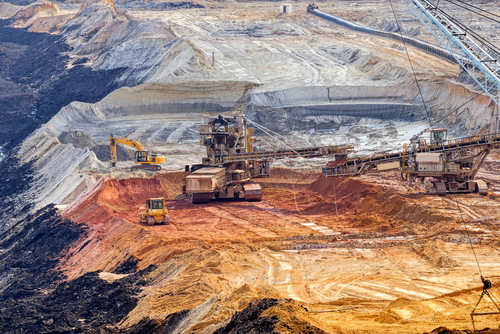
Central Asia is attractive in this context because of its reserves of uranium, tungsten and other strategic resources. South Korea, meanwhile, depends heavily on imported minerals for industries including semiconductors, batteries and steel.
But the priorities announced around the summit went beyond extraction. The first C5+1 Industry Ministers’ Meeting identified industrial infrastructure, critical-mineral supply chains, technology cooperation and talent development among its main areas of work. Importantly for Central Asian governments, the stated ambition also included refining, smelting, higher-value processing and manufacturing.
The question is whether this political and institutional momentum can now be converted into commercially viable projects.
IMPLICATIONS:
The first test of the new framework is not how many agreements are signed, but what kind of economic relationship develops around Central Asia’s resources.
For the region, increasing mineral exports would represent only a limited form of success. The more consequential question is whether Korean investment creates capabilities that remain locally: processing facilities, engineering expertise, laboratories, trained workers and suppliers able to meet demanding industrial standards.
This distinction is particularly important when governments speak of technology transfer. Purchasing Korean machinery does not in itself create technological capacity. Aidar Kurmashev of the Kazakhstan Institute for Strategic Studies argues that meaningful transfer requires local engineers able to control production processes, laboratories capable of testing quality, maintenance capacity and suppliers able to meet industrial specifications.
Kazakhstan’s automotive sector provides an indication of what a deeper model of cooperation could look like. Korean-backed vehicle production has increasingly been accompanied by efforts to localize components and connect industrial investment with technical education. Its longer-term significance will depend on whether domestic suppliers eventually acquire capabilities that allow them to serve several customers rather than remain dependent on a single assembly operation.
This is where South Korea could offer something distinctive. Korean companies can combine technology and production management with knowledge of the standards required by advanced industrial customers. If those capabilities are embedded locally, they could help Central Asian firms enter production networks that would otherwise be difficult to access.
Yet the constraints are considerable. Central Asia is landlocked, divided into several relatively small markets and geographically distant from Korean production centers. Transport therefore remains expensive and complex. The Middle Corridor has attracted growing attention as Central Asian governments seek additional routes across the Caspian and South Caucasus, but from South Korea even an overland Eurasian connection requires goods first to reach the continent by sea because transit through North Korea is unavailable.
A second challenge concerns the regional character of the new framework. A C5+1 mechanism does not automatically create a regional economic relationship.
Kazakhstan and Uzbekistan have traditionally dominated South Korea’s engagement with Central Asia because of their larger markets, industrial bases, resource endowments and extensive human ties. Kyrgyzstan, Tajikistan and Turkmenistan have different economic structures and offer different forms of cooperation. Replicating the Kazakh or Uzbek relationship across all five countries is therefore neither realistic nor necessary.
A more viable model would combine bilateral investment with regional economic effects. Large industrial projects will continue to be negotiated primarily between individual governments and companies, but they can acquire a regional dimension if they generate supply chains, services and commercial links across borders.
Smaller Central Asian economies do not each need a Korean assembly plant to benefit from deeper cooperation. They could participate through specialized suppliers, logistics, technical services, training or other activities connected to regional production networks. Jieon Lee, Professor in the Department of Central Asian Studies at Hankuk University of Foreign Studies, also points to areas such as water management, human-resource development, environmental policy and digital governance, where cooperation could create regional benefits even if not every country participates in the same way.
This differentiated model also changes how South Korea’s growing role should be understood geopolitically. Central Asian governments are not looking for Seoul to replace China, Russia, the European Union, Japan, Türkiye or the Gulf states. They are seeking additional options.
The value of diversification lies not in accumulating foreign partners for its own sake, but in reducing structural dependence. A producer with several potential customers, access to alternative technologies, multiple financing sources and more than one workable transport route has greater room for maneuver. Adding another external actor without changing those underlying dependencies achieves much less.
South Korea enters this environment with important advantages. It retains a comparatively non-threatening profile in Central Asia and does not carry the same geopolitical baggage as some larger powers. Korean culture, education and business also enjoy considerable visibility, particularly in Kazakhstan and Uzbekistan.
But this goodwill should not be taken for granted. If Korean engagement becomes associated primarily with securing access to raw materials, it risks reproducing the same frustrations Central Asian governments increasingly express toward extractive forms of external partnership. The credibility of the new framework will therefore depend on whether industrial cooperation produces visible local value.
That makes implementation more important than diplomatic architecture. The summit and the new C5+1 mechanisms can create political direction and regular channels for cooperation, but they cannot by themselves make projects commercially viable. Financing, transport costs, regulatory conditions, reliable customers and private-sector incentives will ultimately determine which initiatives move forward.
CONCLUSIONS:
The September summit has institutionalized South Korea’s relationship with Central Asia. It has not yet transformed it.
The decisive phase will take place below the level of presidential diplomacy. Memoranda must become feasibility studies, financing agreements, actual investment and operating facilities. Progress should therefore be measured not only by the volume of minerals exported or the number of agreements announced, but by whether cooperation produces processing capacity, competitive suppliers, skilled engineers and commercially viable production networks.
The C5+1 format should likewise not be judged by whether it creates identical Korean relationships with all five Central Asian states. Kazakhstan and Uzbekistan will remain the principal economic anchors, while smaller economies can participate through supply chains, services and regional initiatives.
South Korea does not need to become Central Asia’s dominant external actor for the new framework to matter. Its opportunity lies in the overlap between Seoul’s search for resilient supply chains and the region’s search for investment, technology and greater productive capacity. If that overlap creates durable local capabilities, the summit may mark a substantive change. If it produces mainly new memoranda and meetings, the institutional architecture will have advanced further than the economic partnership.
AUTHOR’S BIO:
Mathieu Lemoine is a governance, rule of law and public sector reform professional with experience across UNDP, USAID, OSCE, EU institutions and election observation missions. He has worked extensively on governance, elections, civil society and regional dynamics in Central Asia, Eastern Europe and the South Caucasus.
By: Sobir Kurbanov and Eldaniz Gusseinov
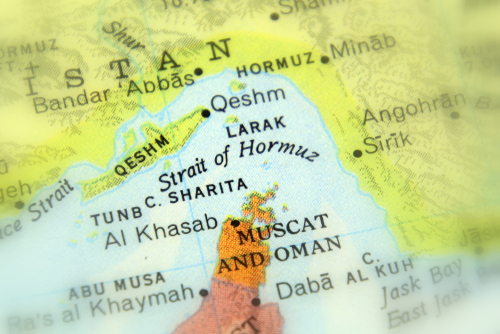
The renewed closure of the Strait of Hormuz, which followed the strikes on Iran of 28 February 2026, has tested world energy markets without producing the price spike that most forecasters expected, and the main reason lies in China. Chinese crude imports fell to 7.1 million barrels per day in June against a 2025 average of 11.6 million, while refinery utilisation dropped to 57.7 percent. For Central Asia the consequence arrives indirectly, because the same weak Chinese demand that has capped crude prices is also depressing the steel, iron ore and ferroalloy prices on which Kazakhstan’s metallurgical sector depends. The chokepoint that Beijing is building Central Asian corridors to bypass is now transmitting its own shock into the region through the very relationship those corridors are meant to deepen.
BACKGROUND:
The Strait of Hormuz carries roughly 20 percent of global oil consumption and a comparable share of liquefied natural gas, with no overland substitute at scale for most Gulf producers. The International Energy Agency warned on 12 August 2026 that Hormuz-related losses would cut global oil supply by 4.3 million barrels per day across the year, and that a projected demand increase of 850,000 barrels per day had reversed into a decline of 1.6 million. Prices rose sharply, yet the escalation that many analysts anticipated did not materialise, because the largest buyer withdrew from the market at the same moment.
On 5 March 2026 China ordered its largest refiners to suspend diesel and gasoline exports, and refiners began cutting throughput and bringing scheduled maintenance forward within days. A structural change compounded the cyclical one. GL Consulting estimates that Chinese gasoline consumption will fall 5.5 percent in 2026, the second steepest decline after the lockdown year of 2022, with retail prices up roughly 30 percent since late February and electric vehicles absorbing a growing share of the fleet. China entered the disruption holding approximately 300 million barrels of cheap crude accumulated over the 14 months before the war, a buffer that is substantial and finite.
Central Asia is too integrated into external markets to insulate itself from a shock of this size, and yet the shock does not arrive directly. Kazakhstan ships most of its crude westward through the Caspian Pipeline Consortium rather than through the Gulf, and the region’s hydrocarbon trade with China moves by pipeline, which protects volumes while leaving prices exposed. External disturbances therefore reach Central Asian economies through three intermediaries, Russia, China and the European Union. Residents of the region learned the shape of that transmission in 2022, when the war in Ukraine reached household budgets through remittances, Russian banking channels and rerouted transit rather than through any direct commercial link. The present episode follows a different path. In Temirtau and Aktobe, where employment is concentrated in steel and ferroalloy plants, and in Karaganda region, the connection between a maritime chokepoint 3,000 kilometres away and local order books is neither obvious nor remote.
IMPLICATIONS:
The transmission runs through Chinese construction. China accounts for roughly half of world steel output, and construction absorbs about 49 percent of that steel, down from 58 percent in 2020. The property downturn has deepened rather than stabilised. Between January and May 2026, housing sales declined 10.8 percent by floor area and 13.5 percent by value, new construction starts fell 22.6 percent and property investment fell 16.2 percent. Weak demand for steel pulls down the inputs that Kazakhstan sells into it.
According to analysis published by the Kazakh sector channel Metals and ESG Trends.KZ, falling steel demand has depressed prices for iron ore, ferrochrome, silicomanganese and ferrosilicon, with ferrosilicon down by approximately 30 to 35 percent and pressure building on Qarmet, ERG and the country’s independent ferroalloy producers. These figures come from a sector channel rather than from exchange data and should be treated as indicative, though they are consistent with the direction of Chinese construction indicators.
The oil shock is mainly a reversible supply-and-refinery disruption, although China’s underlying oil-demand trend is weakening. The ferrous challenge is more structural: China’s property sector is unlikely to restore the previous steel-demand regime, while Chinese overcapacity may intensify competition in Kazakhstan’s surrounding markets. Kazakhstan therefore needs not only short-term support, but a multi-year strategy of market diversification, productivity improvement and product upgrading.
The more consequential implication concerns the logic of integration itself. Chinese investment in processing industries across Central Asia has reached an estimated US$ 11.8 billion against US$ 4.1 billion in energy, reversing the historically extractive pattern, and the China-Kyrgyzstan-Uzbekistan railway began construction in 2025. Nightingale Int. argued in October 2024 that Beijing would move from buying commodities in the region to embedding it in Chinese industrial chains, a forecast that BYD’s full localisation of electric vehicle production in Uzbekistan has since borne out. That investment is driven substantially by the same chokepoint exposure now visible at Hormuz. Central Asia is therefore receiving Chinese capital because China needs a continental rear, and absorbing Chinese demand shocks because it is becoming one. Deeper integration raises both the opportunity and the correlation.
Transit revenue moves with the same cycle, since corridor volumes through Central Asia are weighted toward Chinese cargo, and traffic on the Trans-Caspian Transport Corridor reached 4.5 million tonnes in 2024 before easing in 2025. Kyrgyzstan and Tajikistan face a different version of the problem. Neither exports ferroalloys at scale, and both carry sovereign debt to China equivalent to roughly 9.5 percent and 6 percent of GDP respectively, servicing obligations denominated against a creditor whose own fiscal position is tightening. A prolonged Chinese slowdown compresses their repayment capacity and their construction pipelines at once.
Kazakhstan’s emerging answer is visible in Karaganda region, where new copper extraction and processing projects are advancing and diversification into non-ferrous metals has become a working scenario for the sector. The direction is sound, and the caveat is familiar. Announced projects are not deployed capacity, and copper demand is itself concentrated in Chinese buyers. Diversification that changes the commodity while leaving the customer unchanged reduces exposure to one construction cycle and not to one counterparty.
CONCLUSIONS:
The Hormuz disruption has demonstrated that Central Asia’s exposure to global shocks is now mediated primarily through China, and that this channel operates in both directions. Beijing’s search for continental redundancy is drawing capital, factories and corridors into the region, while the maritime vulnerability that motivates that search transmits demand shocks back along the same route. If flows through the strait normalise within 2026, the oil-linked component will unwind. The ferrous component will not, because it rests on a Chinese property contraction that predates the conflict and is expected to persist. For Central Asian governments the practical lesson concerns buyers rather than corridors. Multi-vector policy has been articulated mostly in terms of routes and creditors, and the present episode indicates that the diversification that matters most is the diversification of demand.
AUTHOR’S BIOS:
Sobir Kurbanov is an international development expert and fellow at Nightingale Int. with over 20 years of experience in partnership-building, complex market reforms, program management, and teaching policy reform, public sector economics, and industrial policy across Eurasia. His expertise spans macroeconomic management, public sector governance, private sector development, trade, investment climate, infrastructure, and IF4D portfolio management, with a strong track record of working with bilateral and multilateral donors (SECO, DFID, USAID, IMF, WB, EU, UN), governments, CSOs, and think tanks, and leading cross-functional teams to advance evidence-based policy solutions.
Eldaniz Gusseinov is co-founder and Head of Research at Nightingale Int. and a non-resident fellow at Ibn Haldun University’s Haydar Aliyev Center for Eurasian Studies.
By Suren Sargsyan
One year has passed since Armenia and Azerbaijan signed the Washington agreement under the direct mediation of President Trump. Nevertheless, the TRIPP project, an approximately 40-kilometer route that would constitute the shortest segment of the Middle Corridor, has yet to be implemented, leaving the broader project incomplete. Notably, the principal obstacles to its implementation originate neither in Armenia nor Azerbaijan but are predominantly external factors that continue to impede the project’s realization.

Image Source: Alam and Blancas (2026), Map O.1, "Main trade corridors connecting Asia and Europe." World Bank. CC BY 3.0 IGO.
BACKGROUND:
In August 2025, the Trump administration initiated a process aimed at normalizing relations between Armenia and Azerbaijan, in which an enhanced U.S. strategic presence in the South Caucasus, particularly in Armenia, was expected to play a significant role. A central element was the proposed Trump Route for International Peace and Prosperity (TRIPP) on Armenian territory, which would provide Azerbaijan with a direct connection to its Nakhchivan exclave without transiting Iran. The TRIPP would also offer Armenia and Azerbaijan an opportunity to strengthen their integration into the Middle Corridor, connecting Central Asia with Europe via the Caspian Sea, the South Caucasus, and Turkey.
In other words, the TRIPP would facilitate the development of the Middle Corridor through Armenia and Azerbaijan, which, according to the Trump administration, would contribute significantly to the normalization of Armenian-Azerbaijani relations. From a strategic perspective, the route also offers the prospect of transporting Central Asian energy resources to Europe while bypassing Russia and Iran. At the same time, it would provide Central Asian states with greater opportunities to diversify their export routes and reduce their dependence on China. Kazakhstan has shown particular interest in the project, as reflected in its deepening relations with Armenia, alongside its traditionally close ties with Azerbaijan.
Nevertheless, the project has experienced significant delays despite sustained efforts by Washington to advance its implementation. The U.S. has allocated financial resources for infrastructure development, established a dedicated fund to support the project, and appointed a manager with extensive knowledge of Armenia and its business environment, as well as direct ties to the Trump administration. Despite these measures, construction has yet to begin, and little information has been made available regarding the implementation process. The clearest indication of a potential timeline came from Azerbaijani President Ilham Aliyev, who recently stated that construction on Armenian territory may begin in early 2027.
IMPLICATIONS:
Developments over recent months provide a broader picture of the factors that have delayed the implementation of the TRIPP project on Armenian territory and, consequently, the project as a whole. The first concerns Iran. The U.S.-Israeli war with Iran has fundamentally altered the regional security environment, with Tehran targeting U.S. military bases and other facilities in neighboring states within range of its missile capabilities. Against this backdrop, TRIPP represents a U.S.-backed strategic transport route running directly along Iran’s northern border, in some places only a few hundred meters away. Its location and strategic significance have generated considerable concern in Tehran, which has publicly expressed its opposition to the project.
It therefore cannot be ruled out that the delays are partly linked to the negotiations between Iran and the U.S. and uncertainty over their outcome. In the event of renewed hostilities, the route could potentially become a target for Iran despite being located on the territory of a third country. Moreover, prior to the proposed implementation of TRIPP, Iran provided Azerbaijan with its shortest transit route to the Nakhchivan exclave, creating a degree of Azerbaijani dependence on Tehran that TRIPP would substantially reduce. Iran therefore also has an economic and geopolitical interest in the project’s development. Yet another significant obstacle concerns the railway component of TRIPP. A functioning rail connection is central to the project’s ambition to facilitate trade between Central Asia and Europe and is therefore of critical logistical importance to the viability of the corridor as a whole.
However, Armenia’s railway network remains under concession to the state-owned Russian Railways, with the agreement set to remain in force for a considerable period. Russia has shown little willingness to relinquish control, although recent developments suggest that the issue may be subject to negotiation. When the possibility of returning the railway network to Armenian control was raised, the head of Russian Railways emphasized that Russia had invested approximately US$ 400 million in Armenia’s railway infrastructure. This statement can be interpreted in two ways. Moscow may be signaling that it expects compensation for its investments as a condition for terminating the concession. Alternatively, it may indicate an interest in participating in the TRIPP project itself, with its existing investment potentially forming the basis for such involvement. In either case, control over Armenia’s railway infrastructure introduces a significant Russian dimension into the implementation of TRIPP.
This considerably complicates the situation, as both Moscow and Tehran are capable of exerting pressure on Armenia, albeit in different ways and in pursuit of their respective strategic interests. Any potential Russian participation in TRIPP would not, however, be a matter for Yerevan and Baku alone, as Washington and Moscow could potentially reach a separate agreement on Russia’s role in the project. At present, however, Iranian security concerns and Russia’s control over Armenia’s railway infrastructure remain among the principal external factors hindering the implementation of TRIPP.
CONCLUSIONS:
At present, Armenia and Azerbaijan have limited scope to advance the implementation of TRIPP independently. The outcome of potential negotiations between the U.S. and Iran, and ultimately the termination of hostilities, may prove critical to the project’s future. Should the parties pursue a diplomatic settlement, TRIPP may need to form part of a broader package of agreements between Washington and Tehran. The Russian dimension is equally complex. Moscow may seek compensation for its investments in Armenia’s railway infrastructure, a substantial burden for Armenia, or demand some form of participation in the project. The latter would present Washington with a strategic dilemma: whether to accommodate Russian involvement in a transport corridor whose broader geopolitical rationale includes reducing regional dependence on Russia.
In either case, the Trump administration would need to engage in substantive negotiations with Moscow, whether to agree on compensation or determine the terms of potential Russian participation in the project. The implementation of TRIPP therefore depends on a broader set of political and strategic agreements extending well beyond Armenia and Azerbaijan. Without such arrangements, the corridor will continue to entail significant geopolitical and security risks, potentially undermining its attractiveness to businesses seeking reliable routes for transporting goods between Central Asia and Europe.
AUTHOR’S BIO:
Suren Sargsyan is a PhD candidate Political Science. He holds LLM degrees from Yerevan State University, the American University of Armenia, and Tufts University Fletcher School of Law and Diplomacy. He is the director of the Armenian Center for American Studies.
By Erlan Benedis-Grab
On May 20, 2026 the UN General Assembly unanimously adopted a Turkmenistan-initiated resolution recasting neutrality as active stabilization rather than withdrawal from the global stage. Although it was ratified domestically in 2025, in July 2026 Turkmenistan became the last of the five Central Asian states to sign the Treaty on Friendship, Good-Neighborliness, and Cooperation for the Development of Central Asia in the 21st Century, nearly four years after it was opened for signature in 2022. On October 8, Ashgabat hosted the region’s newly consequential gathering, the Consultative Meeting of Central Asian and Azerbaijani heads of state (CMHS) in Avaza. Turkmenistan's recent actions suggest that a country once largely absent from multilateral institutions, is now an active participant in Greater Central Asian initiatives.
BACKGROUND:
Turkmenistan has, in the name of neutrality, pursued one of the most isolationist foreign policy orientations in Central Asia, if not the world. Unlike Kazakhstan and Kyrgyzstan, Turkmenistan is not a member of the Eurasian Economic Union; unlike Tajikistan, it is not a member of the Shanghai Cooperation Organization; and unlike Uzbekistan, it holds only associate status in the Commonwealth of Independent States. Saparmyrat Niyazov, or Turkmenbashi, intended to build neutrality into a sovereignty-as-state ideology, reinforcing his legitimacy, while also giving Turkmenistan a role as a neutral-venue country where opposing parties could meet.
With almost 35 years having passed since independence, though, neutrality in Turkmenistan has yielded mixed results. Its benefit stems mainly from its energy policy. Turkmenistan’s ability to reach various markets has depended mainly on relations with transit countries, where its neutral posture serves as a positive factor.
Yet, Turkmenistan’s economy remains in a precarious position, with persistent food, budget, and gas shortages. And, while it was able to serve as a host between warring parties during the Tajik and Afghan civil wars, it has not convened a major mediation since, while its neighbors have. Astana hosted the years-long talks on the Syrian conflict, one of the most violent in the contemporary period. Perhaps out of recognition of these shortcomings, Turkmenistan, while maintaining its policy of neutrality, is starting to emerge from its longstanding isolation.
Most notably, it has begun to participate more substantially in regional cooperation projects. The Consultative Meetings of the Heads of State of Central Asia (CMHS), the region’s standing summit format convening the five presidents, launched in 2018. It was at the CMHS's 2022 summit that Kazakhstan, Kyrgyzstan, and Uzbekistan signed the Treaty on Friendship, Good-Neighborliness, and Cooperation for the Development of Central Asia in the 21st Century. The treaty outlines cooperation agreements, including in critical areas like defense, law enforcement, water, energy, and a mutual-assistance clause. Tajikistan and Turkmenistan were both initially hesitant to sign on, citing the need to “complete all domestic procedures.” However, in August 2025 Tajikistan acceded, following a breakthrough in delimiting the borders of the Fergana Valley. Turkmenistan formally signed in July 2026.
Turkmenistan previously hosted the CMHS at Avaza in 2021, its only turn as host to date. Since then, the format has grown more consequential, admitting Azerbaijan as a full member in 2025. Turkmenistan’s return as host in 2026 therefore fits its broader pattern of renewed regional engagement.
Turkmenistan is also pursuing a renewed effort to participate more seriously in international intergovernmental organizations like the United Nations. In May 2026, Turkmenistan introduced the UN resolution “The Role and Importance of a Policy of Neutrality in Maintaining and Strengthening International Peace, Security and Sustainable Development” which the General Assembly adopted. The same language Turkmenistan once used to keep the world at a distance now draws it closer.
IMPLICATIONS:
Signing onto a regional cooperation treaty, hosting the CMHS, and making diplomatic pushes at the UN mark a Turkmen shift from isolation. Turkmenistan’s recent actions suggest a country poised to try to take on a bigger role in world affairs, motivated by a fear of being left behind, the changing external environment, the need for economic diversification, and regime legitimacy.
Serdar Berdimuhamedov, who became president in 2022, has continued a doctrinal shift, begun under his father, away from Turkmenbashi’s “permanent neutrality” towards what might be called “active neutrality.” This policy seeks to utilize Turkmenistan’s non-aligned status as a platform for diplomacy.
aPreviously, Turkmenbashi’s “permanent neutrality” was essentially a shield for disengagement, codified within the constitution. The changing nature of Russia's role in Central Asia partly explains this shift as well. That shield was primarily aimed at one country: Russia. Non-alignment justified staying out of Russian-led integration projects; however, Moscow's leverage has since thinned. China is moving in, and Russia's attention is fixed west, on Ukraine, so Turkmenistan has had to update its strategy to this new environment.
Turkmenistan is pursuing renewed engagement with its neighbors. Turkmenistan’s signing of the Treaty on Friendship, Good-Neighborliness, and Cooperation for the Development of Central Asia in the 21st Century is the clearest marker of this. Although formally binding, the treaty is noncommittal, with no automatic trigger or enforcement mechanism. This is a significant factor in Turkmenistan’s accession, even though it was delayed. If a security threat arises, the response is “determined through bilateral consultations and within the framework of Consultative Meetings.” That falls well short of the CSTO treaty, which requires members to “immediately provide … the necessary help, including military one,” or the CIS treaty, which permits “the use of the Armed Forces” in individual or collective self-defense.
Regionalism is advancing regardless of Turkmenistan, and Ashgabat appears unwilling to be the one state left out of it. Kazakhstan and Uzbekistan have driven the push for deeper integration—and they have been largely successful in this. Intra-regional trade nearly doubled from 2020 to 2025, while the Fergana Valley states settled their long-running border dispute. Staying outside would have left Turkmenistan negotiating from outside a structure its neighbors had already built without it.
Thus, by hosting the Avaza summit on October 8, Turkmenistan has a chance to set an important agenda. Ahead of the summit, Ashgabat circulated a draft agenda to its partners spanning security, diplomacy, trade and logistics, climate and water, and humanitarian cooperation. As Kazakhstan pointed out in July, the next steps should be to develop a concrete action plan as the CMHS format moves along.
Economic diversification is an important focus for Turkmenistan. It remains constrained by near-total reliance on natural gas exports, the overwhelming majority bound for China. While mutual-assistance commitments are a tougher sell, proposals like Tajikistan’s prospective joint oil refinery are the kinds of economic initiatives that appeal to Ashgabat.
International validation of Turkmenistan’s neutrality reinforces the legitimacy of the ruling family, making prestige a significant motivator for Ashgabat. The May 2026 UN resolution gave neutrality a standalone General Assembly agenda item, strengthening Turkmenistan’s diplomatic profile. This momentum also supports its bid for a 2031–2032 UN Security Council seat, which would provide another significant source of international prestige.
CONCLUSIONS:
This is Turkmenistan’s most substantive year of regional engagement since 1995. Ashgabat chose its engagement moves for their low cost. The CMHS treaty is noncommittal, the UN resolution is declaratory, and hosting is a rotational duty. Turkmenistan maintains its neutral doctrine, but through active diplomacy rather than diplomatic isolation. This posture will likely hold in the long term because its drivers reinforce the need for engagement. Turkmenistan still leans almost entirely on gas sales to China, whereas Central Asia continues to build structures regardless of Turkmen involvement. And the international promotion of neutrality plays well at home. The limits to Turkmenistan’s shift are also clear and it can be expected to continually abstain from the usual multilateral institutions. If regional cooperation deepens toward binding obligations at Avaza or beyond, Ashgabat’s commitment will be tested.
AUTHORS BIO:
Erlan Benedis-Grab is a Junior Fellow at the Central Asia-Caucasus Institute. He holds a dual B.A. in Economics and Central Eurasian Studies at Indiana University Bloomington, and his research focuses on Central Asia, International Trade, and Energy Politics. He can be reached at This email address is being protected from spambots. You need JavaScript enabled to view it. .
Feature Articles
|
Earlier Articles
|




The Central Asia-Caucasus Analyst is a biweekly publication of the Central Asia-Caucasus Institute & Silk Road Studies Program, a Joint Transatlantic Research and Policy Center affiliated with the American Foreign Policy Council, Washington DC., and the Institute for Security and Development Policy, Stockholm. For 15 years, the Analyst has brought cutting edge analysis of the region geared toward a practitioner audience.
Sign up for upcoming events, latest news, and articles from the CACI Analyst.