By: Emil Avdaliani
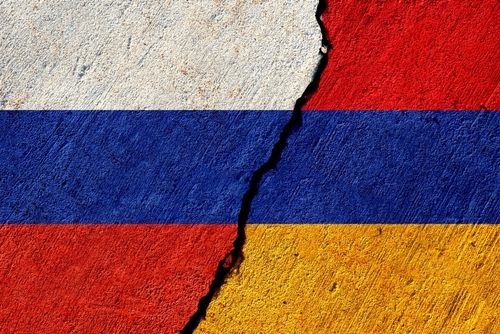
Russia has moved from targeted trade restrictions against Armenia toward examining whether Yerevan can retain the benefits of Eurasian Economic Union (EAEU) membership while deepening ties with Europe. An October 20 report prepared by four EAEU members outlines the economic consequences of suspending Armenia’s treaty privileges, although the bloc lacks an explicit expulsion mechanism. The dispute follows Prime Minister Nikol Pashinyan’s June electoral victory and extends to Russian control of Armenia’s railways and energy supplies. EU trade preferences and a U.S.-backed transit initiative offer alternatives, but neither can quickly offset Armenia’s dependence on Russia or the constraints on regional connectivity.
BACKGROUND:
Armenia’s relations with Russia have deteriorated as Yerevan has expanded its political and economic engagement with Western partners. In 2025, Armenia adopted legislation initiating a process of European integration, although this neither conferred EU candidate status nor ended the country’s membership in the Russian-led Eurasian Economic Union (EAEU). Moscow initially responded with warnings about the economic costs of Armenia’s changing orientation and a series of restrictions on selected Armenian exports.
The confrontation intensified around Armenia’s June 7, 2026 parliamentary election. Prime Minister Nikol Pashinyan’s Civil Contract party received 49.75 percent of the vote and won 64 of the National Assembly’s 105 seats. The outcome gave Pashinyan a renewed mandate to pursue a more diversified foreign policy.
Russia remains Armenia’s major economic partner. During his September 1 meeting with Pashinyan in Bishkek, President Vladimir Putin estimated Russia’s share of Armenian trade at approximately 30 percent, with bilateral turnover reaching US$ 2.5 billion in the first half of 2026. Armenian agricultural producers, beverage exporters, and other businesses remain particularly exposed to the Russian market, where they have long-established distributors and commercial networks.
Russian import controls became more restrictive in the weeks following the election. Beginning June 12, Russian authorities blocked the import or transit of a wide category of quarantine-controlled Armenian goods. Additional restrictions on fish followed on June 26 and on dairy products on July 27. As of late September, the fish and dairy measures remained in effect. World Bank figures reported in September indicated that Armenia’s agricultural exports fell 15.2 percent year on year in July, including a 52.2 percent decline in vegetable-product exports. A broader decline in aggregate exports also reflected unrelated changes in precious-stone re-exports.
On October 20, representatives of Russia, Belarus, Kazakhstan, and Kyrgyzstan submitted a report examining the consequences of temporarily suspending the application of the EAEU treaty to Armenia. Its scenario projected a 15.6 percent contraction in Armenian GDP, a 55.6 percent decline in trade with the EAEU, and an inflation increase of 14.9 percentage points relative to the baseline. It also envisaged the reintroduction of customs controls, tariffs, certification requirements, and restrictions affecting Armenian workers in EAEU labor markets.
Infrastructure has become another point of dispute. Russia’s state railway company has operated Armenia’s railway network through its South Caucasus Railway subsidiary since 2008, under a concession extending to 2038. Pashinyan has argued that Russian management could deter investment and divert future transit traffic because of geopolitical tensions and sanctions risks. In October he said Armenia had grounds to terminate the concession, while expressing a preference for transfer to a third country acceptable to both governments. Following bilateral talks on October 14, Yerevan and Moscow agreed to observe the existing agreement and to explore transit opportunities through a joint working group, without agreeing on a change of operator.
Energy supplies remain another major link. Russia provided about 82 percent of Armenia’s natural gas in 2025, with Iran supplying most of the rest under a gas-for-electricity arrangement. The EAEU report illustrated a possible increase in the indicative price of imported gas from US$ 177.50 to US$ 300 per thousand cubic meters if Armenian privileges were suspended, a rise of roughly 69 percent.
IMPLICATIONS:
Moscow’s consideration of suspending Armenia’s EAEU privileges marks a change in its approach. A suspension affecting the treaty itself would turn Armenia’s economic integration into a geopolitical bargaining instrument involving potential loss of market access, labor rights, and customs advantages, which can itself influence calculations in Yerevan.
The legal obstacles, however, are considerable. The EAEU treaty does not clearly provide four members with a route to expel the fifth, and an improvised suspension could damage the organization’s reputation as a rules-based economic union. It would also set a precedent, potentially unsettling other members that maintain diversified foreign relations.
Armenia can pursue closer ties with the EU while remaining in the EAEU for now, but membership in two separate customs unions with different external commercial policies would be impossible in the longer run. Russian pressure may have the opposite political effect: the greater the perceived risks of dependence on Russian decisions, the stronger the incentive for Armenian policymakers and businesses to build alternative links.
Yerevan has meanwhile sought alternative economic and transport arrangements. In June, the European Union disbursed €34 million in immediate support in response to the Russian trade measures. A two-year EU trade-liberalization regime took effect on October 10, reducing or eliminating duties on selected Armenian goods and covering nearly 80 percent of Armenia’s existing exports to the EU, including many fresh products and beverages affected by Russian restrictions.
The United States has also become more involved in Armenia’s connectivity plans. On October 21, an Armenian parliamentary committee approved ratification of a framework agreement with Washington concerning the Trump Route for International Peace and Prosperity (TRIPP). Surprisingly, however, Armenian diaspora organizations in the U.S., foremost among them the Armenian National Committee of America (ANCA), have been steadfast in resisting deeper U.S. engagement with Armenia dismissing Trump’s keystone project as a “pan Turkic corridor.” This clashes with Yerevan's attempts to normalize relations with its neighbors, distance itself from Russia and, by extension, also contradicts U.S. interests.
The limits of Armenia’s alternatives are equally clear. EU tariff preferences and emergency financial support reduce some of the immediate costs of Russian restrictions, but they cannot rapidly replace distribution networks developed over decades. Exporters must find buyers, adapt to product standards, and absorb new transport costs. The EAEU’s labor-market provisions also extend the stakes beyond goods trade. For Yerevan, effective diversification will depend less on declarations of European orientation than on the practical ability of businesses and workers to adapt to other markets and arrangements.
Control over railways could prove particularly consequential if the South Caucasus becomes more interconnected. TRIPP and the prospect of reopened routes through Azerbaijan and Turkey would increase the strategic value of Armenia’s existing rail network. Russian management could complicate efforts to attract Western-backed capital and transit contracts, while surrendering the concession would remove one of Moscow’s remaining instruments of influence over regional connectivity. The October discussions indicate that neither side prefers any major rupture. With construction under TRIPP not expected before 2027 and the region’s borders still subject to political negotiations, the commercial balance is also not settled.
Gas creates a similar dilemma. A substantial price increase would be capable of imposing costs on Armenian households and producers precisely because Russian supplies remain dominant. However, aggressive use of this leverage could intensify Armenian efforts to diversify energy supplies and encourage further external assistance. Russia must weigh the value of short-term coercion against the possibility of weakening its own long-term market position.
The political context makes this calculation more difficult for Moscow. Pashinyan’s electoral victory demonstrated that pressure before the June vote had not reversed the government’s Western opening. At the same time, the erosion of Armenia’s role in the Collective Security Treaty Organization has left economic interdependence as an increasingly important pillar of Russian influence. The Kremlin therefore has an interest in retaining Armenia within the EAEU, even while warning that an eventual move toward EU membership will carry costs.
CONCLUSIONS:
Ahead of the expected EAEU leaders’ meeting in December, a continued combination of targeted restrictions, legal warnings, and negotiations appears more plausible than an immediate comprehensive suspension. Moscow can preserve leverage by keeping the possibility of harsher measures on the table while protecting its railway and energy interests. For Armenia, the challenge is to expand European, U.S., and regional options without disregarding its exporters’ and consumers’ near-term vulnerability. The central question is not simply whether Yerevan can distance itself from Russia, but whether Moscow can still determine the economic conditions under which that process unfolds.
AUTHOR’S BIO:
Emil Avdaliani is a research fellow at the Turan Research Center and a professor of international relations at the European University in Tbilisi, Georgia. His research focuses on the history of silk roads and the interests of great powers in the Middle East and the Caucasus.
By: Kubatbek Rakhimov
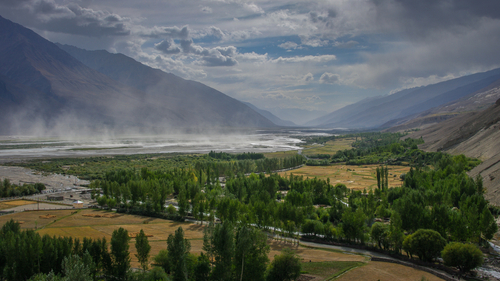
On October 4, 2026, Afghanistan’s Taliban government opened a 121-kilometer gravel road through the Wakhan Corridor to the Chinese border. Most commentary asks whether Beijing will open the Wakhjir Pass. A less visible question concerns the people along the road. Its eastern section crosses the Little Pamir, home to most of Afghanistan’s remaining ethnic Kyrgyz. Kyrgyzstan has supported them with state expeditions since 2008. This gives Bishkek a small but regular presence at a four-country junction. Yet Kyrgyz policy aims to resettle the community just as the road makes it relevant.
BACKGROUND:
The road runs from Sarhad-e Broghil to the zero point on the Chinese border. According to Tolo News and Pajhwok, it was built in two phases for 365 million afghanis, about US$ 5.5 million, with Afghan funds and Afghan engineers. Officials list four bridges, 66 culverts and 3,100 meters of retaining walls. The surface is gravel. At Wakhjir, at almost 4,900 meters, there is still no official crossing point.
The corridor is Afghanistan’s only border with China. It separates Tajikistan from Pakistan. Sarhad lies below the Broghil Pass, which leads to Pakistan’s Chitral.
The eastern half of the road crosses the Little Pamir. Bozai Gumbaz, where the valleys meet, is a traditional Kyrgyz camping ground. The Pamir Kyrgyz descend from groups that arrived between the late 16th and early 20th centuries. Writing for ZOiS in 2021, Mahabat Sadyrbek noted that until 1973 they numbered around 10,000 and were assigned to patrol the border. War, Taliban rule in the 1990s and emigration to Pakistan, Turkey and Canada reduced their numbers. Kyrgyzstan’s Ministry of Labor, Social Security and Migration now puts the community at about 1,300 people in the Little and Big Pamir.
Bishkek’s engagement is regular. Since 2008 the government has sent expeditions with food, medicine and doctors. In October 2025, an expedition led by a deputy minister examined 765 people and delivered veterinary drugs. In August 2025, the Cabinet adopted a support program for 2026–2029, with progress reports going to the Presidential Administration. In 2021, after the Taliban takeover, a Kyrgyz delegation agreed with Kabul on the community’s safety and freedom of movement.
The community has few ways out. In July 2021, about 345 Afghan Kyrgyz fled to Tajikistan’s Murghab area. Within a week, Tajik authorities sent them back with some four thousand animals, citing security guarantees from Kabul.
The program’s main track, however, is resettlement. Fifty people were moved to Naryn in 2017, and eleven families to the Alai district in 2019. Some later went back to Afghanistan. In 2021 President Sadyr Japarov said he intended to bring the remaining Kyrgyz home. By May 2026, 172 Pamir Kyrgyz lived in Chon-Alai district, according to the Ministry of Labor.
IMPLICATIONS:
The road changes the cost of presence. Until now the Little Pamir could be reached only by long tracks. A graded road makes access cheaper for aid convoys. It does the same for Afghan officials, traders and security forces. Pajhwok reports that administrative units and health clinics have now been set up in Wakhan. The district governor has already asked for a road from Broghil to Ishkashim, which would tie the eastern section into the rest of the network. In 2022 the Taliban cabinet ordered a military deployment to the valley. The Afghan state is arriving in an area where its presence has been very limited, and where Kyrgyzstan was one of the few regular outside actors.
The road also increases the corridor’s political and economic importance. Kabul promotes it as a link between China and the Middle East. Beijing has not yet opened Wakhjir, although Badakhshan officials have claimed that the Chinese ambassador assured them that trade would begin once the road was finished and in April 2026, China created a new county on its side of the border. An opening will affect those living along the last sixty kilometers before the pass, including the small Kyrgyz population with an external patron. It can help maintain stability in the area, but could also become a humanitarian problem if traffic, checkpoints or newcomers interfere with its pastures.
For Kyrgyzstan, the community is the only basis for a legitimate Kyrgyz interest in the corridor and in the infrastructure now being built there. Kyrgyzstan has no border with Afghanistan and no share in the road. Without the Kyrgyz community, Bishkek is just another outside commentator on Wakhan. Yet with the community in pace, Bishkek gains three advantages.
The first is standing. Kabul acknowledged Kyrgyzstan’s interest in the community’s safety in 2021. That gives Bishkek a recognized reason to raise its concerns as the corridor develops, bilaterally with Kabul and Beijing or in the SCO. Its concerns are concrete: grazing rights at Bozai Gumbaz and along the road, free movement of herders and livestock, and access for aid if a Wakhjir crossing regime is ever agreed.
The second is a channel. Each expedition needs Afghan permits, escorts and local contacts in Badakhshan. Kyrgyzstan does not recognize the Taliban government, although it removed the movement from its list of banned organizations in September 2024. The expeditions give Bishkek a routine humanitarian line to Kabul that does not depend on recognition. This will become even more valuable in January 2027, when Kyrgyzstan takes its first seat on the UN Security Council. At the CICA summit in Baku this month, President Japarov again named Afghanistan’s stability as a priority for that term. A Council member with regular field access to at least one corner of Afghanistan speaks with more weight than one that relies solely on reports.
The third is continuity. Expeditions keep Kyrgyz doctors and officials in contact with the community each year, just as the area gains a road. If Wakhjir opens, Kyrgyz cargo could in theory reach Afghanistan through Irkeshtam and the Chinese road network, without Uzbek or Tajik transit. The community would then be a local interlocutor for Bishkek along that route.
The advantages have their limits and Bishkek’s engagement must stay humanitarian. If it presents the Pamir Kyrgyz as a political asset, Kabul or Beijing could read patronage of a border minority as interference, and the channel would close.
Yet full resettlement would remove all three advantages. Turkey offers a precedent. In 1982 Ankara took in more than a thousand Pamir Kyrgyz who had fled to Pakistan and settled them in Ulupamir, in Van Province. The move saved lives and the community grew. It also left Turkey with no stake in the Little Pamir. Sadyrbek recorded in 2021 that opponents of resettlement in Kyrgyzstan wanted the community to stay because of the area’s geostrategic weight. With the road built, their argument is no longer abstract. Resettlement also costs money. On September 30, 2026, MP Ulan Primov urged the government to address the need for jobs and adaptation for resettled Pamir Kyrgyz, noting that the state cannot support them financially forever. Bishkek is paying for a policy that also shrinks its presence in Wakhan.
Families should not be kept in hardship for strategic reasons. The choice to stay or leave belongs to them. Yet the weight of policy should move toward those who stay: veterinary care, schooling, mobile clinics and communications. That is now the most direct way for Kyrgyzstan to keep a voice at Wakhan.
CONCLUSIONS:
The Wakhan road is built, but it is not yet a trade route. Gravel, altitude, winter and a closed border still stand in between. The change so far is local. The Afghan state now reaches the Little Pamir by road, and Kabul has already put administrative units and clinics in place.
For Kyrgyzstan, the Pamir Kyrgyz are Bishkek’s main link to the last stretch of Afghan territory before China. That link rests on annual expeditions, the 2026–2029 program and a working arrangement with Kabul.
Resettlement is the weak point of that policy. By May 2026, 172 Pamir Kyrgyz lived in Chon-Alai district, while about 1,300 remained in Afghanistan. Bishkek should keep helping families who choose to move. But if it wants to maintain legitimate interests in Wakhan, it must invest in those who stay. Once the Afghan state settles in along the road, that choice will be harder to make.
AUTHOR’S BIO:
Kubatbek Rakhimov, PhD in Economics, is Director of Development at the Institute for Strategic and Academic Studies (ISAS), Bishkek. He works on transit corridors and the political economy of Central Asia. Note from the author: The idea, the case and the conclusions are mine. The core argument — that Kyrgyzstan should keep the Pamir Kyrgyz in place because the community is Bishkek's only lever in Wakhan — I made publicly on Kyrgyz television well before this road opened. The facts, the figures and the Turkish precedent of 1982 come from my own work on the region. I am not a native English speaker. In preparing the English text I used an AI assistant (Claude) for grammar and language editing. I reviewed and edited the full text myself and take full responsibility for every statement in it.
By: Gia Jandieri
The Central Asian region possesses significant economic and trade potential, yet its realization remains constrained by traditional dependencies on Russia and China and underutilized transit pathways. Unlocking this potential through the Middle Corridor requires substantial capital investment alongside comprehensive institutional reforms and modernized trade regulations. Enhanced Western engagement, particularly from the EU and the U.S., offers a strategic framework to diversify regional trade and integrate Central Asia into global markets. Ultimately, the long-term viability of the Middle Corridor hinges on lowering transit costs, accelerating administrative procedures, and establishing a predictable, transparent economic environment.
BACKGROUND:
Its geographical location and available natural resources make Central Asia a top priority in contemporary global politics and economics. While the region's transit potential is high, its own economic capacity is currently underutilized; exports are dominated by energy resources, while the bulk of imports originates from China and Russia. Furthermore, certain countries within the region remain excessively reliant on remittances sent home by workers living in Russia.
Significant effort is required to fully unlock the region's economic capacity and expand its trade with the West. This will require rapid infrastructure development and comprehensive institutional reforms, including the modernization of trade and border-crossing regulations. Such measures could quickly double the region's economy and lay the foundation for close coordination and strategic cooperation with Western partners.
Western interest (particularly from the EU and the U.S.) in Central Asia rests on several strategic considerations:
The region offers an opportunity to expand market reach and secure reliable new partners, as well as resource base. In addition, the region holds significant economic and strategic balancing importance vis-à-vis China and Russia.
Consequently, numerous efforts are underway by the U.S. and EU to reconnect historical links or establish new partnerships to foster trade opportunities and build long-term strategic alliances. One major initiative currently driving international discourse is the Middle Corridor, a route designed to connect Europe and Asia through Central Asia and the South Caucasus, allowing access to energy, critical minerals, and other goods and resources from the region, as well as Central Asian markets.
The People’s Republic of China (PRC) maintains strong economic interest in the region and has already invested heavily. However, its interest in using the Middle Corridor by China is limited by the capacity of the transit corridor, as well as by the availability of alternative transit routes. Although the recent surge in traffic through the corridor is notable, the route requires careful feasibility planning and substantial capital investment to fulfill its expanded role. Based on current and expected trade numbers, the Middle Corridor will be more important for trade between the Central Asian countries, Europe and Mediterranean, and less important for Chinese transit.
Meanwhile, the Russian Federation (RF) maintains strong political and commercial interests in Central Asia and aims to preserve its leading role as a transit hub for goods from China. Moscow retains several political and economic leverages in the region.
The Russian Federation accounts for 15 to 31 percent of imports and 11 to 42 percent of exports across the five Central Asian states. By comparison, China accounts for 1 to 40 percent of imports and 5.8 to 25 percent of exports. Intra-regional trade remains minimal, peaking at just 20 percent in lower-income nations like Tajikistan and Kyrgyzstan. Interestingly, Türkiye's share of trade with Central Asia also trails behind that of both Russia and China.
The Middle Corridor faces numerous economic hurdles that must be addressed, including technical and institutional reforms aimed at reducing costs, increasing throughput capacity, and shortening transit times. Estimated infrastructure investments amount to tens of billions of dollars; without a clear economic return, potential investors and traders may hesitate.
IMPLICATIONS:
To evaluate the prospects of the Middle Corridor, it is essential to assess the Central Asian foreign trade market, its current and potential capacity. International trade across Central Asian states, with a combined population of 83 million, averages roughly US$ 2,500 per capita. By contrast, the three Baltic states with a combined population of 6.5 million generate a foreign trade volume nearly equal to that of Central Asia (US$ 202 billion total), translating to over US$ 33,000 per capita.
This gap highlights Central Asia's immense untapped potential. However, realizing this potential will require substantial capital injection and a major modernization of the institutional framework. In total, the region currently conducts around US$ 260 billion in global trade (goods and services, including intra-regional trade), with merchandise trade accounting for US$ 216 billion. One critical area for development is the removal of trade and border-crossing barriers. Harmonizing regional trade policies and regulations with EU standards represents a vital step forward, allowing greater efficiency of the trade route.
However, shifting away from long-standing ties with Russia carries potential political and economic costs. Hundreds of thousands of Central Asian migrant workers currently live in Russia, sending home hundreds of millions of dollars in remittances that support local economies.
Oil and natural gas represent a quarter of the region’s foreign trade. Hydrocarbon exports account for approximately 49 percent of all exports (US$ 116 billion) and are transported almost entirely via pipelines. China is the region’s largest trading partner, handling nearly half of Central Asia's total merchandise trade (US$ 106 billion). Russia remains another primary trade partner with a 20 percent share, which is nevertheless gradually declining as trade shifts toward China.
Institutional environment and economic freedom remain critical concerns: Kazakhstan ranks 68th and Uzbekistan 86th (both categorized as "moderately free") on the Heritage Foundation’s Index of Economic Freedom. The remaining three states rank below 114th, categorized as either "mostly unfree" or "repressed". Upgrading institutional quality would stimulate the wider economy and attract foreign investment beyond the oil and gas sectors.
Border-crossing procedures present additional challenges. Current regulatory frameworks in Central Asia are tailored primarily for trade with Russia and China. Adapting these systems to EU standards, alongside digitizing and simplifying customs procedures, will be essential to lower transit costs. Georgia’s implementation of the Deep and Comprehensive Free Trade Area (DCFTA) with the EU offers a proven model for regional trade regulation.
Furthermore, government integrity, local corruption, bureaucratic delays, political influence, and weak rule of law present significant obstacles. Central Asian governments must actively address these issues to prevent costly delays and administrative inefficiencies. Improving governance and mitigating local corruption risks requires reducing regulatory burdens, streamlining administrative processes, and leveraging digital technologies.
Accelerating these institutional reforms will give potential investors the confidence to finance regional growth, increasing the flow of goods toward the EU and justifying the substantial investments needed for the Middle Corridor. Ultimately, Middle Corridor investments will succeed only if transit costs and transit times remain competitive against alternative global trade routes, both now and in the future.
CONCLUSIONS:
Central Asia has strong potential to become a key economic partner for the U.S., EU and other Western states. To achieve this, the region requires deep institutional reforms to attract capital, eliminate trade barriers, and align border procedures with Western standards. Reforms must focus on creating a transparent, predictable, and streamlined regulatory environment. The success of the Middle Corridor will depend directly on its cost-competitiveness and the pace of Central Asia’s broader economic development, driven by foreign direct investments. Although current foreign trade figures remain modest, trade volume could realistically double to US$ 500 billion. Eliminating trade barriers and curbing political and bureaucratic interference, especially across internal regional borders, are critical steps.
AUTHOR’S BIO:
Gia Jandieri is Founder and Vice President of the New Economic School – a Georgian think-tank. He is an economist with extensive experience in the public sector and independent research organizations. His expertise includes public finance, business climate, international trade, monetary and anti-corruption policy.
By: Yunis Gurbanov
The Eighth Consultative Meeting of the Heads of State (CMHS) of Central Asia was held on October 8, 2026, in Awaza, Turkmenistan. It was the first meeting at which Azerbaijan was represented as a full-fledged member of the format. More significantly, the Awaza meeting can be regarded as an effort to provide content to the expanded format since the parties adopted a Joint Statement and decided on the regulatory documents of the Consultative Meeting, designating the format Chair in 2027 to Azerbaijan. The inclusion of Azerbaijan will not transform the Consultative Meeting into a supra-state structure or an integration association. The forum remains built on the principle of consensus and consciously maintains its flexibility. The inclusion of Azerbaijan has nevertheless shifted the geographical focus and agenda of the meeting. The Caspian Sea will connect the countries, not separate them, placing Trans-Caspian transportation and energy cooperation as well as other issues of cooperation and ecology on the agenda.

BACKGROUND:
CMHS is the outcome of developments in intra-regional relations due to the changing political environment in Uzbekistan from 2016 onwards. Instead of forming one more intergovernmental organization on the basis of a binding treaty, the five Central Asian countries created a leadership-oriented consultation and coordination mechanism. During the Awaza summit, Uzbekistan’s President Shavkat Mirziyoyev explicitly stated his opposition to “cumbersome structures” and advocated for a flexible format of cooperation of sovereign states based on respect and pragmatism.
The importance of Azerbaijan’s involvement increased gradually. Baku was asked to participate in previous gatherings as a guest since its cooperation with Kazakhstan, Uzbekistan, Turkmenistan and Kyrgyzstan was developing politically, economically and in transport. Azerbaijan was acknowledged by all Central Asian presidents as one of the full-fledged members of the group in November 2025. The informal consultative meeting in Cholpon-Ata in July 2026 and the adoption of the Cholpon-Ata Declaration helped establish the first CMHS involving the six presidents in Awaza.
The CMHS on October 8 did more than just confirm the format’s enlargement. According to Azerbaijan’s President Ilham Aliyev, the trade volume between Azerbaijan and Central Asia increased by 50 percent in the past year, and more than 400 enterprises with capital from Central Asian countries operate in Azerbaijan. Baku also established joint investment funds with Kazakhstan, Uzbekistan and Kyrgyzstan, and cooperation in transport, energy transit, information technologies and renewable energy is growing.
Azerbaijan’s involvement in the C6 format is most significant in the transport area. The Middle Corridor passes through Azerbaijan and connects Central Asia with Georgia, Türkiye, and Europe. It has become increasingly relevant for the Central Asian states seeking access to Western markets through the Caspian Sea. According to Aliyev, the volume of cargo transported via the Middle Corridor increased by more than 10 percent in 2025 and by nearly 20 percent in the first eight months of 2026.
IMPLICATIONS:
The inclusion of Azerbaijan expands the CMHS format while avoiding any attempts to change its geographic identity and creating a new regional concept in which connectivity becomes the main element.
Another implication is the shift from trade to production. The most significant idea put forward at the Awaza summit was Mirziyoyev’s proposed new economic objective of “six economies – one product,” implying that companies in different countries that partake in the cooperation will be involved in the same value chain instead of trading. Uzbekistan also proposed to organize the “Central Asia-Azerbaijan” business forum in Khiva during 2027.
This will perfectly suit Azerbaijan’s appeal to the participating states to “invest together, produce together, and enter foreign markets together,” providing for more industrial zones, factories, logistics centers and investment projects along the corridor.
The meeting also addressed institutional development. The leaders adopted regulatory documents for the CMHS, while Uzbekistan proposed developing a dedicated legal framework. However, Mirziyoyev emphasized that implementation mattered more than the number of documents adopted. Greater institutionalization could improve coordination, but excessive formalization risks undermining the mechanism’s flexibility.
Transport coordination is likely to remain the most practical area of cooperation. Uzbekistan proposed establishing a Council for Infrastructure Development to coordinate transport projects and integrate national infrastructure into a broader regional framework. This initiative aligns with the development of the Baku International Sea Trade Port.
Cooperation also extends to energy resources. Oil from Kazakhstan and Turkmenistan is transported through Azerbaijan’s transport network, while the three countries are developing a green energy corridor to supply Western markets. These initiatives highlight the Middle Corridor’s potential for energy cooperation and digital connectivity, including the installation of fibre-optic cables beneath the Caspian Sea.
Environmental challenges are equally significant. Azerbaijan has raised concerns about declining water levels in the Caspian Sea, which could influence coastal infrastructure and increase the costs and reduce the efficiency of maritime transport.
Finally, Azerbaijan’s participation brings about a convergence of interests with the Organization of Turkic States (OTS), an important instrument of Baku’s foreign policy. Four of the six C6 countries are OTS members, while Turkmenistan holds observer status. Tajikistan, with its distinct linguistic and cultural identity, participates in other regional cooperation frameworks. The OTS has also gained importance in Azerbaijan’s security policy. At the October 2025 Gabala summit, President Ilham Aliyev proposed joint military exercises and subsequently emphasized defense and security cooperation in September 2026. Rather than competing with the OTS, however, the C6 format offers a broader platform for regional cooperation.
However, the expanded format faces geopolitical constraints, reflecting the six states’ differing relations with Russia, China, Türkiye, the EU, and the U.S. Kazakhstan, Kyrgyzstan, and Tajikistan remain members of the Collective Security Treaty Organization (CSTO), while Kazakhstan and Kyrgyzstan also belong to the Eurasian Economic Union (EAEU). Turkmenistan maintains its policy of permanent neutrality, while Tajikistan pursues distinct foreign policy and security priorities.
CONCLUSIONS:
Azerbaijan’s full inclusion in the Consultative Meeting represents not merely a symbolic expansion but a structural extension of Central Asian regional cooperation. The Awaza meeting on October 8 demonstrated that the expanded format could facilitate more practical cooperation on production chains, infrastructure, investment, energy corridors, digitalization, and environmental challenges.
However, the significance of the C6 format should not be overstated. It is neither a formal organization nor an alliance, and its participants retain their sovereignty and distinct foreign policy orientations. Its potential instead lies in providing a platform for political coordination among six states connected by the Caspian Sea and increasingly integrated through transport, energy, and investment corridors, enabling them to align their interests.
Azerbaijan’s first chairmanship in 2027 will provide an important test of the format’s potential. If Baku succeeds in translating the initiatives proposed at the Awaza meeting into concrete projects, the transition from C5 to C6 could mark a significant step towards broader regional cooperation across the Trans-Caspian region.
AUTHOR’S BIO:
Dr. Yunis Gurbanov is a Senior Adviser at the AIR Center in Baku and Lecturer at the Academy of Public Administration under the President of Azerbaijan. His research focuses on Eurasian geopolitics, regional security, connectivity, and political and economic cooperation across the South Caucasus, Central Asia, and the broader post-Soviet region.
Feature Articles
|
Earlier Articles
|




The Central Asia-Caucasus Analyst is a biweekly publication of the Central Asia-Caucasus Institute & Silk Road Studies Program, a Joint Transatlantic Research and Policy Center affiliated with the American Foreign Policy Council, Washington DC., and the Institute for Security and Development Policy, Stockholm. For 15 years, the Analyst has brought cutting edge analysis of the region geared toward a practitioner audience.
Sign up for upcoming events, latest news, and articles from the CACI Analyst.