Russia’s Double Game in Afghanistan and Central Asia
By Stephen Blank
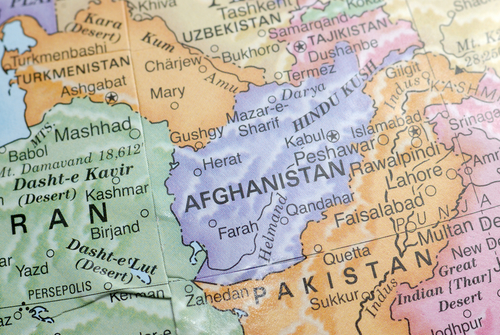
The Pakistan-Afghanistan war, on top of the war against Iran, is forcing Moscow to attempt to balance its security and economic interests in and beyond Central Asia with both Pakistan and Afghanistan. Pakistan is critical to Russia because it provides an alternative to Iran, allowing Moscow’s transcontinental trade project INSTC to move forward and offering a gateway to Asia. Concurrently, Moscow has upgraded its ties with the Taliban in Afghanistan both to deter ISIS-K terrorists and to secure broader geostrategic aims. Yet it also increasingly appears that Moscow is willing to offer Afghanistan arms, ostensibly to deter terrorists. However, in the broader regional context, this move underscores Moscow’s propensity for playing a double game with and against its partners.
BACKGROUND:
The Iran war and Pakistan’s war with Afghanistan threaten the further erosion of Russian influence in Central Asia. Consequently, Russia has embarked on what can only be called a double game vis-à-vis Pakistan and Afghanistan. Pakistan has attacked Afghanistan because it claims Afghanistan harbors the Tehrik-e-Taliban Pakistan (TTP) terrorist group, which performs attacks against Pakistan. This complaint is more than a little ironic given Pakistan’s own long-standing and well-known record of sponsoring terrorism against India. More significant, however, is the fact that this charge, if true, signifies that Kabul has escaped Islamabad’s tutelage. However, the war also disrupts Russia’s ambition to sell Russian gas to South and Southeast Asia through pipelines traversing Afghanistan and Pakistan.
At the same time, Russia has steadily built a “full-fledged” and “pragmatic” partnership with Afghanistan to prevent it from sponsoring terrorist groups like ISIS-K and their targeting of Russia and Central Asia, where Russia still claims to be the ultimate security manager. According to Sergei Shoigu, Secretary of Russia’s Security Council, full-fledged partnership includes bilateral defense and security cooperation. Indeed, Shoigu openly proclaimed Russia’s opposition to any third-party military presence in Afghanistan or neighboring countries, a shot across both Pakistan’s and the U.S.’s bow and a sign of its ambition to establish a protectorate over Afghanistan.
However, Russia’s interests transcend defense. The war against Iran has ruptured the feasibility of Russia’s, Iran’s and India’s major transit, trade and connectivity route through Central Asia and then through Russia to Europe, the INSTC (multi-modal International North-South Transportation Corridor). The other existing corridor, the increasingly lucrative Middle Corridor or TITR (Trans-Caspian International Transport Route) from China to Central Asia and then to the Caucasus and Europe bypasses Russia. Thus, since failure to find an alternative to Iran for INSTC will have dire geoeconomic and geopolitical consequences for Russia, it has turned to Pakistan for help. Pakistan cannot afford exclusion from transcontinental trade routes and has agreed to explore connecting its port at Gwadar either by land or by sea to INSTC.
IMPLICATIONS:
Moscow typically has sought to have a foot in both camps in every conflict scenario throughout the Global South and the Pakistan-Afghan war is no exception. But this case is far more central to Moscow’s interests than its power projection in for example Africa or the Middle East. In order to maintain its self-appointed “leading position” in Central Asia, it is crucial for Russia to exercise leverage over Afghanistan to deter an outbreak of Islamic terrorism targeting either Central Asia or Russia.
Likewise, it is critical to Russia’s economic health and continuing ability to finance its war against Ukraine and its heavily strained state budget that it continues to find Asian markets for its oil and gas. Doing so also entails developing trade routes like INSTC to Pakistan, India and Southeast Asia, especially given its desire to be acknowledged as an independent Asian power. Therefore, balancing between Pakistan and Afghanistan while developing alternatives to Iran’s connectivity have become requirements of Russian policies to realize vital Russian interests, especially as its economy is reeling and its position in Central Asia erodes.
Further erosion is inevitable if Islamic terrorism “migrates” to Central Asia without Moscow being able to deter or stop it. By the same token, exclusion from transcontinental trade routes will undermine Moscow’s ideological and rhetorical pretense of hegemony, and demonstrate that Russia lacks the means in terms of tangible material capability to back up its arguments or sustain a position that answers to Central Asia’s most pressing questions, i.e. economic development.
Concurrently, if Russia cannot develop let alone sustain viable, economically justifiable outreach to South and Southeast Asia, its hard-won influence and standing in those countries will diminish by an order of magnitude, negating its claims of being an Asian power and making it still more dependent on China.
Despite its vital need to keep the balance between Pakistan and Afghanistan, many recent reports suggest that Moscow is secretly negotiating an arms deal with the Taliban. Ostensibly, the aim would be to use the weapons to suppress ISIS-K and prevent further terrorist strikes in Central Asia and or Russia. While this makes sense if leveraging Russia’s Central Asian position and ambitions vis-à-vis Afghanistan are the priority; in reality, it highlights the priority of security over economic development in Russian policy. It also illustrates the abiding temptation to make secret deals involving the security services or force structures as primary instruments of foreign policy.
Given the Taliban’s track record, it is unlikely that it can or will hold up its end of the bargain. Moreover, should these reports be true this news will enrage Pakistan and likely torpedo efforts to have it join INSTC. That trade project, unlike the Middle Corridor, never got off the ground and is therefore already being eclipsed. This has gravely serious and negative implications for Russia and is likely to aggravate all the trends making for the decline of Russian power in the Caucasus and Central Asia as well as South and Southeast Asia.
An arms deal with the Taliban will further entrench the belief among governments who monitor Russian behavior that Moscow is cannot be relied on as a partner. It will also confirm the notion held by many Western governments that Russia, like the Soviet Union, remains a sponsor of state terrorism and must, at best, be kept at arm’s length.
CONCLUSIONS:
Thus Russia continues to play a double game towards its partners, attempting to have both an empire and prosperous foreign trade relations, even though their logics are quite incompatible. Moscow also has yet to grasp that it cannot denounce and support terrorism at the same time without paying an incommensurate price for its quest after short-term gains. In Central Asia, Russia still seeks to pursue wildly contradictory aims without paying the price for doing so. If Moscow does, in fact, arm the Afghan government, it will once again be playing with dynamite.
AUTHOR’S BIO:
Stephen Blank is a Senior Fellow with the Foreign Policy Research Institute, www.fpri.org.
Pashinyan Won: Armenia’s Fate Is Still Up for Grabs
By Joseph Epstein
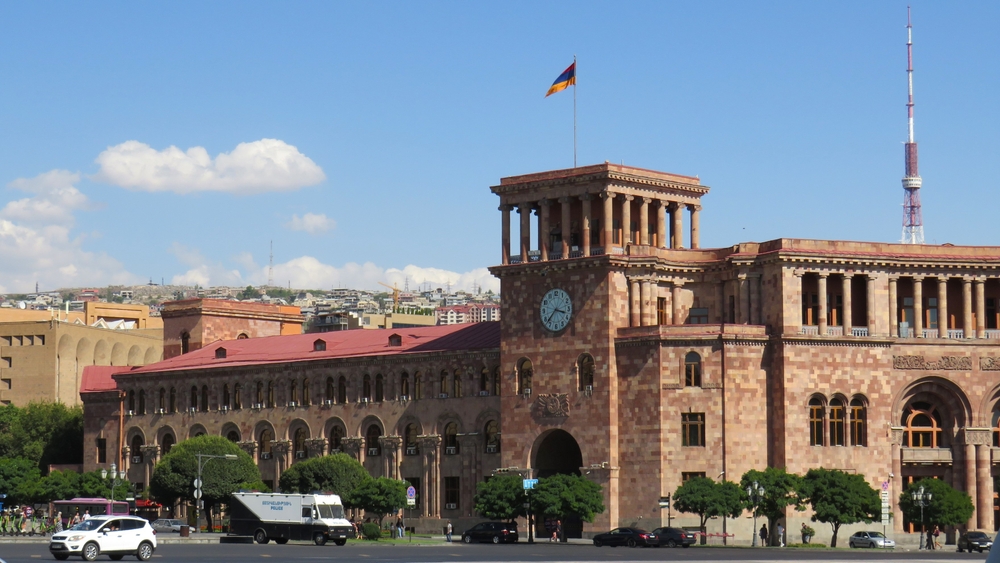
On June 7, Armenian Prime Minister Nikol Pashinyan’s Civil Contract party won the country’s parliamentary elections with just under 50 percent of the vote, enough under Armenia’s electoral system to govern alone with a comfortable majority. The nearest challenger, the Strong Armenia bloc fronted by Russian-Armenian billionaire Samvel Karapetyan, trailed near 23 percent, and every opposition force that cleared the threshold campaigned on some version of repairing ties with Moscow. Civil Contract cast the vote as a choice between a return to Russia’s orbit and a more independent Armenia drawn toward the West, and the electorate sided with the latter. Yet the win alone will not seal Armenia’s fate. The country must still pass the constitutional change widely seen as the final barrier to normalization with Azerbaijan and Turkey, and Pashinyan’s victory does not mean Russia will quietly concede a country it has dominated for two centuries.
BACKGROUND:
Armenia under Pashinyan has moved steadily away from Russia, above all since the 2020 defeat to Azerbaijan in the Second Karabakh War, a forty-four-day conflict that cost Yerevan roughly three-quarters of the territory Armenian forces had held since the early 1990s. The remainder of Karabakh fell in September 2023, when Azerbaijan retook the enclave and more than one hundred thousand ethnic Armenians fled. Out of that collapse Pashinyan built the vision he calls “Real Armenia” versus “Historic Armenia”: the argument that unless the country relinquishes irredentist claims on its neighbors, it will never enjoy genuine independence.
Pashinyan is often cast as the ideological successor to Armenia’s first president, Levon Ter-Petrosyan, who late in his tenure pushed for a settlement with Azerbaijan to end Armenia’s isolation and strip Russia of its ability to leverage the conflict. He warned, almost prophetically, that Armenia would one day be forced to ask for what it was then rejecting and would not receive it, “as it has happened more than once in our history.” That push cost him his office and triggered the rise of the Karabakh-born politicians who ruled until the Velvet Revolution brought Pashinyan to power in 2018. Ter-Petrosyan was right too early, and Armenia paid for it in 2020.
Pashinyan, who early in his premiership pushed for unification with Karabakh, reversed course entirely after the war, concluding that the only way forward was a deal with the stronger party. That trajectory produced the breakthrough of August 8, 2025, when Trump hosted Pashinyan and Azerbaijani President Ilham Aliyev at the White House, where the two leaders initialed a peace agreement and committed to a U.S.-brokered connectivity project across southern Armenia.
One obstacle remains, and it is constitutional. Armenia’s constitution, through a preamble invoking the 1990 Declaration of Independence and, with it, the 1989 act of “reunification” with Karabakh, still carries an implicit claim to territory that the entire international community—Armenia included—recognizes as Azerbaijani, and over which Baku reestablished full control in 2023. Removing that language is less an Azerbaijani demand than a load-bearing element of the peace process itself: so long as a founding document lays claim to a neighbor’s recognized land, the conflict cannot be considered definitively closed.
IMPLICATIONS:
The step is not the aberration its critics suggest. Other democracies have rewritten founding texts to settle territorial disputes: Ireland surrendered its constitutional claim to Northern Ireland by referendum in 1998 under the Good Friday Agreement, and a reunifying Germany renounced its claims east of the Oder-Neisse line to normalize relations with Poland. What makes Armenia’s case hard is procedure and politics, not principle. Its Constitutional Court has ruled the preamble immutable, so the only path is an entirely new constitution, ratified by national referendum. Civil Contract has the votes, and a draft shorn of the preamble was finalized in March 2026. The referendum, expected around 2027, is the real test, and Pashinyan’s task is to sell it at home as the completion of the peace rather than a capitulation to it. Clear that hurdle, and Armenia gains overland access to Europe and Central Asia.
Moscow, however, will not concede, and recent reporting shows how much it was willing to spend even as its war in Ukraine strained its resources. OCCRP traced an influence operation, through leaked documents, to Russia’s Social Design Agency—already sanctioned in Washington, London, and Brussels—working under the direction of the Presidential Administration. The agency ran a dedicated outlet aimed at Armenian dual citizens living in Russia, a bloc its own planning documents called potentially decisive, blending fabricated scandals with AI-generated content. The Insider identified the officials managing the Armenia portfolio and the officers dispatched to Yerevan, alongside a plan to bus Russian Armenians in to swing the result.
The influence campaign ran in parallel with economic coercion. At an April Kremlin meeting, Putin told Pashinyan that Armenia could not belong to both the EU and the Russia-led Eurasian Economic Union, citing discounted gas as leverage. Moscow then restricted imports of Armenian produce, flowers, mineral water, and alcohol on pretextual grounds and threatened to scrap the 2013 agreement guaranteeing duty-free gas, oil, and diamonds. At the Union’s summit in Astana in late May, Putin invoked the “Ukrainian scenario” and demanded that Yerevan choose. Armenia’s own history supplies a darker warning: in October 1999, gunmen stormed the National Assembly and killed Prime Minister Vazgen Sargsyan and Speaker Karen Demirchyan, whose reformist coalition had just sidelined then-President Kocharyan, who consolidated power in the aftermath—a reminder that an inconvenient reform government can be removed by means other than the ballot box. Russia retains real leverage over Armenia’s economy and a meaningful share of its population, and it has now demonstrated its capacity to run sophisticated active measures inside the country.
Against that pressure, U.S. engagement has been unprecedented. In February, JD Vance became the first sitting U.S. vice president to visit Armenia, advancing a civil nuclear deal and offering Yerevan a place in a U.S.-led critical minerals bloc. In late May, Secretary of State Marco Rubio signed a strategic partnership charter and the corridor framework in Yerevan, and days later Trump issued his “complete and total endorsement” of Pashinyan—the first time a U.S. president has openly backed a leader squarely within Russia’s traditional sphere. The centerpiece is the Trump Route for International Peace and Prosperity (TRIPP), a roughly twenty-seven-mile corridor through Armenia’s Syunik province that would link the main body of Azerbaijan to its Nakhchivan exclave and onward to Turkey, built and operated by a development company in which the U.S. holds 74 percent for an initial forty-nine-year term. Passage of the constitutional change would give Washington its strongest position in the South Caucasus since independence and, through TRIPP, a chokepoint of the Middle Corridor just as securing non-Chinese supply lines for critical minerals has become a first-order priority.
CONCLUSIONS:
Armenia’s voters made the choice Civil Contract asked of them and handed the U.S. a strategic opening that did not exist a year ago. But an election is not a settlement. The referendum still lies ahead, carrying a real chance of failure, and Russia has shown it will spend, subvert, and coerce to keep Armenia within its grip; it will not stop because one vote went against it. For Washington, the work is beginning rather than ending. The endorsements and signing ceremonies were the easy part. Converting them into a durable foothold means seeing the constitutional process through, hardening Armenia against the next wave of Russian active measures, and breaking ground on TRIPP before the window closes. Pashinyan has staked his country’s future on the West, and the U.S. has every reason, and a narrowing amount of time, to ensure that bet pays off.
AUTHOR’S BIO:
Joseph Epstein is the Director of the Turan Research Center, a Senior Fellow at the Yorktown Institute, an Expert at the N7 Foundation, and a Research Fellow at Bar-Ilan University’s Begin-Sadat Center for Strategic Studies.
Pashinyan's Victory And Armenia's Geopolitical Choice
By Irakli Laitadze
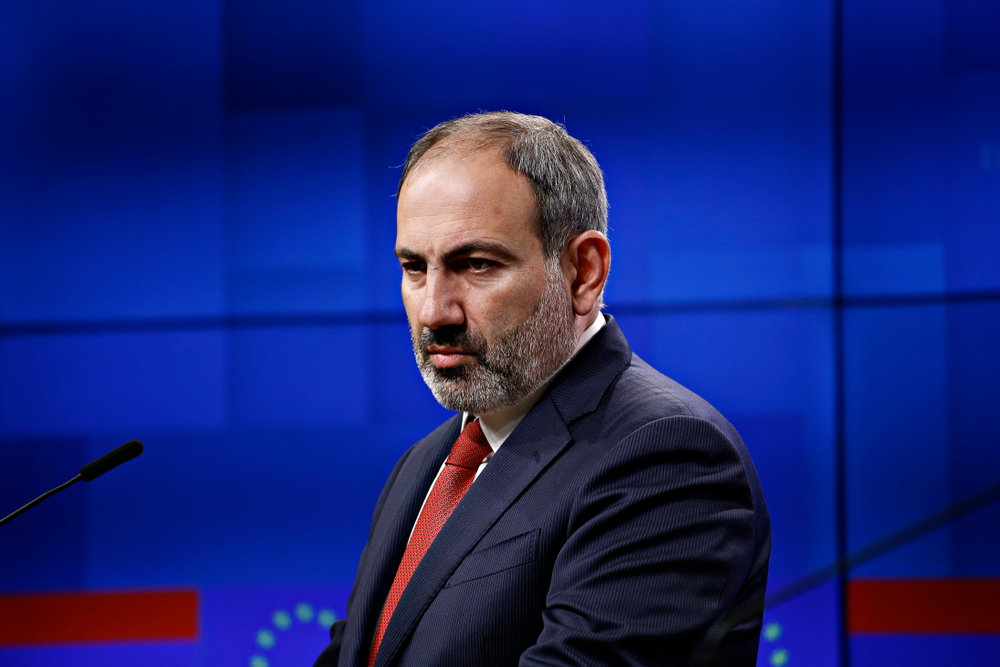
On June 7, Armenia held general elections with significant implications for both the country and the South Caucasus. Incumbent Prime Minister Nikol Pashinyan’s Civil Contract party won 49.81 percent of the vote. Although falling short of a majority, the result still enables Pashinyan to form and lead the new government. The victory of Civil Contract is not merely an outcome of domestic politics. It signifies a rupture with Russia’s sphere of influence and the institutionalization of a pro-Western course. The collapse of the pro-Russian opposition, despite unprecedented pressure from Moscow, indicates that Armenian citizens made a strategic choice in favor of genuine sovereignty and European integration. This choice is likely to produce long-term changes not only in Armenia but also in the security architecture of the South Caucasus.
BACKGROUND:
Armenia approached the 7 June elections amid intense geopolitical turbulence. The country stood at a crossroads between two incompatible trajectories: deeper Euro-Atlantic integration or a return to Russia’s sphere of influence. Understanding this choice requires examining developments in the recent past.
Following its defeat in the 2020 Karabakh War, Armenia completely lost control of Nagorno-Karabakh in September 2023. The country was confronted with a harsh reality: Russia, its ally and partner within the Collective Security Treaty Organization (CSTO), failed to defend Armenia during the conflict. As a result, Prime Minister Pashinyan’s government intensified the already ongoing process of deepening ties with the EU and the U.S. In March 2026, the Armenian parliament adopted a bill initiating the process of accession to the EU. Consequently, the elections effectively became a referendum on Armenia’s foreign policy orientation and security strategy.
Russia responded with increased pressure. The election campaign was effectively transformed into an open confrontation between Moscow and Yerevan. Russian officials publicly warned that continued pursuit of a pro-Western course could expose Armenia to a scenario similar to that experienced by Ukraine.
The regional dimension is equally important. The South Caucasus is a region where the interests of Russia, Turkey, Iran, the U.S., the EU, and increasingly China intersect. Armenia has traditionally been a stronghold of Russian influence in the region: Russian forces are stationed at the 102nd Military Base in Gyumri, an aviation component is based at Erebuni Air Base, and Armenia remains a member of the CSTO. Yerevan’s drift away from Moscow represents more than the loss of an ally; it is a strategic setback that could reshape the regional balance of power. This explains why the stakes were far higher than those of a regular parliamentary election.
IMPLICATIONS:
Russia’s attempt to influence the election outcome was not only unsuccessful but also counterproductive. In addition to extensive use of bots, disinformation, and fake news, reports suggest that Moscow was covertly preparing operations aimed at preventing Pashinyan’s re-election, allegedly including scenarios involving his physical elimination.
Russian economic pressure was systematic and sustained. Moscow banned imports of Armenian Jermuk mineral water, halted sales of Armenian brandy and wine, and reduced imports of meat and fish products. On the eve of the elections, Russia sent an official letter signaling its intention to suspend exports of gas, oil, and diamonds. Rosselkhoznadzor, Russia’s federal veterinary and phytosanitary agency, also banned imports of Armenian tomatoes, cucumbers, potatoes, and dried fruits. To influence the vote, plans were reportedly discussed to organize travel to Armenia for around 100,000 Russia-based Armenians.
The pro-Russian camp was represented by two key figures: Samvel Karapetyan and Ruben Vardanyan. Both embodied an alternative to Armenia’s Western-oriented course. Karapetyan, a Russian-Armenian billionaire and leader of the Strong Armenia electoral bloc, lived in Moscow until last year and, in addition to Armenian citizenship, held Russian and Cypriot citizenship. He allegedly maintains links with Russia’s Federal Security Service (FSB). Since June 2025, Karapetyan has been under house arrest on charges of encouraging the seizure of state institutions. Moscow openly demanded his release and participation in the parliamentary elections, turning the issue into a political instrument of pressure on Yerevan.
Another key figure was Ruben Vardanyan, a Russian-Armenian billionaire who left Moscow to become State Minister of the self-proclaimed Republic of Nagorno-Karabakh. Arrested by Azerbaijani authorities while leaving Nagorno-Karabakh through the Lachin Corridor, he is currently serving a prison sentence in Azerbaijan (Meduza). Vardanyan became both a symbol of the lost Armenian Karabakh and a reminder of the failure of the pro-Russian course, which ultimately provided Armenia with neither security nor genuine independence.
The election results reflected the Armenian public’s increasingly negative attitude toward Russia. Samvel Karapetyan’s Strong Armenia alliance received 23.29 percent of the vote, while the Armenia bloc, led by former President Robert Kocharyan, a veteran of the First Nagorno-Karabakh War and a prominent advocate of close ties with Moscow, won 9.93 percent. Combined, the main pro-Russian forces secured only about two-thirds of the support received by Pashinyan’s Civil Contract party.
Western countries, particularly the U.S., expressed unusually strong support for Nikol Pashinyan. On May 27, U.S. President Donald Trump publicly endorsed Pashinyan on Truth Social. The previous day, U.S. Secretary of State Marco Rubio and Armenian Foreign Minister Ararat Mirzoyan signed several bilateral cooperation agreements, including a Comprehensive Strategic Partnership Charter. On June 4, following a telephone conversation with Pashinyan, European Commission President Ursula von der Leyen announced that Brussels was preparing additional support measures for Armenia, including €50 million in financial assistance.
The 8th Summit of the European Political Community (EPC) was held in Yerevan on 4 May 2026, with the participation of Ukrainian President Volodymyr Zelensky. The event served as a clear signal of Armenia’s emerging European orientation and identity. Almost simultaneously, Turkey partially lifted the trade restrictions on Armenia that had been in place since 1993. The easing of this economic embargo marks a significant step toward the normalization of Armenian–Turkish relations and has the potential to reshape the region’s economic architecture.
A stable, pro-Western Armenia would be better positioned to finalize a peace agreement with Azerbaijan and secure the full lifting of Turkey’s long-standing economic blockade. Under such circumstances, Armenia’s withdrawal from the CSTO could become a realistic prospect in the near future. This step would deprive Russia of the principal legal framework underpinning its military presence in Armenia, further accelerating the country’s geopolitical reorientation.
Armenia is expected to continue developing its relations with the EU while maintaining membership in the Eurasian Economic Union, as confirmed by Prime Minister Pashinyan. This reflects tactical pragmatism rather than an ideological compromise: Armenia remains dependent on Russian gas imports and on the large Armenian diaspora residing in Russia. Nevertheless, the country’s strategic orientation toward Europe appears to have been firmly established.
CONCLUSIONS:
The elections of 7 June may prove to be a point of no return in the history of post-Soviet Armenia. Despite political pressure, economic coercion, and extensive Russian involvement, Armenian voters endorsed a genuinely sovereign choice and reaffirmed the country’s commitment to a pro-Western path of development.
Russia suffered a strategic defeat, as neither Karapetyan nor Kocharyan succeeded in challenging the pro-Western majority of Armenian voters. The Kremlin’s unprecedented pressure, including threats of a “Ukrainian scenario” and the use of economic coercion, failed to weaken Nikol Pashinyan and his supporters. Instead, these measures contributed to their further mobilization and strengthened Pashinyan’s image as a defender of Armenian sovereignty and statehood.
The electoral victory of Civil Contract and its parliamentary majority provide Armenia’s pro-European course with a clear democratic mandate to advance further along the path of European integration.
Armenia is entering a phase of profound transformation in its security architecture, moving from dependence on Russia toward a more diversified and multilateral security framework. This realignment is likely to reshape not only Armenian domestic and foreign policy but also the broader balance of power in the South Caucasus. For the first time in the post-Soviet era, Armenia, and, to a lesser extent, the wider region, is beginning to move beyond the logic of Russian dominance. The date of June 7, 2026, may be remembered as the day Armenia chose its own future.
AUTHOR’S BIO:
Irakli Laitadze is an Adjunct Professor at Ilia State University (Tbilisi, Georgia) and Senior Fellow of the think-tank EU Awareness Centre (Brussels). He was previously a career diplomat, serving as a senior Counsellor in the Mission of Georgia to the EU and Director of the EU Political Department, Ministry of Foreign Affairs of Georgia. After his diplomatic service, he was the CFO in GMT Hospitality and CEO of Publishing House Artanuji. He holds degrees from Tbilisi State University, the Diplomatic School of Madrid (Diploma), and Cambridge University (MBA), and a Ph.D. (Magna cum laude) from Tbilisi Free University.
Central Asia's Educational Mobility Is Moving Beyond Its Old Default
By Jordan N. Troisi
Russia’s recent school enrollment restrictions and rigorous language testing for Central Asian migrant children underscore a fraying post-Soviet educational default. While Russia remains an inherited educational pathway, its relative dominance is being eroded by its own restrictive policies, new external destinations, and Central Asian states becoming destinations in their own right. Consequently, states and institutions seeking a role in the region’s education landscape can no longer rely on old geopolitical defaults or view Central Asia simply as an outbound market. To remain credible, they must build tangible, long-term pathways tailored to the practical push and pull factors shaping student mobility.

BACKGROUND:
As a legacy of its imperial and Soviet past, Russia has remained the default international education pathway for many Central Asian students since the dissolution of the Soviet Union, with language, credentials, professional networks, labor migration, and family mobility reinforcing one another. This is partly why Russian influence has endured; education sits inside a broader inherited system rather than apart from it. However, Russia itself is complicating its position as a welcoming destination. Its crackdown on Central Asian migrants, expanding since 2024, now bars children of immigrants from attending Russian schools unless they pass a difficult Russian-language exam and their parents prove legal registration. Early implementation results showed that only about 19 percent of migrant children applicants were even allowed to take the proficiency exam. Many families, reading the writing on the wall, are considering returning home. These pressures matter because educational mobility, particularly toward former colonial powers, often begins before university through questions of language, schooling, legal status, and future work opportunities.
At the same time, a recent New Lines Institute article argues that the U.S. has an opportunity to expand influence in Central Asia through higher education, framing international education in the region primarily as a contest between Washington and Beijing. This correctly identifies the strategic importance of educational diplomacy but misses the wider regional picture. Flattening Central Asia’s educational mobility into great power competition risks overlooking the perspectives of those making mobility decisions. Central Asian students are part of a global movement of nearly 7.3 million students studying abroad, and while geopolitics shape their available options, the push and pull factors influencing their decisions are inherently practical.
In short, educational mobility in Central Asia is becoming increasingly complex, not because one actor is being displaced by others, but because the old default is eroding under the pressure of overlapping factors and the availability of new options. Those who continue to read the region simply as an outbound market or primarily as an arena of great power competition risk misunderstanding this shift and missing opportunities for deeper ties with an increasingly consequential region.
IMPLICATIONS:
This shift has three major implications. First, recruitment alone is no longer enough. Central Asian students continue to seek educational opportunities abroad, but in an increasingly crowded market, access alone is a thinner basis for engagement. As students gain more options, destinations and programs that offer little beyond admission will be less compelling than those that connect education to recognized credentials, professional mobility, and credible post-graduation opportunities. The countries and institutions that understand this will be better positioned than those that treat student mobility as a matter of simply attracting students outward.
Second, states and institutions are increasingly building within the region, not only recruiting from it. This includes newer entrants, like the EU, which held the first Central Asia–European Union University Congress, in Samarkand in April 2026. The congress framed engagement not only around student exchange to Europe, but as an “important platform to advance academic cooperation,” with Uzbekistan touting more than 50 signed agreements and stronger partnerships with European universities.
It also includes China, which has moved furthest in this direction. Rather than simply trying to displace Russia by student volume, it is folding education into a larger regional presence and longer-term strategy. Education is being linked to technology, infrastructure, language, and vocational capacity, making China one of the most active emerging education actors in the region. Indicative of this shift, in April it opened additional Luban Workshops in Turkmenistan, including at the International University of Oil and Gas during a high-level visit by First Vice Premier Ding Xuexiang. This fits into a broader Chinese regional strategy that is picking up pace. At the June 2025 China-Central Asia Summit in Astana, President Xi said China was ready to expand cultural centers, university branches, and Luban Workshops across the region, while launching new Central Asian language programs in Chinese universities and continuing the China-Central Asia technology and skills improvement scheme. Under this model, education is more than soft power; it supports the development of infrastructure for long-term regional cooperation.
Third, Central Asia itself is becoming a destination, further complicating the old outbound model. Kazakhstan is leading the way, with the government seeking to host 150,000 international students by 2029. Recent news from Uzbekistan illustrates a shift in both directions. In 2025, Uzbekistan’s outbound education travel fell to 28,954 students amid rapid domestic educational growth. Russia, narrowly ahead of Tajikistan, remaining the top international destination. At the same time, the growing presence of Uzbek students in South Korea shows that mobility is spreading across a wider map. Meanwhile, Uzbekistan reported that incoming international students rose over 54 percent, mainly from India, Turkmenistan, and Tajikistan, with smaller increases from Pakistan and China. This expansion occurs alongside deeper institutional engagement, with the number of foreign universities in Uzbekistan increasing to 30 in late 2025. Kyrgyzstan has seen similar results. Among its 49,553 international students by the start of the 2024 academic year, Uzbekistan was the largest sender, followed by India and Pakistan, reported IOM.
Together, these cases trace a shift away from treating Central Asia primarily as a recruitment market, toward a more complicated mobility landscape. Today’s education pathways shape tomorrow’s economic opportunities, which is why the stakes extend beyond student numbers. International educational engagement increasingly depends less on abstract soft-power appeals than on the ability to build credible, usable, and durable pathways. As Central Asian students and families gain more options, they are becoming more discerning decision-makers. Institutions and countries interested in engaging with the region should take note.
CONCLUSIONS:
Russia’s restrictions on Central Asian migrant children are not just a matter of domestic education policy. They are a signal that the old post-Soviet educational default is fraying. Central Asia’s student mobility is not shifting from Russia to another concentrated center, but becoming increasingly pluralistic, shaped by new destinations, regional alternatives, and family calculations about long-term opportunities. The strategic significance is not that students are choosing geopolitical sides; it is that educational engagement now depends less on recruitment alone and more on whether states and institutions can build credible pathways in an increasingly pluralistic landscape.
States and institutions that recognize this shift early will be better positioned to build durable educational ties, while those still relying on dated frames of Central Asia as a recruitment market or secondary arena of great power competition risk falling behind in a region already on the move.
AUTHOR’S BIO:
Jordan N. Troisi is a doctoral researcher in Global Studies in Education at the University of Illinois Urbana-Champaign and former Country Director for American Councils for International Education in Azerbaijan. Based in Tashkent, his research examines how geopolitics shapes student mobility and transnational education. The views expressed in this article are the author’s own and do not represent any institution or organization.
Armenia Seeks to Reduce Russia's Monopoly on Railway Infrastructure
By Vali Kaleji
While the Armenian government appears to seek a short-term balance between the U.S. and Russia in the railway sector, its long-term objective is to end Russia’s monopoly and extensive influence over this critical infrastructure in Armenia. The realization of this objective, as well as reforms in the electricity and gas sectors, largely depends on the outcome of the decisive parliamentary elections on June 7, 2026. These elections will determine whether Armenia returns to its pre-2018 foreign policy orientation or continues its recent trajectory toward closer alignment with the West.

Photo by Denis Belitsky, 2023
BACKGROUND:
On 13 February 2008, Armenia signed an agreement transferring full control of the state-owned Armenian Railways to South Caucasus Railway (Yuzhno-Kavkazskaya zheleznaya doroga, YuKZhD), a wholly owned subsidiary of Russian Railways (RZhD). Subject to mutual agreement, the contract may be extended until 2048. The agreement followed a concession model, transferring operational, managerial, and investment responsibilities to the Russian side. Although ownership of the railway infrastructure formally remained with the Armenian government, operational control, investment decisions, tariff policy, and network development were effectively placed under Russian authority, constituting influence without formal ownership.
The 2008 railway agreement was effectively a continuation, and one of the consequences, of the 2002–2003 “debt-for-assets” agreement between Armenia and Russia, which settled Armenia’s US$ 96 million debt to Russia. The 30-year concession agreement is widely regarded as a major turning point in the development of Russia’s structural influence over Armenia’s economy and infrastructure in the post-Soviet period. Under the debt-for-assets arrangement, ownership or management of six major industrial and economic assets in Armenia, including electricity, gas, electronics, and defense-related sectors, was transferred to Russia, facilitating Russian dominance and influence in other sectors, including railways and telecommunications.
To reduce this monopoly and dependency, the Armenian government signed an agreement with Iran in 2009, one year after the 30-year concession agreement, to construct the “Marand–Norooz–Meghri–Yerevan” railway. Russia opposedthe project, and despite considerable efforts by Armenia, the railway was never realized, leaving Russia’s monopoly over Armenia’s railway network intact.
Plans to revive Soviet-era railway routes in the southern South Caucasus failed to materialize in the transformed regional environment following the Second Nagorno-Karabakh War in 2020. However, the peace agreement signed by Ilham Aliyev and Nikol Pashinyan at the White House on August 8, 2025, marked a new phase in the construction and integration of road and railway routes in southern Armenia. Nevertheless, despite the completion of approximately 80 percent of the 110-kilometer Horadiz–Aghband railway line in southwestern Azerbaijan (around 140 kilometers including auxiliary routes), and Turkey’s initiation of a new 224-kilometer railway line from Kars to the Nakhichevan border, scheduled for completion before 2030, the rehabilitation and construction of the railway line in southern Armenia has yet to begin.
In these circumstances, during a press briefing on February 13, Armenian Prime Minister Nikol Pashinyan stated that a country maintaining “friendly relations” with both Russia and Armenia could “purchase the concession management rights” of Armenia’s railways, which are currently under Russian management. He presented this as a potential solution to Armenia’s loss of “competitive advantage” by having international routes pass through the country. When asked which states could assume such a role, Pashinyan mentioned Kazakhstan, the UAE, and Qatar, while noting that the list was not exhaustive.
IMPLICATIONS:
Pashinyan’s recent statements may represent the latest step by the Armenian government to reduce the country’s dependence on Russia in the infrastructure sector. Following the collapse of the Soviet Union, Russian control and influence over Armenia’s railway network and railway management became particularly significant due to Armenia’s status as a landlocked country. After the First Nagorno-Karabakh War, Armenia’s railway routes with Azerbaijan (the eastern route) and Turkey (the western route) were closed. The disruption of railway connections between Armenia and Azerbaijan also severed Armenia’s rail link with Iran via the Julfa–Nakhichevan route. Consequently, over the past three decades, Armenia’s only active railway connection has been the northern route, a Soviet-era railway line running through Georgia to Russia and the Black Sea. Notably, despite the breakdown of diplomatic relations between Russia and Georgia following the August 2008 war, this railway corridor, like the road route, has remained open and operational.
The absence of Armenia’s railway connectivity in three directions, eastward towards Azerbaijan, southward towards Iran, and westward towards Nakhichevan and Turkey, and the country’s dependence on the northern route through Georgia to Russia significantly strengthened the monopoly position and influence of the Russian-controlled South Caucasus Railway company. The Armenian government’s new approach therefore represents a step toward reducing Russia’s monopoly and influence over Armenia’s railway infrastructure, while also diversifying the country’s rail connections.
However, the most noteworthy aspect is Russia’s continued presence in these developments. Although Russia was excluded from the agreements reached during the Washington summit, it nevertheless expressed readiness to discuss possible participation in the Trump Route with Armenia. Mikhail Kalugin, Director of the Fourth CIS Department at the Russian Foreign Ministry, argued that “there are ample grounds” for such involvement. Among other points, Kalugin referred to South Caucasus Railway, which “holds a concession to manage Armenia’s railway network.”
On the other hand, Armenian Prime Minister Nikol Pashinyan revealed that he had asked Russia to “urgently address” the full restoration of railway sections adjacent to the Azerbaijani exclave of Nakhichevan and the Turkish border. The issue concerns three key railway sections: Yeraskh–Nakhichevan, Gyumri–Kars, and Ijevan–Gazakh. Pashinyan stated that he had raised the matter with Russia more than a month earlier.
However, the Armenian government appears to support Russian participation and investment only in railway sections located outside the so-called “Trump Route.” Addressing possible Russian involvement in the project, Nikol Pashinyan stated that the route is a bilateral initiative with the U.S., adding that “any third-party involvement can be discussed only bilaterally.” Pashinyan also responded to the South Caucasus Railway’s expressed readiness to transfer only the Meghri railway section, through which the Trump Route is expected to pass, from its administration to Armenia, arguing that the statement reflected a “misunderstanding.” “The [Meghri railway] section is not under Russian management for it to be handed over to Armenia. It is Armenia’s sovereign territory, and we have not delegated the management of that sovereign territory to anyone. There is no railway there to be managed by anyone,” Pashinyan stated.
In fact, as Russian Deputy Prime Minister Alexey Overchuk stated, the Russian Federation has decided to begin substantive negotiations on the restoration of two sections of Armenia’s railway network that would reconnect Armenian railways with the railway network of the Republic of Azerbaijan near the town of Yeraskh and with the railway network of the Republic of Turkey near the settlement of Akhuryan. The total length of the sections to be restored has been announced as 1.6 kilometers and 12.4 kilometers, respectively. All of these sections exclude southern Armenia, through which the Trump Route is expected to pass. Nevertheless, the reopening of these railway sections forms part of the Pashinyan government’s Crossroads of Peace project.
CONCLUSIONS:
Armenia’s exit from political and military dependence on Russia is unlikely without ending Russia’s monopoly over the country’s economic infrastructure. The Armenian government took an initial step in this direction by nationalizing the country’s electricity grid, and on July 9, 2025, Armenian President Vahagn Khachaturyan signed a law permitting the nationalization of the national electricity distribution company. However, this decision became politically contentious following the arrest of opposition leader Samvel Karapetyan, who had acquired full ownership of the Armenian Power Grid Company and the Hrazdan Thermal Power Plant in 2017.
Armenia’s dependence on Russian-controlled economic infrastructure extends beyond railways and electricity. The exclusive supplier of natural gas in Armenia’s domestic market is Gazprom Armenia, a Russian-Armenian company established in December 1997, whose shares are wholly owned by Russia’s Gazprom. Consequently, Armenia’s efforts to end Russia’s monopoly and influence over its economic infrastructure face significant obstacles. The realization of this objective will largely depend on the outcome of the crucial parliamentary elections on June 7, 2026, which will determine whether Armenia returns to its pre-2018 foreign policy orientation or continues its recent trajectory toward closer alignment with the West.
AUTHOR’S BIO:
Vali Kaleji, based in Tehran, Iran, holds a Ph.D. in Regional Studies, Central Asian and Caucasian Studies. He has published numerous analytical articles on Eurasian issues for the Eurasia Daily Monitor, the Central Asia-Caucasus Analyst, The Middle East Institute and the Valdai Club. He can be reached at This email address is being protected from spambots. You need JavaScript enabled to view it. .
Visit also