Russia and South Ossetia Move Toward de facto Union
By Nicola Ilario
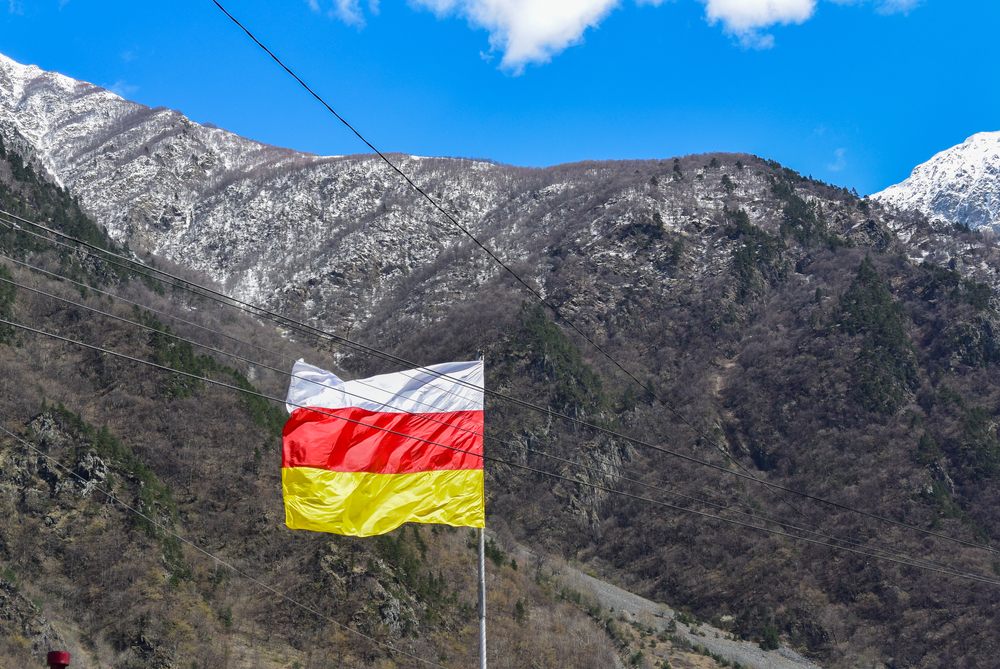
South Ossetia's recent presidential transition, in which Alan Gagloev resigned in favor of Russian administrator Marat Kambolov, marks the latest step in a long-running process of Russo-Ossetian integration. The May 2026 "Treaty on Deepening Allied Interaction," marks a significant step in South Ossetia's integration, signifying Moscow's broader strategy toward Georgia and the South Caucasus as well as its limitations.
BACKGROUND:
On June 23, Alan Gagloev resigned from his post as President of the small breakaway republic of South Ossetia, taking a new position as an aide to Russian President Vladimir Putin. The move happened suddenly. Gagloev, in a televised address to the Ossetian people, claimed that after meeting Putin on June 22, he agreed to become an advisor to the Office of the Russian President. The next day he resigned. In his place, Prime Minister Marat Kambolov assumed the responsibilities of the presidency.
Kambolov is, notably, not a native to South Ossetia. A Russian national, Kambolov was sworn in as South Ossetia’s Prime Minister on June 17, 2026, but had until 2025 not been involved in the domestic affairs of the breakaway republic. Born in North Ossetia in 1965, he graduated from Moscow State Social University and the Russian Academy of Public Administration, going on to work in the Russian government. In May, he was tapped to be Gagloev’s advisor, and soon became Gagloev’s nominee for the premiership. Kambolov is expected to deepen Russo-Ossetian ties, implementing provisions of a bilateral treaty signed between Russia and Ossetia on May 9, 2026. Kambolov is expected to become the President of South Ossetia after snap elections planned September 18.
Kambolov’s ascension is part of a continuous effort of Ossetian aspirations for annexation into the Russian Federation. Indeed, since 1991 and with Russian backing, the Ossetians have maintained de facto independence from Georgia and alignment with Russia.
Generally, the South Ossetian separatist project is concerned with the unification of their people, whether it be within a sovereign state or under Russian rule. Indeed, the Ossetians are a transnational people, inhabiting Georgia, the unrecognized Republic of South Ossetia, as well as the Russian federal subject, the Republic of North Ossetia–Alania. As the vast majority of Ossetians reside in North Ossetia, it has been the wish of many in the south form a union with the north, to share a common state.
Ossetian demands for union with the north began in the early 90s, when the region broke from Tbilisi. In 1992, South Ossetia held a referendum that saw overwhelming support for independence by Ossetians and a 99.89 percent vote in favor for “reunion” with Russia.
Serious promotion of annexation did not begin until 2008, however, when Russia formally recognized the small de facto republic. After the election of Leonid Tibilov as South Ossetian president in 2012, it began making moves towards unionship. Tibilov stated after winning the 2012 elections that “We will certainly continue along the course towards Russia that has been chosen by our people – a course of further integration ... in all existing spheres, including the economy, as well as military, technical, and defense cooperation.” Other efforts towards union, such as the partial integration of the South Ossetian armed forces into the Russian army, also occurred during this period. In 2016, Ossetia signed the bilateral Treaty on Union Relations and Integration with the Russian Federation, strengthening ties between the two countries. Further plans for full annexation emerged at this time as well, with Tibilov suggesting closer union with Russia.
Plans for an annexation referendum did not pan out until 2022, where in March, South Ossetian president Bibilov announced a referendum following the 2022 presidential elections. Bibilov suggested it should take place the day after the presidential elections, thus constituting concrete executive action in contrast with earlier parliamentary debates on the organization of referendums. The referendum was delayed, however, by Gagloev who after winning the elections stated that the time was not right and signed a decree cancelling it.
Despite continued delays, Russo-Ossetian cooperation has continued with the culmination of talks leading to the signing of a bilateral treaty in 2026. On May 9, Vladimir Putin and Alan Gagloev signed a “Treaty on Deepening Allied Interaction,” which the Russian Duma ratified on May 13. The document outlines provisions that would enable Russian citizens to hold office in South Ossetia and establish greater energy, transportation, telecommunication integration between the Russian Federation and the de facto republic. In effect, the agreement would bring de facto annexation. Gagloev, the former president of South Ossetia, called it, a “step towards the reunification of the Ossetian people,” further emphasizing that “South Ossetians perceive Russia as [their] great homeland.”
IMPLICATIONS:
The recent appointment of Marat Kambolov as Prime Minister and his ascension to the role of acting president is a continuation of the integration and unification of Russia and South Ossetia, a process that has been ongoing since the South Ossetian war in 1991. Kambolov is a demonstration that Moscow is now installing administrators rather than cultivating local elites.
The events in South Ossetia demonstrate Moscow’s continuing exercise of influence in the South Caucasus, which is otherwise waning against the backdrop of its economic, military and political overextension due to its ongoing invasion of Ukraine. Russia has lost considerable influence in Armenia, as Prime Minister Pashinyan moves the country Westward and as President Aliyev of Azerbaijan continues to elevate Baku’s strategic autonomy.
This is evident as Gagloev noted that one of the reasons for the delay of the 2022 referendum was Russia’s invasion of Ukraine. As he stated, “I believe that the current authorities of the Russian Federation, represented by President Vladimir Putin, are still busy with other issues, I think with more serious ones.”
Setting aside Russia's insufficient political capital for outright de jure annexation, indirect rule is also part of Moscow’s strategy to manage Russo-Georgian relations. Since the Georgian Dream (GD) party’s rise to power in the early 2010s, Georgia began to employ a foreign policy that was multi-axis oriented, engaging in attempts at rapprochement with Russia. When Russia invaded Ukraine in 2022, the GD government refused to engage in the Western sanctions imposed on Moscow. GD likely believed that a swift Russian victory in 2022 was inevitable, and that maintaining friendly relations with Russia was Georgia’s most rational course of action. It is unclear whether there is a definitive grand strategy to GD’s foreign policy, yet the Georgian government clearly believes that cultivating better relations with Russia is in their interest.
This certainly incentivizes Moscow to maintain a friendlier attitude Georgia, however, at the same time Moscow acknowledges the utility of both South Ossetia and Abkhazia in the relationship. By continually utilizing South Ossetia as a bargaining chip, Moscow can promise Georgia speculative future talks on the fate of South Ossetia, and in return Georgia retains a neutral, or even semi-positive attitude towards Moscow. Of course, Russia has no intention of giving away South Ossetia, yet this strategy continues to work as GD continues its attempts at a multi-axis oriented foreign policy.
CONCLUSIONS:
Georgia remains strategically important for Russia, which hopes to control a North-South Axis, from the North Caucasus through Georgia and Armenia, cutting through the Middle Corridor and further linking up with Iran. This competes with the ongoing establishment of a West-East Axis from Turkey, through Armenia/Georgia and Azerbaijan and further to the Caspian and Central Asia.
It is evident that Russia, at least under the current strategic policies of the Putin regime, will seek to retain its influence in the South Caucasus for the foreseeable future. Moscow’s approach to integration in South Ossetia demonstrates its continued interest in the region, but also the limitations to its capacity for fulfilling them.
AUTHOR’S BIO:
Nicola Ilario is an undergraduate at the University of Pennsylvania. He studies Economics and History, with a concentration in the history of diplomacy. Nicola interned at the Central Asia-Caucasus Institute the Summer of 2026, assisting fellows in their research. He can be reached at This email address is being protected from spambots. You need JavaScript enabled to view it. .
From Soviet Pipelines to Eurasian Energy Corridors: Russian Gas Exports to Iran Through Azerbaijan
By Vali Kaleji
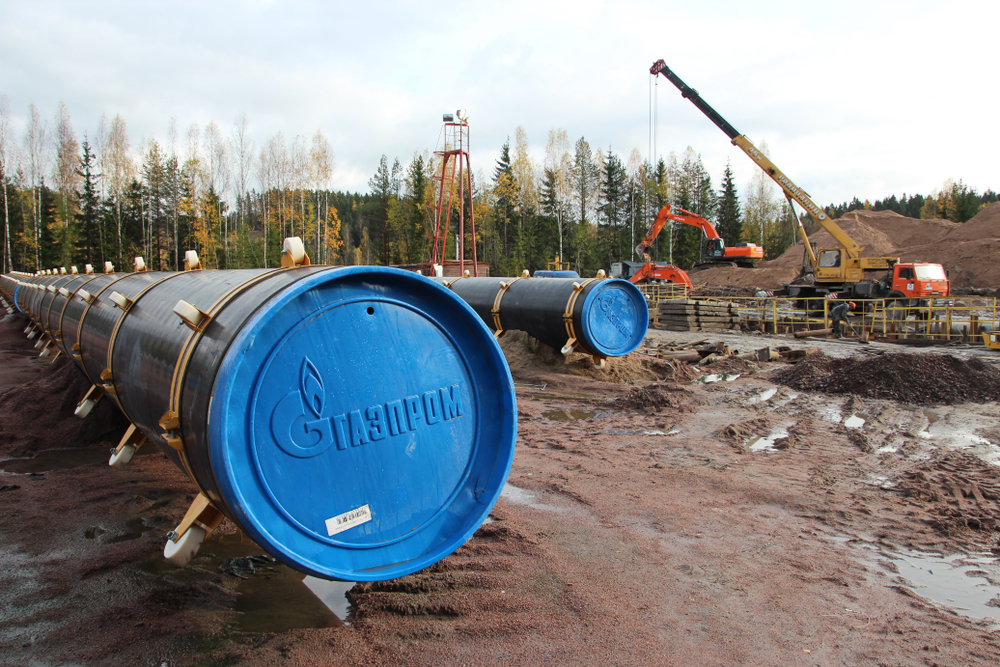
Russia and Iran are moving closer to implementing a long-negotiated natural gas agreement. Officials from both countries have confirmed that Azerbaijan has been selected as the preferred transit route for Russian gas exports to Iran, a route that recalls Iran's natural gas exports to the Soviet Union through the same corridor in the 1970s. The project will constitute part of the broader geopolitical and geoeconomic reconfiguration of Eurasia following the Ukraine war, in which Russia seeks to redefine its energy export routes while Iran seeks not only to reduce its domestic natural gas imbalance but also to strengthen its geoeconomic and transit position within regional energy networks.
BACKGROUND:
Energy cooperation between Iran and Russia dates back to the Soviet era. In January 1966, Iran and the Soviet Union signed a gas agreement under which Iran exported 10 billion cubic meters (bcm) of natural gas annually from its southern gas fields to the Soviet Caucasian republics through a pipeline terminating at Astara, now on the Iran–Azerbaijan border. In return, the Soviet Union agreed to build the Isfahan Steel Plant and the Arak Machine Manufacturing Plant. The pipeline became operational in 1970, but gas exports ceased in 1980 following the Islamic Revolution and the Iran–Iraq War. Although exports briefly resumed in 1989, the collapse of the Soviet Union in 1991 ended this framework of cooperation.
Rather than expanding energy ties with the Russian Federation, Iran subsequently developed cooperation with the newly independent states of Central Asia and the South Caucasus, including gas imports from Turkmenistan, oil swap arrangements with Kazakhstan and Azerbaijan, gas exports to the Nakhichevan Autonomous Republic, and the Iran–Armenia Gas-for-Electricity Swap agreement.
Despite UN sanctions, Iran and Russia reached an “oil-for-goods” agreement in 2014 under which Russia would purchase Iranian oil in exchange for Russian goods and equipment. The arrangement lost momentum after the 2015 Joint Comprehensive Plan of Action (JCPOA) enabled Iran to increase oil exports and regain access to international markets.
The U.S. withdrawal from the JCPOA in 2018 and the reimposition of sanctions, combined with Western sanctions on Russia following its invasion of Ukraine, created new incentives for bilateral energy cooperation. In July 2022, the National Iranian Oil Company (NIOC) and Russia’s Gazprom signed a US$ 40 billion memorandum of understanding covering joint investment in oil and gas projects, including gas pipelines and swap arrangements. In June 2024, Gazprom and the National Iranian Gas Company (NIGC) signed an agreement on Russian gas supplies to Iran, with Tehran aiming to import up to 20 bcm annually. During 2025, negotiations focused on pricing, financing, volumes, and transportation routes. Azerbaijan emerged as the preferred transit corridor, with Russian gas expected to enter Iran through the Astara border crossing, replicating the route used during the Soviet era. Russian Energy Minister Sergei Tsivilev confirmed this route in January 2025. Russia has proposed an initial supply of about 2 bcm annually, potentially expanding to 55 bcm in later phases.
During a meeting with Iranian Oil Minister Mohsen Paknejad on 13 July, Tsivilev also emphasized that the main provisions of the contract had been settled, and that the agreement would be finalized in the near future.
Azerbaijan has taken a cautious position. Unlike Russia and Iran, whose officials have repeatedly commented on the project, Baku has largely refrained from public statements regarding the proposed Russian gas exports to Iran. This silence may reflect the fact that Azerbaijan has become one of the EU's key natural gas suppliers, particularly since the outbreak of the Ukraine war, and does not wish to create the impression that it is serving as a new export route for Russian gas under the current sanctions regime. Azerbaijan may also prefer to avoid taking a public position until the commercial and legal arrangements of the project have been finalized.
From a technical and operational perspective, two key pipelines could potentially facilitate gas supplies from Russia to Azerbaijan and Iran. The 200km Novo-Filya (Russia) – Baku Gas Pipeline was built during the Soviet era, with a capacity of 10 bcm per year. It runs along the Caspian Sea coast and can operate in reverse mode, forming part of the larger Mozdok-Hajigabul gas pipeline system. The 1,474.5km Hajigabul (Azerbaijan) – Astara – Abadan (Iran) Gas Pipeline is another Soviet-era construction, connecting Azerbaijan to Iran. It has a capacity of 10 bcm per year but is currently inactive.
To enable significant Russian gas supplies, substantial investments in modernizing the entire pipeline system would likely be necessary. By mid-2026, imports have not yet begun, as negotiations continue over commercial terms, infrastructure development, Iran’s role in gas swaps and re-exports, and transit arrangements with Azerbaijan.
IMPLICATIONS:
The most immediate implication of the prospective Russian gas exports to Iran is its contribution to mitigating Iran’s gas imbalance in the country’s northern regions during the cold autumn and winter seasons. Although Iran possesses the world’s second-largest natural gas reserves after Russia and, in 2025, its total annual natural gas production exceeded 280 bcm, equivalent to approximately 7 percent of global natural gas production. The rapid growth in domestic consumption, the deterioration of parts of its infrastructure, two decades of extensive economic sanctions, and a lack of foreign investment in the development of gas fields and refinery capacity have created a structural imbalance between gas production and consumption. As a result, in recent years Iran has faced a daily gas shortage of 200–300 million cubic meters (mcm) during peak consumption periods. During the recent U.S. and Israeli war against Iran, parts of the South Pars gas facilities and processing plants were targeted, resulting in the loss of approximately 230 mcm of gas production capacity and further exacerbating the country’s energy imbalance.
The gas imbalance in northern Iran is particularly acute during the cold autumn and winter seasons because most of the country’s oil and gas resources, as well as its refineries, are located in the southern regions. Hydrocarbons must therefore be transported by pipeline to Iran’s densely populated northern provinces, a process that is both costly and associated with energy losses. At the same time, Iran has not developed the oil and gas resources of the Caspian Sea for a variety of reasons. Under these circumstances, gas imports from Russia, as well as Turkmenistan, enable Iran to increase gas supplies to its northern regions during the cold autumn and winter months.
A second implication, strongly emphasized by supporters of the project in Iran, is the use of surplus Russian gas, after meeting demand in the northern regions, to increase Iran’s gas exports to Iraq, Turkey, Armenia, Pakistan, and Oman, thereby strengthening Iran’s position as a regional energy hub. The realization of this objective, however, will largely depend on a final agreement between Iran and the U.S., the lifting of UN sanctions, and the removal of unilateral U.S. sanctions against Iran.
A third implication is the deepening of strategic interdependence between the two countries. Alongside the expansion of close political relations, the conclusion of the 20-year Comprehensive Strategic Partnership Agreement between Iran and Russia, the strengthening of bilateral and multilateral economic and trade cooperation within the Eurasian Economic Union (EAEU), the International North–South Transport Corridor (INSTC), and military-defense cooperation, energy will constitute a new dimension in Tehran–Moscow relations. Nevertheless, competition between Iran and Russia in the regional gas market, particularly in the South Caucasus and especially in Armenia, cannot be overlooked in the context of routing Russian gas exports to Iran through Azerbaijan. In fact, rather than routing the pipeline through Georgia and Armenia, both of which are consumers of natural gas, Russia has opted for Azerbaijan, a producer and exporter of natural gas, in order to ensure that Gazprom’s long-term commercial interests are not threatened.
A fourth implication is the strengthening of Azerbaijan’s role and position between Iran and Russia in both transit—the International North–South Transport Corridor (INSTC)—and energy, through the export of Russian gas to Iran. This development has been shaped by a number of factors, including sanctions on both Iran and Russia, the Free Trade Agreement between Iran and the Eurasian Economic Union (EAEU), the changing geopolitical environment resulting from the war in Ukraine, the recent U.S. and Israeli war against Iran, and Iran’s growing energy imbalance. Although the fluctuating nature of Iran’s and Russia’s relations with Baku could affect the sustainability of Russian gas exports to Iran, the re-export of part of the imported gas from Iran to Pakistan, a close partner of Azerbaijan, could disincentivize Baku from disrupting or suspending Russian gas transit to Iran.
CONCLUSIONS:
Whereas Iran exported natural gas to the Soviet Union in the 1970s, this trend has reversed over the past six decades. If implemented, Russian gas exports to Iran would form part of the broader geopolitical and geoeconomic reconfiguration of Eurasia following the Ukraine war. Russia seeks to redefine its energy export routes, while Iran aims to reduce its domestic gas imbalance and strengthen its geoeconomic and transit role within regional energy networks. However, the project’s success will depend on political cooperation between Tehran and Moscow, Azerbaijan’s role as the main transit route, international sanctions, its economic viability, and developments in global energy markets.
Within Iran, opinions on Russian gas imports remain divided. Supporters argue the project would reduce winter gas shortages in northern Iran, increase gas exports to neighboring countries, and reinforce Iran’s position as a regional energy hub. Critics, however, view Russia as Iran’s principal competitor in regional and global gas markets, noting that discounted Russian oil and gas have already displaced Iranian exports, particularly in China and India. Russia has similarly expanded its share of Iran’s steel export markets through lower prices. Consequently, if Iran–U.S. negotiations lead to sanctions relief and expanded Iranian energy exports, Russia may already have secured a significant portion of Iran’s potential export markets.
AUTHOR’S BIO:
Vali Kaleji, based in Tehran, Iran, holds a Ph.D. in Regional Studies, Central Asian and Caucasian Studies. He has published numerous analytical articles on Eurasian issues for the Eurasia Daily Monitor, the Central Asia-Caucasus Analyst, The Middle East Institute and the Valdai Club. He can be reached at This email address is being protected from spambots. You need JavaScript enabled to view it. .
Patriarch Shio III: A New Era in the Georgian Orthodox Church
By Irakli Kiknavelidze and Tomáš Baranec
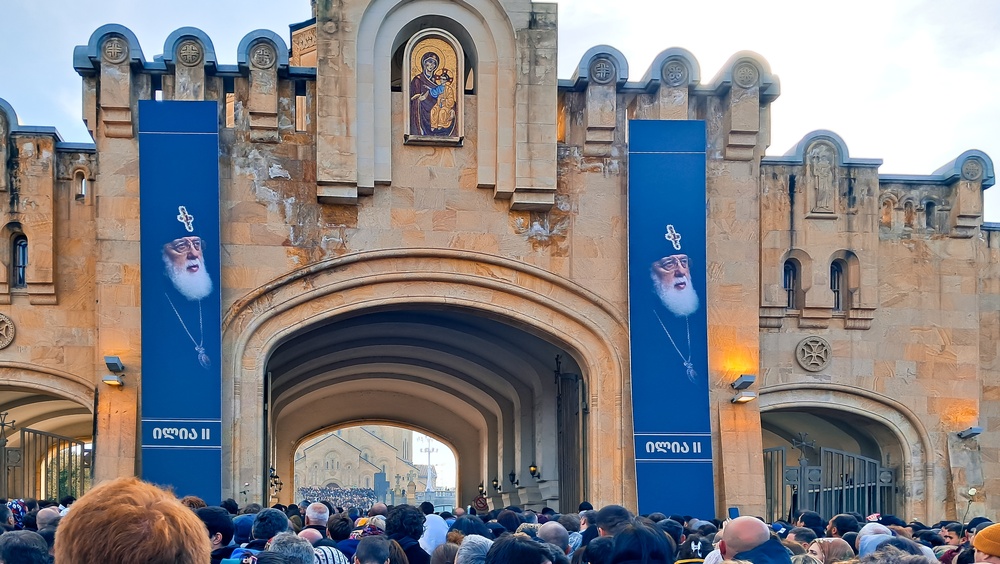
Ilia II of the Georgian Orthodox Church (GeOC) died on 17 March. Over nearly five decades, he consolidated the Church’s position as one of Georgia’s most influential and trusted institutions. His tenure was characterized by a dominant patriarchate, a relatively constrained Holy Synod, and a cautious approach to partisan politics and foreign policy alignment. The accession of Shio III marks the beginning of a new era for the GeOC, bringing expectations of a redefined balance between the patriarch and the synod, as well as potential consequences arising from the Church’s increased engagement in domestic and international politics.
BACKGROUND:
Under the 1995 Statute of Administration of the GeOC, the Holy Synod plays the central role in the election of the Patriarch. It is responsible for nominating three candidates and is the only body granted voting rights within the Extended Council, which selects the final candidate. All other participants, unlike under the pre-1995 system, serve solely in an advisory capacity.
Ideologically, the Holy Synod can currently be divided into three principal blocs. The conservative bloc is characterised by a dogmatic stance on cultural and ethical issues, scepticism towards Western integration, and, to varying degrees, openness to cooperation with the Russian Orthodox Church (ROC).
The national-conservative bloc often adopts an even more dogmatic position on cultural and ethical issues than the conservative bloc, while remaining strongly anti-Russian. Consequently, it is particularly sceptical of both the influence of the Russian Orthodox Church (ROC) and Georgia’s integration with Western institutions.
The liberal bloc, the smallest of the three, advocates more moderate positions on socio-ethical issues and is broadly supportive of Georgia’s political integration with Western institutions.
A heterogeneous yet numerically significant group within the Holy Synod consists of centrists, whose members are generally less ideologically committed and more pragmatic in their outlook than those belonging to the principal ideological blocs.
At its session on April 28, the Holy Synod nominated three candidates for the patriarchate, broadly reflecting the three principal ideological currents within the Church. Metropolitan Shio Mujiri, backed by the conservative wing, received 20 votes. The national-conservative bloc nominated Iob Akiashvili, who secured 7 votes, while the liberal wing put forward Grigol Berbichashvili, who also received 7 votes.
In the final vote held on 11 May, Metropolitan Shio Mujiri was elected head of the GeOC with 22 votes. Metropolitan Iob received nine votes, while Metropolitan Grigol secured seven. Mujiri was enthroned the following day, assuming the title Shio III.
IMPLICATIONS:
As one of the few senior figures within the GeOC to have received theological education in Russia, Shio has frequently been portrayed in the media as “Moscow’s candidate,” a characterisation openly used by Archbishop Zenon Iarajuli, among others. Critics have also pointed to his close relationship with Georgia’s ruling party. In contrast, Patriarch Ilia II maintained close ties with the Georgian state as an institution while generally avoiding overt alignment with any particular political party.
The accession of Shio III can be regarded as a significant success for the ROC, particularly with respect to the question of recognising the autocephaly of the Orthodox Church of Ukraine (OCU), which is a fully independent, autocephalous national church. Both of Shio’s rivals, Iob and Grigol, stated that they would support recognition of the OCU’s independence if elected. Shio, by contrast, avoided taking a public position on the issue during the election process. Given his longstanding ties to the ROC, it appears unlikely that he will endorse recognition of the OCU and will instead support the Moscow-affiliated Ukrainian Orthodox Church (UOC). As a result, the ROC can expect continued support from the GeOC on an issue of major strategic importance to Moscow, potentially for decades to come.
To an extent that remains uncertain, Shio’s accession is also likely to ensure the continuation of relatively close relations between the two Churches and to preserve a degree of ROC influence within the GeOC, at least intellectually and ideologically.
Compared with Ilia II, the new Patriarch’s initial public statements and appearances indicate that he may adopt a more uncompromisingly conservative stance, which will be difficult to reconcile with Georgia’s integration with Western institutions.
In this way, Shio may contribute to the strengthening of anti-Western attitudes among segments of the Georgian population. Such a development would align with Russia’s broader geopolitical interests while simultaneously reinforcing the legitimacy of the ruling Georgian Dream party among parts of its domestic constituency.
Even before his accession, Shio departed from Ilia II’s principle of supporting state institutions rather than specific political parties. Moreover, unlike Ilia II, Shio III is likely to enter his relationship with Bidzina Ivanishvili, the de facto leader of the ruling party, as a junior partner, at least initially.
An important factor in assessing the outlook of the new Patriarch is his background as a black (monastic) priest. Orthodox monasticism has traditionally been closer to the ROC (which is based on monasticism) than to the Greek Orthodox Church, which relies more heavily on white (married parish) clergy. As a result, Shio’s affinity with the Russian Orthodox world extends beyond his education in Russia. Whereas Ilia II’s faith was based on "Georgian Orthodoxy;" a faith with regard to the interests of the state, Shio III emphasizes Orthodoxy as a superior and supranational religious identity.
Shio III’s ties to Russia and support for the government appear to stem from deeply held personal convictions rather than political expediency. Consequently, a significant shift in these positions during his patriarchate is unlikely.
Nevertheless, the impact of Shio’s enthronement is likely to remain limited, at least during the initial years of his patriarchate. The fact that, after the first round of voting, when his victory had become virtually certain, there was no significant shift of centrist support in his favour (his tally increased by only two votes) suggests that members of the Holy Synod are not subservient to the new Patriarch and are prepared to oppose him if necessary.
Shio III has yet to display the political acumen that characterised Ilia II. His leadership is constrained by dogmatism and introversion, although he has shown an ability to rely on politically skilled allies and possesses some political instinct. The first major challenges of his patriarchate will reveal which of these traits proves more influential.
The GeOC will soon face several important internal challenges, including the appointment of seven vacant episcopal positions and the reform of the 1995 Statute of Administration. While there is broad agreement within the Holy Synod that the current statute requires revision, opinions differ sharply regarding its replacement. In addition, some bishops are actively advocating for the Church to publicly call for the release of political prisoners.
None of these issues falls within Shio III’s formal authority to decide unilaterally. To advance his preferred policies, he will need to secure the support of the Holy Synod. His handling of these challenges will provide an indication of his ability to shape the Church in accordance with his worldview.
CONCLUSIONS:
If Shio III consolidates his position, he could enable greater Russian influence within the GeOC and bolster the legitimacy of Georgian Dream among conservative voters. In the long term, however, this may weaken the Church’s broader social authority and deepen political polarization in Georgia.
In an alternative scenario, the Holy Synod could gain influence at the expense of the Patriarch. Even so, a major shift in the Church’s domestic or foreign policy positions is unlikely, as the recent patriarchal election demonstrated the continued dominance of the conservative wing within the Synod.
AUTHOR’S BIO:
Tomáš Baranec is a Research Fellow and Head of the Caucasus Program of the Slovak think tank Strategic Analysis. He worked for several years as a field researcher on the Georgian-Ossetian ABL. Tomas studied Balkan, Central European and Eurasian Studies at Charles University in Prague.
Irakli Kiknavelidze is a Georgian journalist, television host, political commentator, and media professional specializing in Georgian politics, democracy, religion, and South Caucasus affairs. He has worked in television, print, and digital media, producing interviews, analysis, and public affairs programming. Throughout his career, Kiknavelidze has focused on political developments, international relations, and the intersection of religion and public life in Georgia.
How Russia Won the Hybrid War in Georgia — and What the West Got Wrong
By David Dondua
The August 2008 Russo-Georgian war achieved less than Moscow had hoped. Russia seized 18 per cent of the country's territory, areas it had already controlled since the early 1990s, but failed to alter Georgia's strategic direction. What military force could not achieve, Moscow pursued through other means — disinformation, economic leverage, elite capture, and a sustained cognitive campaign targeting Georgian society's deepest cultural anxieties. Over the following decade and a half, these tools proved far more effective than tanks. Yet Moscow's campaign found the ground partly prepared for it. Western partners, through a series of miscalculations, inadvertently made the cognitive campaign easier to wage. Understanding what went wrong and why is essential not only for Georgia's future but also for every country facing Russian hybrid warfare.
Read How Russia Won the Hybrid War in Georgia

Russia’s Double Game in Afghanistan and Central Asia
By Stephen Blank
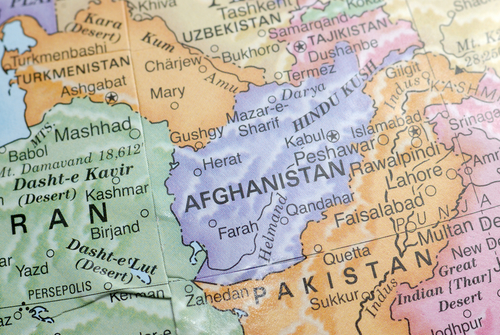
The Pakistan-Afghanistan war, on top of the war against Iran, is forcing Moscow to attempt to balance its security and economic interests in and beyond Central Asia with both Pakistan and Afghanistan. Pakistan is critical to Russia because it provides an alternative to Iran, allowing Moscow’s transcontinental trade project INSTC to move forward and offering a gateway to Asia. Concurrently, Moscow has upgraded its ties with the Taliban in Afghanistan both to deter ISIS-K terrorists and to secure broader geostrategic aims. Yet it also increasingly appears that Moscow is willing to offer Afghanistan arms, ostensibly to deter terrorists. However, in the broader regional context, this move underscores Moscow’s propensity for playing a double game with and against its partners.
BACKGROUND:
The Iran war and Pakistan’s war with Afghanistan threaten the further erosion of Russian influence in Central Asia. Consequently, Russia has embarked on what can only be called a double game vis-à-vis Pakistan and Afghanistan. Pakistan has attacked Afghanistan because it claims Afghanistan harbors the Tehrik-e-Taliban Pakistan (TTP) terrorist group, which performs attacks against Pakistan. This complaint is more than a little ironic given Pakistan’s own long-standing and well-known record of sponsoring terrorism against India. More significant, however, is the fact that this charge, if true, signifies that Kabul has escaped Islamabad’s tutelage. However, the war also disrupts Russia’s ambition to sell Russian gas to South and Southeast Asia through pipelines traversing Afghanistan and Pakistan.
At the same time, Russia has steadily built a “full-fledged” and “pragmatic” partnership with Afghanistan to prevent it from sponsoring terrorist groups like ISIS-K and their targeting of Russia and Central Asia, where Russia still claims to be the ultimate security manager. According to Sergei Shoigu, Secretary of Russia’s Security Council, full-fledged partnership includes bilateral defense and security cooperation. Indeed, Shoigu openly proclaimed Russia’s opposition to any third-party military presence in Afghanistan or neighboring countries, a shot across both Pakistan’s and the U.S.’s bow and a sign of its ambition to establish a protectorate over Afghanistan.
However, Russia’s interests transcend defense. The war against Iran has ruptured the feasibility of Russia’s, Iran’s and India’s major transit, trade and connectivity route through Central Asia and then through Russia to Europe, the INSTC (multi-modal International North-South Transportation Corridor). The other existing corridor, the increasingly lucrative Middle Corridor or TITR (Trans-Caspian International Transport Route) from China to Central Asia and then to the Caucasus and Europe bypasses Russia. Thus, since failure to find an alternative to Iran for INSTC will have dire geoeconomic and geopolitical consequences for Russia, it has turned to Pakistan for help. Pakistan cannot afford exclusion from transcontinental trade routes and has agreed to explore connecting its port at Gwadar either by land or by sea to INSTC.
IMPLICATIONS:
Moscow typically has sought to have a foot in both camps in every conflict scenario throughout the Global South and the Pakistan-Afghan war is no exception. But this case is far more central to Moscow’s interests than its power projection in for example Africa or the Middle East. In order to maintain its self-appointed “leading position” in Central Asia, it is crucial for Russia to exercise leverage over Afghanistan to deter an outbreak of Islamic terrorism targeting either Central Asia or Russia.
Likewise, it is critical to Russia’s economic health and continuing ability to finance its war against Ukraine and its heavily strained state budget that it continues to find Asian markets for its oil and gas. Doing so also entails developing trade routes like INSTC to Pakistan, India and Southeast Asia, especially given its desire to be acknowledged as an independent Asian power. Therefore, balancing between Pakistan and Afghanistan while developing alternatives to Iran’s connectivity have become requirements of Russian policies to realize vital Russian interests, especially as its economy is reeling and its position in Central Asia erodes.
Further erosion is inevitable if Islamic terrorism “migrates” to Central Asia without Moscow being able to deter or stop it. By the same token, exclusion from transcontinental trade routes will undermine Moscow’s ideological and rhetorical pretense of hegemony, and demonstrate that Russia lacks the means in terms of tangible material capability to back up its arguments or sustain a position that answers to Central Asia’s most pressing questions, i.e. economic development.
Concurrently, if Russia cannot develop let alone sustain viable, economically justifiable outreach to South and Southeast Asia, its hard-won influence and standing in those countries will diminish by an order of magnitude, negating its claims of being an Asian power and making it still more dependent on China.
Despite its vital need to keep the balance between Pakistan and Afghanistan, many recent reports suggest that Moscow is secretly negotiating an arms deal with the Taliban. Ostensibly, the aim would be to use the weapons to suppress ISIS-K and prevent further terrorist strikes in Central Asia and or Russia. While this makes sense if leveraging Russia’s Central Asian position and ambitions vis-à-vis Afghanistan are the priority; in reality, it highlights the priority of security over economic development in Russian policy. It also illustrates the abiding temptation to make secret deals involving the security services or force structures as primary instruments of foreign policy.
Given the Taliban’s track record, it is unlikely that it can or will hold up its end of the bargain. Moreover, should these reports be true this news will enrage Pakistan and likely torpedo efforts to have it join INSTC. That trade project, unlike the Middle Corridor, never got off the ground and is therefore already being eclipsed. This has gravely serious and negative implications for Russia and is likely to aggravate all the trends making for the decline of Russian power in the Caucasus and Central Asia as well as South and Southeast Asia.
An arms deal with the Taliban will further entrench the belief among governments who monitor Russian behavior that Moscow is cannot be relied on as a partner. It will also confirm the notion held by many Western governments that Russia, like the Soviet Union, remains a sponsor of state terrorism and must, at best, be kept at arm’s length.
CONCLUSIONS:
Thus Russia continues to play a double game towards its partners, attempting to have both an empire and prosperous foreign trade relations, even though their logics are quite incompatible. Moscow also has yet to grasp that it cannot denounce and support terrorism at the same time without paying an incommensurate price for its quest after short-term gains. In Central Asia, Russia still seeks to pursue wildly contradictory aims without paying the price for doing so. If Moscow does, in fact, arm the Afghan government, it will once again be playing with dynamite.
AUTHOR’S BIO:
Stephen Blank is a Senior Fellow with the Foreign Policy Research Institute, www.fpri.org.
Visit also