Future prospects for Caspian energy

By Stephen Blank
October 10th, 2016, The CACI Analyst
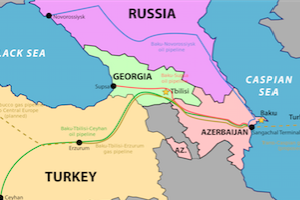
There are several signs of a possible turn for the better in the energy prospects of Caspian states, and especially Azerbaijan. The collapse of energy prices appears to have bottomed out. Even prices stagnating at US$ 40-60 a barrel gives energy producers a certain margin to cushion the shocks they will endure. A major aspect of the Caspian states’ comparative advantage is their proximity to Turkey and Southeastern Europe. As European growth recovers, the demand for energy coming through those states will likely grow. Ukraine’s growing freedom from Russian energy coercion will also stimulate it to look for alternatives and new opportunities for Caspian producers. Yet the perhaps most encouraging sign is the construction of new capacities to tie together and eventually integrate the European market.
A new balance of power in the Black Sea?

By Natalia Konarzewska
September 15th, 2016, The CACI Analyst
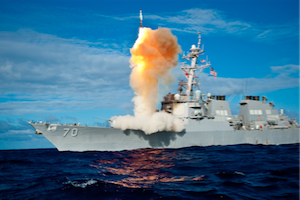
Despite the Black Sea’s geopolitical importance, NATO has neglected Russia’s enhancement of its military capabilities there to unprecedented levels over the past few years. Russia’s new military buildup in the Black Sea will allow it to project power into adjacent regions, and to compromise NATO’s operational ability to protect its Black Sea riparian member states. The latest NATO summit in Warsaw on July 8-9 addressed this issue and called for the deployment of new deterrence and defense measures in the region.
NATO summit makes progress with problems

By Richard Weitz
August 24th, 2016, The CACI Analyst
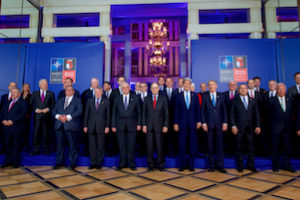
NATO’s Warsaw summit on July 8-9 made progress in strengthening Baltic security, enhancing the alliance’s counterterrorism and cyber defense capabilities, and strengthening relations with the European Union (EU). But the alliance has still not solved the challenge of ensuring the security of non-member states, including Afghanistan as well the countries of Central Asia and the South Caucasus.
Russia and Turkey come back to the gas table

By Najia Badykova
July 20th, 2016, The CACI Analyst
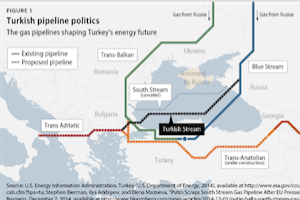
On June 27, Moscow announced that Turkish President Recep Tayyip Erdogan sent a personal letter to Russian President Vladimir Putin expressing his “regret and sorrow” for the downing of a Russian plane last November and his wish to reestablish bilateral relations. This ended a seven-month standoff between Turkey and Russia that seriously threatened their political and economic relations. Moscow welcomed the apology. Both sides have strong reasons to resume and reinforce their relations. The rapprochement will allow a restoration of diplomatic relations, and remove trade sanctions and barriers to the development of a number of joint projects, including the planned Turkish Stream gas pipeline under the Black Sea. Yet while Ankara and Moscow may return to pipeline negotiations, the gas supply situation to Europe has changed since November. Moscow has made substantial progress pushing an alternative option – an expansion of the Nord Stream pipeline.
Georgia's visa liberalization with the EU remains opaque

By Eka Janashia
July 10th, the CACI Analyst
At a June 20 meeting in Luxembourg, the EU’s foreign ministers again acknowledged Georgia’s eligibility for visa-free travel in the Schengen area for a short-stay. However, the country’s much-awaited exemption from visa requirements remains obscure.
At the end of last year, the European Commission (EC) issued the “Fourth progress report on Georgia’s implementation of the action plan on visa liberalization,” endorsing the country’s success in conducting legislative and policy reforms and praising its diligence in meeting institutional and organizational principles and procedures in line with European and international standards.
Visit also