Armenia’s Geopolitical Pivot: Strategic Ambiguity and the Search for New Security Anchors
By Ebru Akgün
Armenia is currently navigating its most significant geopolitical shift since its independence in 1991. The collapse of the traditional security architecture, which was built on the pillar of the Russian-led Collective Security Treaty Organization (CSTO), has forced Yerevan to embark on a perilous journey of "sovereign recalibration." By embracing Western civilian security instruments—most notably the European Union Monitoring Mission in Armenia (EUMA)—while simultaneously hosting legacy Russian military infrastructure, Prime Minister Nikol Pashinyan’s administration has adopted a high-stakes "dual-track" strategy. However, this hedging mechanism is reaching its structural exhaustion. As regional geopolitics shift toward binary alignments and the South Caucasus becomes a primary theater for broader EU-Russia competition, Armenia's tactical flexibility is increasingly challenged by the reality of asymmetric pressures.
BACKGROUND:
The central challenge for Armenia’s transition is the "security guarantee deficit." While Yerevan has successfully frozen its participation in the CSTO, citing the alliance’s failure to respond to incursions into Armenian sovereign territory in 2021 and 2022, it has not yet secured a formal military alternative. The Western response, though diplomatically robust, remains focused on "soft power" and monitoring rather than "hard power" defense obligations.
The EUMA's mandate has been extended until 2028, providing a layer of "visibility-based deterrence." However, from a military perspective, a civilian mission cannot function as a permanent shield. Unlike the formal mutual defense obligations found in Article 4 of the CSTO treaty—which Armenia now views as a "failed promise"—the EU mission carries no legal mandate to intervene in the event of an armed conflict. The presence of European monitors on the border with Azerbaijan may increase the political cost of escalation, but it does not provide the physical protection necessary to stop an offensive.
For Western policymakers, Armenia serves as a critical case study of the limits of small-state hedging under asymmetric pressure. The lack of a "hard" security partner leaves Yerevan in a state of strategic ambiguity. While France and the United States have increased their security assistance, these relationships are characterized by bilateral cooperation agreements rather than mutual defense pacts. This gap between monitoring and defense creates a period of strategic vulnerability that regional actors could exploit, especially if the diplomatic cost of military escalation is perceived as manageable by Baku or Moscow.
A critical but often under-analyzed component of Armenia’s new security architecture is its integration into Western-backed transit networks, specifically the Trump Route for International Peace and Prosperity (TRIPP) corridor. Launched as a flagship initiative to decouple the South Caucasus from Russian and Iranian monopolies, the TRIPP implementation framework signed in early 2026 aims to integrate Armenia into a Western-secured transit network.
The TRIPP initiative seeks to link Azerbaijan with its Nakhchivan exclave through Armenian territory (specifically the Syunik province) under Armenian sovereign and customs control. By promoting this "Crossroads of Peace" vision, the United States is attempting to create a vested economic interest in Armenia’s territorial integrity. If major Western corporations and U.S.-backed contractors become primary stakeholders in Armenia’s infrastructure, the logic follows that Washington will have a more explicit incentive to ensure the region's stability.
However, the TRIPP corridor brings its own set of risks. While it offers an economic lifeline and a potential implicit security shield, it places Armenia at the heart of a "corridor war" between the West, Russia, and Iran. Tehran remains deeply wary of any increased Western presence in Syunik, which it views as its "red line" for northern connectivity. Meanwhile, Moscow views any corridor not controlled by its own FSB border guards as a violation of the November 2020 ceasefire arrangements. Therefore, the TRIPP corridor is as much a security challenge as it is an opportunity, requiring Armenia to balance American ambitions against the immediate geographical realities of its neighbors.
Armenia’s military modernization efforts represent another pillar of its diversification strategy. Recent contracts for French GM200 radar systems and Mistral anti-air missiles, alongside the procurement of Indian Akash-1S missile systems and Pinaka rockets, mark a decisive break from the decades-long monopoly of the Russian defense industry.
However, "buying Western" does not automatically translate into "Western security." Armenia faces an immense technical challenge known as the "interoperability trap." The nation’s current command-and-control (C2) architecture is built on Soviet-legacy systems that are historically transparent to Russian military intelligence. Integrating NATO-standard French radars or high-tech Indian artillery into this legacy environment is not just a logistical hurdle; it is a profound security risk.
Without an entirely independent and secure C2 network—a project that would require billions of dollars and years of specialized training—Armenia’s new hardware remains vulnerable to electronic jamming or data interception by legacy Russian systems. Furthermore, the logistical chain for these Western systems is fragile. Unlike Russian equipment, which is supported by established rail links, Western hardware must be transported through Georgia’s ports or via complex Iranian routes, making the supply chain vulnerable to external political pressures. This technical sovereignty is the missing link in Armenia's military transition.
The strategic direction of Armenia will face its ultimate domestic test in the upcoming June 7, 2026 parliamentary elections. These polls will function as a definitive referendum on the "Western pivot" and the "Fourth Republic" vision proposed by the Pashinyan administration. Public opinion in Armenia is currently characterized by "ambiguity fatigue." While trust in Western institutions has surged, a significant portion of the population remains skeptical that monitoring missions and "economic corridors" like TRIPP can replace the hard security guarantees once expected from Russia.
The 2026 elections will be fought on two fronts: economic prosperity and national survival. If the government cannot demonstrate that its pivot has brought tangible security improvements or significant economic relief through projects like TRIPP before the elections, the opposition—likely backed by Russian narratives of "restoring traditional ties for safety"—may gain significant traction. The outcome of the 2026 polls will determine whether Armenia continues its pursuit of sovereignty through Western integration or is forced into a strategic reversal. The memory of the 2020 and 2023 conflicts looms large, and the electorate's patience for "strategic patience" is wearing thin.
IMPLICATIONS:
Despite the rhetoric of "de-coupling," the physical and economic reality of Russian influence in Armenia remains a formidable obstacle. Russia still owns a majority of Armenia’s natural gas infrastructure through Gazprom Armenia and plays a critical role in the operation of the Metsamor nuclear power plant. To counter this, the European Union has pledged $500 million to enhance Armenia’s energy security and diversification, but the transition will take years.
This economic asymmetry gives Moscow a "soft-kill" capability. The Kremlin does not need to launch a military intervention to destabilize Armenia; it can achieve similar results through "technical" border closures at the Lars crossing, energy price hikes, or logistical sabotage. The withdrawal of Russian FSB border guards from Zvartnots Airport was a symbolic victory, but Russian units still maintain a presence along the borders with Turkey and Iran. Any move that Moscow perceives as an "over-pivot" could trigger a devastating economic retaliation that the Armenian state is currently ill-equipped to handle.
In this complex chess game, the role of Iran cannot be ignored. Tehran views the Syunik province as its essential gateway to the north. Any implementation of corridors—whether TRIPP or the Russian-backed Zangezur version—that changes the border status or introduces NATO-linked security actors is considered a "red line" by Iran. Armenia must navigate its pivot toward the West without alienating its southern neighbor, which remains its only other physical gateway to the world. This necessitates a delicate balance: engaging with the U.S. on TRIPP while reassuring Tehran that Armenia’s sovereign control over the route remains absolute and non-negotiable.
CONCLUSIONS:
Armenia is currently in a race against time. The dual-track strategy has provided essential short-term breathing room, allowing the state to begin the slow process of military modernization and diplomatic diversification. However, as the 2026 elections approach and the regional environment becomes more binary, the luxury of ambiguity is disappearing.
For Armenia to survive as a sovereign actor, it must bridge the gap between "monitoring" and "defense." This requires moving beyond symbolic gestures toward a robust institutional framework that accounts for the state’s structural vulnerabilities. The TRIPP corridor and Western arms contracts are steps in the right direction, but they are not panaceas. Ultimately, Armenia’s ability to sustain its independence will depend on whether its Western partners are willing to provide actionable security pathways that go beyond binoculars and political statements. In a region where hard power still dictates the terms of sovereignty, Armenia’s "dual-track" must eventually find a single, solid, and defensible destination.
AUTHOR’S BIO:
Ebru Akgün is an independent researcher specializing in the South Caucasus, regional security architecture, and transportation corridors. Her work focuses on the intersection of infrastructure development, military modernization, and geopolitical risk analysis in Eurasia. She actively monitors the evolving dynamics between Armenia, its neighbors, and global power enters. You can follow her latest research and professional updates via http://linkedin.com/in/ebruakgun
China’s Free Riding in Central Asia’s Security Arrangements
By Vali Kaleji
June 20, 2024
Contrary to the economic, financial, and commercial domains where China has supplanted Russia in the five Central Asian states, Beijing is reluctant to assume a similar role in defense and security. China’s strategy, characterized by “free riding” at the expense of Russia and the Collective Security Treaty Organization (CSTO), has significantly influenced the Shanghai Cooperation Organisation’s (SCO) passive and conservative stance. Indeed, this aspect of China’s “soft power” has been instrumental in mitigating the escalation of anti-Chinese sentiments and “Sinophobia” within the region. By adopting a free riding approach and refraining from direct intervention in Central Asia’s security arrangements, China has been able to concentrate on economic, trade, and transit relations, particularly the Belt and Road Initiative. This strategy has facilitated China’s ability to address competition and strategic threats in other regions, notably Asia-Pacific and the Indian subcontinent.
Russia’s Retreat and Counterattack in Central Asia
By Stephen Blank
May 9, 2024
Russian power is retreating from the Caucasus and Central Asia, most prominently with the withdrawal of Russian peacekeepers from Nagorno-Karabakh and Washington’s concurrent decision to open discussions with Yerevan on military support. The same process is discernible in Central Asia in the lukewarm support for the war in Ukraine and Kazakhstan’s critique of that war. Other harbingers of the trend are the gradual erosion of Russian language use and China’s dominance in regional finance, trade, and investment. Nevertheless, Moscow still deploys substantial leverage over Central Asia and individual states and can conduct purely domestic policies that negatively affect Central Asian governments and citizens. Moreover, recent indicators suggest that Russia is launching a campaign to restore its hegemonic position in Central Asia. Thus, despite the war in Ukraine and the burdens it has imposed, current Russian policies in Central Asia amount to a determined resistance to its equally observable retreat.
India-Pakistan Strategic Rivalry Extends to the South Caucasus
By Vali Kaleji
March 28, 2024
The development of military and defense relations between Azerbaijan and Pakistan and Armenia and India is an important consequence of the political arrangement and the balance of forces after the Second Karabakh War. However, Pakistan’s non-recognition of Israel has prevented Baku from forming a “quadruple alliance” with its three strategic allies, including Turkey, Israel and Pakistan. Armenia, after defeat in the war and amid dissatisfaction with its traditional ally Russia and the Collective Security Treaty Organization (CSTO), views India, France and Iran as new strategic options, however, Iran prefers Armenia to maintain its traditional and strategic relations with Russia. The tripartite cooperation between Armenia, Iran and India focus efforts on “soft balancing” (economic-transit) instead of “hard balancing” (military-security), against the tripartite ties of Azerbaijan, Turkey and Pakistan in the South Caucasus.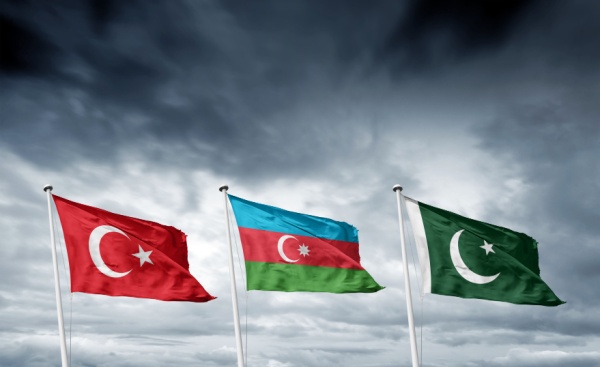
Two Years Later: Kazakhstan's January Events
By Svante E. Cornell
January 2, 2024
In January 2022, Kazakhstan experienced its most serious internal crisis since independence. Popular protests over energy costs turned into riots that in turn took on the shape of an attempted coup d’état that required President Tokayev to request support from the Collective Security Treaty Organization. Kazakhstan’s outlook appeared bleak. While some elements of the January events are still being investigated by the Kazakh law enforcement, the overall picture of what happened is clear. Overall, however, the events led to a gradual purge of older elements within the state institutions, a further distancing from Russia, and a redoubling of the overall reform process in the country.
Visit also