The EU-Armenia Summit and Armenia's European Aspirations
By Suren Sargsyan
On May 4-5, Yerevan hosted two significant events: the 8th Summit of the European Political Community (EPC) and the first Armenia–EU Summit. The gatherings brought together leaders from EU member states as well as representatives from Canada, the UK, and NATO. The Armenia–EU Summit concluded with a joint declaration and several cooperation agreements, prompting renewed debate over whether Armenia intends to pursue eventual membership in the EU. The question is particularly relevant given Prime Minister Nikol Pashinyan’s ambiguous statements regarding Armenia’s strategic orientation. While the government has expanded cooperation with the EU across numerous sectors, it has simultaneously emphasized that Armenia does not intend to withdraw from the Eurasian Economic Union (EAEU). Consequently, it remains unclear whether Yerevan seeks eventual EU membership or merely aims to deepen relations with the EU while avoiding a confrontation with Russia.
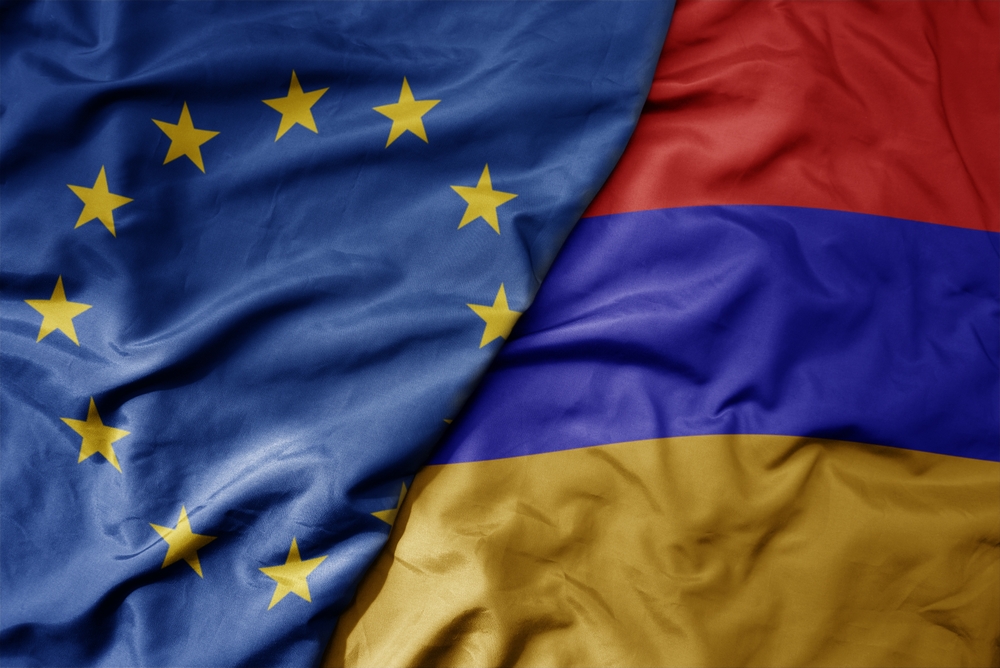
BACKGROUND:
Since Armenia’s 2018 “Velvet Revolution,” political observers, media outlets, and analysts have frequently argued that the country is gradually reorienting itself toward Europe. Many interpreted the rise of a reform-oriented government as a signal that Armenia would seek deeper integration with the EU and possibly pursue membership in the future. Such assessments often portrayed Armenia as distancing itself from Russia and adopting a more Western-oriented foreign policy.
In practice, however, Armenia has not taken concrete steps toward EU accession during the years following the revolution. Instead, the government has continued a long-standing policy of strengthening ties with the EU while maintaining relations with Russia. This approach is consistent with the policies pursued by previous Armenian administrations, which also sought to diversify the country’s external partnerships.
Armenia’s engagement with the EU predates the current government. Key milestones include the signing of the Partnership and Cooperation Agreement in 1996, participation in the European Neighborhood Policy from 2004, involvement in the Eastern Partnership launched in 2009, and the signing of the Comprehensive and Enhanced Partnership Agreement (CEPA) in 2017. These initiatives demonstrate that successive Armenian governments have viewed closer cooperation with Europe as beneficial for political, economic, and institutional development.
At the same time, none of Armenia’s previous administrations formally declared EU membership as a strategic objective. The current government has likewise avoided making such a commitment. Instead, Armenian officials typically provide cautious and often ambiguous responses when asked about accession prospects. This ambiguity allows multiple interpretations and sustains public debate without requiring a definitive policy choice. Public opinion nevertheless remains broadly supportive of the prospect of EU membership in general, and visa liberalization in particular. According to surveys conducted by the International Republican Institute, 51 percent of Armenians would support EU membership if a referendum were held, while 32 percent would vote against. Such attitudes make the topic politically attractive, particularly during election periods. By avoiding a clear rejection of membership aspirations, the government can appeal simultaneously to pro-European constituencies and to voters who favor maintaining strong relations with Russia.
IMPLICATIONS:
The EPC Summit in Yerevan was significant not only because of its scale and high-level participation but also because it was held in a non-EU member state. If Armenia genuinely intended to pursue EU accession, this gathering would have provided an ideal opportunity to announce such ambitions and seek political support from European leaders. Virtually all relevant decision-makers were present, creating a favorable diplomatic environment for such a declaration. No such announcement was made, suggesting that EU membership is not currently a priority within Armenia’s foreign policy agenda. The absence of such a step indicates that Yerevan remains focused on deepening cooperation with the EU rather than initiating a formal accession process. This situation reveals a degree of tension between public sentiment and official policy. While support for European integration appears relatively strong among the Armenian population, the government has avoided translating these preferences into a concrete strategic objective. The primary reason appears to be geopolitical rather than domestic. The decision to pursue EU membership depends not only on Armenia’s political will but also on the willingness of the EU to accept new members. Enlargement remains a complex issue involving economic, political, institutional, and security considerations. Brussels evaluates candidate countries according to extensive criteria, including governance standards, economic performance, social development, and regional stability. Consequently, accession is a lengthy and demanding process even under favorable circumstances.
In Armenia’s case, additional geopolitical factors further complicate the issue. EU member states would inevitably consider Russia’s position when evaluating any Armenian application. Armenia remains a member of the EAEU and maintains extensive security ties with Russia. It also hosts Russia’s only military base in the South Caucasus. Given these realities, many European governments would be reluctant to support a process that could significantly increase tensions with Moscow.
Moreover, EU enlargement requires unanimous approval by all member states. Even countries with stronger institutional links to Europe have faced lengthy and uncertain accession processes. As a result, Armenian membership, even if formally pursued, would likely require many years or even decades to achieve. It would also necessitate extensive economic, political, and legal reforms that could generate significant domestic costs.
Comparisons with Georgia and Ukraine are often made in discussions of Armenia’s European aspirations. These cases provide useful reference points because both countries have actively pursued closer integration with the EU while facing strong Russian opposition. However, Armenia’s geopolitical circumstances differ in important ways.
Unlike Georgia and Ukraine, Armenia does not share a border with Russia. This reduces certain direct security risks associated with Russian pressure. At the same time, Armenia lacks a direct land or maritime connection to any EU member state. This geographical reality limits economic integration and creates logistical challenges.
Furthermore, the EU itself remains divided on the question of further enlargement. While some member states support enlargement, others remain cautious due to concerns about institutional capacity, financial costs, migration, and security implications. The prolonged and uncertain experiences of countries such as Ukraine and Georgia illustrate that membership aspirations do not necessarily translate into rapid progress.
Economic considerations also constrain Armenia’s options. Despite efforts to diversify its international partnerships, Russia remains Armenia’s principal economic partner. Russia accounts for a substantial share of Armenian exports, imports, investment flows, and labor migration. Any move toward EU accession would therefore have significant economic implications and could provoke responses from Moscow that Armenia would need to manage carefully.
Regional dynamics further complicate the issue. Armenia must also consider the interests of neighboring Iran. Although EU membership does not automatically imply NATO membership, Tehran could interpret such a move as part of a broader Western geopolitical alignment. Given the importance of Armenian-Iranian relations, Yerevan is unlikely to disregard Iranian concerns.
The position of the U.S. adds another layer of complexity. Although Washington generally supports European stability and cooperation, U.S. engagement in the South Caucasus has focused primarily on regional stability, economic connectivity, and broader geopolitical initiatives while Armenia’s potential EU accession hardly factor into U.S. strategic priorities.
Among these constraints, Russia’s influence remains the most significant. Armenia’s security dependence, economic integration, and geographic realities create structural limitations that make a rapid strategic shift toward EU membership highly unlikely.
These factors also raise a broader question: if neither Armenia nor the EU is seriously pursuing accession, what was the primary purpose of the summit? Plausibly, the event was intended primarily as a demonstration of political support for Prime Minister Pashinyan and his government ahead of the June 7 parliamentary elections. Hosting such a high-profile international gathering enhanced Armenia’s diplomatic visibility while reinforcing the government’s image as a credible partner for Europe.
CONCLUSIONS:
There is currently little to suggest that Armenia regards full EU membership as an immediate or realistic foreign policy objective. Although the government continues to expand cooperation with European institutions, it has avoided taking the political steps necessary to initiate a formal accession process. The absence of any membership declaration during the Armenia–EU Summit reinforces this assessment. At the same time, none of the principal external actors have strong incentives to support or concede to Armenian accession. Russia remains firmly opposed to such a development, while the EU lacks a clear consensus on further enlargement. Iran would likely view the prospect with concern, and the U.S. interest in the issue is limited.
Discussions about EU membership in Armenia often serve domestic political purposes rather than reflecting an actionable policy agenda. The issue remains attractive to many voters and therefore continues to feature prominently in political discourse. Nevertheless, Armenia’s current strategy appears to focus on maximizing cooperation with the EU while preserving functional relations with Russia and other regional actors.
Accordingly, Armenia’s objective is best understood not as the pursuit of full EU membership but as the maintenance of deep political, economic, and institutional ties with the EU without fundamentally challenging the existing regional balance of power.
AUTHOR’S BIO:
Suren Sargsyan is a PhD candidate Political Science. He holds LLM degrees from Yerevan State University, the American University of Armenia, and Tufts University Fletcher School of Law and Diplomacy. He is the director of the Armenian Center for American Studies.
Georgian Government's Educational Reform Sparks Academic and Societal Protest
By Irakli Laitadze
On February 4, 2026, the Georgian Parliament adopted amendments to the Law of Georgia On Higher Education. The controversial reform triggered mass protests from the academic community and broader society, which are still ongoing. The government argues that the reform will modernize the education system, concentrate limited financial resources, and increase the competitiveness of universities. A central element of the reform is the principle “One City–One Faculty,” under which multidisciplinary universities will be reorganized into specialized institutions aligned with regional and market demands. Critics argue that the reform will reduce institutional autonomy, weaken interdisciplinary research, and hinder integration with the European higher education system.

BACKGROUND: Over the past twenty years, Georgia has implemented EU standards in the field of higher education. The country participates in the Bologna Process and meets the criteria of the European Higher Education Area (EHEA). The aim of this process and the EHEA standards is to improve the quality of education, promote student mobility, and ensure the international recognition of Georgian academic degrees.
Despite significant progress, several persistent problems remain: weak research infrastructure, insufficient links between universities and the labor market, and the excessive concentration of higher education institutions in the capital, Tbilisi. Of the sixty-one higher education institutions in Georgia, forty-six are located in Tbilisi.
In early February, the Government of Georgia initiated a reform of the higher education system; however, it significantly deviates from the actual needs of universities. The reform has provoked protests among professors, students, and the broader public. According to the government, the proposed changes will improve the quality of higher education and make it more responsive to labor market demands.
One of the declared goals of the reform is to support regional universities. The government argues that improving the quality of teaching may reduce the migration of young people to the capital and strengthen social and economic development outside Tbilisi. In addition, such support is expected to enhance the stability of regional universities and enable them to respond more effectively to local challenges.
The government argues that budget centralization and the redistribution of academic resources will enable more efficient use of funding for competitive salaries, equipment, and infrastructure. According to this view, restructuring will create better conditions for academic research.
One of the key elements of the government’s reform is the principle of “One City – One Faculty.” This approach implies the abandonment of classical multidisciplinary universities and the creation of institutions focused on only a few disciplines. Critics argue that such a model will ultimately weaken academia. According to the government, however, this mechanism will eliminate the duplication of academic programs across universities and align education more closely with labor market demands. The reform will also allow the state to control the distribution of quotas and admission rates. The number of students receiving state-funded scholarships, as well as their allocation across higher education institutions, will be determined directly by state priorities.
A significant share of Georgia’s academic community fiercely opposes the reform. Particularly active in the protests are professors and students at Ilia State University, an institution known for its strong criticism of the government. The university has become a main target of the authorities, most probably for this reason. Since February 4, protests have been held daily by several thousand campaigners, taking the form of marches and open-air lectures in front of the university.
IMPLICATIONS: The concentration of administrative and financial management reduces the role of universities in academic decision-making. Without control over financial resources, universities lack the capacity to strengthen specific disciplines. Decisions on how to allocate funds should remain the responsibility of the universities themselves. External bureaucratic structures are not well positioned to accurately identify or assess the specific needs of individual institutions.
The dismantling of multidisciplinary higher education institutions will reduce opportunities for interdisciplinary research and may hinder innovation. Excessive specialization risks making education overly dependent on current economic conditions and short-term market demands. Such institutions tend to be less adaptable to changes in the labor market and may limit graduates’ career prospects. If only one specialized institution operates in a region, local students will face limited educational choices, which may further increase migration to Tbilisi. Although specialization may appear beneficial, since concentrated funding could strengthen specific subdisciplines, in practice this effect is likely to be limited.
This is a complex issue that involves the broader context of the entire education system, including secondary education. It cannot be addressed solely through structural changes within universities, as the quality of higher education is directly influenced by the preparedness of school graduates, curriculum standards, teacher training, and assessment models. Without coordinated reform at earlier stages of education, university reforms risk becoming fragmented and ineffective. A systemic approach is therefore essential to ensure coherence, continuity, and long-term sustainability across all levels of education. Consequently, the government’s emphasis on specialized institutions may replace strategic development with short-term objectives. In the long term, such reliance on market signals may undermine the stability of educational institutions.
Nearly 75 percent of Georgia’s population supports further integration with the European Union and there is significant concern that these reforms will jeopardize the country’s participation in the Bologna Process and its ability to meet EHEA criteria. The inadequacy of the reform in addressing existing challenges raises international, as well as domestic, concerns. Moreover, the reform appears to contradict the commitments outlined in Georgia’s Association Agreement with the EU.
From 2026, Georgian state universities will be unable to admit foreign students, or will be allowed to admit only a limited number with prior state approval. Such academic restrictions and increased state control are likely to reduce both the number and the quality of joint research projects, participation in international academic programs, and student exchange programs.
The reform was developed without meaningful involvement of the academic community through open consultations, analytical assessments, or financial evaluations, raising serious concerns about its transparency. The absence of clearly presented criteria, objectives, and implementation mechanisms undermines trust among professors and students and encourages perceptions that the reform serves political rather than strategic goals, including increased control over academic freedom and expression.
Moreover, unclear decision-making procedures heighten the risk of politicization. When the criteria for financing and the reorganization of higher education institutions are not transparent, concerns about political influence and corruption arise. Limited public access to information on decision-making processes, budget allocations, and performance indicators also makes it difficult to evaluate whether the reform’s objectives are being achieved. The lack of clear benchmarks and independent evaluation mechanisms weakens accountability and reduces public trust in the reform process.
CONCLUSIONS: Criticism of the higher education reform by scholars and students highlights significant risks. The reform goes far beyond administrative restructuring and carries important social and political implications. These include the preservation of institutional and academic autonomy, transparent governance, funding for research, admission policies, the social role of universities, continued integration into European education and research frameworks, and the risk of unemployment among the intellectual elite. All of these areas risk becoming adversely affected by the proposed changes.
As of today, the reform applies to all state-owned universities, but there is no guarantee that similar measures will not later be extended to private higher education institutions. The reform contradicts Article 27 of the Constitution of Georgia, which guarantees academic freedom and the autonomy of higher education institutions. A major concern is that the reform may institutionalize political control over universities and significantly reduce their autonomy. Critics argue that an implicit objective of the reform is to marginalize pro-Western academic circles, which have traditionally served as spaces for open debate and free discussion. In the context of the government’s increasingly anti-Western orientation and democratic backsliding, the autonomy and independence of universities remain essential pillars of a free society.
AUTHOR’S BIO: Irakli Laitadze is an Adjunct Professor at Ilia State University (Tbilisi, Georgia) and Senior Fellow of the think-tank EU Awareness Centre (Brussels). He was previously a career diplomat, serving as a senior Counsellor in the Mission of Georgia to the EU and Director of the EU Political Department, Ministry of Foreign Affairs of Georgia. After his diplomatic service, he was the CFO in GMT Hospitality and CEO of Publishing House Artanuji. He holds degrees from Tbilisi State University, the Diplomatic School of Madrid (Diploma), and Cambridge University (MBA), and a Ph.D. (Magna cum laude) from Tbilisi Free University.
Navigating Complex Choices: The EU's Dilemma With Georgia
By Kornely Kakachia
November 30, 2023
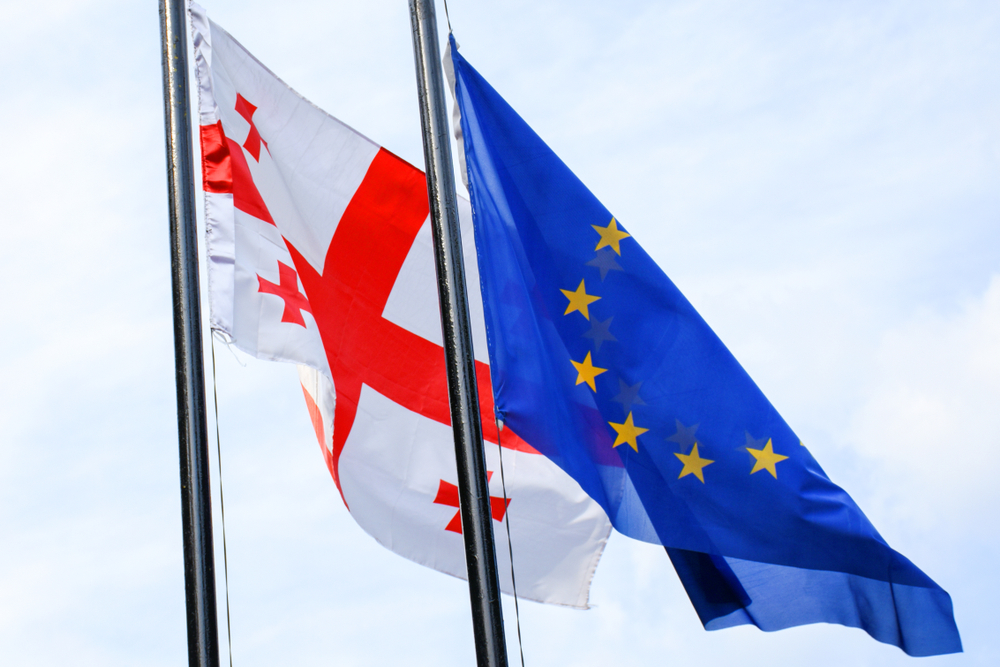
On November 8, the European Commission recommended granting candidate status to Georgia. The acceptance or rejection of these recommendations will be determined by a vote from the 27 EU member states in mid-December. If approved by the European Council, this decision would mark a significant milestone in Georgia’s extensive pursuit of European integration, reflecting the historical transformations occurring in the region. As the EU endeavors to anchor Georgia within its newly defined geopolitical sphere, the country is still required to address nine priorities, along with two additional conditions related to combating disinformation. These include countering anti-EU disinformation, foreign information manipulation, and interference against the EU’s values. Another pivotal condition for Georgia involves ensuring a closer alignment of its foreign policy with the EU’s Common Foreign and Security Policy (CFSP).
The U.S. Role in International Mediation of the South Caucasus Peace Process
By Robert M. Cutler
June 26, 2023
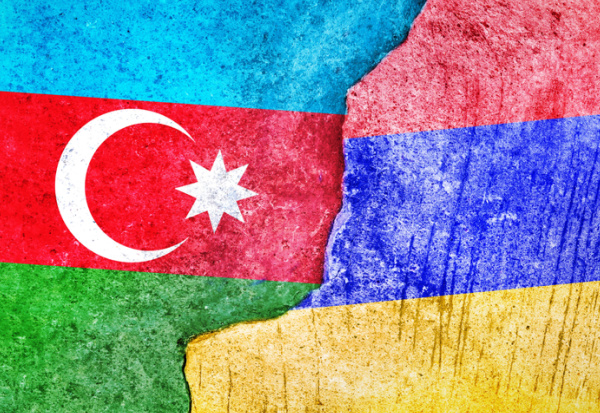
Intensive rounds of negotiations between Armenia and Azerbaijan over the past few months seem to be hitting a pause. Some progress has been made via each of the now-existing three tracks sponsored respectively by Russia, by the EU, and by the U.S. These have shown a certain limited mutual complementarity, yet crucial issues still await authoritative resolution. At present, only the U.S. would appear to have the goal of a final peace treaty firmly in sight. The process presided by Council of the EU President Charles Michel in Brussels may potentially still be helpful, but the activity of other EU institutions has become obstructive. U.S. diplomacy should not allow the current momentum to dissipate.
EU dashes Georgia's hopes for candidate country status

By Natalia Konarzewska
July 8, 2022
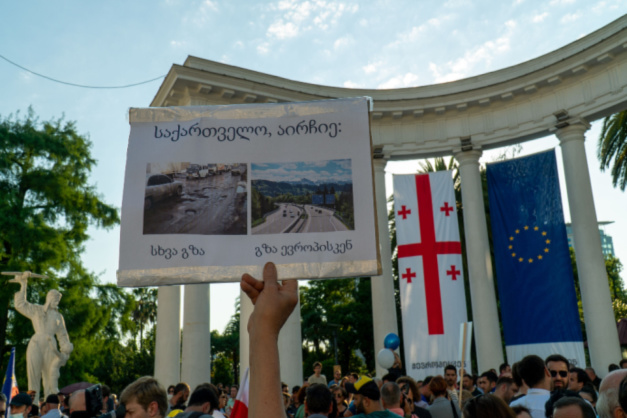
Georgia made a big leap towards membership in the European Union on March 3 when it submitted a formal application for EU candidate country status alongside Moldova and shortly after the same move by Ukraine, which granted them the nickname of Associated Trio. Yet despite high hopes on June 17, the European Commission recommended that Ukraine and Moldova, but not Georgia, should be awarded candidate country status. A few days later, the EU leaders endorsed this decision based on Georgia’s recent democratic backsliding. Instead, Georgia was offered a “European perspective”, a roadmap to qualify for candidate status in the future.
Visit also