The Hormuz Disruption Reaches Central Asia Through Chinese Demand
By: Sobir Kurbanov and Eldaniz Gusseinov
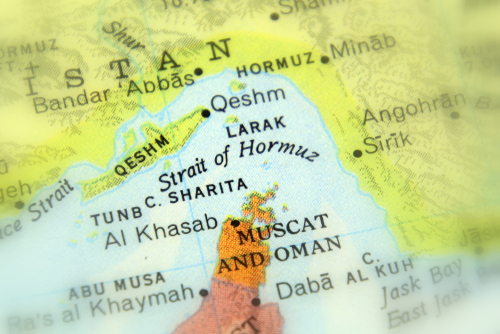
The renewed closure of the Strait of Hormuz, which followed the strikes on Iran of 28 February 2026, has tested world energy markets without producing the price spike that most forecasters expected, and the main reason lies in China. Chinese crude imports fell to 7.1 million barrels per day in June against a 2025 average of 11.6 million, while refinery utilisation dropped to 57.7 percent. For Central Asia the consequence arrives indirectly, because the same weak Chinese demand that has capped crude prices is also depressing the steel, iron ore and ferroalloy prices on which Kazakhstan’s metallurgical sector depends. The chokepoint that Beijing is building Central Asian corridors to bypass is now transmitting its own shock into the region through the very relationship those corridors are meant to deepen.
BACKGROUND:
The Strait of Hormuz carries roughly 20 percent of global oil consumption and a comparable share of liquefied natural gas, with no overland substitute at scale for most Gulf producers. The International Energy Agency warned on 12 August 2026 that Hormuz-related losses would cut global oil supply by 4.3 million barrels per day across the year, and that a projected demand increase of 850,000 barrels per day had reversed into a decline of 1.6 million. Prices rose sharply, yet the escalation that many analysts anticipated did not materialise, because the largest buyer withdrew from the market at the same moment.
On 5 March 2026 China ordered its largest refiners to suspend diesel and gasoline exports, and refiners began cutting throughput and bringing scheduled maintenance forward within days. A structural change compounded the cyclical one. GL Consulting estimates that Chinese gasoline consumption will fall 5.5 percent in 2026, the second steepest decline after the lockdown year of 2022, with retail prices up roughly 30 percent since late February and electric vehicles absorbing a growing share of the fleet. China entered the disruption holding approximately 300 million barrels of cheap crude accumulated over the 14 months before the war, a buffer that is substantial and finite.
Central Asia is too integrated into external markets to insulate itself from a shock of this size, and yet the shock does not arrive directly. Kazakhstan ships most of its crude westward through the Caspian Pipeline Consortium rather than through the Gulf, and the region’s hydrocarbon trade with China moves by pipeline, which protects volumes while leaving prices exposed. External disturbances therefore reach Central Asian economies through three intermediaries, Russia, China and the European Union. Residents of the region learned the shape of that transmission in 2022, when the war in Ukraine reached household budgets through remittances, Russian banking channels and rerouted transit rather than through any direct commercial link. The present episode follows a different path. In Temirtau and Aktobe, where employment is concentrated in steel and ferroalloy plants, and in Karaganda region, the connection between a maritime chokepoint 3,000 kilometres away and local order books is neither obvious nor remote.
IMPLICATIONS:
The transmission runs through Chinese construction. China accounts for roughly half of world steel output, and construction absorbs about 49 percent of that steel, down from 58 percent in 2020. The property downturn has deepened rather than stabilised. Between January and May 2026, housing sales declined 10.8 percent by floor area and 13.5 percent by value, new construction starts fell 22.6 percent and property investment fell 16.2 percent. Weak demand for steel pulls down the inputs that Kazakhstan sells into it.
According to analysis published by the Kazakh sector channel Metals and ESG Trends.KZ, falling steel demand has depressed prices for iron ore, ferrochrome, silicomanganese and ferrosilicon, with ferrosilicon down by approximately 30 to 35 percent and pressure building on Qarmet, ERG and the country’s independent ferroalloy producers. These figures come from a sector channel rather than from exchange data and should be treated as indicative, though they are consistent with the direction of Chinese construction indicators.
The oil shock is mainly a reversible supply-and-refinery disruption, although China’s underlying oil-demand trend is weakening. The ferrous challenge is more structural: China’s property sector is unlikely to restore the previous steel-demand regime, while Chinese overcapacity may intensify competition in Kazakhstan’s surrounding markets. Kazakhstan therefore needs not only short-term support, but a multi-year strategy of market diversification, productivity improvement and product upgrading.
The more consequential implication concerns the logic of integration itself. Chinese investment in processing industries across Central Asia has reached an estimated US$ 11.8 billion against US$ 4.1 billion in energy, reversing the historically extractive pattern, and the China-Kyrgyzstan-Uzbekistan railway began construction in 2025. Nightingale Int. argued in October 2024 that Beijing would move from buying commodities in the region to embedding it in Chinese industrial chains, a forecast that BYD’s full localisation of electric vehicle production in Uzbekistan has since borne out. That investment is driven substantially by the same chokepoint exposure now visible at Hormuz. Central Asia is therefore receiving Chinese capital because China needs a continental rear, and absorbing Chinese demand shocks because it is becoming one. Deeper integration raises both the opportunity and the correlation.
Transit revenue moves with the same cycle, since corridor volumes through Central Asia are weighted toward Chinese cargo, and traffic on the Trans-Caspian Transport Corridor reached 4.5 million tonnes in 2024 before easing in 2025. Kyrgyzstan and Tajikistan face a different version of the problem. Neither exports ferroalloys at scale, and both carry sovereign debt to China equivalent to roughly 9.5 percent and 6 percent of GDP respectively, servicing obligations denominated against a creditor whose own fiscal position is tightening. A prolonged Chinese slowdown compresses their repayment capacity and their construction pipelines at once.
Kazakhstan’s emerging answer is visible in Karaganda region, where new copper extraction and processing projects are advancing and diversification into non-ferrous metals has become a working scenario for the sector. The direction is sound, and the caveat is familiar. Announced projects are not deployed capacity, and copper demand is itself concentrated in Chinese buyers. Diversification that changes the commodity while leaving the customer unchanged reduces exposure to one construction cycle and not to one counterparty.
CONCLUSIONS:
The Hormuz disruption has demonstrated that Central Asia’s exposure to global shocks is now mediated primarily through China, and that this channel operates in both directions. Beijing’s search for continental redundancy is drawing capital, factories and corridors into the region, while the maritime vulnerability that motivates that search transmits demand shocks back along the same route. If flows through the strait normalise within 2026, the oil-linked component will unwind. The ferrous component will not, because it rests on a Chinese property contraction that predates the conflict and is expected to persist. For Central Asian governments the practical lesson concerns buyers rather than corridors. Multi-vector policy has been articulated mostly in terms of routes and creditors, and the present episode indicates that the diversification that matters most is the diversification of demand.
AUTHOR’S BIOS:
Sobir Kurbanov is an international development expert and fellow at Nightingale Int. with over 20 years of experience in partnership-building, complex market reforms, program management, and teaching policy reform, public sector economics, and industrial policy across Eurasia. His expertise spans macroeconomic management, public sector governance, private sector development, trade, investment climate, infrastructure, and IF4D portfolio management, with a strong track record of working with bilateral and multilateral donors (SECO, DFID, USAID, IMF, WB, EU, UN), governments, CSOs, and think tanks, and leading cross-functional teams to advance evidence-based policy solutions.
Eldaniz Gusseinov is co-founder and Head of Research at Nightingale Int. and a non-resident fellow at Ibn Haldun University’s Haydar Aliyev Center for Eurasian Studies.
Turkmenistan Moves Toward Active Neutrality
By Erlan Benedis-Grab
On May 20, 2026 the UN General Assembly unanimously adopted a Turkmenistan-initiated resolution recasting neutrality as active stabilization rather than withdrawal from the global stage. Although it was ratified domestically in 2025, in July 2026 Turkmenistan became the last of the five Central Asian states to sign the Treaty on Friendship, Good-Neighborliness, and Cooperation for the Development of Central Asia in the 21st Century, nearly four years after it was opened for signature in 2022. On October 8, Ashgabat hosted the region’s newly consequential gathering, the Consultative Meeting of Central Asian and Azerbaijani heads of state (CMHS) in Avaza. Turkmenistan's recent actions suggest that a country once largely absent from multilateral institutions, is now an active participant in Greater Central Asian initiatives.

BACKGROUND:
Turkmenistan has, in the name of neutrality, pursued one of the most isolationist foreign policy orientations in Central Asia, if not the world. Unlike Kazakhstan and Kyrgyzstan, Turkmenistan is not a member of the Eurasian Economic Union; unlike Tajikistan, it is not a member of the Shanghai Cooperation Organization; and unlike Uzbekistan, it holds only associate status in the Commonwealth of Independent States. Saparmyrat Niyazov, or Turkmenbashi, intended to build neutrality into a sovereignty-as-state ideology, reinforcing his legitimacy, while also giving Turkmenistan a role as a neutral-venue country where opposing parties could meet.
With almost 35 years having passed since independence, though, neutrality in Turkmenistan has yielded mixed results. Its benefit stems mainly from its energy policy. Turkmenistan’s ability to reach various markets has depended mainly on relations with transit countries, where its neutral posture serves as a positive factor.
Yet, Turkmenistan’s economy remains in a precarious position, with persistent food, budget, and gas shortages. And, while it was able to serve as a host between warring parties during the Tajik and Afghan civil wars, it has not convened a major mediation since, while its neighbors have. Astana hosted the years-long talks on the Syrian conflict, one of the most violent in the contemporary period. Perhaps out of recognition of these shortcomings, Turkmenistan, while maintaining its policy of neutrality, is starting to emerge from its longstanding isolation.
Most notably, it has begun to participate more substantially in regional cooperation projects. The Consultative Meetings of the Heads of State of Central Asia (CMHS), the region’s standing summit format convening the five presidents, launched in 2018. It was at the CMHS's 2022 summit that Kazakhstan, Kyrgyzstan, and Uzbekistan signed the Treaty on Friendship, Good-Neighborliness, and Cooperation for the Development of Central Asia in the 21st Century. The treaty outlines cooperation agreements, including in critical areas like defense, law enforcement, water, energy, and a mutual-assistance clause. Tajikistan and Turkmenistan were both initially hesitant to sign on, citing the need to “complete all domestic procedures.” However, in August 2025 Tajikistan acceded, following a breakthrough in delimiting the borders of the Fergana Valley. Turkmenistan formally signed in July 2026.
Turkmenistan previously hosted the CMHS at Avaza in 2021, its only turn as host to date. Since then, the format has grown more consequential, admitting Azerbaijan as a full member in 2025. Turkmenistan’s return as host in 2026 therefore fits its broader pattern of renewed regional engagement.
Turkmenistan is also pursuing a renewed effort to participate more seriously in international intergovernmental organizations like the United Nations. In May 2026, Turkmenistan introduced the UN resolution “The Role and Importance of a Policy of Neutrality in Maintaining and Strengthening International Peace, Security and Sustainable Development” which the General Assembly adopted. The same language Turkmenistan once used to keep the world at a distance now draws it closer.
IMPLICATIONS:
Signing onto a regional cooperation treaty, hosting the CMHS, and making diplomatic pushes at the UN mark a Turkmen shift from isolation. Turkmenistan’s recent actions suggest a country poised to try to take on a bigger role in world affairs, motivated by a fear of being left behind, the changing external environment, the need for economic diversification, and regime legitimacy.
Serdar Berdimuhamedov, who became president in 2022, has continued a doctrinal shift, begun under his father, away from Turkmenbashi’s “permanent neutrality” towards what might be called “active neutrality.” This policy seeks to utilize Turkmenistan’s non-aligned status as a platform for diplomacy.
aPreviously, Turkmenbashi’s “permanent neutrality” was essentially a shield for disengagement, codified within the constitution. The changing nature of Russia's role in Central Asia partly explains this shift as well. That shield was primarily aimed at one country: Russia. Non-alignment justified staying out of Russian-led integration projects; however, Moscow's leverage has since thinned. China is moving in, and Russia's attention is fixed west, on Ukraine, so Turkmenistan has had to update its strategy to this new environment.
Turkmenistan is pursuing renewed engagement with its neighbors. Turkmenistan’s signing of the Treaty on Friendship, Good-Neighborliness, and Cooperation for the Development of Central Asia in the 21st Century is the clearest marker of this. Although formally binding, the treaty is noncommittal, with no automatic trigger or enforcement mechanism. This is a significant factor in Turkmenistan’s accession, even though it was delayed. If a security threat arises, the response is “determined through bilateral consultations and within the framework of Consultative Meetings.” That falls well short of the CSTO treaty, which requires members to “immediately provide … the necessary help, including military one,” or the CIS treaty, which permits “the use of the Armed Forces” in individual or collective self-defense.
Regionalism is advancing regardless of Turkmenistan, and Ashgabat appears unwilling to be the one state left out of it. Kazakhstan and Uzbekistan have driven the push for deeper integration—and they have been largely successful in this. Intra-regional trade nearly doubled from 2020 to 2025, while the Fergana Valley states settled their long-running border dispute. Staying outside would have left Turkmenistan negotiating from outside a structure its neighbors had already built without it.
Thus, by hosting the Avaza summit on October 8, Turkmenistan has a chance to set an important agenda. Ahead of the summit, Ashgabat circulated a draft agenda to its partners spanning security, diplomacy, trade and logistics, climate and water, and humanitarian cooperation. As Kazakhstan pointed out in July, the next steps should be to develop a concrete action plan as the CMHS format moves along.
Economic diversification is an important focus for Turkmenistan. It remains constrained by near-total reliance on natural gas exports, the overwhelming majority bound for China. While mutual-assistance commitments are a tougher sell, proposals like Tajikistan’s prospective joint oil refinery are the kinds of economic initiatives that appeal to Ashgabat.
International validation of Turkmenistan’s neutrality reinforces the legitimacy of the ruling family, making prestige a significant motivator for Ashgabat. The May 2026 UN resolution gave neutrality a standalone General Assembly agenda item, strengthening Turkmenistan’s diplomatic profile. This momentum also supports its bid for a 2031–2032 UN Security Council seat, which would provide another significant source of international prestige.
CONCLUSIONS:
This is Turkmenistan’s most substantive year of regional engagement since 1995. Ashgabat chose its engagement moves for their low cost. The CMHS treaty is noncommittal, the UN resolution is declaratory, and hosting is a rotational duty. Turkmenistan maintains its neutral doctrine, but through active diplomacy rather than diplomatic isolation. This posture will likely hold in the long term because its drivers reinforce the need for engagement. Turkmenistan still leans almost entirely on gas sales to China, whereas Central Asia continues to build structures regardless of Turkmen involvement. And the international promotion of neutrality plays well at home. The limits to Turkmenistan’s shift are also clear and it can be expected to continually abstain from the usual multilateral institutions. If regional cooperation deepens toward binding obligations at Avaza or beyond, Ashgabat’s commitment will be tested.
AUTHORS BIO:
Erlan Benedis-Grab is a Junior Fellow at the Central Asia-Caucasus Institute. He holds a dual B.A. in Economics and Central Eurasian Studies at Indiana University Bloomington, and his research focuses on Central Asia, International Trade, and Energy Politics. He can be reached at This email address is being protected from spambots. You need JavaScript enabled to view it. .
Central Asia's Afghan Reality: What the U.S. Might be Missing
By Zabikhulla Saipov
The August 31–September 1 Shanghai Cooperation Organization (SCO) summit in Bishkek offered a revealing snapshot of Afghanistan’s changing role in the region. The massive SCO gathering brought together the leaders of China, Russia, India, Iran, Pakistan, Kazakhstan, Kyrgyzstan, Tajikistan, Uzbekistan and Belarus. Its expanded SCO Plus meeting added Azerbaijan, Armenia, Egypt, Laos, Mongolia, Türkiye, Togo and Vietnam, alongside the UN and other organizations. U.S. Special Envoy for South and Central Asia Sergio Gor was in Bishkek meeting Central Asian leaders, while former U.S. Special Envoy for Afghanistan Zalmay Khalilzad was engaging Afghanistan’s Foreign Minister Amir Khan Muttaqi in Kabul. The juxtaposition is revealing: Afghanistan may have receded from Washington’s formal strategic agenda, but it has not receded from the calculations of the states surrounding it, or from every channel of U.S.–Afghan interaction.
BACKGROUND:
The precipitous U.S. departure from Afghanistan in 2021 altered the form of U.S. involvement, but it did not change the geography that had made Afghanistan central to Washington’s engagement with Central Asia. Afghanistan shares approximately 2,329 kilometers of common land and water borders with Tajikistan, Uzbekistan, and Turkmenistan, while all five Central Asian states remain exposed to security, economic, and connectivity issues pertaining to Afghanistan. After 2001, Afghanistan became a central organizing factor in Washington’s engagement with Central Asia, shaping security cooperation, military access, border assistance, counterterrorism policies and regional diplomacy. The withdrawal changed that equation, but not the underlying geography.
Since 2021, Uzbekistan has been particularly active in treating Afghanistan not only as a security concern but as a potential connecting link between Central and South Asia. The Termez Dialogue, launched in May 2025 as a permanent platform is perhaps the clearest example of this approach. Its second meeting in June 2026 moved toward practical mechanisms for political dialogue, connectivity, transport and logistics, climate adaptation, and cultural-humanitarian cooperation. Rather than treating Afghanistan solely as a security perimeter, Tashkent is attempting to embed the Afghan question within a broader architecture of regional connectivity. This institutionalization also began to acquire a specifically Central Asian format in August 2025, when Uzbekistan convened the first meeting of Central Asian special representatives on Afghanistan, which agreed to establish a regular Contact Group for coordinated regional dialogue on the Afghan issue.
Institutionalization, however, is moving in both directions. In April 2026, Afghanistan itself initiated the first Afghanistan–Central Asia Consultative Dialogue in Kabul, bringing together all five Central Asian states and proposing regular consultations, expert cooperation and a roadmap for cooperation in trade, transit, security and connectivity. The subsequent Afghanistan–Central Asia Think Tank Forum in June 2026 extended this process into the intellectual and policy sphere, explicitly seeking research-based proposals and locally generated regional narratives. Thus, Uzbekistan is building platforms through which Afghanistan can be incorporated into wider regional cooperation, while Kabul is simultaneously seeking to engage Central Asia on its own terms. Afghanistan remains an unavoidable geographic reality, but the institutional response to that reality is increasingly being shaped within the region itself.
IMPLICATIONS:
Central Asian ownership, however, should not be confused with Central Asian consensus. Uzbekistan emphasizes connectivity, trade and regional integration; Tajikistan remains particularly attentive to border security, inclusive government, and militant threats; Turkmenistan prioritizes energy, transit and neutrality; Kazakhstan approaches Afghanistan through economic and diplomatic engagement; and Kyrgyzstan, although less directly exposed geographically, participates in wider regional security discussions. These differences may explain why flexible regional mechanisms are emerging alongside existing multilateral institutions.
For Kabul, the emerging collaborative architecture may represent both an opportunity and a necessity. The April Consultative Dialogue was initiated by the Afghan side, but its timing is particularly significant given Afghanistan’s increasingly constrained external environment. Tensions and armed confrontation with Pakistan have disrupted one of Afghanistan’s principal trade and transit corridors, while the wider war involving Iran has created additional uncertainty around western routes and regional commerce. Against this backdrop, Kabul’s turn toward Central Asia may amount to more than diplomatic activism. It can be understood as an effort to widen Afghanistan’s room for maneuver by strengthening alternative northern connections to Uzbekistan, Turkmenistan, Tajikistan and the wider Eurasian market. In this sense, the Afghanistan–Central Asia dialogue may function as a form of strategic insurance at a moment when some of Afghanistan’s traditional routes and external options have become more vulnerable. Kabul is therefore increasingly seeking to participate in shaping the regional architecture around it. This does not automatically imply political convergence or recognition by Central Asian governments; rather, it reflects an attempt by Afghanistan’s de facto authorities to turn geography into diplomatic and economic leverage.
The Bishkek SCO summit illustrates the wider environment in which this process is unfolding. The sheer composition of the gathering demonstrated the breadth of the Eurasian strategic conversation in which Afghanistan is situated. Afghanistan remained outside the summit, yet its political future and security implications remained part of the agenda. The SCO’s call for an inclusive Afghan government showed that regional powers continue to attach political conditions to their vision of Afghan stability.
Uzbekistan used the same broader setting to advance institutional mechanisms of its own. President Shavkat Mirziyoyev highlighted Uzbekistan’s initiative to establish a Universal Center for Countering Security Challenges and Threats in Tashkent under the SCO’s Regional Anti-Terrorist Structure, indicating Tashkent’s interest in strengthening the region’s permanent capacity to address emerging security challenges. Together with the Termez Dialogue, the initiative illustrates a broader Uzbek strategy: institutionalizing regional cooperation rather than relying exclusively on ad hoc responses to individual crises.
Gor’s presence in Bishkek demonstrated that the U.S. remains engaged with Central Asia, but increasingly from outside the Afghan theater. His meetings with Central Asian leaders focused on strategic partnerships, economic and investment cooperation, transport, energy, critical minerals and the C5+1 framework. On September 5, Khalilzad met Afghanistan’s Foreign Minister Amir Khan Muttaqi in Kabul to discuss Afghanistan–U.S. relations and opportunities for constructive engagement. Afghanistan’s Foreign Ministry presented the meeting as part of discussions on bilateral relations, economic growth and self-reliance, while the U.S. State Department clarified that Khalilzad is no longer a government employee and was acting in a personal capacity. These engagements therefore should not be interpreted as evidence of a new official U.S. policy toward Kabul. Their significance lies elsewhere: the U.S.–Afghan relationship has not simply disappeared; rather, it now exists through channels considerably different from the military-centered relationship of the pre-2021 period.
The geometry of U.S. involvement is changing as Washington cultivates Central Asian partnerships without a military presence in Afghanistan, while Central Asian governments are simultaneously deepening practical engagement with Kabul through regional mechanisms. The U.S. does not necessarily need to sit at every table where Afghanistan is discussed. But understanding what those tables are producing may become increasingly important for a U.S. strategy that seeks to remain relevant in Central Asia.
The emerging regional architecture is not necessarily anti-American, nor does Central Asian engagement with Kabul imply recognition of the Taliban or alignment with China or Russia. Much of it is the practical consequence of geography, security concerns and economic necessity. The U.S. may therefore face a different Afghan question than it did before 2021. Previously, Afghanistan often shaped Washington’s requirements for Central Asia. Increasingly, Central Asian approaches to Afghanistan, and Afghanistan’s own efforts to engage Central Asia, may shape how the country connects to the wider region.
CONCLUSIONS:
The U.S. left Afghanistan, but Afghanistan did not leave Central Asia. What has emerged since 2021 is neither a simple regional takeover of the Afghan question nor a disappearance of U.S interest. Instead, Afghanistan is becoming embedded in a regional architecture being built from several directions: Uzbekistan and other Central Asian states are developing mechanisms for security and connectivity; Kabul is seeking to participate in that architecture on its own terms; and institutions such as the SCO are incorporating the Afghan question into a much broader Eurasian strategic conversation. Washington is still engaged with Central Asia, but increasingly without the Afghan theater as the organizing center of that engagement. At the same time, the U.S.–Afghan relationship has not simply disappeared. For U.S. policy, the challenge is therefore to recognize how the Afghan factor itself is changing. Afghanistan has not become less relevant to Central Asia; rather, Central Asia is increasingly determining what that relevance means.
AUTHOR’S BIO:
Zabikhulla Saipov is an independent researcher on contemporary history and diplomacy of U.S. and wider Central Asia relations. He holds BSc honors degree from Uzbekistan State World Languages University, Tashkent; MIA degree from SIPA, Columbia University, New York, and PhD in political science from the University of World Economy and Diplomacy, Tashkent.
Pakistan, Central Asia, and The Transchina Trade Corridor
By Syed Fazl-e-Haider
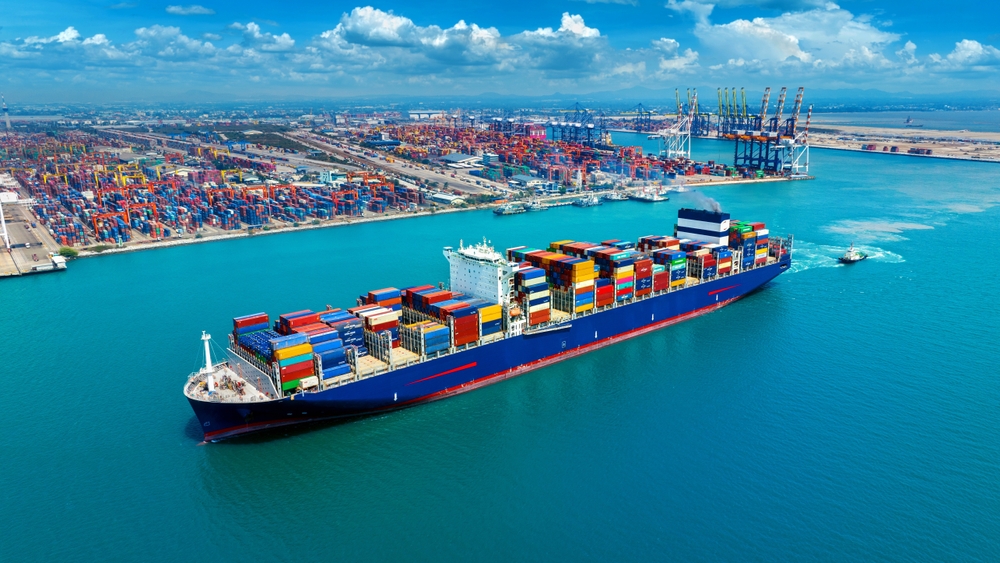
Tashkent and Islamabad have agreed to expand bilateral trade through routes traversing China, as Pakistan-Afghanistan tensions and the war in Iran have disrupted existing trade links. Pakistan’s conflict with Afghanistan has made the prospects for trans-Afghan corridors connecting Central Asia with Pakistan increasingly uncertain. Meanwhile, renewed U.S.-Iran fighting has made trans-Iranian routes an unreliable option for Pakistan’s trade with Central Asia. Pakistan and Central Asian states such as Kyrgyzstan are therefore promoting an overland route through China that bypasses Afghanistan. Besides providing Pakistan and Central Asia with a corridor avoiding both Afghanistan and Iran, this route creates opportunities to extend the China-Pakistan Economic Corridor (CPEC), a key component of China’s Belt and Road Initiative (BRI), into Central Asia.
BACKGROUND:
Afghanistan has long represented the most viable transit route for trade between Pakistan and the Central Asian Republics (CARs). However, decades of conflict have prevented plans for a Trans-Afghan trade corridor connecting Central Asia with Pakistan from materialising. More recently, escalating Pakistan-Afghanistan tensions over cross-border terrorism have further undermined prospects for developing these routes. Relations deteriorated sharply in October 2025 following border clashes, prompting Islamabad to suspend truck-borne trade through the main Torkham and Chaman crossings. In February 2026, Islamabad declared an open war against Afghanistan and launched airstrikes targeting alleged terrorist sanctuaries inside the country.
In April, Islamabad opened six overland transit routes for goods destined for Iran amid the U.S. blockade of Iranian ports. These routes allowed goods from third countries to transit Pakistan and enter Iran by road. The designated corridors connect Pakistani seaports with two Iranian border crossings, providing a viable route towards Turkmenistan and Uzbekistan. In April, Islamabad dispatched its first shipment of frozen meat to Tashkent via Iran.
Pakistan activated new routes through Iran for trade with the CARs, but renewed U.S.-Iran hostilities over the Strait of Hormuz have undermined their viability. The trans-China route has consequently emerged as the most viable and secure remaining option for trade between Pakistan and Central Asia. Both sides are therefore increasingly prioritizing the development of the trans-China trade corridor.
The trans-China option has long featured in discussions between Pakistani and Central Asian leaders due to security concerns in Afghanistan. In November 2025, Uzbekistan and Pakistan agreed to develop trade along two major land routes bypassing Afghanistan: the Pakistan-China-Tajikistan-Uzbekistan and Pakistan-China-Kyrgyzstan-Uzbekistan corridors.
In April, Kyrgyzstan successfully tested an overland route to Pakistan via China, bypassing Afghanistan. A truck carrying Kyrgyz goods reached the Pakistani port of Karachi via China along the Karakoram Highway. Islamabad considers routes connecting Pakistan with Bishkek and Almaty more secure than the Trans-Afghan alternatives.
Several Central Asian leaders have visited Pakistan over the past ten months. Kyrgyz President Sadyr Japarov visited Islamabad in December 2025, followed by Uzbek President Shavkat Mirziyoyev and Kazakh President Kassym-Jomart Tokayev in February 2026. Their discussions with Pakistani leaders focused primarily on connectivity projects providing the CARs with access to Pakistan’s seaports at Karachi, Gwadar, and Bin Qasim.
Uzbekistan and Pakistan have agreed to amend their transit trade agreement to formally incorporate the China corridor. This would allow goods to transit through the Sost dry port and western China before reaching Central Asia. In July, Uzbekistan’s Deputy Prime Minister was scheduled to visit Pakistan, but the visit was postponed at Tashkent’s request. During the visit, the two countries were expected to sign a protocol formally incorporating the China corridor into their transit trade agreement.
Currently, routes through China have become Pakistan’s preferred option for regional connectivity and the extension of CPEC.
IMPLICATIONS:
Deteriorating relations with the Taliban regime, recurring border clashes, and terrorist sanctuaries in Afghanistan have prompted a major shift in Islamabad’s Afghanistan policy, accelerating its turn towards routes through China. While the activation of the China corridor could undermine planned connectivity projects between Pakistan and the CARs, it may strengthen alternative regional initiatives. The future of the Uzbekistan-Afghanistan-Pakistan (UAP) railway, for instance, appears increasingly uncertain. Launched in 2021, the UAP railway aims to connect Central Asia with Pakistani seaports through Afghanistan.
Conversely, completion of the China-Kyrgyzstan-Uzbekistan (CKU) railway could make Pakistan’s Gwadar port one of the shortest trade routes for Central Asia. The CKU railway is a strategic connectivity project linking Kashgar in China with Kyrgyzstan and Uzbekistan. From Kashgar, existing and planned transport links could connect the railway southwards with Gwadar through CPEC, providing Central Asia with access to the Arabian Sea.
Infrastructure development could further increase trade along the China corridor. Key projects include upgrading the Karachi–Peshawar ML-1 railway, expanding the Karakoram Highway, developing Gwadar Port as a warm-water outlet for the CARs, and expanding dry ports and logistics networks. Together, these projects could improve the efficiency and capacity of the China route.
Although Beijing, Islamabad, and Kabul have already agreed to extend CPEC to Afghanistan and Central Asia, the China corridor could accelerate its direct extension into Central Asia. CPEC connects China’s Xinjiang region with Pakistan’s Gwadar port in Balochistan through a network of highways, railways, and energy infrastructure.
The rerouting will provide Pakistan with an alternative route to Central Asia while maintaining Uzbekistan’s access to the Pakistani ports of Gwadar and Karachi. Uzbekistan has emerged as Pakistan’s key economic partner in Central Asia. Although the China corridor bypasses instability in both Afghanistan and Iran, it is longer and more expensive than the Trans-Afghan route due to greater distances, higher handling costs, additional border procedures, and longer transit times. The China corridor could therefore serve as a strategic alternative in the short term, but is unlikely to fully replace the Afghan route commercially in the longer term. Improved infrastructure along the China route could enable Pakistan to connect with Kyrgyzstan, Kazakhstan, and Tajikistan via the Khunjerab Pass.
CONCLUSIONS:
Geopolitics and security will ultimately determine the development of trade corridors between Pakistan and the CARs. The Pakistan-Afghanistan conflict has undermined prospects for the Trans-Afghan corridor, while the war in Iran has reduced the viability of the Trans-Iranian route. Under these conditions, the Trans-China corridor offers a comparatively secure and viable alternative for both Pakistan and the CARs. It could therefore serve as a strategic safeguard against regional instability stemming from conflicts in Afghanistan and Iran.
Pakistan’s importance as a trade outlet is widely recognized in Central Asia. The landlocked CARs seek access to Pakistani seaports through Afghanistan, Iran, or China to facilitate global trade. However, growing security concerns surrounding the Afghan and Iranian routes are likely to increase Central Asian interest in accessing Pakistani ports through the comparatively secure China corridor.
Pakistan, China, and the CARs could enhance the corridor by improving infrastructure, extending CPEC into Central Asia, and streamlining cargo clearance procedures at their borders. Such measures could address existing constraints and make the China route more cost-effective and commercially attractive.
AUTHORS BIO:
Syed Fazl-e-Haider is a Karachi-based analyst at the Wikistrat. He is a freelance columnist and the author of several books. He has contributed articles and analysis to a range of publications. He is a regular contributor to Eurasia Daily Monitor of Jamestown Foundation Email: This email address is being protected from spambots. You need JavaScript enabled to view it. .
Regional Connectivity and Central Asia’s Need for a Unified Strategy
By Nargiza Umarova
In early June, Istanbul hosted a number of significant events reflecting Central Asia’s growing role in the east-west land transit system. Representatives of the railway administrations of Uzbekistan, Turkmenistan, Türkiye, Georgia, Azerbaijan and Kyrgyzstan signed an agreement to further develop the CASCA+ corridor (Central Asia–South Caucasus–Anatolia+). The aim is to increase the flow of goods, including transit traffic to the EU. This development aligns with the Middle Corridor extension strategy, the prospects of which was discussed at the 8th meeting of the United Nations Economic Commission for Europe – Economic Cooperation Organization (UNECE-ECO) Coordination Committee. Participants at the Istanbul meeting also reviewed the formation dynamics of the Southern Railway Corridor through Central Asia, Iran and Türkiye. Although the five Central Asian republics are actively involved in international transport initiatives, they have not yet succeeded in consolidating projects of regional interest and mutual benefit, creating the potential for unhealthy competition.

BACKGROUND:
The war in Ukraine, which has become the main geopolitical upheaval in Eurasia, and subsequent regional crises have impacted the security of global maritime shipping, are making land logistics increasingly important in intercontinental transport. This presents an opportunity for Central Asian states to establish a new trade route architecture, turning their geographical position into a strategic asset. However, to achieve this, it is first necessary to address issues of intra-regional connectivity, as this could strengthen Central Asia’s position in its relations with major powers.
Following the launch of a mechanism for regular consultative meetings in 2018, Central Asian countries prioritized the convergence of their national transport systems. This would strengthen the region’s connectivity, facilitate its integration into global supply chains, and accelerate economic growth.
This approach is based on data from authoritative international organizations, including the World Bank, which publishes the Logistics Performance Index (LPI) every two years, reflecting the current state of transport and communications at national and regional levels.
The geographical remoteness of Central Asia from the open seas puts the region at a disadvantage in terms of achieving logistical efficiency. Landlocked countries must transit through coastal nations and cross multiple borders, which significantly increases the time required to transport goods. An additional day of transit leads to a seven percent reduction in exports. This illustrates the substantial effect that delivery times have on the volume and value of foreign trade. Due to high transport costs combined with the lack of direct access to the sea, the Central Asian region loses up to 2 percent of its GDP annually.
In the context of Central Asian connectivity, geography undoubtedly constrains foreign trade growth. However, this factor is generally manageable. Global experience shows that direct access to maritime trade does not guarantee a country a competitive advantage in logistics connectivity. Even within the same region, coastal economies have access to different numbers of markets with which they can trade without relying on intermediary countries. Morocco, for example, has the highest connectivity of all the North African countries, whereas Malaysia and Sri Lanka have achieved similar positions in Southeast and South Asia. All three of these developing economies are recognized regional transport and logistics hubs in their respective regions, and this has helped them raise their logistics efficiency to the required level. Since 2017, the Central Asian republics have been striving for a similar outcome, working to consolidate extended transport links between countries, with a particular focus on increasing the region’s transit potential. Proximity to open seas is in this case less important than an intraregional strategy enabling Central Asian countries to manage their geographic location and improve transport logistics.
IMPLICATIONS:
From the outset, the five Central Asian states agreed to integrate into the global transport network as a single entity, rather than individually. This would pave the way for the region’s strategic autonomy, which, through implementing a coordinated policy to develop and promote promising transit corridors crossing Central Asia, could align relations with major powers, prioritizing pan-regional interests and thereby enhancing the region’s geopolitical significance. The primary task of this approach is to strengthen intra-regional connectivity, which requires collective action to remove administrative, legal and technical barriers. To this end, the establishment of a Regional Center for Transport and Communications Connectivity under the auspices of the UN has been proposed.
Although this initiative has yet to be implemented, certain positive developments in Central Asia’s transport connectivity have already been achieved. These include the restoration and modernization of key transport routes between countries in the region, the opening of new trade routes and an increase in transit freight traffic. However, urgent solutions are needed to address issues such as unifying tariff policies, harmonizing transport legislation, introducing standardized permit forms and electronic document management practices, reducing customs duties, increasing the throughput capacity of border crossings and simplifying customs procedures. Attracting investment in transport infrastructure and digitalizing the transportation process is also crucial. While there is a general understanding of the urgency of these issues, there is no consolidated effort to address them.
There is a growing trend towards developing new interregional transit corridors rather than local transport routes. A focus on self-interest and a lack of proper coordination in the implementation of such projects risks fueling rivalry between regional states. This could potentially deprive them of the opportunity to influence the geopolitics of transport corridors in Central Asia.
Globally rising geopolitical tensions are creating growing uncertainty in the maritime shipping industry, which is making Central Asian trade routes increasingly important. This, in turn, is stimulating investment interest in the regional transport services market. The main investors are China and the EU, who are implementing their own global initiatives: the Belt and Road Initiative (BRI) and the Global Gateway. Japan, South Korea and the Gulf states are also contributing to the development of Central Asia’s transport sector to varying degrees.
CONCLUSIONS:
With limited mutual coordination, the involvement of Central Asian states in infrastructure projects funded by external actors creates an incentive for unhealthy competition. Paradoxically, despite having overlapping interests in transport logistics and the potential to establish mutually beneficial cooperation based on shared priorities, the countries in the region act in isolation, often resorting to foreign aid or support. This is evident in the development of westward transport, for example.
Kazakhstan participates in the Trans-Caspian International Transport Route (TITR), connecting China and Europe and institutionalized by Kazakhstan, Azerbaijan and Georgia in 2014. In 2019, meanwhile, Uzbekistan launched the alternative CASCA+ corridor to Europe via the Caspian Sea in partnership with Kyrgyzstan, Turkmenistan, Azerbaijan, Georgia and Türkiye.
A similar situation is unfolding along the southern transit route. Uzbekistan is speeding up construction of the Trans-Afghan Railway (the Kabul Corridor), which runs from Termez to Naibabad, Maidanshahr, Logar and Kharlachi. The railway will provide access to Pakistani ports on the Indian Ocean. Meanwhile, Turkmenistan and Kazakhstan are working to create another railway corridor through Afghanistan's western provinces. These initiatives have attracted the attention of influential countries such as Russia, China, Iran and Türkiye, who view them in the context of their own geopolitical interests. This could influence the implementation of each route and fuel regional competition.
In order to avoid the duplication of infrastructure projects, the Central Asian republics should adopt a regional strategy for developing transport corridors and establish a single coordinating body with legal entity status. This would be an important step towards strengthening regional connectivity.
AUTHOR’S BIO:
Nargiza Umarova is a Head of the Center for Strategic Connectivity at the Institute for Advanced International Studies (IAIS), University of World Economy and Diplomacy (UWED), and an analyst at the Non-governmental Research Institution ‘Knowledge Caravan’, Tashkent, Uzbekistan. Her research activities focus on developments in Central Asia, trends in regional integration, and the influence of great powers on this process. She also explores Uzbekistan’s current policy on the creation and development of international transport corridors. She can be contacted at This email address is being protected from spambots. You need JavaScript enabled to view it. .
Visit also