Pakistan Declares “Open War” On Afghanistan: Implications For The Region
By Umair Jamal
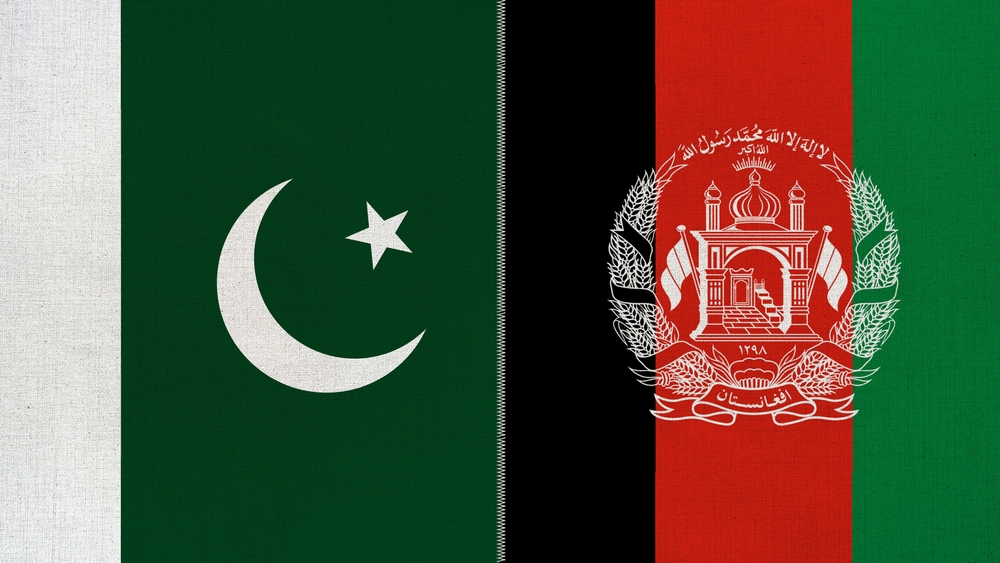
Pakistan’s ongoing military campaign against Afghanistan, initiated by airstrikes in late February 2026 targeting hideouts of the Tehrik-e-Taliban Pakistan (TTP) and Islamic State–Khorasan Province (ISKP) in Nangarhar, Paktika, and Khost, has escalated into a declared “open war” following retaliatory Taliban attacks and subsequent Pakistani strikes on Kabul, Kandahar, and other locations.
Pakistan’s Defense Minister, Khawaja Asif, announced Islamabad’s decision to wage war on Afghanistan on February 27, 2026, amid intense cross-border clashes. Pakistan claims hundreds of Taliban fighters have been killed and dozens of border positions seized. The conflict highlights the Afghan Taliban’s continued refusal to dismantle anti-Pakistan militant sanctuaries within Afghanistan, a factor fueling regional instability.
Islamabad’s operations, reportedly enjoying international backing including from the U.S., appear aimed at compelling Kabul to alter its policies. Such changes could curb the regional spread of militancy and enhance security across South and Central Asia by weakening a regime that has continued to enable extremist groups since returning to power in 2021.
BACKGROUND:
Tensions along the Pakistan–Afghanistan border have persisted for decades but intensified significantly following the Taliban’s takeover of Afghanistan in 2021. Since returning to power, the Taliban have been accused by Pakistan of providing safe havens to the Tehrik-e-Taliban Pakistan (TTP), a militant alliance formed in 2007 with deep ethnic Pashtun and ideological ties to Kabul’s rulers.
The TTP has intensified attacks inside Pakistan since the U.S. withdrawal from Afghanistan. Terrorist violence has risen sharply in recent months, with Afghanistan-based groups claiming responsibility for deadly incidents including the February 2026 bombing of a Shia mosque in Islamabad that killed 31 people, attacks in Bajaur district that killed 11 security personnel, and additional strikes in Bannu and other areas. Exploiting Afghan territory for training, recruitment, and cross-border operations, these groups have claimed hundreds of Pakistani lives in recent years.
The relationship between Pakistan and Afghanistan has long been shaped by mutual grievances. Pakistan supported the Taliban during the 1990s and throughout the post-2001 insurgency in Afghanistan. However, relations have deteriorated in recent years as the Taliban-led government in Kabul has refused Pakistan’s repeated demands to crack down on the TTP despite sustained diplomatic pressure.
Pakistan’s efforts to fence the border have also generated clashes with Afghan forces, as Kabul refuses to recognize the Durand Line as a legitimate international border. In 2025 Pakistan conducted airstrikes inside Afghanistan for the first time, targeting TTP strongholds in Khost and Paktika in response to cross-border militant attacks.
Economic relations have deteriorated alongside security tensions. Trade between the two countries, once worth billions annually, has faced repeated disruptions. Pakistan’s exports to Afghanistan have nearly halted, while Kabul has been unable to access Pakistani ports for over a year.
The February 2026 escalation began with Pakistani airstrikes on February 21 targeting militant camps in Afghanistan in retaliation for terrorist attacks in Pakistan. The Taliban condemned the strikes as violations of Afghan sovereignty and claimed civilian casualties, including at a religious school. Taliban forces retaliated on February 26 by attacking Pakistani border positions.
Pakistan then declared “open war,” stating that military operations would continue until militant threats were eliminated. “Our patience has run out,” Defense Minister Khawaja Asif stated.
Pakistan’s campaign, codenamed Operation Ghazab Lil Haq, has targeted Taliban military facilities in Kabul, including ammunition depots, as well as sites in Kandahar, Paktia, and other provinces. Notably, these strikes included direct attacks on urban centers for the first time. Pakistan has also struck Bagram airbase, which houses Taliban military infrastructure. Islamabad further claims to have captured 32 square kilometers of territory along the Afghan border to establish a buffer zone. Pakistani military officials state that operations will continue until all objectives are achieved.
IMPLICATIONS:
Pakistan’s war on Afghanistan carries significant implications and could reshape regional security by confronting the Taliban’s refusal to act against militant groups. More than a dozen organizations, including TTP, ISKP, and affiliated networks, reportedly use Afghan territory to conduct cross-border attacks. In recent months the TTP has intensified operations inside Pakistan, while ISKP activities near Central Asian borders pose security risks to Tajikistan and Uzbekistan.
Pakistan’s strategic objectives appear broad and evolving. Islamabad is targeting infrastructure facilitating cross-border militancy, including TTP camps and hideouts in Nangarhar and Paktika. These strikes also seek to destroy logistical networks the Taliban uses—or tolerates—to enable cross-border operations, including suicide bomber facilitation networks and weapons depots.
According to Pakistani military sources, forces have captured several strategic positions across the border to create a buffer zone. Numerous Afghan Taliban posts along the Durand Line have reportedly been destroyed or seized in efforts to limit cross-border infiltration.
Pakistan also appears to be attempting to weaken the Taliban regime sufficiently to expose internal fissures. This could enable rival factions or opposition groups, including elements linked to resistance in Panjshir, to challenge Taliban authority. Such actions are intended to signal to Taliban leadership that providing sanctuary to anti-Pakistan militants will impose severe costs. From Islamabad’s perspective, sustained pressure could force Kabul to reconsider its ties with militant organizations.
The Taliban’s refusal to sever ties with the TTP, rooted partly in shared Deobandi ideology and Pashtun affiliations, has further isolated the regime diplomatically and economically. Pakistan’s strikes on weapons depots, bases, logistics networks, and Taliban military offices in Kabul and Kandahar aim to degrade the regime’s operational capacity and cohesion.
Economic pressure is also mounting. Pakistan’s full suspension of trade has significantly reduced Afghan exports. The ongoing conflict in Iran may further close alternative import routes for Afghanistan, intensifying economic constraints on the Taliban government.
In northern Afghanistan, resistance in the Panjshir Valley led by the National Resistance Front (NRF) has complicated Taliban control. Pakistan has reportedly targeted Taliban-linked bases in the valley in recent days, potentially weakening Taliban authority and creating space for resistance groups to expand operations. This could also disrupt Taliban access to Central Asian trade routes if resistance groups challenge Taliban control of northern corridors.
Pakistan appears likely to sustain pressure until the Taliban ceases harboring the TTP, remnants of the Islamic Movement of Uzbekistan, and other militant factions. Islamabad also appears to have secured a degree of international support. The U.S. State Department has affirmed Pakistan’s right to self-defense against cross-border terrorism. The EU has called for de-escalation but has not condemned the operations. Central Asian states and Russia have likewise refrained from criticizing Pakistan’s actions, suggesting tacit acceptance.
This international stance reinforces Pakistan’s position while increasing pressure on the Taliban. Although prolonged conflict risks refugee flows and humanitarian challenges, it could also compel the Taliban to reconsider policies that allow militant groups to operate from Afghan territory.
The Taliban leadership faces a difficult choice. Sustaining governance while harboring militant groups targeting neighboring states is increasingly untenable. According to officials, Pakistani actions are not intended to pursue regime change but rather to compel behavioral change in Kabul.
Such an outcome could align broader regional interests. An isolated Afghanistan where militancy thrives benefits no state in the region. Central Asian governments facing threats from ISKP may view Pakistan’s campaign as helping contain the northward spread of extremism. Tajikistan and Uzbekistan could benefit from reduced militant sanctuaries. Meanwhile China, the U.S., and other regional actors have consistently pressured Kabul to cooperate in countering extremist networks.
Taken together, these developments suggest Pakistan may continue military operations without facing significant international opposition. The Taliban, meanwhile, face mounting economic and military pressure, with limited capacity to respond to sustained aerial strikes.
CONCLUSIONS:
Pakistan’s war on Afghanistan, though carrying risks of escalation, civilian suffering, and humanitarian crises, may ultimately serve broader regional interests by forcing the Taliban to confront its militant entanglements. By targeting TTP and ISKP sanctuaries and pursuing objectives such as buffer zones and the degradation of militant infrastructure, Pakistan seeks to address security threats destabilizing South and Central Asia.
International support for Pakistan’s actions, particularly U.S. recognition of its right to self-defense, reflects a growing consensus that unchecked extremism in Afghanistan poses regional dangers. Sustained pressure could compel Kabul to reconsider its policies, reduce the operational space of militant groups, and potentially open pathways toward more inclusive governance.
Ultimately, weakening an ideologically rigid regime sustained by militant alliances could contribute to greater stability across South and Central Asia and benefit neighboring states long threatened by cross-border violence.
AUTHOR’S BIO:
Umair Jamal is a Ph.D. candidate at the University of Otago, New Zealand, and an analyst at Diplomat Risk Intelligence (DRI). His research focuses on counterterrorism and security issues in Pakistan, Afghanistan, and the broader Asia region. He offers analytical consulting to various think tanks and institutional clients in Pakistan and around the world. He has published for several media outlets, including Al-Jazeera, Foreign Policy, SCMP, The Diplomat, and the Huffington Post.
ISKP Attack In Kabul Punches Holes In Taliban Regime's Claims
By Sudha Ramachandran
A recent attack by the Islamic State of Khorasan Province (ISKP) on a Chinese restaurant in a supposedly secure district in the Afghan capital, Kabul, is a setback for the Taliban regime. Not only was it an embarrassment to the regime as it laid bare its limited capacity to provide foolproof security to foreign nationals; it is also likely to have drawn the ire of the Chinese, who have promised investment in Afghanistan. Other countries keen on investing in Afghanistan will have taken note.
BACKGROUND:
A suicide attack in a Chinese restaurant in Kabul’s Shahr-e-Naw district on January 19 claimed the lives of seven people, including a Chinese Muslim man, who co-owned the restaurant with his wife and an Afghan partner. The others killed in the attack were Afghans. Over a dozen people, including a Chinese national, were injured in the explosion. Claiming responsibility for the attack, the ISKP warned that it “has placed Chinese nationals on its target list, especially in light of the increasing crimes committed by the Chinese government against the persecuted Uyghur Muslims.” Chinese nationals reportedly frequented the Kabul restaurant that was attacked. The bomber aimed to cause maximum Chinese casualties; according to the ISKP statement, he waited for a large number of Chinese to enter the restaurant before he blew himself up.
The ISKP has been targeting China both in its propaganda and violence for several years. ISKP propaganda slams China’s persecution of Uighur Muslims. Its criticism of China’s policies and actions in Xinjiang is primarily aimed at drawing Uighur Muslims in the region into its fold. ISKP often calls on Muslims to take up arms against “red atheists whose hands are soaked with the blood of innocent Uyghur Muslims.” The ISKP has also targeted Chinese nationals and interests abroad, including the kidnapping and killing of two Chinese teachers in Quetta in Pakistan’s Balochistan province in 2017. ISKP attacks targeting Chinese nationals in Afghanistan include the January 2022 suicide bombing outside the Foreign Ministry building in Kabul, minutes ahead of the arrival of a Chinese delegation; the December 2022 attack on the Kabul Longan Hotel, which is frequented by Chinese businessmen, that left at least five Chinese nationals injured; and the January 2025 killing of a Chinese mining worker in Takhar. The targeted killing of Chinese nationals working in mines in Tajikistan has surged in recent months, although it is not clear whether the ISKP carried out these attacks.
Since the Taliban captured power in Kabul in August 2021, China’s role in Afghanistan has grown significantly. Chinese investment in the Afghan economy, particularly in the mineral sector, has grown. Such investment provides the internationally isolated Taliban regime in Kabul with much-needed funds and serves to help it consolidate control over power in Afghanistan. The ISKP’s targeting of Chinese nationals in Afghanistan is likely aimed at prompting Beijing to rethink its collaboration with the Taliban, the ISKP’s sworn enemy, and withdraw investments from the Afghan economy.
IMPLICATIONS:
Reports, including from the United Nations, from last year have stated that ISKP attacks have declined both in frequency and scale. ISKP propaganda publications have also fallen in frequency. They rarely provide new content, and often regurgitate topics and articles previously published. It is possible that the ISKP’s recent attack in Kabul on January 19 and the targeting of a Shia Mosque in Islamabad on February 6 were aimed at signaling that it remains a potent jihadist group. However, it may be too early to conclude that the ISKP is on the path of revival and resurgence, since the two major attacks this year were on soft targets. Yet, the fact that the ISKP was able to target a Chinese restaurant in the Shahr-e-Naw neighborhood cannot be dismissed lightly as this is a tightly guarded area of the Afghan capital.
UN reports have been pointing out that terrorist groups like al-Qaida, ISKP and Tehreek-e-Taliban continue to operate from Afghanistan, a claim that the Taliban regime has often rejected. The January 19 attack reveals that at a minimum, the ISKP is present in Afghanistan, and remains a clear and present danger even in Kabul. This punches holes in the Taliban’s oft-repeated claims to prospective foreign partners that Afghanistan is safe for investment, and that their nationals are secure here, laying bare the fragility of these security guarantees. This is a major embarrassment and setback to the Taliban, which can be expected to further intensify operations against the ISKP in the coming days. The Taliban has been collaborating closely with China to crack down on Uighur Muslims living in Afghanistan and the regime can be expected to double down on them, especially since they form an important component of the ISKP’s fighting cadre.
The January 19 attack in Kabul can be expected to prompt a strong response from the Chinese government. Although there were few Chinese nationals among the casualties in the restaurant attack, the fact that the bomber was able to enter a restaurant and areas reportedly secured by Chinese guards will rattle Beijing. It will raise the issue of security for its nationals and interests in Afghanistan with the Taliban regime and has already issued advisories to its nationals travelling to and living in Afghanistan. Yet while the Chinese government can be expected to step up pressure on the regime in Kabul, China is unlikely to throw in the towel with regard to investment in Afghanistan. Other countries that are looking to enhance their role in Afghanistan, for example India, will have taken note of the still unstable security environment in the country. They will be cautious in deciding on investments and taking on infrastructure-building activities in Afghanistan.
For the ISKP, the January 19 attack on the Kabul restaurant brings mixed returns. Although the attack may not have resulted in many Chinese casualties, it has given the ISKP the propaganda boost it was looking for. This will enhance the group’s image, especially in jihadist circles. It also served to roil relations between Beijing and the Taliban regime, while the ISKP can expect a boost to its recruitment efforts. However, the group can also expect to increasingly be in Beijing’s crosshairs.
CONCLUSIONS:
The ISKP attack on a Chinese Muslim restaurant in Kabul has once again turned the spotlight on the jihadist group. While it may not signal a revival of the ISKP’s flagging image and declining capacity, it will serve to boost morale and recruitment of fighters. Importantly, it is a major setback for the Taliban regime’s credibility and for its relations with China, its most important international partner. While the attack may not prompt Beijing and Chinese businesses to review their decision to invest in Afghanistan or revise their investment strategies in the country, more such attacks, especially on hard targets and those that damage Chinese infrastructure could prompt China to go slow or scale down investment in Afghanistan. However, such a rethinking is not imminent.
AUTHOR’S BIO:
Dr Sudha Ramachandran is an independent South Asian political and security analyst. She is also South Asia editor at The Diplomat. Her articles have appeared in publications like The Diplomat, Asia Times, China Brief and Terrorism Monitor.
Why Are Central Asian Countries Accelerating Their Strategic Initiatives In Afghanistan
By Nargiza Umarova
During the first week of February, the leaders of Kazakhstan and Uzbekistan paid state visits to Pakistan. For Islamabad, these visits represented a new stage in relations with the Central Asian states, based on shared interests in trade, transport logistics, industrial production, and military affairs. Thus, the prospect of Pakistan becoming a key link in the emerging regional connectivity architecture is becoming increasingly realistic, which could accelerate the development of joint infrastructure projects with the active participation of Afghanistan.
BACKGROUND:
Due to its geographical isolation from the open seas, Central Asia is extremely interested in making effective use of Pakistan’s transit capabilities, particularly its maritime infrastructure, which has undergone extensive development in recent years thanks to China’s Belt and Road Initiative. The Pakistani ports of Karachi and Gwadar are seen by regional countries as an alternative outlet to the Indian Ocean, complementing Iran’s southern ports. The fastest route to Pakistan is via neighboring Afghanistan, where large-scale infrastructure projects involving Uzbekistan, Turkmenistan and Kazakhstan are underway. Despite continuing tensions on the Afghan–Pakistani border and the conflictual nature of relations between New Delhi and Islamabad, these states are accelerating their strategic initiatives in Afghanistan.
On January 27, Kazakhstan’s ambassador to Pakistan announced that Astana was prepared to cover the full cost of constructing the western Trans-Afghan Railway, from Torghundi to Herat, Kandahar and Spin Boldak, with an extension to Chaman in Pakistan’s Balochistan province and on to the country’s seaports. The preliminary cost of the project is approximately US$ 7 billion, and the route’s length will be 687 kilometers. Construction is expected to be completed within three years.
This decision is clearly driven by Kazakhstan’s desire to strengthen its position in north-south transit transport, encompassing existing routes through Iran and emerging transport corridors crossing Afghanistan.
Meanwhile, Astana expresses support for the creation of the Kabul Corridor along the Termez-Naibabad-Maidanshahr-Logar-Kharlachi route proposed by Uzbekistan in 2018. In July 2025, the Uzbekistan-Afghanistan-Pakistan (UAP) railway project entered a new stage of development when a trilateral intergovernmental framework agreement on the joint development of the project’s feasibility study was signed. On February 4, 2026, Uzbekistan ratified the agreement and agreed with Pakistan to begin field studies on the transport corridor.
The UAP project is paving the way for a new north-south trade route through Kazakhstan, Uzbekistan and Afghanistan. This route will provide the fastest land connection between Europe, Russia and South Asia, eliminating the need for sea crossings. Against this backdrop, Tashkent has proposed the creation of a multimodal corridor connecting Belarus, Russia, Kazakhstan, Uzbekistan, Afghanistan and Pakistan, which is three times shorter than sea delivery routes. Following the launch of the Kabul Corridor, the 5,532-kilometer trade route to South Asia will be entirely rail-based. This will enable Kazakhstan to receive an additional transit flow of up to 20 million tons per year — the same amount as Uzbekistan. The projected transit volumes for Kyrgyzstan and Tajikistan are estimated at 5 million tons per year, thanks to the attraction of Chinese cargo.
IMPLICATIONS:
Astana’s participation in transit traffic from Belarus to Pakistan was discussed during bilateral talks held during Kazakh President Kassym-Jomart Tokayev’s state visit to Pakistan on February 4 , 2026. The parties also discussed the prospects for the Turkmenistan-Afghanistan-Pakistan (TAP) Railway Corridor.
Kazakhstan joined the initiative to construct a railway from Torghundi to Spin Boldak in Kandahar Province, which represents an alternative to the Kabul Corridor, in 2024 at the invitation of the Turkmen side. In July 2025, Astana and Kabul signed a memorandum to implement the project. Kazakhstan has announced that it will allocate US$ 500 million towards the construction of a railway line to Herat and the necessary accompanying infrastructure, including a logistics hub in northern Afghanistan. The stake has now been raised to cover the entire budget for the Western Trans-Afghan Route.
Astana’s active interest in the TAP project may be linked to current dynamics regarding the development of the Turkmenistan-Afghanistan-Pakistan-India (TAPI) gas transport corridor. Work began on laying the Afghan section of the 1,840-kilometer pipeline in December 2024. It is expected to reach Herat Province by the end of 2026.
Russia is paying close attention to TAPI, viewing it as an opportunity to diversify and stabilize its energy exports following the loss of the premium European market. In this context, Kazakhstan can expect to earn transit profits, providing additional expectations for the profitability of the railway from Torghundi to Spin Boldak, as the two transport routes will clearly be synchronized.
On February 1, 2026, a meeting was held in Herat between Mullah Abdul Ghani Baradar, Afghanistan’s Deputy Prime Minister for Economic Affairs, and Rashid Meredov, Turkmenistan’s Foreign Minister. They discussed the progress in constructing the TAPI gas pipeline, the power line between Turkmenistan, Afghanistan and Pakistan, and the Torghundi-Herat railway.
Both Ashgabat and Kabul are seeking to accelerate the TAPI project. At a recent meeting between Turkmenistan’s Ambassador, Khoja Ovezov, and Afghanistan’s Minister of Mines and Petroleum, Hedayatullah Badri, they noted the rapid pace of work on the Afghan section of the gas pipeline. It is reported that part of the route has already been prepared for pipe installation.
According to Afghan authorities, the Saudi Arabian company Delta International is interested in investing in the purchase of gas under the TAPI project, expanding Turkmenistan’s major gas fields and constructing and extending the gas pipeline from Guzara District of Herat Province to Spin Boldak District of Kandahar Province, and then on to the Indian border. The project would also involve building a large, modern gas hub at Pakistan’s Gwadar port.
CONCLUSIONS:
The dynamic development of relations with Afghanistan presents Central Asian states with the challenge of strengthening mutual coordination to ensure their infrastructure initiatives have complementary political and economic effects. To this end, it is advisable to hold regular consultations at the level of the heads of the Ministries of Foreign Affairs and other relevant ministries in the region, to agree on a unified negotiating position when interacting with the governments of Afghanistan and Pakistan, and to ensure the involvement of all five republics in interregional connectivity projects.
AUTHOR’S BIO:
Nargiza Umarova is a Head of the Center for Strategic Connectivity at the Institute for Advanced International Studies (IAIS), University of World Economy and Diplomacy (UWED) and an analyst at the Non-governmental Research Institution ‘Knowledge Caravan’, Tashkent, Uzbekistan. Her research activities focus on developments in Central Asia, trends in regional integration and the influence of great powers on this process. She also explores Uzbekistan’s current policy on the creation and development of international transport corridors. She can be contacted at This email address is being protected from spambots. You need JavaScript enabled to view it. .
Central Asian States and the Bagram Dilemma
By Aleksandar Ivanović
During a joint press conference with British Prime Minister Keir Starmer in September, U.S. President Donald Trump expressed interest in retaking the Bagram Airbase in Afghanistan, citing concerns about monitoring China’s nuclear program. The statement drew immediate opposition from the Taliban and China, while placing Central Asian states in an uncomfortable diplomatic position. The region’s governments must now balance their growing economic partnerships with Taliban-run Afghanistan against potential benefits from renewed U.S. engagement, while maintaining critical relationships with Russia and China.
Credit: Get Archives
BACKGROUND: Ever since retaking office in January, Donald Trump’s stance on Afghanistan has been quite clear. The idea of a U.S. presence in the country has quickly faded away since the turbulent withdrawal, for which Trump has publicly expressed his frustration. He criticized it for multiple reasons, partly fueled by his ideological differences with President Joe Biden, as well as concerning the handling of the situation, at times suggesting it should never have happened at all. His recent confrontational attitude turn the spotlight back to the now Taliban-run state, triggering a multitude of responses from regional actors, including open condemnations from the Taliban itself and China.
The Taliban’s Chief of Staff at its Defense Ministry, Fasihuddin Fitrat, has publicly opposed any military intervention in Afghanistan and expressed shortly after Trump’s statements that “ceding even an inch of our soil is out of the question and impossible.” However, according to the White House, the ambitions towards Bagram are driven less by Taliban-run Afghanistan than by a strategic effort to monitor China.
The airbase was first built in the 1950s by the Soviet Union and redeveloped in 2001 following the U.S.-led invasion. It is located 40 miles north of Kabul, and is, according to Trump, close to where China “makes its nuclear weapons.” The closest nuclear weapons test site in China is in Lop Nur, in the Xinjiang region of northwestern China, 1,200 miles from Bagram. The last nuclear test was conducted in 1996; however, recent satellite images have shown probable test-related preparation at the site since 2019, including newly graded access roads in the historic test area.
China has openly expressed its opinion regarding intervention, offering harsh opposition to the U.S. proposal. Foreign ministry spokesperson Lian Jian stated that China respects Afghanistan’s independence, sovereignty, and territorial integrity. Reports have also uncovered that Beijing invited the Taliban’s Defense Minister, Mulla Yaqub Mujahid, for a visit.
IMPLICATIONS: The tense clash in opinions over Bagram has left Central Asian countries, Afghanistan’s northern neighbors, in a complex position. The five states initially hinted at opposition to Trump’s efforts, shown in a joint statement of the Moscow Format of Consultations on Afghanistan, reaffirming their “unwavering support for the establishment of Afghanistan as an independent, united, and peaceful state” and deeming unacceptable “the attempts by countries to deploy their military infrastructure in Afghanistan and neighboring states, since this does not serve the interests of regional peace and stability.”
Central Asian governments have also stressed cooperation with Taliban-run Afghanistan in the past few years, with partnerships that have demonstrated significant resilience and evolution, a dramatic pivot from some initial opposition after the 2021 takeover. The Kazakh-proposed UN Almaty Centre is a notable testimony that became a reality in August. It aims to connect Central Asian governments, UN country teams, the private sector, and regional organizations to foster further initiatives in Afghanistan regarding humanitarian efforts and human rights issues. Kazakhstan and Uzbekistan also each expect to conduct US$ 3 billion worth of trade with Afghanistan in 2025 in hopes of fostering regional cooperation and improve the country’s poor economic indicators, which instigate external security challenges like extremism. Supporting a U.S. seizure of Bagram airbase could therefore damage the economic potential of their direct neighbor, which also harbors extreme security threats.
Recent developments between Russia, China, and Afghanistan have added another dimension to the race for investing in Afghanistan, and Central Asian support for a U.S. military intervention would derail their efforts to compete with the main economic and political actors in the region. The issue also contributes to an uneasy diplomatic situation between them and their two largest and most reliable trading partners. China has accelerated infrastructure investments in Afghanistan, including its copper mining project at Mes Aynak, potentially the world’s second-largest copper deposit. Russia formally recognized the Taliban government in July 2025, becoming the first country to do so and facilitating a path for future diplomatic partnerships.
Russia and China have also proven to be more reliable and consistent partners to Central Asian governments than the U.S., which has pivoted its policy in the region on multiple occasions, shifting from joint military initiatives after 9/11, to reduced attention the following decade, to the present effort to revitalize relations. Central Asian states have responded cautiously while simultaneously cooperating with Russia and China.
Siding with regional powers and acknowledging Afghanistan’s territorial integrity is clearly the safest option for these states. However, the White House’s latest gambits, recent trade deals, and U.S. military capabilities could incentivize a shift in their position. Central Asia could access diversified investment opportunities, offering a rare moment to collaborate with the U.S. and change the Western perception surrounding this region. Washington has already helped set this scenario, in recent years paying special attention to Central Asia, a region that was expected to be at the bottom of U.S. priorities since the disengagement with Afghanistan.
Trump has praised Central Asian leaders, writing about Uzbek President Shavkat Mirziyoyev and Kazakh President Kassym-Jomart Tokayev on his social media accounts. This year, he endorsed a US$ 8 billion deal for Uzbekistan to buy Boeing 787 Dreamliners. President Mirziyoyev later announced other agreements with U.S. firms covering mining, energy, and transport. Similarly, Washington embraced a deal with President Tokayev concerning US$ 4.2 billion worth of freight railroad equipment. Tokayev also held talks at the UN General Assembly with U.S. officials and corporate executives. These economic deals, along with continued U.S. interest in the Middle Corridor, an economic priority for the region, may reorient Central Asia’s stance on the airbase dilemma.
Another benefit is that the Bagram Airbase can potentially serve as a place for shared anti-terrorism intelligence. Central Asia has been plagued by extremist challenges originating from Afghanistan in the past, most notably from ISIS-K, an Islamic State branch that recruits non-Pashtun minority ethnic groups living in the northern region of Afghanistan, like Uzbeks and Tajiks. ISIS-K also includes radicalized extremists from Central Asia, who oppose their home governments in Tajikistan and Uzbekistan and travel to Afghanistan to become fighters. Despite being their number one adversary, the Taliban government has failed to suppress ISIS-K attacks in the region, which have continued since the U.S. departure. One example includes the alleged missile attacks in 2022 near the Uzbek border, which the Taliban openly condemned but failed to prevent. A U.S. presence in Afghanistan can provide new capabilities for combating Afghan security challenges, unavailable to the Taliban and other external powers. These could build on past initiatives, which included U.S. funding of training for Tajik border forces and strategic drone strikes on ISIS-K members in Nangarhar, Afghanistan’s eastern province.
CONCLUSIONS: Central Asia has for now collectively taken a conservative route. They refrain from initiatives that could jeopardize relations with their large and reliable trade partners or the already progressive efforts to rebuild Afghanistan. On a global scale, the region’s economic potential is still emerging, and the regional states seek to build economic relations with multiple external actors to stay on a steady path of economic growth.
The specifics of the Trump administration’s approach towards the Bagram Airbase are also unknown and fraught with significant risks. There are currently no guarantees that this objective is attainable, that it will ensure effective monitoring of China’s nuclear program, or that it will not trigger further conflict. These concerns heavily undermine the credibility of Trump’s statements on the matter, and the lack of official discussions with the Department of Defense or formal endorsements from Congress currently makes a U.S. attempt to retake Bagram highly unlikely.
This could change, however, and a potential takeover of the Bagram Airbase in the future will likely offset Central Asia’s steady economic and political trajectory, which builds on multiple partners. For now, they have decided to lay low and continue focusing on existing economic and security efforts.
AUTHOR’S BIO: Aleksandar Ivanović is a researcher at the American Foreign Policy Council Email:
This email address is being protected from spambots. You need JavaScript enabled to view it.
.
Kazakhstan-Russia Relations After 2022: Sources of Contention, Points of Pressure
By Nargis Kassenova
The dramatic events of 2022 - the January unrest in Kazakhstan and Russia’s war against Ukraine - upended the status quo in Kazakhstan-Russia relations. Astana must now address both long-standing vulnerabilities—security, political, and economic—and new pressures in areas such as inter-elite relations (as they shape up in the process of "denazarbayevization"), nuclear energy, and history writing. The Tokayev government seeks to accommodate Russia as much as possible while advancing Kazakhstan’s sovereignty, which requires constant adjustments and trade-offs.
Read Kazakhstan-Russia Relations After 2022: Sources of Contention, Points of Pressure

Visit also