Balochistan attacked again: what is Islamabad thinking?

By Rizwan Zeb
November 30th, 2016, The CACI Analyst
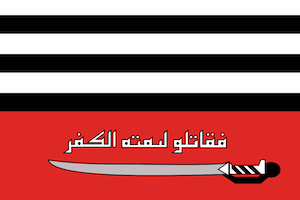
The terror attack in late October on a police training center in Balochistan’s capital Quetta, and the August suicide attack in the same city, indicate that despite certain headway in operation Zarb-e-Azb, terror groups in Pakistan are still capable of conducting devastating attacks and that the country’s war on terror is far from over. However, the greatest challenge that Pakistan currently faces is a lack of consensus on the terror problem and that Pakistan’s political leadership has yet to accept ownership of this war.
Putin-Xi meeting underlines Russian weakness faced with China's geoeconomics strategy

By Robert M. Cutler
August 28th, 2016, The CACI Analyst
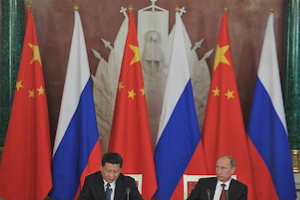
On June 25, Presidents Vladimir Putin of Russia and Xi Jinping of China met in Beijing, immediately after spending two days together in Tashkent at a summit meeting of the Shanghai Cooperation Organization (SCO). The two countries’ industrial cooperation is dominated by the energy sector, where the several dozen agreements that were signed in Beijing confirmed that in bilateral economic and trade relations China is the agenda-maker and Russia is the agenda-taker. This relationship is now extending itself to the geoeconomic competition between the two in Central Asia and East Central Eurasia generally, as well as into Greater South Asia at a slower pace.
The Tashkent summit and the expanded SCO

By Farkhod Tolipov
July 27th, 2016, The CACI Analyst
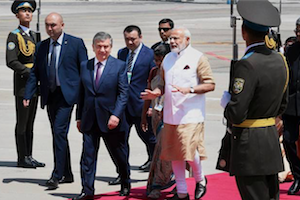
50 years ago, Uzbekistan’s capital Tashkent hosted a summit ending the India-Pakistan war of 1965, resulting in the Tashkent Declaration. It was, so to speak, a Soviet “Camp David” aimed at bringing two antagonists – India and Pakistan – to peace. The SCO summit of June 2016 was, symbolically speaking, a second – multilateral – platform created in the same place, Tashkent, for the same two states to restore peace. Yet this summit did not appear to be a second Tashkent “Camp David,” but rather a challenge for the SCO itself.
Afghanistan risks water conflict with Iran

By Sudha Ramachandran
July 30th, 2016, The CACI Analyst
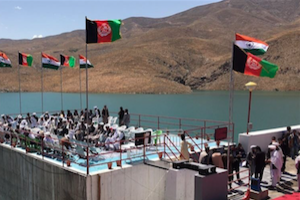
Afghanistan’s damming of the Harirud River could boost agriculture and industry in the country. However, the resulting reduction in water flow to Iran could contribute to a deterioration of relations with Tehran. Afghanistan and Iran can no longer delay a dialogue on how to share the waters of the Harirud. Afghanistan has previously blamed its reluctance to engage in such a dialogue on a lack of requisite data and expertise, but can ill afford a conflict with Iran on this issue.
China eyes Iran's potential as a trade corridor

By Sudha Ramachandran
May 26th, 2016, The CACI Analyst
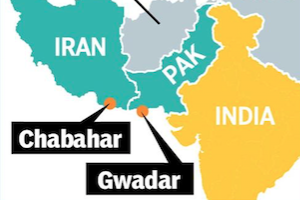
Iran’s location near key trade routes and strategic waterways could make it a major Eurasian trade and transit corridor in the coming decades. China is keen to tap into Iran’s potential. But will Iran’s rise as a trade hub undermine the importance and prospects of the China-Pakistan Economic Corridor (CPEC)? This possibility has raised concerns in Pakistan that China’s commitment to making the Gwadar port a key node in the CPEC could dwindle as Iran’s trade corridors take shape and if Pakistan’s government fails to address China’s security concerns.
Visit also