CACI Analyst, June 10, 2015
Contents
Analytical Articles
HANGING IN THE TRADE BALANCE: IS FREE TRADE A CURSE FOR KAZAKHSTAN?, by Sergei Gretsky
SHIFTING RUSSIAN POLICIES TOWARDS ALLIED SEPARATIST REGIONS, by Michael Hikari Cecire
AFGHANISTAN-PAKISTAN INTELLIGENCE COOPERATION AND THE PROSPECT OF PEACE, by Sudha Ramachandran
TURKEY-ARMENIA RELATIONS AFTER TURKEY'S ELECTIONS, by Armen Grigoryan
Field Reports
GEORGIA'S POLITICAL LANDSCAPE TRANSFORMS AS SENIOR UNM MEMBERS DEFECT, by Eka Janashia
KYRGYZ PARLIAMENT PASSES "FOREIGN AGENTS" LAW IN FIRST READING, by Arslan Sabyrbekov
AZERBAIJANI DIPLOMAT UNDER ATTACK AFTER COMMENTING BAKU FIRE, by Mina Muradova
THE RIGA SUMMIT AND NEW PROSPECTS FOR EU-ARMENIA RELATIONS, by Erik Davtyan
Hanging in The Trade Balance: Is Free Trade a Curse for Kazakhstan?

By Sergei Gretsky (06/10/2015 issue of the CACI Analyst)
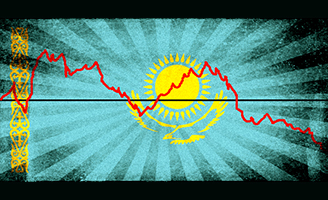
The creation of the Eurasian Economic Union (EEU) was presented as a vehicle for economic development of Belarus, Kazakhstan, and Russia as a result of the removal of barriers to free movement of goods, capital, and labor between the three states and creating a common market. Its inauguration on January 1, 2015, happened at a very inopportune moment as Russian economy, the largest of the three, was sharply contracting due to falling global commodity prices and western sanctions over Ukraine. Economic recession in Russia has had a negative ripple effect on Belarusian and Kazakhstani economies, which led some in Kazakhstan to second-guess the benefits of joining the EEU.
China's Silk Roads and Their Challenges

By Stephen Blank (01/07/2015 issue of the CACI Analyst)
Few realize that China is actually building three Silk Roads, one through Central Asia to Europe; a second, maritime one, through South East Asia to India and South Asia; and third, China is building a robust commercial network through the Arctic to connect it with Europe. In all three cases there is a common geopolitical dream that has been shared by Russian and Asian leaders since the opening of the Suez Canal: building a land-based alternative connecting East, South, and Central Asia to Europe by purely terrestrial means. China’s plans for Central Asia are extraordinarily ambitious but there are serious problems that could undermine them.
India to Invest in Iran's Chabahar Port

By Sudha Ramachandran (11/26/2014 issue of the CACI Analyst)
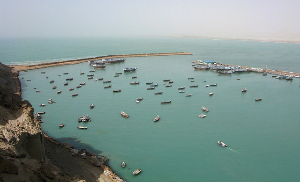
The Indian government’s decision in late October to participate in the development of Iran’s Chabahar port will jump-start this long-delayed project. The port’s expansion will boost its emergence as a major transshipment hub and its strategic location is expected to transform the region’s geopolitics. But will this ambitious project realize its full potential given unrest in the Sistan-Balochistan province, where it is located, and the prospects of a civil war looming large in Afghanistan?
Kazakhstan's Deepening Ties with Europe
By Nicklas Norling (11/11/2014 issue of the CACI Analyst)
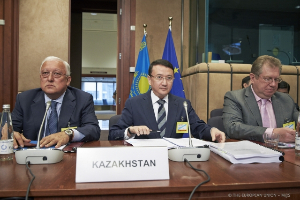
On October 9, Kazakhstan and the EU concluded negotiations on an enhanced Partnership and Cooperation Agreement, superseding the PCA that had been in force since 1999. The agreement, the first of its kind, is primarily a result of strengthening trade and investment ties between Kazakhstan and EU countries developed over the past 15 years. Kazakhstan is among the most economically EU-oriented post-Soviet states and one of only three whose trade with the EU is growing relative to that with other countries. The enhanced partnership will serve as a foundation to further strengthen these ties but the EU must upgrade Kazakhstan in its list of priority countries to exploit the partnership’s full potentials.
Visit also