India vs Pakistan in the Race for Influence in Central Asia
By Syed Fazl-e-Haider
A recent succession of visits by Central Asian leaders to Islamabad over the past four months has drawn attention in New Delhi. In response, India has intensified its diplomatic engagement with the Central Asian Republics (CARs) to counter Pakistan’s expanding regional influence. Indian officials have conducted discussions with counterparts from Kyrgyzstan, Tajikistan, Turkmenistan, and Uzbekistan to strengthen economic ties. Concurrently, Pakistan has undertaken a significant policy shift by activating alternative trade corridors through China and Iran, reducing its reliance on routes via Afghanistan to access Central Asia. Despite this strategic rivalry, certain connectivity initiatives reveal areas of convergence and potential cooperation between India and Pakistan.
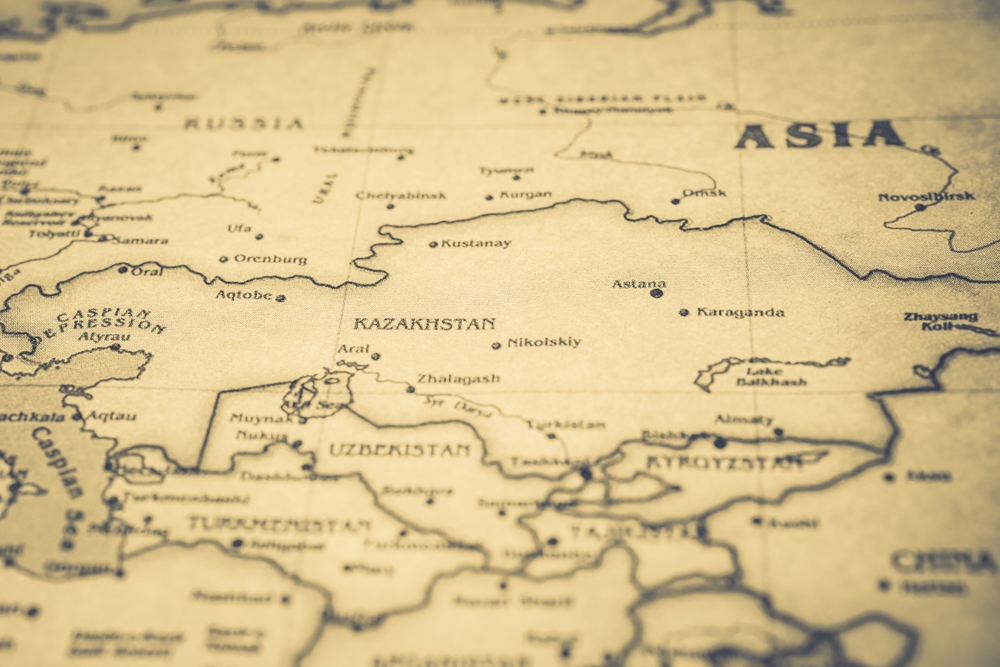
Photo by Alexander Lukatskiy, 2022
BACKGROUND:
Both India and Pakistan view post-Soviet Central Asia as a region of considerable geostrategic and geo-economic importance. Endowed with substantial hydropower capacity, the region possesses significant untapped energy reserves and critical mineral resources. For both states, primary interests in Central Asia include energy security, infrastructure development, trade, and connectivity.
India has advanced a proactive “Connect Central Asia” policy aimed at strengthening political, economic, and cultural engagement with the Central Asian Republics (CARs), Kyrgyzstan, Tajikistan, Turkmenistan, Kazakhstan, and Uzbekistan. By 2025, India’s trade with these five states reached approximately US$ 2.5 billion, nearly three times the volume of Pakistan’s trade with the region.
Afghanistan, serving as a critical bridge between Central and South Asia, remains central to the strategic competition between India and Pakistan. Pakistan’s historical support for the Taliban has contributed to strained relations with the CARs, many of which have been wary of the Taliban’s rise due to concerns over regional stability and extremism. In contrast, CARs have often aligned with anti-Taliban forces in Afghanistan.
India, during the Taliban’s first regime (1996–2001), opposed the movement and supported the anti-Taliban Northern Alliance, a stance that strengthened its political alignment with the CARs. This policy brought India closer to the region, where skepticism toward Pakistan’s Afghanistan policy persisted. Although regional dynamics have evolved in recent years, India’s earlier opposition to the Taliban and its engagement with alternative Afghan actors significantly shaped its favorable ties with Central Asia.
Under the current Taliban regime, India has engaged pragmatically with Kabul amid escalating tensions between Pakistan and Afghanistan. Pakistan has repeatedly accused the Taliban authorities of harboring anti-Pakistan militant groups, contributing to a deterioration in bilateral relations. This conflict has prompted a notable shift in the Afghan policies of both states. Pakistan has adopted a more confrontational stance, reportedly launching Operation Ghazab lil-Haq in February to target militant sanctuaries within Afghanistan. In contrast, India has maintained a pragmatic approach, guided by a strategic calculus often characterized as “the enemy of my enemy is my friend.”
Simultaneously, Pakistan has extended support to the anti-Taliban National Resistance Front (NRF), formerly known as the Northern Alliance. This shift in Pakistan’s Afghanistan policy has facilitated closer alignment with the CARs, many of which remain wary of the Taliban regime.
In December 2025, Kyrgyz President Sadyr Japarov visited Pakistan, the first such visit by a Kyrgyz leader in over two decades, marking a revival of bilateral relations. Both countries agreed to increase trade from approximately US$ 16 million in 2024 to US$ 200 million by 2027–28. In February 2026, Uzbek President Shavkat Mirziyoyev undertook a two-day visit to Islamabad, during which the two sides committed to expanding bilateral trade to US$ 2 billion over the next five years. In the same month, Kazakh President Kassym-Jomart Tokayev also visited Pakistan, with discussions focusing primarily on developing transport corridors to provide landlocked Kazakhstan access to Pakistan’s Arabian Sea ports.
In response to the deepening economic engagement between Pakistan and CARs, India has intensified its diplomatic outreach to the region to advance trade and investment ties. In March 2026, Turkmenistan’s Deputy Chairman of the Cabinet of Ministers, Baymyrat Annamammedov, and India’s Ambassador to Turkmenistan, Bandaru Wilsonbabu, held discussions in Ashgabat on expanding cooperation in industry, construction, chemicals, and fertilizers.
Concurrently, India is pursuing a proposed US$ 3 billion agreement for the import of uranium from Kazakhstan, currently under consideration by Kazatomprom, the country’s national nuclear energy agency. In addition, India’s Tata Power is reportedly nearing agreements in Tajikistan’s energy sector.
The escalating conflict with Afghanistan has prompted Pakistan to operationalize alternative trade corridors to Central Asia via Iran and China. In April 2026, Islamabad dispatched its first shipment to Tashkent through the Gabd–Rimdan border crossing with Iran, thereby establishing a functional route toward Turkmenistan and Uzbekistan. Concurrently, Pakistan activated a trade corridor through China via the Khunjerab Pass, facilitating connectivity with Kyrgyzstan, Kazakhstan, and Tajikistan.
IMPLICATIONS:
During recent visits to Islamabad, officials from Kazakhstan, Uzbekistan, and Kyrgyzstan discussed trade and strategic connectivity initiatives aimed at linking Central and South Asia and providing landlocked Central Asian economies access to Pakistan’s seaports at Karachi and Gwadar. Geographically, Pakistan holds a comparative advantage over India in facilitating commercial access to Central Asia.
Key projects include the Uzbekistan–Afghanistan–Pakistan (UAP) railway and the China–Kyrgyzstan–Uzbekistan (CKU) railway. The UAP corridor is intended to connect Central Asia to Pakistan’s seaports via Afghanistan. Similarly, the CKU railway would enhance regional connectivity by linking China’s Kashgar to Central Asia, with onward access to Gwadar port through the China–Pakistan Economic Corridor (CPEC), thereby providing Central Asian states with routes to open seas.
In contrast, India faces geographical constraints in accessing Central Asia, as overland connectivity via Afghanistan would require transit through Pakistan. To circumvent this limitation, India has invested in Iran’s Chabahar Port as an alternative route to the region. Located on the Gulf of Oman, Chabahar constitutes a key node in the International North–South Transport Corridor (INSTC), which links India with Iran, Russia, and Central Asian states, thereby facilitating trade while bypassing Pakistan.
Islamabad no longer views Afghanistan as the principal transit route to the rest of Central Asia, largely due to security concerns. The activation of alternative trade corridors via China and Iran reflects a significant shift in Pakistan’s connectivity strategy, driven by tensions with the Taliban regime over cross-border militancy. As one senior Pakistani official noted, “The China and Iran corridors are not just alternatives anymore – they are becoming the preferred routes for regional connectivity.”
Geopolitically, India’s alignment with Israel in the ongoing Iran–Israel conflict risks undermining its strategic interests in Iran, particularly regarding the Chabahar port project. In contrast, Iran has moved closer to Pakistan amid the US–Israel war with Iran, with Islamabad positioning itself as a mediator between Washington and Tehran. Pakistan’s emerging role as a diplomatic intermediary has enhanced its geopolitical profile, including in Central Asia, a region significantly affected by instability in the Middle East.
India’s withdrawal last year from the Ayni airbase in Tajikistan, its only overseas military facility near Afghanistan, signals a decline in its intelligence capabilities and strategic influence in the region. Established in 2000, the base served as a strategic counterbalance to Pakistan’s influence and as a key platform for India’s engagement with Central Asia.
India and Pakistan have primarily competed for influence in Central Asia due to the region’s substantial energy resources. However, the viability of key energy connectivity projects depends on cooperation rather than rivalry between the two states. For example, the Turkmenistan–Afghanistan–Pakistan–India (TAPI) gas pipeline cannot function effectively without mutual coordination, as it is designed to transport Turkmen gas to energy-deficient markets in both India and Pakistan. Similarly, the CASA-1000 hydropower project, which aims to export electricity from Central Asia to Afghanistan, Pakistan, and India, has the potential to transform strategic competition into convergence between the two countries.
Conversely, an armed conflict between India and Pakistan would have significant repercussions for Central Asia. A war could disrupt trade and energy corridors, undermine major connectivity initiatives such as the INSTC and CPEC, exacerbate militancy, and pose serious risks to regional stability.
CONCLUSIONS:
With their ambitious regional strategies, India and Pakistan could turn Central Asia either into a site of rivalry or a platform for cooperation. Pakistan’s shift in Afghan policy, its counterterrorism operations against militant groups under the Taliban, and its use of alternative corridors via China and Iran, bypassing Afghanistan, are key developments encouraging the CARs to favor Pakistan. From geographical and geopolitical perspectives, Pakistan may be a more viable partner for the landlocked CARs, which seek to expand trade through connectivity to Arabian Sea ports. In contrast, deteriorating India–Iran relations cast uncertainty over the future of India’s Chabahar port project.
AUTHOR’S BIO:
Syed Fazl-e-Haider is a Karachi-based analyst at the Wikistrat. He is a freelance columnist and the author of several books. He has contributed articles and analysis to a range of publications. He is a regular contributor to Eurasia Daily Monitor of Jamestown Foundation Email, This email address is being protected from spambots. You need JavaScript enabled to view it.
Kazakhstan-Russia Relations After 2022: Sources of Contention, Points of Pressure
By Nargis Kassenova
The dramatic events of 2022 - the January unrest in Kazakhstan and Russia’s war against Ukraine - upended the status quo in Kazakhstan-Russia relations. Astana must now address both long-standing vulnerabilities—security, political, and economic—and new pressures in areas such as inter-elite relations (as they shape up in the process of "denazarbayevization"), nuclear energy, and history writing. The Tokayev government seeks to accommodate Russia as much as possible while advancing Kazakhstan’s sovereignty, which requires constant adjustments and trade-offs.
Read Kazakhstan-Russia Relations After 2022: Sources of Contention, Points of Pressure

The Indo-Pakistani-Afghan Connection and Its Implications for Central Asia
By Stephen Blank
Just as Pakistan and Afghanistan agreed to a cease-fire on October 19, representatives of the Taliban were in New Delhi reviving India’s long-standing ties with Afghanistan, demonstrating the interconnections between Afghanistan, Central Asia as a region, and the rivalries that drive Asian politics, i.e. the Indo-Pakistani-China triangle. In turn, this signifies the region’s increasing importance to major external actors as well as the growing importance and agency of Central Asian states. 
Credit: Wikimedia Commons
BACKGROUND: India’s rapprochement with Afghanistan follows the examples of China, Russia, and Central Asian states. Although Pakistan promoted the Taliban during the insurgency against the U.S., their relations have deteriorated since 2021. Pakistan has increasingly charged the Taliban with sheltering and supporting the Tehrik-e-Taliban Pakistan (TTP), a militant group responsible for a surge of deadly attacks inside Pakistan. This tension has led to frequent and sometimes deadly border clashes, airstrikes, and the repatriation of Afghan refugees from Pakistan. Despite the latest cease-fire, continued tensions can be expected along the Afghan-Pakistan border.
There are compelling reasons for India and Afghanistan to resume ties and connections, e.g., air flights from New Delhi to Kabul. Prior to the Taliban takeover, India had a thriving, strategically motivated, relationship with Afghanistan. India is in a permanent state of tension with Pakistan, which continues to sponsor terrorist attacks on India, while China supports Pakistan to prevent India from rivalling it as an Asian great power. These two states have consistently sought with considerable success to isolate India from Central Asia, thereby giving China a freer hand in the region.
Pakistan has long strived to have hegemonic influence over Afghan governments. It previously sponsored the Taliban against the pro-Western and pro-Indian Karzai and subsequent governments in Afghanistan. Consequently, as Taliban ties to Pakistan eroded and the need for economic support from abroad grew, India has emulated other actors in Central Asia to resume ties with Afghanistan.
India, Central Asian governments, Russia, and China have congruent economic-political reasons for restoring ties to Kabul. The same is true for Washington, although to a lesser degree. All these governments have concluded that if they wish to prevent the Afghan government from sponsoring terrorism, whether against Russia, Uzbekistan, or China, they must engage seriously, and enter into diplomatic relations, with Afghanistan.
Similarly, by virtue of its geographical location Afghanistan is instrumental to transcontinental trade and transportation routes, including the Middle Corridor and Belt and Road, leading from China through Central Asia to Europe. The construction of such corridors is now one of the most urgent issues on the agenda for these states, making a reasonably secure and robust economic engagement with Afghanistan a necessity for both Central Asian states and China. As a result of this awareness, we now see numerous proposals for a railway and other transportation routes connecting Central Asia and China. The Afghan government also evidently grasps the need for secure and thriving economic links with its Central Asian neighbors, China, and Russia.
The enhanced understanding on all sides of the urgent need for improved connectivity obliges foreign governments to press for an end to support for terrorists. It remains to be seen if Kabul can or will terminate this support. If it does not, it will be shunned by its neighbors and potential partners.
Great power interest in Afghanistan is also fueled by the fact that previous international studies estimate that Afghanistan is sitting on an estimated US$ 1 trillion of rare earths and minerals. As access to these goods has now become a central issue in global politics, and especially Sino-American relations, there is an intensifying competition to gain secure and uncontested access to them. Once again, Afghanistan could become a central arena for great power rivalry.
Moscow needs good ties to Kabul to reinforce its overall Central Asian policy goals and prevent domestic terrorism; and also aspires to sell arms to Kabul. Soviet arms sales provided the basis for its earlier influence in Afghanistan, and Russia hopes to repeat this especially as it has little to offer economically compared to Beijing and Washington. The Trump Administration, apart from its growing obsession with rare earths, wants to regain access to Bagram Air Base to monitor Chinese military developments.
IMPLICATIONS: Rising interest in ties with Afghanistan across the board opens the way for the Taliban to play the traditional small state game of hedging and balancing among competing foreign governments. However, the developments outlined above tell us things about Central Asia that are prospectively much more important. First, Central Asian states that are displaying ever more interest in regional cooperation and integration now acknowledge that their region is incomplete if Afghanistan does not or cannot participate in it. This insight applies with equal force to economic issues as well as security concerns. For them, no discussion of the regional future is complete without including Afghanistan. Therefore, they are promoting bilateral and regional plans for projects to expand trade, transport, and technology projects to Afghanistan.
Second, it appears that all of the major foreign state actors appreciate the fact that for economic, political, and strategic reasons they all need to engage not only Afghanistan but the entire region. This awareness enhances their mutual rivalries throughout Central Asia but also prospects for Central Asian states to acquire much needed foreign assistance, on better terms than if they were dependent on only one foreign provider. This foreign rivalry enhances their economic and security capabilities while also creating a possibility to pacify Afghanistan’s domestic and foreign policies.
However, as is often the case, these potential benefits come at a price. Although Central Asian states, India, China, Russia, and the U.S, are all engaging Afghanistan, it is unlikely that they can induce it to stop supporting terrorism even if it is directed at Pakistan, itself a known supporter of terrorism. Thus, Central Asian states that depend to some degree on the economic-political development of Afghanistan cannot escape involvement in the tangled relations of South Asia. To the extent that Central Asian states hope to include Afghanistan in their future projects this involvement is unavoidable.
Meanwhile, Pakistan and China work steadily to impede India’s engagement with Central Asia. Chinese analysts increasingly frame the Pakistan-Afghanistan tensions with reference to a wider Indian role as manifested in India’s ties to Afghanistan. Pakistan fears such connections and strongly objected to the references to Jammu and Kashmir in the Indo-Afghan communique.
Moreover, Uzbekistan is now expressing its interest in obtaining a permanent berth at the Iranian port of Chabahar in Iran. It has held meetings with Iranian and Indian officials to gain this position because this port, apart from figuring prominently in Iran’s regional commercial ambitions, is critical to India’s efforts to leapfrog or bypass Pakistani obstruction of its Central Asian policies.
The entanglement in South Asia’s rivalries is part of a larger trend where Central Asia is increasingly tied to developments in other regions. Central Asian economies are profoundly affected by the war in Ukraine. Similarly, there is mounting interest in Central Asian countries joining the Abraham Accords, a move that increases their political and strategic involvement in the Middle East on top of their growing economic ties with states of the Persian Gulf.
CONCLUSIONS: The impending Sino-American rivalry over rare earths cannot but draw Central Asian states, including Afghanistan, into the Sino-American, and possibly Sino-European tensions. Thus, what we are now seeing in the spillover of South Asian tensions into Central Asia and vice versa, given the TTP raids into Pakistan, signify the full arrival and agency of Central Asian states as individual and regional actors of more than local significance. These trends will undoubtedly continue but how they develop depends on the actions of all the relevant policymakers involved. While those actions cannot be foreseen, Central Asian states will not be merely the object of other states’ designs but independent actors whose policies, be they support for terrorism or large-scale connectivity projects, will impact trends far beyond their borders.
AUTHOR’S BIO: Stephen Blank is a Senior Fellow at the Foreign Policy Research Institute, www.fpri.org.
SCO at a Crossroads: India's Waning Influence Amid Tightening China-Pakistan Axis

By Umair Jamal
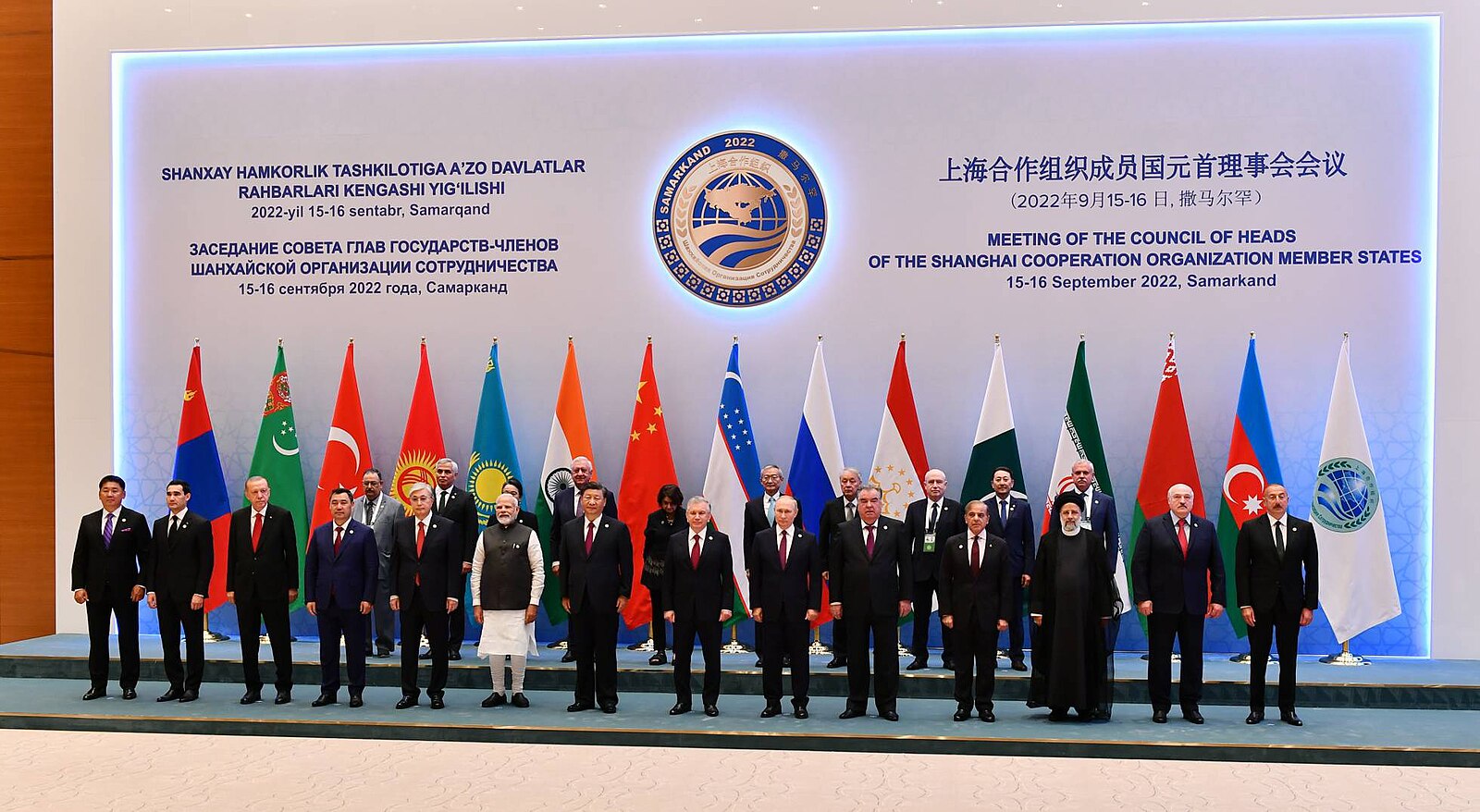
The June 25 meeting of the Shanghai Cooperation Organization (SCO) Defence Ministers in China illuminated how enduring tensions between Pakistan and India are hindering the bloc’s counterterrorism initiatives while compounding New Delhi’s diplomatic challenges within the organization. India’s refusal to endorse the meeting’s joint communiqué, following its unsuccessful attempt to include references to the April 2025 Pahalgam attack in Indian-administered Kashmir, demonstrated its waning influence in Eurasian multilateralism. Whereas Pakistan succeeded in presenting the unrest in Baluchistan as a matter of SCO concern, India was unable to garner support for its narrative on Kashmir. Concurrently, China’s advocacy for a more pronounced Iranian role in the SCO—evident in the forum’s condemnation of Israeli military actions, which India opposed—suggests a growing divide, potentially transforming the organization into a venue for great-power rivalry. This impasse accentuates India’s strategic dilemma: it must either align with the SCO’s emerging anti-Western consensus or risk marginalization within the China-dominated security framework of Central Asia.
The 2022 Meeting of the Shanghai Cooperation Council in Samarqand, Uzbekistan. Image Courtesy of Wikimedia Commons.
BACKGROUND: The SCO evolved from the 1996 Shanghai Five, initially established as a Sino-Russian initiative aimed at stabilizing Central Asia. However, its enlargement in 2017 to include both Pakistan and India introduced volatile bilateral dynamics into the organization. Traditionally, the SCO has concentrated on combating the “three evils” of terrorism, separatism, and extremism, yet the divergent stances of India and Pakistan have increasingly politicized these very concerns. Pakistan characterizes India’s actions in Kashmir as constituting state terrorism. Islamabad maintains its support for the region’s right to self-determination and remains committed to a negotiated resolution of the dispute. In contrast, India accuses Pakistan of facilitating cross-border militancy, resulting in an impasse that has repeatedly obstructed consensus within the SCO.
The April 2025 attack in Pahalgam, which resulted in the deaths of 26 tourists, along with India’s subsequent missile strikes on Pakistan, significantly escalated bilateral tensions in the weeks leading up to the SCO meeting in China. India’s effort to raise the Kashmir issue during the SCO Defence Ministers’ meeting proved unsuccessful, as references to the matter were excluded from the preliminary joint communiqué intended for endorsement by all member states. In contrast, Pakistan’s inclusion of references to unrest in Baluchistan in the draft appeared to align more closely with the organization’s stance against external interference, thereby garnering broader resonance within the bloc.
China’s discreet yet consistent support for Pakistan has altered the internal dynamics of the SCO in recent years. On multiple occasions, Beijing has permitted Islamabad to obstruct India’s terrorism-related narratives, while simultaneously advancing its own conception of the SCO as a counterweight to the U.S.-led international order. For example, India’s recent refusal to endorse the SCO’s condemnation of Israel’s attack on Iran further isolated New Delhi from the prevailing consensus within the group, highlighting its increasing divergence from the bloc’s anti-Western trajectory. This discord is structural in nature. India’s strategic alignments with the U.S. through frameworks such as the QUAD and I2U2 are at odds with the SCO’s objectives, whereas Pakistan’s China-backed diplomatic strategy aims to leverage the organization to constrain India’s influence. With Iran’s accession as a full member, the SCO is likely to intensify its anti-Israel and anti-American rhetoric, thereby compelling India to confront progressively more difficult diplomatic trade-offs.
IMPLICATIONS: The persistent tensions between India and Pakistan during SCO meetings are generating substantial obstacles for the organization while reshaping regional power dynamics. India increasingly finds itself in a strategic quandary. Remaining within the SCO necessitates engagement with both Pakistan and China on contentious issues such as Baluchistan and may compel tacit support for initiatives aligned with Beijing’s Belt and Road Initiative (BRI). Conversely, a complete withdrawal from the forum would entail forfeiting strategic influence in Central Asia, thereby ceding greater regional influence to China and Russia.
Recent military confrontations between India and Pakistan underscore how their bilateral disputes are impeding the SCO’s capacity to foster effective security cooperation. Although the U.S. facilitated a ceasefire between the two countries following the latest clashes, the underlying issue persists: India aspires to leadership within the Global South, yet its strategic vision diverges from the SCO’s predominantly anti-Western orientation. India’s choice not to utilize the SCO platform to present its case against Pakistan after the Pahalgam attack reflects a diminishing confidence in the organization. Despite actively engaging Western capitals to highlight the issue of cross-border terrorism in the aftermath of its retaliatory strikes, India conspicuously refrained from advancing its position during the SCO summit.
This pattern of selective engagement suggests that New Delhi perceives the China-led forum as increasingly peripheral to its core security interests—a perception that stands in sharp contrast to its intensified diplomatic outreach to the U.S. and EU in recent weeks. India’s disengagement from the forum conveys a clear signal to states such as Pakistan and China: New Delhi prioritizes its Western alliances over participation in Eurasian multilateral mechanisms. By choosing not to raise the Pahalgam incident within the SCO framework, India implicitly acknowledged the organization’s limited utility in addressing its counterterrorism agenda. However, this strategy entails certain risks, as India’s terrorism-centric narrative, promoted primarily through its Western partnerships, has recently received limited international traction. Many states remain preoccupied with the potential nuclear implications of India-Pakistan tensions, while terrorism-related issues have garnered comparatively little global attention.
India’s marginalization within the SCO may inadvertently enhance Pakistan’s standing as the more engaged and consistent Eurasian partner, thereby exposing the limitations of New Delhi’s multi-alignment strategy. Pakistan has strategically leveraged the SCO platform to elevate its international profile, presenting itself as a cooperative actor aligned with the organization’s principles.
Meanwhile, Islamabad actively seeks to obstruct Indian statements that conflict with its strategic interests, while simultaneously reinforcing its alliance with Beijing. By focusing on shared security concerns—such as terrorism—that resonate with Central Asian member states, Pakistan positions itself as a more constructive and cooperative actor within the SCO framework. In contrast, India’s persistent emphasis on Pakistan’s alleged support for terrorism in Kashmir is perceived by other members as invoking a protracted bilateral conflict that necessitates substantive dialogue between the two parties. Within this context, the SCO is viewed as a potential facilitator, but only if both countries demonstrate a willingness to engage. While Pakistan has signaled openness to such mediation through the SCO, India has consistently rejected third-party involvement in the Kashmir dispute.
China appears to be the primary beneficiary of the ongoing India-Pakistan rivalry within the SCO. It leverages these divisions to diminish India’s influence in Eurasian institutions, to assess the reliability of Russia—traditionally a neutral actor—and to advance its own financial mechanisms as alternatives to Western systems. In this context, Iran’s accession as a full member introduces additional complexities for India, compelling it to navigate between aligning with SCO positions and preserving its expanding strategic relations with Israel. Moreover, Iran’s inclusion is likely to enhance coordination between China and Pakistan on issues such as Afghanistan and regional energy initiatives, thereby increasing the risk of India’s marginalization within the organization.
India’s challenges within the SCO undermine its credibility as a self-proclaimed leader of the Global South. Its positions frequently diverge from those of the majority of member states, thereby casting doubt on its representative claims. The SCO’s counterterrorism cooperation has also been significantly impeded by the India-Pakistan impasse, which prevents joint military exercises, intelligence sharing, and meaningful dialogue on bilateral tensions. This persistent dysfunction has historically provided greater operational latitude for militant groups and carries the risk of escalating into open conflict, as illustrated by the aftermath of the Pahalgam attack.
CONCLUSIONS: The SCO has arrived at a critical juncture, as the enduring rivalry between India and Pakistan continues to obstruct its operational efficacy. India’s marginalization at recent meetings underscores its difficulty in reconciling strategic partnerships with the U.S. and effective engagement within a China-led multilateral framework. Meanwhile, Pakistan—bolstered by Chinese support—has adeptly utilized the SCO as a platform to contest India’s stance on Kashmir and to portray itself as a constructive and responsible partner in counterterrorism efforts.
Looking ahead, three scenarios appear increasingly plausible. First, the existing stalemate may persist, with India continuing to obstruct references to Kashmir and Baluchistan while opposing proposals perceived as anti-Western. Second, Iran’s recent accession to the forum may consolidate an anti-U.S. and anti-Israel bloc within the SCO, further marginalizing India’s influence. Third, China may exploit these internal divisions to transform the SCO into a vehicle for advancing its Belt and Road Initiative, thereby diminishing India’s strategic role within the organization.
For the SCO to retain its relevance, it would need to play a constructive role in resolving disputes between India and Pakistan; however, China’s evident alignment with Pakistan renders this prospect improbable. The organization’s viability as a significant security platform now hinges on its capacity to transcend its current status as merely another stage for persistent India-Pakistan rivalry. With each successive meeting concluding without consensus, the prospects for such a transformation appear increasingly uncertain.
AUTHOR'S BIO: Umair Jamal is a Ph.D. candidate at the University of Otago, New Zealand, and an analyst at Diplomat Risk Intelligence (DRI). His research focuses on counterterrorism and security issues in Pakistan, Afghanistan, and the broader Asia region. He offers analytical consulting to various think tanks and institutional clients in Pakistan and around the world. He has published for several media outlets, including Al-Jazeera, Foreign Policy, SCMP, The Diplomat, and the Huffington Post.
Could Trans-Afghan Transport Routes Split Central Asia?

By Nargiza Umarova
The fourth session of the India–Central Asia Dialogue at the level of foreign ministers convened in New Delhi on 6 June 2025. The concluding communiqué underscored the significance of Iran’s Chabahar Port in advancing trade connectivity between the Central Asian republics and India, and beyond.
The Indo-Iranian Chabahar initiative competes with the port of Gwadar, a pivotal component of the China–Pakistan Economic Corridor (CPEC), which envisages the integration of Central Asia through the development of a trans-Afghan railway. Concurrently, Russia is pursuing its distinct agenda by engaging with the Taliban to extend the International North–South Transport Corridor (INSTC) into Afghanistan. Under such conditions, the Central Asian republics face the risk of becoming entangled in a cycle of great power competition, thereby endangering their own national interests.
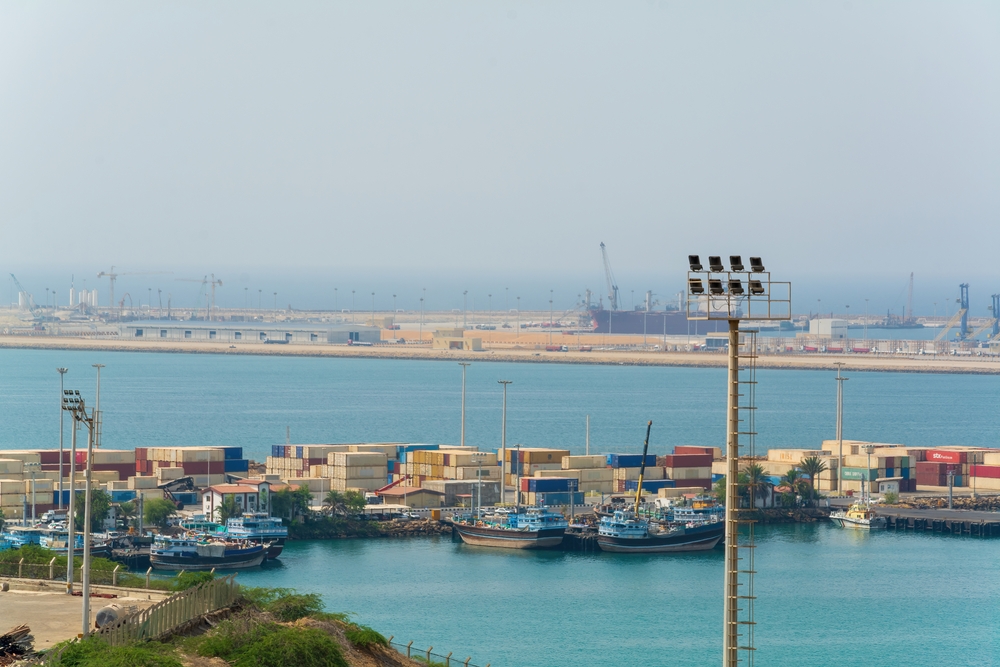
BACKGROUND: Since 2020, Uzbekistan has engaged in dialogue with India and Iran regarding the joint utilization of the deep-water port of Chabahar, which provides direct access to the Indian Ocean. Situated in southeastern Iran, the port constitutes a critical component of Tashkent’s strategy to develop southern transit corridors and diversify freight transportation routes. Chabahar functions as a commercial gateway to Central Asia and Afghanistan, affording major global economies—especially India—access to key regional resources. This underlies New Delhi’s commitment to upgrading the Shahid Beheshti terminal in Chabahar and enhancing the surrounding transport infrastructure.
Moreover, transit through Iran reduces the cost and duration of Indian cargo shipments to and from Central Asia by nearly one-third relative to maritime routes via Europe or China. India’s objective extends beyond securing efficient and affordable access to uranium, oil, coal, and other raw materials from Central Asia; it also involves circumventing its principal rival, Pakistan.
The Indian transit corridor to Central Asia, originating at Chabahar, may proceed through both Iran and Afghanistan. In 2020, Iran commenced construction of the 628-kilometer Chabahar–Zahedan railway line, with financial assistance from India. Work on this segment is nearing completion. The route is projected to continue toward the Turkmenistan border, traversing the northern Iranian cities of Mashhad and Serakhs. En route, the Chabahar–Zahedan–Mashhad railway will diverge toward the city of Khaf, where the inaugural cross-border rail link between Iran and Afghanistan begins.
The construction of the 225-kilometer railway linking Khaf to Herat in Afghanistan is also approaching completion. Its designed capacity is estimated at up to three million tons annually, with transit cargo expected to comprise more than half of this volume. Consequently, the Khaf–Herat railway is poised to be integrated into a broader China-led transport initiative connecting East and West through Central Asia, Afghanistan, and Iran. Owing to its direct linkage with Afghanistan, Uzbekistan stands to benefit from this configuration by enhancing its own transit capacity. The Taliban administration seeks comparable advantages for Afghanistan and is actively encouraging Tashkent to extend the railway from Mazar-i-Sharif to Herat. While such an extension would grant Uzbekistan additional access to Chabahar by circumventing Turkmenistan, it could also redirect China–Europe–China transit cargo toward other neighboring states bordering Afghanistan.
IMPLICATIONS: For several years, Iran has actively pursued the realization of the China–Kyrgyzstan–Tajikistan–Afghanistan–Iran railway corridor, commonly referred to as the “Five Nation Road.” The Afghan segment of this 2,100-kilometre overland route will primarily comprise the railway currently under construction between Mazar-i-Sharif and Herat. From Mazar-i-Sharif, the transportation network would require only an extension to Sherkhan Bandar in Kunduz Province to establish a connection with the Tajik border. This development would facilitate Tajikistan’s access to Iran through Afghan territory, thereby definitely weakening Uzbekistan’s competitive position in regional transit logistics.
The Taliban regard the Mazar-i-Sharif–Herat railway as an integral element of a broader initiative aimed at establishing a Trans-Afghan corridor extending through Kandahar to Pakistan, analogous to Uzbekistan’s proposed Kabul Corridor. In 2023, the Afghan authorities announced plans to construct the Mazar-i-Sharif–Herat–Kandahar railway, which, according to media sources, is projected to provide the shortest overland route between Moscow and New Delhi via Afghanistan. Russia, Turkmenistan, Kazakhstan, and even Turkey have been invited to invest in the venture.
The attractiveness of the Kandahar Corridor lies in its capacity to extend toward both Iran and Pakistan. Ashgabat and Astana are already advancing a new transit route from the Torghundi railway station, located at the Afghan–Turkmen border, toward Pakistan, traversing western Afghanistan. Recently, the Russian Ministry of Transport announced the initiation of a feasibility study for the Trans-Afghan railway, covering the Mazar-i-Sharif–Herat–Kandahar–Chaman route.
Without reaching Kandahar in the city of Delaram, both lines could be redirected westward and linked to Iran’s Zahedan via Zaranj in Nimroz Province, ultimately reaching the port of Chabahar.
Consequently, the Central Asian states will gain an additional opportunity to access the warm waters of the Indian Ocean. However, this scenario presents significant implications for Uzbekistan. Foremost, the advancement of the Kandahar Corridor—regardless of whether it extends toward Iran—raises concerns regarding the viability of the Trans-Afghan Railway via Kabul, which Tashkent has identified as a core interest. The simultaneous operation of both routes will inevitably result in competition for transit cargo, thereby impacting their overall profitability. Uzbekistan is will unlikely be able to impede the construction of the Mazar-i-Sharif–Herat railway, as the initiative partially aligns with the interests of Russia, India, Iran, and China. Under such circumstances, preserving the relevance of the Kabul Corridor—particularly amid funding constraints—becomes exceedingly challenging.
Secondly, the construction of the Zaranj–Delaram railway line will establish conditions conducive to the redistribution of cargo flows transiting Afghanistan toward South Asia and beyond, in favor of Chabahar. This development represents a direct challenge to the China–Pakistan Economic Corridor, the most costly and prominent flagship project of the Belt and Road Initiative, which prioritizes the expansion of the Gwadar port on Pakistan’s Arabian Sea coast. Enhancing Chabahar’s transit capacity through the creation of a comprehensive network of rail and roads linking the port to neighboring countries and regions within Iran’s periphery may diminish the significance of the Kabul Corridor as a land bridge between the poles of continental Asia.
Should the Kandahar route be developed and extended into Iran, Gwadar will be compelled to share prospective cargo flows with Chabahar, thereby intensifying the rivalry between New Delhi and Beijing. Russia must also be considered, as it views the Trans-Afghan Railway as a means to extend its flagship International North–South Transport Corridor (INSTC) into Afghanistan. Preliminary estimates place the volume of Russian cargo on the Trans-Afghan route at between 8 and 15 million tons annually. In light of escalating tensions between Kabul and Islamabad, as well as the generally unstable security climate in Pakistan—particularly in the provinces of Khyber Pakhtunkhwa and Balochistan, through which two proposed railway branches from Central Asia to Indian Ocean ports are planned—Russia may opt to reroute a portion of its exports to Chabahar via Afghanistan. Over time, this shift could also influence freight transit patterns from Northern Europe to India.
Nevertheless, the ongoing escalation of armed conflict between Iran and Israel introduces significant uncertainty regarding the feasibility of such transport configurations. A protracted period of hostilities, accompanied by potential political destabilization within Iran, will unavoidably impact the reliability of established logistics networks in West Asia, potentially necessitating their complete reconfiguration. Under these conditions, both the trans-Afghan corridors leading to Iran and the Indian access route to Central Asia via Afghanistan will be placed at considerable risk. This situation will undoubtedly compel stakeholders to revise their strategies concerning the Chabahar project and to place greater emphasis on leveraging Pakistan’s transit capabilities.
CONCLUSIONS: Uzbekistan’s proactive engagement in the development of a network of trans-Afghan trade routes is anticipated to yield both economic and political advantages by enhancing its national and regional transit capacity. However, realizing these outcomes will require Tashkent to navigate carefully among the interests of global and regional powers, whose influence may significantly shape the implementation of specific transport initiatives within Afghanistan.
For the Central Asian states, maintaining diversified access to the southern ports of Iran and Pakistan is advantageous, provided that intra-regional competition is avoided, as such rivalry could undermine their collective competitiveness along the trans-Afghan corridor. Accordingly, it is essential to implement a coordinated policy aimed at identifying and advancing mutually beneficial transport routes through Afghanistan. Reaching consensus on a unified negotiating stance in engagements with the Afghan leadership is vital to mitigate the risk of the Taliban enacting externally influenced political decisions that may contradict the interests of Central Asian states.
AUTHOR’S BIO: Nargiza Umarova is a Senior Research Fellow at the Institute for Advanced International Studies (IAIS), University of World Economy and Diplomacy (UWED) and an analyst at the Non-governmental Research Institution “Knowledge Caravan”, Tashkent, Uzbekistan. Her research activities focus on developments in Central Asia, trends in regional integration and the influence of great powers on this process. She also explores Uzbekistan’s current policy on the creation and development of international transport corridors. She can be contacted at This email address is being protected from spambots. You need JavaScript enabled to view it. .
Visit also