Türkiye-Armenia Border Reopening: A Turning Point For The South Caucasus
By Alpaslan Özerdem and Olesya Vartanyan
After more than three decades of closure, the Türkiye-Armenia border may soon reopen. A string of recent developments, including the launch of Turkish Airlines flights to Yerevan, agreements to simplify visa procedures, and moves toward direct land trade, suggest that normalization is shifting from cautious diplomacy toward practical implementation. If it does, it would mark one of the most consequential geopolitical shifts in the South Caucasus since the end of the Cold War. Yet reopening the border will require careful political management. Without it, renewed contact could generate friction rather than stability.
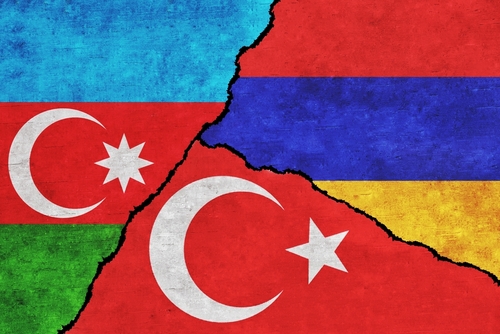
BACKGROUND:
The land border between Türkiye and Armenia has been closed since 1993. Ankara shut the crossing in solidarity with Azerbaijan during the first war over Nagorno-Karabakh. Since then, the border has symbolized one of the most enduring geopolitical divides in the region. For communities on both sides, the closure produced long-term economic and social consequences. Armenia’s access to regional markets has remained constrained, while eastern Turkish border regions have also faced limited cross-border economic opportunities.
Regional dynamics began shifting after the 2020 war between Armenia and Azerbaijan, which altered the political balance in the South Caucasus and created new incentives for diplomatic engagement. In the aftermath of the war, Ankara and Yerevan appointed special envoys in 2021 to explore the possibility of restoring diplomatic relations and reopening the border.
Since then, negotiations have progressed slowly but steadily. Several confidence-building measures have been agreed and some already implemented. These include agreements allowing third-country citizens to cross the border, the resumption of direct flights between Istanbul and Yerevan, and discussions on facilitating trade and travel. In early 2026, the pace of normalization accelerated visibly. In March, Turkish Airlines launched regular scheduled flights on the Istanbul-Yerevan route. The two governments agreed to simplify visa procedures, and reports emerged that direct land trade between Türkiye and Armenia would begin as part of a broader US-led Caucasus peace push. Last December Bloomberg reported that Ankara was weighing a full reopening of the border within six months, while senior Turkish officials publicly expressed optimism, stating that they hoped “everything develops quickly.”
Physical preparations also indicate growing readiness. Armenia has renovated the Margara checkpoint on its side of the border, declaring the facility technically ready for operation. Türkiye has likewise upgraded infrastructure at the Alican crossing. These preparations suggest that the technical conditions for reopening could be met relatively quickly if political decisions align.
Still, reopening the border remains politically sensitive. For Türkiye, the process remains closely linked to the broader relationship between Armenia and Azerbaijan, particularly negotiations over a comprehensive peace agreement following the collapse of the self-declared Nagorno-Karabakh authorities in 2023. Since last August, when the two countries signed several accords at the White House, Baku and Yerevan have taken a number of steps forward, including facilitating transit trade to Armenia through Azerbaijan and Armenia’s recent agreement with the United States on the TRIPP transit route, which will facilitate the operation of a transit route between Azerbaijan and its enclave of Nakhchivan in southern Armenia. These are promising steps, but a final peace agreement is still pending, which Türkiye must take into consideration.
Ankara has long coordinated its approach toward Armenia with Baku. Turkish policymakers have repeatedly emphasized that normalization should not undermine Azerbaijan’s strategic interests, and progress in Türkiye-Armenia relations has often moved in parallel with developments in Armenia-Azerbaijan negotiations. How close are the parties to a final agreement on the border? The string of practical steps in early 2026 suggests the process has crossed a threshold from symbolic confidence-building to operational preparation. Yet the absence of a finalized Armenia-Azerbaijan peace deal means that Ankara retains a political brake on the timeline. A stall or deterioration in those talks could slow or freeze the border track; conversely, a breakthrough could accelerate it rapidly.
Domestic political considerations also matter. In Armenia, normalization with Türkiye remains controversial for segments of society deeply affected by historical grievances, and the issue will feature in the country’s upcoming June parliamentary elections. In Türkiye, policymakers must balance diplomatic engagement with Armenia against their longstanding strategic partnership with Azerbaijan.
IMPLICATIONS:
If and when the border reopens, the effects will extend well beyond bilateral relations. Armenia has long depended on limited transit routes through Georgia and Iran to access external markets. Opening the Turkish border would provide an alternative corridor, linking Armenia more directly to European and Middle Eastern trade networks. It would also reinforce Türkiye’s role as a regional connector between the South Caucasus and broader Eurasian markets. In this context, reopening the border aligns with wider connectivity initiatives such as the Middle Corridor, which aims to strengthen east-west trade routes across the region.
Russia’s influence in the South Caucasus has weakened since the start of the war in Ukraine and the collapse of its peacekeeping mission in Nagorno-Karabakh in 2023. As Moscow’s role recedes, regional actors are increasingly seeking alternative economic and diplomatic partnerships. In parallel, instability in the Middle East, including conflict involving Iran, has heightened uncertainty along key transit routes. For Armenia, which has relied on access through Iranian territory, reopening the Turkish border would reduce dependence on a single corridor and provide greater strategic flexibility.
On the other hand, the expansion of trade and transit routes associated with reopening the Türkiye-Armenia border could deepen regional interdependence and, in turn, support longer-term peace between Armenia and Azerbaijan. Durable reconciliation rarely rests on diplomatic agreements alone; it often emerges when economic cooperation and shared interests make renewed conflict increasingly costly. Expanded trade, transportation links, and cross-border mobility can help create these incentives by encouraging regional actors to view cooperation not as a concession but as mutual gain.
At the local level, decades of closure have left many towns near the frontier economically stagnant. Renewed cross-border access could stimulate transportation links, tourism, and commercial exchange. Armenian producers would gain easier access to Turkish markets, while Turkish businesses could expand trade with Armenia and potentially beyond. However, regions that have been economically isolated for decades may struggle to adjust quickly to new competitive pressures, and if cross-border trade develops unevenly, local communities could perceive the reopening as disruptive rather than beneficial.
The practical challenges of reopening should not be underestimated. Local authorities, customs agencies, border police, and regulatory bodies on both sides have never previously operated together. Communities along the frontier have lived in close geographical proximity but political separation for decades. In the Armenian village of Margara, residents have long lived within sight of the Turkish side of the river without direct contact. Renewed engagement may generate economic and cultural exchange, but it could also expose differences in administrative practices, expectations, and social attitudes that will require careful management on both sides.
CONCLUSIONS:
The reopening of the Türkiye-Armenia border represents more than a bilateral diplomatic milestone. It reflects a broader transformation in the political landscape of the South Caucasus. The rapid accumulation of practical steps in early 2026, from flights to visa agreements to land trade, indicates that the process has moved beyond the realm of aspirational diplomacy. Yet the outcome is not guaranteed. The process remains closely linked to developments in Armenia-Azerbaijan relations, domestic political considerations in both countries, and evolving regional geopolitics. Whether Ankara ultimately opens the border before or after a finalized Armenia-Azerbaijan peace deal will be a critical signal of how much Türkiye is willing to decouple the two tracks. Whether the border ultimately becomes a bridge between the two societies or simply another contested frontier will depend on how effectively these challenges are addressed not only in the coming months, but in the longer term.
AUTHOR’S BIO:
Alpaslan Özerdem is Dean of the Carter School for Peace and Conflict Resolution at George Mason University. Olesya Vartanyan is a conflict analyst specializing in South Caucasus security and peace processes and a PhD student at George Mason University.
Türkiye-Pakistan-Azerbaijan Trilateral Defence Cooperation
Syed Fazl-e-Haider
Azerbaijan's acquisition of at least 50 JF-17 Block III fighter jets from Pakistan, to be equipped with Turkish-manufactured missiles, aims to enhance the aerial combat capabilities of the Azerbaijani Air Force. Jointly developed by China and Pakistan, the JF-17 Block III fighters will gain increased lethality through the integration of avionics from Türkiye’s advanced defense industry. This agreement has further consolidated the multi-dimensional defense collaboration between Pakistan, Türkiye, and Azerbaijan, commonly referred to as "three brothers." Pakistan and Azerbaijan are also actively participating in Türkiye’s Kaan fifth-generation fighter aircraft program. The procurement of Türkiye’s fifth-generation jets, among the most advanced globally, is expected to be transformative for both Baku and Islamabad.

BACKGROUND: Türkiye, Pakistan, and Azerbaijan are collectively referred to as the "three brothers" since Türkiye was the first state, and Pakistan the second, to recognize Azerbaijan's independence in 1991. Both Türkiye and Pakistan provided military support to Baku during the 44-day war against Armenia over the Nagorno-Karabakh region in 2020. The states convened in Islamabad in January 2021 for a trilateral meeting, during which they agreed to expand cooperation in political, strategic, trade, economic, peace, and security, while reaffirming mutual support on issues of shared concern.
Initiated and launched by Turkish Aerospace Industries (TAI) in 2010, the Kaan fifth-generation fighter program represents Türkiye’s indigenous jet fighter initiative. Following Türkiye’s exclusion from the U.S. F-35 fifth-generation fighter program in 2019, the Kaan remains Türkiye’s sole alternative and is intended to replace the country's aging fleet of F-16 fighter jets. The first prototype was tested in 2023; however, the development process is expected to span at least a decade.
While Azerbaijan is providing financial assistance to Türkiye’s Kaan program, hundreds of Pakistani officials and engineers are actively engaged in the project. In 2023, Türkiye and Azerbaijan signed an agreement during the International Defense Industry Fair (IDEF 2023) in Istanbul to advance the development of the Kaan fighter program. As part of its contribution, Azerbaijan is expected to offer financial investment and industrial collaboration in support of the initiative.
In 2024, Azerbaijan’s Defence Minister Zakir Hasanov stated that his country was leveraging the defense capabilities of Türkiye, its primary partner in military cooperation. In January 2025, Türkiye and Pakistan finalized plans to establish and operate a joint facility for the production of Türkiye’s Kaan fighter jet, agreeing to collaborate on the development and manufacturing of the aircraft.
In February 2025, defense industry authorities from Azerbaijan and Türkiye, during a meeting held at the International Defence Exhibition (IDEX-2025) in Abu Dhabi, discussed the successful military-technical cooperation between the two nations and pledged to further strengthen defense industry ties by exploring prospects for joint projects.
The JF-17 Thunder Block III, a fourth-generation fighter jet, has been developed through a joint venture between Pakistan Aeronautical Complex Kamra and China’s Chengdu Aircraft Industry Corporation. Compared to earlier versions of JF-17, the Block III features superior maneuverability, enhanced combat capabilities, and improved stealth characteristics. In February 2024, Azerbaijan signed a US$ 1.6 billion agreement with Pakistan for the procurement of JF-17 Block III aircraft. The deal also included pilot training and armaments for the fighter jets. On 25 September 2024, Azerbaijani President Ilham Aliyev announced, “The JF-17 jets have already been integrated into the arsenal of Azerbaijan’s air force.”
IMPLICATIONS: Arming the JF-17 “Thunder” Block III fighter jets acquired by Baku with Türkiye’s Gökdoğan Beyond-Visual-Range Air-to-Air Missile (BVRAAM) and Bozdoğan Within-Visual-Range Air-to-Air Missile (WVRAAM) will significantly enhance the aerial firepower of Azerbaijan's Air Force. It also underscores the progress of Türkiye’s defense industry. Türkiye is emerging as a major global arms exporter, after the leading five exporters—the U.S., France, Russia, China, and Germany.
With its advanced combat capabilities, the JF-17 aircraft surpasses the region’s Russian-made jets, including the MiG-29 and SU-25. Russia has been Azerbaijan’s primary arms supplier for decades, however, the JF-17 will replace Azerbaijan’s existing and aging fleet of Russian-manufactured MiG-29 fighters. The JF-17 are expected to enhance Azerbaijan’s airpower amid escalating regional security challenges. Equipped with improved avionics and an active electronically scanned array (AESA) radar, the Block III variant is adaptable to diverse combat scenarios.
According to the Secretariat for Defense Industries (SSB), Türkiye’s defense and aerospace exports in 2024 totaled US$ 7.2 billion. Three Turkish defense firms are included in the ‘Top 100 Arms-Producing and Military Services Companies’ list, published annually by the Stockholm International Peace Research Institute (SIPRI).
Jointly developed by Pakistan and China, the JF-17 fighter jet deal with Azerbaijan also creates opportunities for China to secure additional defense agreements with Azerbaijan and other countries in the region. Between 2019 and 2023, China accounted for 5.8 percent of global arms exports. During this period, China supplied arms to nearly 40 countries across Asia and Africa, ranking as the fourth largest exporter of conventional weapons after the U.S., France, and Russia.
By selling the JF-17 Thunder to Azerbaijan, Pakistan has effectively supported China in boosting demand and expanding its market for arms and military equipment in a region traditionally dominated by Russia. The JF-17 agreement with Azerbaijan is likely to facilitate the entry of Chinese weaponry and enhance China’s influence in the region.
Islamabad, Ankara, and Baku have integrated their tactical and strategic practice with the use of Turkish drone systems. In the Kaan project, Türkiye is experimenting with a ‘loyal wingman’ drone, to gather data in a range of different terrains and against a range of technologies.
The development of the Kaan fighter will significantly reduce Türkiye’s reliance on foreign aircraft. As a fifth-generation fighter program, Kaan demands extensive expertise, substantial financial resources, and international collaboration. Azerbaijan’s financial investment and Pakistan’s manufacturing expertise will not only support Türkiye’s Kaan project but also further reinforce the trilateral defense cooperation for long-term initiatives.
The joint factory established by Islamabad and Ankara for the production of Türkiye’s Kaan fighter jets will further consolidate the defense partnership between Pakistan and Türkiye. Pakistan’s role is expected to enable Türkiye to produce the Kaan jet at a reduced cost. Cost-effective joint production of the Kaan is expected to expand Türkiye’s defense exports, while also bolstering Pakistan’s aerial defense capabilities.
Yet the involvement of Pakistan—China’s longstanding strategic ally and “all-weather” friend—in the Kaan project may pose challenges in sourcing components from Western suppliers due to security concerns. China’s suspected indirect involvement in the Kaan program via Pakistan is viewed as a potential risk to the project. Although China has no official role in Türkiye’s Kaan initiative, critics suspect an indirect influence through Pakistan’s participation. A primary factor behind the rising demand for Chinese defense equipment is its competitive pricing, attributed to low-cost production. The anticipated cost-effective production of the Kaan fighters has further fueled suspicions regarding China’s indirect involvement in the project.
Pakistan’s military cooperation with Azerbaijan carries significant geopolitical implications. In the aftermath of the six-week Azerbaijan-Armenia war over the Nagorno-Karabakh region in 2020, Armenia—Azerbaijan’s primary adversary—has become the largest importer of weapons from India, Pakistan’s principal regional rival.
CONCLUSION: The JF-17 and Kaan fighter jet agreements is a clear statement that Pakistan and Türkiye will continue to bolster Azerbaijan’s military capabilities, with trilateral defense cooperation expected to deepen further. If successful, the Kaan project will lay the groundwork for expanded trilateral collaboration among Türkiye, Pakistan, and Azerbaijan in launching additional large-scale defense initiatives. It will also create opportunities for future bilateral or trilateral joint ventures in the defense industry among the three nations.
The Kaan jet will allow the three countries to enhance engineering capabilities within their domestic defense industries. As a strategic asset, the acquisition of Türkiye’s Kaan will represent a significant technological advancement for Azerbaijan’s and Pakistan’s air forces.
AUTHOR’S BIO: Syed Fazl-e-Haider is a Karachi-based analyst at the Wikistrat. He is a freelance columnist and the author of several books. He has contributed articles and analysis to a range of publications. He is a regular contributor to Eurasia Daily Monitor of the Jamestown Foundation. He is reachable by email at This email address is being protected from spambots. You need JavaScript enabled to view it. .
Turkey and the Organization of Turkic States: A Quest for Pan-Turkism?
Halil Karaveli
April 11, 2024
The Organization of Turkic States (OTS) represents an institutionalized restoration of a pre-Soviet pattern of Turkic cooperation. A common linguistic, as well as the more dubitative no-tion of a cultural heritage that is supposed to unite the lands between Istanbul and Samar-kand contribute to furthering a sense of belonging among the member states of the OTS. Yet Turkic unity is valued and promoted only as far as it aligns with the economic-political state interests of the individual members of the OTS, and is discarded when it contravenes those in-terests. The deepening of Turkic cooperation answers to the material interests of the partici-pating states. The Turkic states’ reluctance to recognize and include the Turkish Republic of Northern Cyprus underlines the ultimately non-ethnic character of their cooperation, and is also indicative of Turkey’s limited ability to exercise an uncontested leadership role among the group of Turkic states.

Türkiye’s Energy Engagement in Central Asia and the Caucasus
Brenda Shaffer
March 27, 2024
In recent years, Türkiye has significantly increased cooperation with the states of Central Asia and Azerbaijan. One of the most important geopolitical developments in recent years in Eurasia is the emerging alliance between Türkiye, Azerbaijan, and Central Asia. This emerging alliance has given impetus to increased cooperation in the sphere of energy among the states. In addition, the increases in strategic collaboration in the region are also raising the prospects of establishment of cross-Caspian energy projects. Türkiye’s engagement in the energy sphere in Central Asia is likely to grow in 2024 and onward. 2024 is a pivotal year for Türkiye’s energy policies as its main contracts for gas imports from Russia and Iran expire at the end of 2024 and in 2026. Thus, this year Ankara will make decisions on its future natural gas supplier mix. Türkiye’s Sakarya gas field is also ramping up over 2024.

Visit also