From Soviet Pipelines to Eurasian Energy Corridors: Russian Gas Exports to Iran Through Azerbaijan
By Vali Kaleji
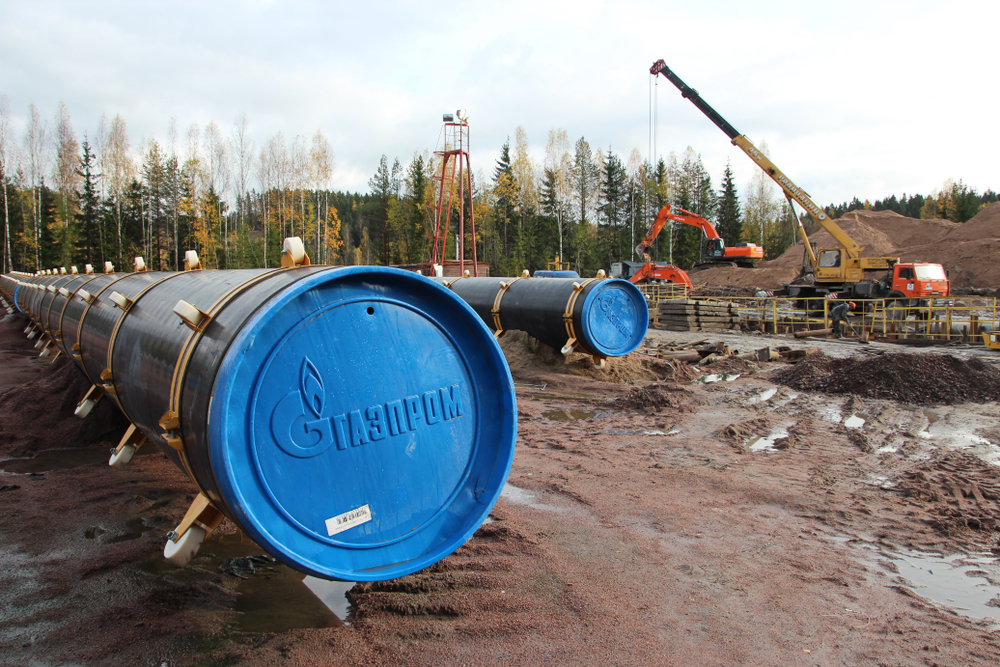
Russia and Iran are moving closer to implementing a long-negotiated natural gas agreement. Officials from both countries have confirmed that Azerbaijan has been selected as the preferred transit route for Russian gas exports to Iran, a route that recalls Iran's natural gas exports to the Soviet Union through the same corridor in the 1970s. The project will constitute part of the broader geopolitical and geoeconomic reconfiguration of Eurasia following the Ukraine war, in which Russia seeks to redefine its energy export routes while Iran seeks not only to reduce its domestic natural gas imbalance but also to strengthen its geoeconomic and transit position within regional energy networks.
BACKGROUND:
Energy cooperation between Iran and Russia dates back to the Soviet era. In January 1966, Iran and the Soviet Union signed a gas agreement under which Iran exported 10 billion cubic meters (bcm) of natural gas annually from its southern gas fields to the Soviet Caucasian republics through a pipeline terminating at Astara, now on the Iran–Azerbaijan border. In return, the Soviet Union agreed to build the Isfahan Steel Plant and the Arak Machine Manufacturing Plant. The pipeline became operational in 1970, but gas exports ceased in 1980 following the Islamic Revolution and the Iran–Iraq War. Although exports briefly resumed in 1989, the collapse of the Soviet Union in 1991 ended this framework of cooperation.
Rather than expanding energy ties with the Russian Federation, Iran subsequently developed cooperation with the newly independent states of Central Asia and the South Caucasus, including gas imports from Turkmenistan, oil swap arrangements with Kazakhstan and Azerbaijan, gas exports to the Nakhichevan Autonomous Republic, and the Iran–Armenia Gas-for-Electricity Swap agreement.
Despite UN sanctions, Iran and Russia reached an “oil-for-goods” agreement in 2014 under which Russia would purchase Iranian oil in exchange for Russian goods and equipment. The arrangement lost momentum after the 2015 Joint Comprehensive Plan of Action (JCPOA) enabled Iran to increase oil exports and regain access to international markets.
The U.S. withdrawal from the JCPOA in 2018 and the reimposition of sanctions, combined with Western sanctions on Russia following its invasion of Ukraine, created new incentives for bilateral energy cooperation. In July 2022, the National Iranian Oil Company (NIOC) and Russia’s Gazprom signed a US$ 40 billion memorandum of understanding covering joint investment in oil and gas projects, including gas pipelines and swap arrangements. In June 2024, Gazprom and the National Iranian Gas Company (NIGC) signed an agreement on Russian gas supplies to Iran, with Tehran aiming to import up to 20 bcm annually. During 2025, negotiations focused on pricing, financing, volumes, and transportation routes. Azerbaijan emerged as the preferred transit corridor, with Russian gas expected to enter Iran through the Astara border crossing, replicating the route used during the Soviet era. Russian Energy Minister Sergei Tsivilev confirmed this route in January 2025. Russia has proposed an initial supply of about 2 bcm annually, potentially expanding to 55 bcm in later phases.
During a meeting with Iranian Oil Minister Mohsen Paknejad on 13 July, Tsivilev also emphasized that the main provisions of the contract had been settled, and that the agreement would be finalized in the near future.
Azerbaijan has taken a cautious position. Unlike Russia and Iran, whose officials have repeatedly commented on the project, Baku has largely refrained from public statements regarding the proposed Russian gas exports to Iran. This silence may reflect the fact that Azerbaijan has become one of the EU's key natural gas suppliers, particularly since the outbreak of the Ukraine war, and does not wish to create the impression that it is serving as a new export route for Russian gas under the current sanctions regime. Azerbaijan may also prefer to avoid taking a public position until the commercial and legal arrangements of the project have been finalized.
From a technical and operational perspective, two key pipelines could potentially facilitate gas supplies from Russia to Azerbaijan and Iran. The 200km Novo-Filya (Russia) – Baku Gas Pipeline was built during the Soviet era, with a capacity of 10 bcm per year. It runs along the Caspian Sea coast and can operate in reverse mode, forming part of the larger Mozdok-Hajigabul gas pipeline system. The 1,474.5km Hajigabul (Azerbaijan) – Astara – Abadan (Iran) Gas Pipeline is another Soviet-era construction, connecting Azerbaijan to Iran. It has a capacity of 10 bcm per year but is currently inactive.
To enable significant Russian gas supplies, substantial investments in modernizing the entire pipeline system would likely be necessary. By mid-2026, imports have not yet begun, as negotiations continue over commercial terms, infrastructure development, Iran’s role in gas swaps and re-exports, and transit arrangements with Azerbaijan.
IMPLICATIONS:
The most immediate implication of the prospective Russian gas exports to Iran is its contribution to mitigating Iran’s gas imbalance in the country’s northern regions during the cold autumn and winter seasons. Although Iran possesses the world’s second-largest natural gas reserves after Russia and, in 2025, its total annual natural gas production exceeded 280 bcm, equivalent to approximately 7 percent of global natural gas production. The rapid growth in domestic consumption, the deterioration of parts of its infrastructure, two decades of extensive economic sanctions, and a lack of foreign investment in the development of gas fields and refinery capacity have created a structural imbalance between gas production and consumption. As a result, in recent years Iran has faced a daily gas shortage of 200–300 million cubic meters (mcm) during peak consumption periods. During the recent U.S. and Israeli war against Iran, parts of the South Pars gas facilities and processing plants were targeted, resulting in the loss of approximately 230 mcm of gas production capacity and further exacerbating the country’s energy imbalance.
The gas imbalance in northern Iran is particularly acute during the cold autumn and winter seasons because most of the country’s oil and gas resources, as well as its refineries, are located in the southern regions. Hydrocarbons must therefore be transported by pipeline to Iran’s densely populated northern provinces, a process that is both costly and associated with energy losses. At the same time, Iran has not developed the oil and gas resources of the Caspian Sea for a variety of reasons. Under these circumstances, gas imports from Russia, as well as Turkmenistan, enable Iran to increase gas supplies to its northern regions during the cold autumn and winter months.
A second implication, strongly emphasized by supporters of the project in Iran, is the use of surplus Russian gas, after meeting demand in the northern regions, to increase Iran’s gas exports to Iraq, Turkey, Armenia, Pakistan, and Oman, thereby strengthening Iran’s position as a regional energy hub. The realization of this objective, however, will largely depend on a final agreement between Iran and the U.S., the lifting of UN sanctions, and the removal of unilateral U.S. sanctions against Iran.
A third implication is the deepening of strategic interdependence between the two countries. Alongside the expansion of close political relations, the conclusion of the 20-year Comprehensive Strategic Partnership Agreement between Iran and Russia, the strengthening of bilateral and multilateral economic and trade cooperation within the Eurasian Economic Union (EAEU), the International North–South Transport Corridor (INSTC), and military-defense cooperation, energy will constitute a new dimension in Tehran–Moscow relations. Nevertheless, competition between Iran and Russia in the regional gas market, particularly in the South Caucasus and especially in Armenia, cannot be overlooked in the context of routing Russian gas exports to Iran through Azerbaijan. In fact, rather than routing the pipeline through Georgia and Armenia, both of which are consumers of natural gas, Russia has opted for Azerbaijan, a producer and exporter of natural gas, in order to ensure that Gazprom’s long-term commercial interests are not threatened.
A fourth implication is the strengthening of Azerbaijan’s role and position between Iran and Russia in both transit—the International North–South Transport Corridor (INSTC)—and energy, through the export of Russian gas to Iran. This development has been shaped by a number of factors, including sanctions on both Iran and Russia, the Free Trade Agreement between Iran and the Eurasian Economic Union (EAEU), the changing geopolitical environment resulting from the war in Ukraine, the recent U.S. and Israeli war against Iran, and Iran’s growing energy imbalance. Although the fluctuating nature of Iran’s and Russia’s relations with Baku could affect the sustainability of Russian gas exports to Iran, the re-export of part of the imported gas from Iran to Pakistan, a close partner of Azerbaijan, could disincentivize Baku from disrupting or suspending Russian gas transit to Iran.
CONCLUSIONS:
Whereas Iran exported natural gas to the Soviet Union in the 1970s, this trend has reversed over the past six decades. If implemented, Russian gas exports to Iran would form part of the broader geopolitical and geoeconomic reconfiguration of Eurasia following the Ukraine war. Russia seeks to redefine its energy export routes, while Iran aims to reduce its domestic gas imbalance and strengthen its geoeconomic and transit role within regional energy networks. However, the project’s success will depend on political cooperation between Tehran and Moscow, Azerbaijan’s role as the main transit route, international sanctions, its economic viability, and developments in global energy markets.
Within Iran, opinions on Russian gas imports remain divided. Supporters argue the project would reduce winter gas shortages in northern Iran, increase gas exports to neighboring countries, and reinforce Iran’s position as a regional energy hub. Critics, however, view Russia as Iran’s principal competitor in regional and global gas markets, noting that discounted Russian oil and gas have already displaced Iranian exports, particularly in China and India. Russia has similarly expanded its share of Iran’s steel export markets through lower prices. Consequently, if Iran–U.S. negotiations lead to sanctions relief and expanded Iranian energy exports, Russia may already have secured a significant portion of Iran’s potential export markets.
AUTHOR’S BIO:
Vali Kaleji, based in Tehran, Iran, holds a Ph.D. in Regional Studies, Central Asian and Caucasian Studies. He has published numerous analytical articles on Eurasian issues for the Eurasia Daily Monitor, the Central Asia-Caucasus Analyst, The Middle East Institute and the Valdai Club. He can be reached at This email address is being protected from spambots. You need JavaScript enabled to view it. .
Iran’s Turn to the East: Afghanistan and the Contest Over Eurasia’s Corridors
By Eldaniz Gusseinov and Daniel Longerich
On June 14, 2026, the U.S. and Iran announced a framework deal meant to end the war that began on February 28 and to lift the U.S. naval blockade of Iranian ports. The ceasefire reopens the Strait of Hormuz, yet the acute phase has already redrawn the logistical map around Iran. The war exposed Tehran’s dependence on a single maritime chokepoint and pushed it to seek overland routes to the east. This reorientation bears directly on Central Asia and the South Caucasus, through which both Iran's plans and those of its rivals now pass.
BACKGROUND:
The war has accelerated a reshaping of overland corridors around Iran. Tehran is strengthening its rear in Afghanistan, where it has already become the top trading partner and is extending a railway northward from Herat. Iran's rivals are moving in the opposite direction. The U.S. is establishing itself in the South Caucasus through the TRIPP project, while Turkey and the Arab monarchies are building routes that skirt Hormuz. For Central Asia and the South Caucasus, this raises the region’s transit weight and at the same time turns it into an arena of rivalry. The Afghan route gives Iran only partial insurance, since a through connection to China is not yet built and depends on Beijing's willingness to open the border.
For decades, Afghanistan was seen as Pakistan’s strategic depth against India. After the Taliban came to power in 2021, that logic broke down. Pakistan accuses Kabul of sheltering the Tehrik-e Taliban Pakistan (TTP), and cross-border attacks have grown more frequent. Clashes in October 2025 and again in February and March 2026 closed the Torkham and Chaman crossings as reliable commercial routes. For Afghans, the cost has been high. The chamber of commerce estimated losses at about 2.5 million dollars for each day the border stayed shut, and in 2025 some 2.9 million people returned to the country from Iran and Pakistan, adding pressure on markets and food supplies.
Against this backdrop, Kabul turned toward Iran. Tehran overtook Pakistan as Afghanistan’s largest trading partner, with a turnover of around 3.5 billion dollars, almost entirely Iranian exports of fuel and food. Afghan cargo shifted to Iran’s port of Chabahar as a substitute for Pakistan’s Karachi, and the Taliban cabinet invested about US$ 35 million in the port.
After the closure of Hormuz and the U.S. blockade, the ports of Chabahar and Bandar Abbas were cut off, and World Food Programme supplies ran out by mid-April. Squeezed from both sides, Afghanistan shifted toward Central Asia, increasing trade with its northern neighbors from Turkmenistan to Tajikistan. The fate of Afghan trade thus became tied directly to the transit role of the region’s neighbors.
IMPLICATIONS:
Iran’s answer to its maritime vulnerability lies in overland infrastructure. The Khaf-Herat railway, opened in 2020, connected the Iranian network to Herat. The Afghan leg of this line is itself run by a Mashhad-registered consortium controlled by Iranian entities, including the state-owned Islamic Republic of Iran Railways. In October 2025 the parties agreed to build the Herat-Mazar-i-Sharif line, with a technical and economic feasibility study due by March 2026.
The project itself has not moved beyond surveying and financing, and construction has not yet begun. In June 2026 Afghanistan’s central bank announced that commercial banks would finance the line, which would run about 657 kilometers and cost some 55 billion afghani, or roughly US$ 780 million, while survey and design work proceeds with Uzbek involvement. In May 2026 Kabul reopened, after a US$ 6.3 million reconstruction, the fifth section of the Hairatan-Mazar-i-Sharif line, the existing outlet to the Uzbek network, and on June 15 Afghan and Iranian officials discussed speeding up work on the Herat-Mazar-i-Sharif line. Completion is tentatively set for around 2028. The line is meant to extend Iran’s outlet into northern Afghanistan and onward toward Central Asia and China, bypassing the maritime chokepoints.
The route’s ultimate aim, an outlet to China, depends above all on Beijing’s stance. The Afghan side has advanced toward completing a road through the Wakhan Corridor to the Chinese border. China, however, remains cautious about opening the single crossing at the junction with Xinjiang. According to analysts, Beijing’s reluctance stems from concerns over the infiltration of East Turkestan Islamic Movement (ETIM) Uyghur militants from Afghan territory, and it has pressed for closer counterterrorism cooperation. In March 2026 China established Cenling County along the border with the Wakhan, signaling interest, though there is still no customs post there. For the Taliban, the prospect of Iran-China transit through Afghanistan serves as leverage in talks with Beijing, yet the corridor will stay closed until China itself opens the border.
At the same time, Iran’s neighbors are building corridors that go around its territory, and the center of gravity is shifting to the South Caucasus and the Gulf. To the north, the U.S. is promoting the TRIPP project through Armenia’s Syunik, linking Azerbaijan with Nakhichevan and onward to Turkey and Europe, and under a January 2026 agreement the U.S. side holds 74 percent of the management company for an initial 49 years. Tehran is firmly opposed and sees in it the severing of its link to the Black Sea and Europe and a U.S. presence on its border. In Syunik, the Meghri station has stood silent for more than thirty years, and local residents live in uncertainty after a series of conflicts. To the south, Baghdad is accelerating Iraq’s Development Road from the port of Faw toward Turkey, while the India-Middle East-Europe corridor is being laid across Arabia around Iran. The Gulf is meanwhile expanding pipelines toward the Red Sea and the Gulf of Oman to move oil past the strait.
For Central Asia and the South Caucasus, the combined effect cuts both ways. The region’s transit weight is rising, since both Iran and its rivals need overland routes through it. At the same time, the region risks becoming a field of rivalry between U.S.-backed routes and alignments involving Iran and Russia. Central Asian capitals are responding with diversification, developing the Middle Corridor and the China-Kyrgyzstan-Uzbekistan project. The weak link remains Afghanistan’s stability, without which any Iranian outlet to the east is vulnerable.
CONCLUSIONS:
Iran’s turn to the east began before the war, and the events of 2026 sharply accelerated it. Afghanistan is becoming Tehran’s overland insurance against maritime pressure, and the railway to Herat, together with the plan for Mazar-i-Sharif, anchors that link. A through bypass of the maritime chokepoints, however, has yet to be built. Its fate depends on Afghanistan’s stability and on China’s decision about its own border, and the durability of the June ceasefire adds further uncertainty. For Central Asia and the South Caucasus, the main outcome is that the region’s connectivity has become an object of strategic bargaining. U.S.-backed routes to the north and in the Gulf pull the region one way, while Iran’s outlet to the east pulls it another. The region’s states gain from rising transit weight, but their resilience will depend on their ability to keep several directions open at once and avoid attaching themselves to a single center of power.
AUTHOR’S BIO:
Eldaniz Gusseinov is Co-Founder and Head of Research at Nightingale Int., a geopolitical risk and foresight advisory focused on Central Asia and Greater Eurasia. Contact: This email address is being protected from spambots. You need JavaScript enabled to view it.
Daniel Longerich is a Partner at Nightingale Int., where he supports the organization in expanding the use of applied data and AI analysis methods. Contact: This email address is being protected from spambots. You need JavaScript enabled to view it.
TRIPP's Future in the Context of the U.S.-Iran War
By Suren Sargsyan
The U.S.–Iran conflict, along with repeated failed negotiations, shows no clear path to resolution, and its future trajectory, consequences, and broader implications remain uncertain. Although a substantial body of research and commentary seeks to forecast developments in the Middle East, there is limited analysis of how this conflict may affect the South Caucasus, particularly in terms of future U.S. engagement in the region and the prospects of the Trump Route for International Peace and Prosperity (TRIPP) project. From Tehran’s perspective, TRIPP may constitute a legitimate target, as it conflicts directly with Iranian interests. It is therefore essential to assess the risks that the Iran–U.S./Israel conflict poses to the TRIPP project.

BACKGROUND:
A defining feature of the Trump administration, distinguishing it from its predecessors, is a marked increase in U.S. engagement with the South Caucasus. This was demonstrated by the approval of the TRIPP project and the announcement of peace between Armenia and Azerbaijan under U.S. mediation. However, U.S. involvement in the region clearly extends beyond relations with Armenia and Azerbaijan alone.
The implementation of TRIPP also aligns with broader U.S. regional interests, particularly in terms of isolating Iran. Currently, Azerbaijan’s shortest direct land connection to its exclave, Nakhichevan, runs through Iranian territory. If implemented, TRIPP would enable Azerbaijan to reduce its reliance on Iran by providing an alternative route. Such a development would also diminish Iran’s importance for Armenia, making Yerevan less dependent on the Iran–Armenia border, especially if accompanied by substantive progress in Armenia–Turkey relations, a goal the U.S. has supported since the George H. W. Bush administration.
Therefore, TRIPP should not be understood merely as a mechanism for regulating Armenian–Azerbaijani relations through the establishment of direct connectivity between the two states. Rather, it should be viewed as a broader geopolitical project, which will among other outcomes diminish the strategic significance of Iran for both Armenia and Azerbaijan, particularly by reducing their reliance on shared borders and transit routes through Iranian territory.
IMPLICATIONS:
Since the outbreak of the war, the United States and Israel have targeted not only Iranian military assets but also infrastructure of major strategic importance. Iran has incurred substantial losses, including damage to its naval capabilities, the elimination of senior political and military figures, and significant economic disruption. The closure of the Strait of Hormuz has further imposed considerable costs on the Iranian economy. In response, Iran has launched missile strikes not only against Israel but also against U.S. military bases within its operational range, despite these bases being located on the sovereign territory of states that have not formally joined the anti-Iran coalition.
Moreover, Iran has expanded its targeting beyond U.S. military installations in neighboring states to include economic infrastructure linked, directly or indirectly, to U.S. interests. From Iran’s perspective, there appear to be few meaningful geographical constraints. Rather, its strategy is to impose maximum costs not only through direct confrontation but also by targeting U.S.-associated economic projects and interests across the region and its immediate periphery.
From this perspective, the TRIPP project could also emerge as a potential target. As a major infrastructure initiative involving significant U.S. investment and the presence of U.S. security personnel, it carries clear strategic implications. Therefore, if tensions persist over an extended period and the conflict’s geographical scope expands, it cannot be excluded that this transportation corridor may eventually be targeted by Iran, despite Tehran’s relatively cooperative relations with Armenia.
This risk is underscored by reports of Iranian drones appearing over Azerbaijani territory, developments that have already provoked strong reactions. Although Iran denied these allegations, the incident nevertheless generated significant strain in bilateral relations and may be interpreted as a signal. There is no guarantee that Iran would refrain from deploying drones in the area, conducting limited troop movements, or undertaking other preventive or deterrent measures against the TRIPP project. Such a scenario becomes more plausible if tensions persist, hostilities intensify, and U.S. forces begin targeting Iranian infrastructure that has thus far remained largely intact, including power grids, transportation networks, and other critical facilities.
At the same time, it should be noted that there is currently no official information regarding the status of the project’s construction, at least on Armenian territory, where it is reportedly financed by the U.S. government. Although Armenia’s Foreign Minister has indicated that the intensity of Armenian–U.S. contacts concerning the project has not diminished, he has not addressed the timeline for the implementation of construction activities.
Even a single strike on this corridor would likely make potential investors and commercial actors significantly more cautious about using it for cargo transportation or committing to further infrastructure investments, given the associated security risks. Although detailed data on the expenditures of Armenia and Azerbaijan, along with U.S. contributions, remain unavailable, it is evident that the project entails substantial costs for both countries, even if only part of the planned infrastructure has been completed to date.
Moreover, if the war does not produce a significant systemic transformation in Iran’s regime, an outcome that currently appears unlikely, the project may remain a long-term potential target for Tehran, as it represents a form of U.S. presence in close proximity to the Iranian border. Under such conditions, it would be difficult for Armenia and Azerbaijan to advance the U.S.-mediated peace agenda in the absence of the project’s implementation, as the failure of one of its key components would raise uncertainty about the viability of the broader framework.
CONCLUSIONS:
At present, it is difficult to determine how long the war and/or negotiations with Iran will continue or what their eventual outcome will be. Statements from the Trump administration suggest that a clear strategy or exit plan has yet to be fully articulated. Nevertheless, it is essential to consider Iran’s likely post-war approach toward U.S. economic projects in its immediate vicinity. On the one hand, if the U.S. and Iran reach a peace agreement, the significance of the TRIPP project could be fundamentally transformed, with its purpose and structure potentially redefined, possibly even allowing for Iran’s participation.
On the other hand, if tensions between the United States and Iran remain elevated even after the cessation of active hostilities, Tehran may come to view TRIPP as a legitimate target and act accordingly. In this sense, whereas the project’s future previously depended largely on U.S. policy, it is now also contingent on Iran’s strategic priorities, policy choices, and perceptions of regional dynamics.
Armenian and Azerbaijani authorities have several options to reassure Tehran that the project cannot serve as a basis for a U.S. strategic or military presence in the South Caucasus, nor be used offensively against Iran. Despite relatively stable relations with both Yerevan and Baku, Tehran may still perceive the initiative as a threat to its core strategic interests and border security. In this context, Iran could find a receptive partner in Moscow, which has also expressed skepticism toward the project. At present, however, the implementation timeline has effectively been suspended, with all stakeholders awaiting either stabilization or further escalation.
AUTHOR’S BIO:
Suren Sargsyan is a PhD candidate Political Science. He holds LLM degrees from Yerevan State University, the American University of Armenia, and Tufts University Fletcher School of Law and Diplomacy. He is the director of the Armenian Center for American Studies.
Afghanistan: Sandwiched Between Wars On Two Fronts
By Sudha Ramachandran
Afghanistan currently finds itself in an exceptionally precarious position. To the west, neighboring Iran has become an active war zone, while to the east, Pakistan has initiated what it describes as an “open war” against Afghanistan. After decades of conflict, Afghanistan’s capacity to manage the far-reaching consequences of the situation in Iran remains severely limited. The country’s already fragile economy is being further strained by rising global oil prices. At the same time, its access to maritime trade routes via Pakistan has been effectively closed for several months, while alternative trade corridors through Iran, the only viable substitute, are increasingly under threat. The likelihood of a substantial influx of refugees, including returning Afghan nationals, is expected to exacerbate an already critical humanitarian situation. Concurrently, the Taliban authorities are closely observing how the Iranian government responds to external pressures aimed at regime change.
BACKGROUND:
On the night of February 21-22, Pakistan launched “Operation Ghazab Lil Haq” against Afghanistan. Islamabad said that its missile and air strikes were targeting camps and hideouts of the Tehreek-e-Taliban Pakistan and the Islamic State of Khorasan Province based on Afghan soil. Over the past month, Pakistan’s strikes have intensified and expanded in terms of the nature of targets and their geography. If initially Islamabad targeted border posts and alleged terrorist camps in Afghanistan’s border provinces, soon it was hitting Taliban military assets and ammunition depots as well as civilian targets, including a drug rehabilitation hospital in Kabul.
Meanwhile, Afghanistan’s western neighbor, Iran, came under devastating missile and air strikes launched by the U.S. and Israel on February 28. Since then, leadership compounds, military infrastructure, and economic and energy locations, including the country’s oil production and storage facilities have been destroyed. Top Iranian political and military leaders have been killed in the strikes as have hundreds of civilians. The war has spread beyond Iran. Tehran retaliated to the U.S.-Israel attacks by hitting Israeli targets as well as U.S. bases and oil infrastructure in Gulf Cooperation Council (GCC) countries. South Asia was soon drawn into the war when the U.S. torpedoed an Iranian warship, IRIS Dena, 40 nautical miles off the Sri Lankan coast. On March 20, Iranian missiles reached deep into the Indian Ocean to target the U.S.-UK base in Diego Garcia. The war could draw in more countries, such as Pakistan. The destruction of production and refining infrastructure in the Gulf and Iran’s blocking of the Strait of Hormuz have led to fuel shortages and surging prices worldwide. What started as a war on Iran has set economies across continents ablaze.
Among the countries that will be hit the hardest by the Iran war is Afghanistan. Several factors make it particularly vulnerable. It is Iran’s neighbor; the two countries share a 921 km-long border. Afghanistan is also a landlocked country, dependent on Iran and Pakistan for access to ports. Importantly, Afghanistan was ravaged by war for decades and internationally isolated since the Taliban captured power in August 2021. Its capacity to withstand the impact of the war in West Asia was limited to begin with. This capacity is being further weakened by Pakistan’s ongoing military strikes on Afghanistan.
IMPLICATIONS:
The Taliban regime strongly condemned the U.S.-Israeli airstrikes on Iran, describing them as an “act of aggression.” Following the assassination of Iranian Supreme Leader Ayatollah Ali Khamenei, it expressed its condolences to the Iranian government and people. Especially since the Taliban came to power in August 2021, relations between Iran and Afghanistan have grown, especially with regard to trade. Although there are several issues of conflict between the two, anti-Americanism serves as glue. The Taliban’s chief spokesperson, Zabihullah Mujahid, has said in the past that if Tehran requests assistance in the event of a U.S. attack, Afghanistan is ready and willing to extend help.
So far, Afghanistan has not been hit by Iranian or U.S/Israeli drones or missiles. Indeed, it is western and south-western Iran that has borne the brunt of U.S. and Israeli strikes. Eastern Iran, which borders Afghanistan, has escaped being hit so far. It is therefore an attractive safe haven for those fleeing western Iranian cities and towns. These internally displaced people can be expected to cross into Afghanistan and Iran’s other eastern neighbors should the war intensify, prolong or spread to eastern Iran. Afghanistan is already grappling with the economic burden imposed by the mass deportation of an estimated 5.4 million Afghan refugees from Iran and Pakistan since October 2023. The new refugee flows from Iran will substantially intensify the humanitarian crisis in Afghanistan. Persecution of Afghan refugees in Iran is set to increase as Iranians have often suspected that they are spying for Israel. Such perceptions are likely to intensify. They will be hounded by Iranian police and people, forcing them to join the exodus into Afghanistan.
Afghanistan’s weak economy is poised to fray further amid fuel shortages and surging prices. Given its low capacity for manufacturing, Afghanistan has depended on Iran for consumer goods. Afghanistan’s landlocked status has made it dependent on Pakistan and Iran for access to the sea, however, as access to Pakistani ports has been shut off, Afghan dependence on Iranian markets and trade corridors to the sea have deepened. Although Iranian border posts remain open to Afghan goods, the trade corridor through Iran to the sea is insecure as it runs through the conflict zone. While it continues to function, it is vulnerable to missile strikes as the war in Iran intensifies. There is a risk that Chabahar port could be bombed. The closure of the Iranian trade corridor would bring the Afghan economy to its knees and shatter Afghan lives and livelihoods. Afghanistan will have to strengthen its trade and transit ties with other Central Asian states.
Notwithstanding its condemnation of the U.S and Israeli strikes on Iran, Pakistan has benefited somewhat from the war in Iran. As the international community is preoccupied with the West Asia crisis, it has ignored the Pakistani military strikes on Afghanistan. Pakistan has therefore escaped global opprobrium for the horrific suffering its strikes have caused to Afghan civilians. Meanwhile, the Taliban regime is watching how Pakistan is responding to the crisis in West Asia. Should the Saudis decide to join the war against Iran, Pakistan, which has a mutual defense pact with Riyadh, is obligated to join the Saudis. Drawn into the West Asian crisis, the Pakistani military would need to halt its ongoing “open war” against Afghanistan. A termination of ‘Operation Ghazab Lil Haq’ would be welcomed by Afghanistan.
Taliban leaders will also be watching Iran closely to see how pressure from outside in the form of military strikes and war impacts an authoritarian regime. Will decapitation and war trigger unrest and lead to regime change? Or will it strengthen national unity and see the population rally behind the regime against the foreign invader? In the event of regime change in Iran, its leaders could seek sanctuary in Afghanistan.
CONCLUSIONS:
The conflict involving Iran has arisen at a particularly challenging moment for Afghanistan, which is simultaneously facing missile and air strikes from Pakistan. As a landlocked state, Afghanistan is especially vulnerable to external disruptions; its economic difficulties are likely to intensify due to fuel shortages linked to the conflict in Iran and the resulting constraints on access to seaports. In addition to its geographic proximity to the West Asian conflict zone, Afghanistan’s already limited institutional and economic capacity is expected to come under severe strain. This pressure will be exacerbated by a further economic downturn and by the anticipated influx of refugees, including returning Afghan nationals, from Iran.
AUTHOR’S BIO:
Dr Sudha Ramachandran is an independent South Asian political and security analyst. She is also South Asia editor at The Diplomat. Her articles have appeared in publications like The Diplomat, Asia Times, China Brief and Terrorism Monitor.
Middle East War Shakes Central Asia's Trade Ambitions
By Saima Afzal
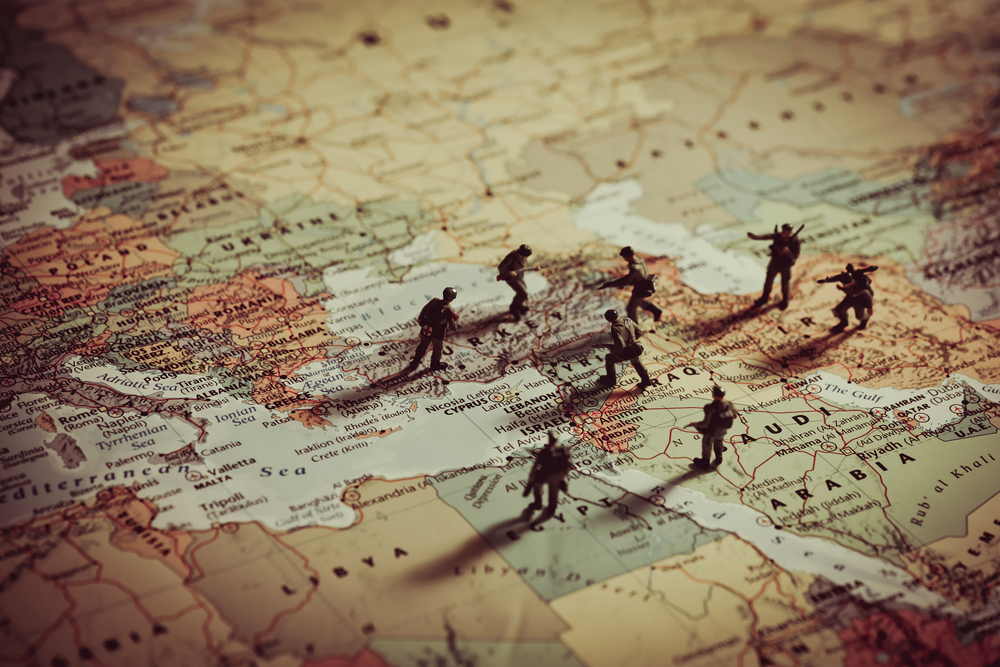
The escalation of conflict in the Middle East following U.S. and Israeli strikes on Iran is exposing the geopolitical vulnerability of Central Asia’s trade diversification strategy. Over the past decade, Kazakhstan and Uzbekistan have invested significant political and financial capital in developing alternative transit corridors including southbound routes through Iran, Afghanistan, and Pakistan to reduce reliance on northern pathways historically oriented toward Russia and to secure access to global maritime markets.
The current crisis is rapidly testing their underlying assumptions. Instability across key transit regions now threatens emerging logistics networks, raising concerns about the reliability of corridors that were intended to enhance economic resilience.
BACKGROUND:
The latest escalation in the Middle East is reverberating well beyond the immediate theatre of conflict, disrupting energy markets, trade routes, and regional economic planning. Oil prices rose sharply following strikes on Iran and subsequent retaliation, reviving concerns about disruption in the Strait of Hormuz, a critical artery through which a significant share of global oil supplies transits daily. For energy-importing economies across Asia, the shock echoes earlier inflationary pressures experienced during previous geopolitical crises.
For Central Asia, the effects are both systemic and immediate. As landlocked economies, states such as Kazakhstan and Uzbekistan have long prioritized the diversification of trade routes as a strategic objective. This has involved developing southbound connectivity through Iran, Afghanistan, and Pakistan, alongside east–west alternatives linking the region to China and Europe.
Iran has played a central role in these plans, offering access to maritime trade via ports such as Chabahar within the framework of the International North-South Transport Corridor (INSTC). Regional initiatives such as the proposed Uzbekistan-Afghanistan-Pakistan railway have likewise aimed to provide direct access to Pakistani ports and shorten transit times to global markets.
These initiatives were conceived well before the current crisis. What the escalation has done is bring into sharper focus the extent to which their viability depends on political stability across multiple transit regions.
At the same time, the conflict is already producing tangible disruptions. Airspace closures and security risks have forced flight cancellations and rerouting, reduced cargo capacity and raising transport costs. Border crossings that serve as key trade arteries are also under pressure, with increased congestion and tighter controls affecting both freight and passenger movement.
In several cases, these disruptions intersect directly with everyday economic activity. Iran’s temporary suspension of selected exports and interruptions in cross-border trade have affected the flow of food and consumer goods into neighbouring Central Asian markets, particularly in countries with strong import dependence. Localized shortages and price increases have already been reported in border regions reliant on Iranian supplies.
IMPLICATIONS:
The unfolding conflicts across Iran and the Afghanistan-Pakistan corridor highlight a structural feature of Central Asia’s connectivity strategy: diversification reduces dependence on any single route, but it also distributes exposure across multiple geopolitical environments.
Southern corridors illustrate this dynamic most clearly under current conditions. Routes passing through Iran now face heightened uncertainty linked to maritime disruption, rising insurance costs, and sanctions-related risks. Even without a formal closure of the Strait of Hormuz, security concerns have slowed tanker traffic and increased freight premiums, costs that are disproportionately borne by landlocked economies.
Overland connectivity through Afghanistan and Pakistan remains constrained by persistent insecurity and fragile political relations. Escalating tensions between Kabul and Islamabad further complicate both the implementation and long-term reliability of projects such as the Uzbekistan-Afghanistan-Pakistan railway. Existing road and rail links are vulnerable to disruption, while transit agreements risk suspension under political pressure, creating uncertainty for trade flows.
Energy and infrastructure initiatives are similarly affected. Projects such as the Turkmenistan-Afghanistan-Pakistan-India (TAPI) natural gas pipeline and the CASA-1000 electricity transmission line depend on stable transit conditions across regions that continue to experience volatility. These risks are not new, but they are in the current environment becoming more acute and more difficult for investors and policymakers to discount.
Beyond infrastructure, the economic transmission mechanisms are already visible. Rising fuel prices are feeding into inflation across import-dependent economies such as Kyrgyzstan and Tajikistan, increasing the cost of food, transport, and basic goods. Disruptions to supply chains-particularly for agricultural products and consumer goods imported via Iran are compounding these pressures. At the same time, any slowdown in major partner economies such as Russia or China would have secondary effects through trade, investment flows, and remittances.
Rather than triggering a shift in strategy, the crisis is reinforcing an existing trend toward hedging. Central Asian states are likely to deepen engagement with alternative corridors perceived as comparatively stable. The Trans-Caspian International Transport Route, linking the region to Europe via the South Caucasus, has gained prominence as an east-west option that avoids both Russian territory and southern conflict zones. Similarly, established rail connections to China provide access to global supply chains through more predictable logistical networks.
This does not signal a retreat from southern connectivity. Instead, it reflects a growing emphasis on redundancy-maintaining multiple routes to manage disruption rather than relying on any single corridor to deliver uninterrupted access.
CONCLUSIONS:
At the core of this challenge is a structural dilemma: while diversification reduces dependence on any single route, it also distributes exposure across multiple geopolitical environments. As a result, Central Asia’s broader transport strategy is increasingly shaped not only by infrastructure development, but by the political and security dynamics of regions far beyond its borders. The current Middle East conflict underscores the extent to which this impacts Central Asia’s economic integration. Connectivity initiatives designed to expand access to global markets are now being evaluated through the lens of geopolitical risk and operational resilience.
The immediate impact is not the abandonment of diversification strategies, but their recalibration. Policymakers are increasingly approaching connectivity not only as an economic objective, but also as a risk management tool, placing greater emphasis on flexibility, redundancy, and continuous reassessment of external exposure.
At the same time, the crisis highlights how quickly geopolitical shocks translate into everyday economic pressures-from rising food and fuel prices to disrupted transport links and constrained trade flows. Even without direct involvement in the conflict, Central Asian states are already absorbing its effects.
Ultimately, the resilience of Central Asia’s trade ambitions will depend not only on infrastructure investment, but on the capacity to navigate an increasingly complex and unpredictable geopolitical environment.
AUTHOR’S BIO:
Saima Afzal is an independent and freelance researcher specializing in South Asian security, counter-terrorism, the Middle East, Afghanistan, and the Indo-Pacific region. Her work focuses on geopolitical developments, strategic affairs, and regional conflict dynamics. She holds an M. Phil in Peace and Conflict Studies from the National Defence University, Islamabad, Pakistan.
Visit also