India vs Pakistan in the Race for Influence in Central Asia
By Syed Fazl-e-Haider
A recent succession of visits by Central Asian leaders to Islamabad over the past four months has drawn attention in New Delhi. In response, India has intensified its diplomatic engagement with the Central Asian Republics (CARs) to counter Pakistan’s expanding regional influence. Indian officials have conducted discussions with counterparts from Kyrgyzstan, Tajikistan, Turkmenistan, and Uzbekistan to strengthen economic ties. Concurrently, Pakistan has undertaken a significant policy shift by activating alternative trade corridors through China and Iran, reducing its reliance on routes via Afghanistan to access Central Asia. Despite this strategic rivalry, certain connectivity initiatives reveal areas of convergence and potential cooperation between India and Pakistan.
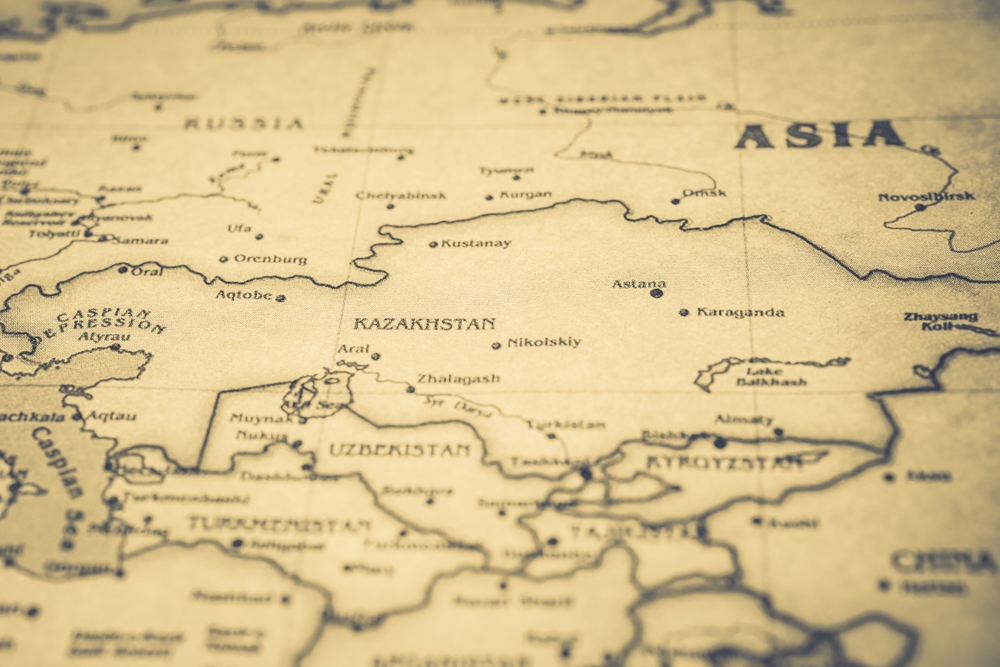
Photo by Alexander Lukatskiy, 2022
BACKGROUND:
Both India and Pakistan view post-Soviet Central Asia as a region of considerable geostrategic and geo-economic importance. Endowed with substantial hydropower capacity, the region possesses significant untapped energy reserves and critical mineral resources. For both states, primary interests in Central Asia include energy security, infrastructure development, trade, and connectivity.
India has advanced a proactive “Connect Central Asia” policy aimed at strengthening political, economic, and cultural engagement with the Central Asian Republics (CARs), Kyrgyzstan, Tajikistan, Turkmenistan, Kazakhstan, and Uzbekistan. By 2025, India’s trade with these five states reached approximately US$ 2.5 billion, nearly three times the volume of Pakistan’s trade with the region.
Afghanistan, serving as a critical bridge between Central and South Asia, remains central to the strategic competition between India and Pakistan. Pakistan’s historical support for the Taliban has contributed to strained relations with the CARs, many of which have been wary of the Taliban’s rise due to concerns over regional stability and extremism. In contrast, CARs have often aligned with anti-Taliban forces in Afghanistan.
India, during the Taliban’s first regime (1996–2001), opposed the movement and supported the anti-Taliban Northern Alliance, a stance that strengthened its political alignment with the CARs. This policy brought India closer to the region, where skepticism toward Pakistan’s Afghanistan policy persisted. Although regional dynamics have evolved in recent years, India’s earlier opposition to the Taliban and its engagement with alternative Afghan actors significantly shaped its favorable ties with Central Asia.
Under the current Taliban regime, India has engaged pragmatically with Kabul amid escalating tensions between Pakistan and Afghanistan. Pakistan has repeatedly accused the Taliban authorities of harboring anti-Pakistan militant groups, contributing to a deterioration in bilateral relations. This conflict has prompted a notable shift in the Afghan policies of both states. Pakistan has adopted a more confrontational stance, reportedly launching Operation Ghazab lil-Haq in February to target militant sanctuaries within Afghanistan. In contrast, India has maintained a pragmatic approach, guided by a strategic calculus often characterized as “the enemy of my enemy is my friend.”
Simultaneously, Pakistan has extended support to the anti-Taliban National Resistance Front (NRF), formerly known as the Northern Alliance. This shift in Pakistan’s Afghanistan policy has facilitated closer alignment with the CARs, many of which remain wary of the Taliban regime.
In December 2025, Kyrgyz President Sadyr Japarov visited Pakistan, the first such visit by a Kyrgyz leader in over two decades, marking a revival of bilateral relations. Both countries agreed to increase trade from approximately US$ 16 million in 2024 to US$ 200 million by 2027–28. In February 2026, Uzbek President Shavkat Mirziyoyev undertook a two-day visit to Islamabad, during which the two sides committed to expanding bilateral trade to US$ 2 billion over the next five years. In the same month, Kazakh President Kassym-Jomart Tokayev also visited Pakistan, with discussions focusing primarily on developing transport corridors to provide landlocked Kazakhstan access to Pakistan’s Arabian Sea ports.
In response to the deepening economic engagement between Pakistan and CARs, India has intensified its diplomatic outreach to the region to advance trade and investment ties. In March 2026, Turkmenistan’s Deputy Chairman of the Cabinet of Ministers, Baymyrat Annamammedov, and India’s Ambassador to Turkmenistan, Bandaru Wilsonbabu, held discussions in Ashgabat on expanding cooperation in industry, construction, chemicals, and fertilizers.
Concurrently, India is pursuing a proposed US$ 3 billion agreement for the import of uranium from Kazakhstan, currently under consideration by Kazatomprom, the country’s national nuclear energy agency. In addition, India’s Tata Power is reportedly nearing agreements in Tajikistan’s energy sector.
The escalating conflict with Afghanistan has prompted Pakistan to operationalize alternative trade corridors to Central Asia via Iran and China. In April 2026, Islamabad dispatched its first shipment to Tashkent through the Gabd–Rimdan border crossing with Iran, thereby establishing a functional route toward Turkmenistan and Uzbekistan. Concurrently, Pakistan activated a trade corridor through China via the Khunjerab Pass, facilitating connectivity with Kyrgyzstan, Kazakhstan, and Tajikistan.
IMPLICATIONS:
During recent visits to Islamabad, officials from Kazakhstan, Uzbekistan, and Kyrgyzstan discussed trade and strategic connectivity initiatives aimed at linking Central and South Asia and providing landlocked Central Asian economies access to Pakistan’s seaports at Karachi and Gwadar. Geographically, Pakistan holds a comparative advantage over India in facilitating commercial access to Central Asia.
Key projects include the Uzbekistan–Afghanistan–Pakistan (UAP) railway and the China–Kyrgyzstan–Uzbekistan (CKU) railway. The UAP corridor is intended to connect Central Asia to Pakistan’s seaports via Afghanistan. Similarly, the CKU railway would enhance regional connectivity by linking China’s Kashgar to Central Asia, with onward access to Gwadar port through the China–Pakistan Economic Corridor (CPEC), thereby providing Central Asian states with routes to open seas.
In contrast, India faces geographical constraints in accessing Central Asia, as overland connectivity via Afghanistan would require transit through Pakistan. To circumvent this limitation, India has invested in Iran’s Chabahar Port as an alternative route to the region. Located on the Gulf of Oman, Chabahar constitutes a key node in the International North–South Transport Corridor (INSTC), which links India with Iran, Russia, and Central Asian states, thereby facilitating trade while bypassing Pakistan.
Islamabad no longer views Afghanistan as the principal transit route to the rest of Central Asia, largely due to security concerns. The activation of alternative trade corridors via China and Iran reflects a significant shift in Pakistan’s connectivity strategy, driven by tensions with the Taliban regime over cross-border militancy. As one senior Pakistani official noted, “The China and Iran corridors are not just alternatives anymore – they are becoming the preferred routes for regional connectivity.”
Geopolitically, India’s alignment with Israel in the ongoing Iran–Israel conflict risks undermining its strategic interests in Iran, particularly regarding the Chabahar port project. In contrast, Iran has moved closer to Pakistan amid the US–Israel war with Iran, with Islamabad positioning itself as a mediator between Washington and Tehran. Pakistan’s emerging role as a diplomatic intermediary has enhanced its geopolitical profile, including in Central Asia, a region significantly affected by instability in the Middle East.
India’s withdrawal last year from the Ayni airbase in Tajikistan, its only overseas military facility near Afghanistan, signals a decline in its intelligence capabilities and strategic influence in the region. Established in 2000, the base served as a strategic counterbalance to Pakistan’s influence and as a key platform for India’s engagement with Central Asia.
India and Pakistan have primarily competed for influence in Central Asia due to the region’s substantial energy resources. However, the viability of key energy connectivity projects depends on cooperation rather than rivalry between the two states. For example, the Turkmenistan–Afghanistan–Pakistan–India (TAPI) gas pipeline cannot function effectively without mutual coordination, as it is designed to transport Turkmen gas to energy-deficient markets in both India and Pakistan. Similarly, the CASA-1000 hydropower project, which aims to export electricity from Central Asia to Afghanistan, Pakistan, and India, has the potential to transform strategic competition into convergence between the two countries.
Conversely, an armed conflict between India and Pakistan would have significant repercussions for Central Asia. A war could disrupt trade and energy corridors, undermine major connectivity initiatives such as the INSTC and CPEC, exacerbate militancy, and pose serious risks to regional stability.
CONCLUSIONS:
With their ambitious regional strategies, India and Pakistan could turn Central Asia either into a site of rivalry or a platform for cooperation. Pakistan’s shift in Afghan policy, its counterterrorism operations against militant groups under the Taliban, and its use of alternative corridors via China and Iran, bypassing Afghanistan, are key developments encouraging the CARs to favor Pakistan. From geographical and geopolitical perspectives, Pakistan may be a more viable partner for the landlocked CARs, which seek to expand trade through connectivity to Arabian Sea ports. In contrast, deteriorating India–Iran relations cast uncertainty over the future of India’s Chabahar port project.
AUTHOR’S BIO:
Syed Fazl-e-Haider is a Karachi-based analyst at the Wikistrat. He is a freelance columnist and the author of several books. He has contributed articles and analysis to a range of publications. He is a regular contributor to Eurasia Daily Monitor of Jamestown Foundation Email, This email address is being protected from spambots. You need JavaScript enabled to view it.
Visit also