Lengthy convictions for Tajik political dissidents
By Oleg Salimov (05/08/2015 issue of the CACI Analyst)

A series of high-profile convictions and trials of members of the political opposition took place in Tajikistan in the second half of July. Among them are a 17-year prison term for Maksud Ibrogimov, the leader of “Youth for Revival of Tajikistan,” a 5-year prison term for Jamoliddin Makhmudov, the top political advisor to the leader of the Islamic Renaissance Party of Tajikistan, and the final phases of a new trial of former Tajik Minister Zaid Saidov, who is already serving a 26 year prison term, which could result in an additional sentence of 25 years. Human rights activists and relatives of convicted opposition members report unfair trials and significant violations of human rights.
Ibrogimov disappeared in Moscow in January 2015 and later reappeared in Dushanbe (see the 04/01/2015 Issue of the CACI Analyst). He was tried behind closed doors at the Ismoili Somoni district court of the city of Dushanbe. The information about Ibrogimov’s trial and verdict was kept secret for a month. Ibrogimov was convicted on June 24 but the official release of the verdict was published only on July 23. Yet the details of Ibrogimov’s case, such as his illegal extradition from Russia to Tajikistan, the substantiation of the accusations against him, and details of the trial, were declared a state secret. The 36-year-old Ibrogimov was convicted on four criminal counts, including “organization of extremist group,” “organization of activity of extremist group,” “public calls to extremist actions,” and “organization of criminal group.” According to Radio Ozodi, Ibrogimov was deprived of his right to be defended by a Russian attorney as his Russian citizenship was revoked during his extradition to Tajikistan.
On July 20, the Hissar district court sentenced Makhmudov to five years in prison for illegal possession of weapons and ammunition. At the trial, Makhmudov admitted that he possessed a handgun due to his leadership position during the Civil War but dismissed state accusations and witness statements on his illegal turnover of weapons, calling them a farce. Makhmudov is a political advisor to the leader of the Islamic Renaissance Party of Tajikistan (IRPT) Mukhiddin Kabiri. As a prominent IRPT member, Makhmudov held positions in the IRPT Supreme Governing Council as well as the State Central Committee on Elections and Referendums as part of the post-Civil War reconciliation agreement between the government and opposition. Makhmudov was arrested in February 2015, right before Tajikistan’s parliamentary elections in March. IRPT was subjected to substantial persecution from the government prior to the elections, forcing its leader Kabiri to flee the country after IRPT lost the elections. Makhmudov’s case was likely intended to intimidate Kabiri and drive him out of the country.
Tajikistan’s Supreme Court finalized the review of Saidov’s new economic case on July 22 in Dushanbe. The trial took place behind closed doors at the ward of Tajikistan’s State Security Services (former KGB). Saidov was sentenced to 26 years in prison in 2013 for criminal charges, including rape and polygamy. In the new case, the state prosecutor requested another 25-year sentence for Saidov, a US$ 5.5 million fine, and the confiscation of his entire property for economic crimes involving abuse of office and illegal assets appropriation.
Earlier this year, Tajik courts in Dushanbe and the Khatlon region sustained the decision of Tajikistan’s Anticorruption agency to expropriate two enterprises owned by Ukrainian businessman Dmitry Firtash, which were privatized during Saidov’s work as a Minister of Industry of Tajikistan.
In his final statement, Saidov rejected all state accusations and insisted that his imprisonment was politically motivated. Saidov was arrested in May 2013 after announcing the formation of the political party New Tajikistan. The announcement preceded the November 2013 presidential elections in Tajikistan.
Recent events in Tajikistan demonstrate the disregard for international law, human rights, and principles of democracy on the part of Tajik authorities. Human rights activists and organizations protested against the secretive trials, lengthy and questionable prison terms, concealment of information, deprivation of defense for the accused, and other transgressions. Tajikistan’s justice system is highly politicized, and is frequently used as a tool to deal with political challengers for Rakhmon’s regime. The president’s clan exercises strong influence over the country’s courts and justice in Tajikistan is curtailed by the judges’ personal loyalty to the country’s ruler rather than their commitment to the rule of law and democracy. The long overdue reform of Tajikistan’s justice system must emphasize the actual independence of the justice system as a separate branch of power and guarantee its representatives safety from retribution from the government and president. Until then, the illegal persecution and imprisonment of political dissidents in Tajikistan will continue.
(Image courtesy: RFE/RL)
The fading illusion of Armenia-NATO relations
By Eduard Abrahamyan (05/08/2015 issue of the CACI Analyst)
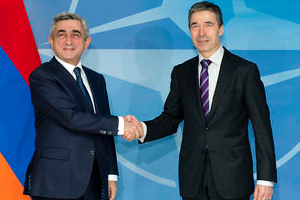
On June 18-20, 2015, NATO’s Parliamentary Assembly held the 89th Rose-Roth seminar in Armenia’s capital Yerevan. It mainly covered the current status of the Armenia-NATO partnership, security issues and challenges that recently emerged in the post-Soviet region and the Middle East. It was declared that the seminar would be unprecedented and firmly reflect positive developments in contrast to the setback in Armenia’s EU integration. The three-day meeting brought together a range of experts, representatives of alliance members and officials from different states, but was conducted against the backdrop of Armenia’s consistent albeit implicit “vassalization” by Russia.
Though Yerevan stressed practical cooperation and its contribution to various missions in Kosovo and Afghanistan through Partnership for Peace (PfP), it kept a certain distance from the intensive political dialogue that is a constitutive part of IPAP. The apogee of the deepening ties between NATO and Armenia came in the period 2010-2013, when Yerevan aimed to sign an Association Agreement (AA) and a Free Trade Agreement (FTA) with the EU, pursuing wide-ranging reforms in both its political-economic and defense sectors. In this light, the promising EU-Armenia relations were inevitably reflected in the ties between NATO and Armenia.
There is no formal institutional link between the EU integration process and NATO’s Euro-Atlantic Partnership for the eastern neighbors, although the advance in partnering with the EU reflects positively on relations with NATO and vice versa. Therefore, there was an expectation in several segments of Armenia’s civil society and among some policymakers that despite its failure to integrate more closely with the EU, Yerevan still had a real scope for consolidating its partnership with NATO even following its engagement with the Eurasian Economic Union (EEU). However, it soon became clear that Moscow’s strong objection to Armenia’s deepening integration with the EU would also seriously deteriorate the country’s relations with NATO, hence negatively affecting Armenia’s security.
The choices made by Armenian officials under heavy pressure from Moscow clearly impaired the country’s reliability in the eyes of the EU to the extent that the EU’s pledge to keep its door open for Armenia has become little more than a phrase.
Likewise, Armenia’s unexpected U-turn away from European integration in September 2013 implied a departure from the path of democratization, instead prioritizing its membership in organizations forged by authoritarian regimes like the Russia-led CSTO and EEU. Consequently, Armenia’s current policy is consistent with Russia’s interests, something NATO could not afford to ignore, and requiring a review of NATO’s relations with Armenia in light of the mounting standoff between the West and Russia.
Amid NATO’s gradually toughening stance vis-à-vis Russia’s belligerent policy, Armenia has taken a set of political steps which were at odds with NATO policy, most blatantly by voting against the UN resolution declaring Crimea’s referendum on joining Russia invalid, and hence for legitimating Russia’s occupation, along with few non-democratic states. This decision was apparently dictated by Russia, but it is noteworthy that it met little protest either from Armenian authorities or Armenian society at large. Moreover, groups of Russia-backed activists in Stepanakert and Yerevan managed to celebrate Crimea’s “self-determination,” placing the region in the same category as Nagorno-Karabakh.
By voting against its resolution, Armenia partly broke the PfP document signed in 1994, where Yerevan committed to the preservation of democratic societies, the maintenance of international law, and to fulfill in good faith the obligations of the Charter of the UN. Moreover, Yerevan damaged its relations with Ukraine, which is in the same NATO partnership framework as Armenia.
By pressure from the Kremlin and as spill-over effect of propaganda addressed to Armenian society, Armenia is being converted into a NATO opponent. Armenia is gradually turning into an isolated tool for Russia in its confrontation with the West, and in its strategy to as far as possible shield the South Caucasus from integration with the West in terms of security, communications, politics and values.
These developments vividly illustrate that Armenia can no longer be considered a prospective political partner of NATO, despite ongoing practical cooperation that will nevertheless likely be reduced after the Armenian peacekeepers leave Afghanistan.
In its effort to reverse Armenia’s relations with NATO, Moscow may finally compel Armenia’s Ministry of Defense to simply suspend its IPAP and PfP programs with NATO.
Moscow has successfully leveraged the political imperative of Armenia’s security, by which Armenia was induced to become a CSTO member. This military quasi-block on its own poses a threat to stability in the South Caucasus, serving Russia’s revisionist policy. It is also becoming clear that the CSTO, which is formally committed to bolstering Armenia’s security, has little capacity to fulfil such a function in practice. Moreover, the main military CSTO partners, Russia and Belarus, continuously contribute to arming Armenia’s main rival Azerbaijan.
The events surrounding Ukraine indeed had dramatic implications for Armenia’s relations with the EU and NATO. Yet the Ukrainian crisis also gave rise to a sense of hope in Armenian society and there is an increasing understanding that a collapse of Russian policy in Ukraine could help Armenia regain its sovereignty. However, by opting to remain in Russia’s orbit, Armenia has in all likelihood lost its potential to foster a democratic and prosperous state with a flourishing economy and simultaneously bolster its security. Armenia’s government still does not comprehend that security is better served by building a closer relationship with NATO.
(Image attribution: NATO)
Moscow continues "creeping annexation" of Georgian territory
By Eka Janashia (05/08/2015 issue of the CACI Analyst)
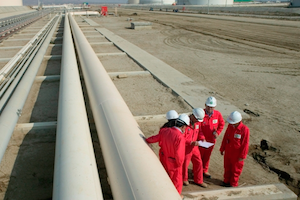
In July 2015, Russia stepped up its policy of redrawing the border along the administrative line of South Ossetia, leaving around 100 families and a total of 1,605 meters of the BP-operated Baku-Supsa oil pipeline beyond the jurisdiction of the Georgian government.
The so-called “borderization,” implying the installation of barbed wire and metal-bar fences at sections of the administrative boundary line (ABL), started in 2008 after the August war and peaked in 2010 and 2013 (see the 02/10/2013 Issue of the CACI Analyst). It has separated the farmlands and orchards of the inhabitants dwelling across the ABL or left them within occupied territory. The recent expansionist move on July 10, however, also involved part of the Baku-Supsa pipeline and moved the border closer to Georgia’s strategic east-west highway.
Baku-Supsa, officially referred to as the Western Route Export Pipeline (WREP) has a transportation capacity of 100,000 barrels per day and earns Georgia around US$ 7 million annually in transit fees. It runs from Azerbaijan’s Caspian Sea shore and reaches Georgia’s Black Sea coast in Supsa. In the first half of 2015, the pipeline transported 16 million barrels of oil.
Georgia’s Energy Minister, Kakha Kaladze said the pipeline could be rerouted by constructing a separate 1,500–1,600-meter section of the WREP if a disruption occurs. Nevertheless, Azerbaijan has remained relatively calm in response to the developments, considering them a purely political issue. SOCAR, which is one of the contractors of the WREP, recently declared that “this [redrawing of the ABL] will not cause any problem for the pipeline.” Meanwhile, South Ossetia’s de facto authorities provocatively announced that BP should apply to them if the full functioning of the pipeline is in danger.
The Kremlin’s annexation of uncontested Georgian territory and its timing could well be intended as a response to recent actions taken by Tbilisi.
On July 8, the Multinational Military Exercise “Agile Spirit 2015,” with the participation of military servicemen from the U.S., Bulgaria, Romania, Lithuania and Latvia, started in Georgia. Moldovan and Armenian servicemen took part in the exercises in the capacity of observers. In recent months, Georgian military units have undergone training in the framework of NATO’s Evaluation and Feedback Program. Aside from these activities, the opening of the NATO training center is scheduled for the fall of 2015 as a part of the “substantial package” that NATO granted the country at last year’s Wales summit (see the 09/17/2014 Issue of the CACI Analyst).
Moreover, this summer Georgia struck two remarkable deals aiming to enhance country’s air defense system. On July 10, Georgia’s Defense Minister Tina Khidasheli signed a contract with the European missile manufacturer MBDA on the purchase of a “state-of-the-art defense system.” A month earlier, she carved out a separate deal with ThalesRaytheonSystems, a producer of ground-based surveillance radars and air defense command and control systems. France’s contribution to strengthening Georgia’s defense capabilities concerns Moscow especially in light of the upcoming NATO summit where Georgia hopes for a renewed chance of obtaining a Membership Action Plan (MAP). Moscow’s permanent representative to NATO, Alexander Grushko, threatened at the end of July that “any kind of political game over the issue of NATO expansion towards Georgia and Ukraine is fraught with the most serious and the most profound geopolitical consequences for the entire Europe.”
One tangible reflection of this statement is the renewed “borderization” just ahead of the European Youth Olympic Festival (EYOF), which started on July 26 and has been perceived as a prominent event for boosting Georgia’s international prestige.
Of greater concern for Tbilisi, however, is Moscow’s inching towards the main transit artery connecting Georgia’s east and west. Georgia’s east-west highway, the partially seized WREP, and the twin Baku-Tbilisi-Ceyhan and Baku-Tbilisi-Erzurum oil and gas pipelines are situated in close proximity of one another and create an important trading route linking the Caspian shore to Eastern Europe. The security of this strategic transport corridor determines to what extent Georgia can promote its status as a transit state. On the contrary, inability to fully control the infrastructure will severely damage Georgia’s economy and its ability to function as a state. Russia’s recent incursions can be understood in this perspective.
A resolution adopted by the Georgian parliament on July 24 condemned the construction of new demarcation signposts close to the east-west route and blamed Russia for “aggressive steps” directed against the peace and security of Georgia and the whole region.
Nevertheless, the opposition United National Movement (UNM) party slammed the ruling Georgian Dream (GD) coalition’s “capitulatory” policy and called on the government to cancel the “Abashidze-Karasin format” – a direct, informal dialogue between Tbilisi and Moscow. UNM insists that the format has falsely created the impression of improved relations between Georgia and Russia and contributed to the removal of Georgia’s occupied territories from the international agenda. UNM thus proposed that the government should request a UN Security Council session and seek to define the steps taken by the Kremlin in the breakaway regions as another justification for the Western sanctions imposed against Russia.
Yet, GD continues its policy of “strategic patience,” with the goal “not to make the country a victim of provocations.” Apparently, Tbilisi’s stance fits well with the EU’s view of Russia’s continuing “borderization” policy. Paying an official visit to Georgia on July 20-21, the President of the European Council Donald Tusk stated his appreciation for Tbilisi’s “responsible reaction” and advised the Georgian government to avoid “overreactions” in its response.
Whereas Georgia indeed needs to devise a shrewd response to these developments, it should also be remembered that by encroaching further into Georgian territory, Russia is testing Tbilisi’s ability to mobilize international support that could discourage further border shifts.
Image Attribution: BP
Iran and the SCO: new opportunities, new challenges

By Richard Weitz (05/08/2015 issue of the CACI Analyst)
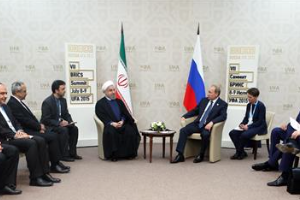
Now that the UN Security Council has blessed the Iranian nuclear deal, Tehran’s chances of becoming a full member of the Shanghai Cooperation Organization (SCO) in coming years have improved, following a decade of rejection. Iranian leaders have long wanted to join the SCO to gain diplomatic, economic, and security advantages. Nonetheless, Iran will need to overcome several major obstacles on its path to full membership, even if nothing goes amiss with the implementation of its nuclear deal.
Russia's warfare strategy and borderization in Georgia

By George Tsereteli (05/08/2015 issue of the CACI Analyst)
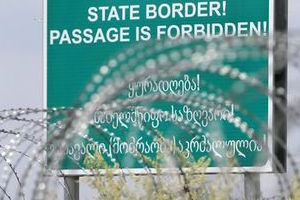
On July 10, Russian military personnel moved border markers further into Georgian territory from the breakaway region of South Ossetia, in the process positioning the new “border” even closer to the strategically vital East-West highway and placing more of the Baku-Supsa pipeline under Russian control. As a result, the Georgian government has been criticized by opposition groups for not doing enough to prevent such incursions, and for not responding adequately. As prescribed by contemporary Russian military doctrine, Russia’s recent actions in Georgia, as well as in other parts of the world, are manifestations of a new warfare strategy.
Visit also