TRIPP's Future in the Context of the U.S.-Iran War
By Suren Sargsyan
The U.S.–Iran conflict, along with repeated failed negotiations, shows no clear path to resolution, and its future trajectory, consequences, and broader implications remain uncertain. Although a substantial body of research and commentary seeks to forecast developments in the Middle East, there is limited analysis of how this conflict may affect the South Caucasus, particularly in terms of future U.S. engagement in the region and the prospects of the Trump Route for International Peace and Prosperity (TRIPP) project. From Tehran’s perspective, TRIPP may constitute a legitimate target, as it conflicts directly with Iranian interests. It is therefore essential to assess the risks that the Iran–U.S./Israel conflict poses to the TRIPP project.
BACKGROUND:
A defining feature of the Trump administration, distinguishing it from its predecessors, is a marked increase in U.S. engagement with the South Caucasus. This was demonstrated by the approval of the TRIPP project and the announcement of peace between Armenia and Azerbaijan under U.S. mediation. However, U.S. involvement in the region clearly extends beyond relations with Armenia and Azerbaijan alone.
The implementation of TRIPP also aligns with broader U.S. regional interests, particularly in terms of isolating Iran. Currently, Azerbaijan’s shortest direct land connection to its exclave, Nakhichevan, runs through Iranian territory. If implemented, TRIPP would enable Azerbaijan to reduce its reliance on Iran by providing an alternative route. Such a development would also diminish Iran’s importance for Armenia, making Yerevan less dependent on the Iran–Armenia border, especially if accompanied by substantive progress in Armenia–Turkey relations, a goal the U.S. has supported since the George H. W. Bush administration.
Therefore, TRIPP should not be understood merely as a mechanism for regulating Armenian–Azerbaijani relations through the establishment of direct connectivity between the two states. Rather, it should be viewed as a broader geopolitical project, which will among other outcomes diminish the strategic significance of Iran for both Armenia and Azerbaijan, particularly by reducing their reliance on shared borders and transit routes through Iranian territory.
IMPLICATIONS:
Since the outbreak of the war, the United States and Israel have targeted not only Iranian military assets but also infrastructure of major strategic importance. Iran has incurred substantial losses, including damage to its naval capabilities, the elimination of senior political and military figures, and significant economic disruption. The closure of the Strait of Hormuz has further imposed considerable costs on the Iranian economy. In response, Iran has launched missile strikes not only against Israel but also against U.S. military bases within its operational range, despite these bases being located on the sovereign territory of states that have not formally joined the anti-Iran coalition.
Moreover, Iran has expanded its targeting beyond U.S. military installations in neighboring states to include economic infrastructure linked, directly or indirectly, to U.S. interests. From Iran’s perspective, there appear to be few meaningful geographical constraints. Rather, its strategy is to impose maximum costs not only through direct confrontation but also by targeting U.S.-associated economic projects and interests across the region and its immediate periphery.
From this perspective, the TRIPP project could also emerge as a potential target. As a major infrastructure initiative involving significant U.S. investment and the presence of U.S. security personnel, it carries clear strategic implications. Therefore, if tensions persist over an extended period and the conflict’s geographical scope expands, it cannot be excluded that this transportation corridor may eventually be targeted by Iran, despite Tehran’s relatively cooperative relations with Armenia.
This risk is underscored by reports of Iranian drones appearing over Azerbaijani territory, developments that have already provoked strong reactions. Although Iran denied these allegations, the incident nevertheless generated significant strain in bilateral relations and may be interpreted as a signal. There is no guarantee that Iran would refrain from deploying drones in the area, conducting limited troop movements, or undertaking other preventive or deterrent measures against the TRIPP project. Such a scenario becomes more plausible if tensions persist, hostilities intensify, and U.S. forces begin targeting Iranian infrastructure that has thus far remained largely intact, including power grids, transportation networks, and other critical facilities.
At the same time, it should be noted that there is currently no official information regarding the status of the project’s construction, at least on Armenian territory, where it is reportedly financed by the U.S. government. Although Armenia’s Foreign Minister has indicated that the intensity of Armenian–U.S. contacts concerning the project has not diminished, he has not addressed the timeline for the implementation of construction activities.
Even a single strike on this corridor would likely make potential investors and commercial actors significantly more cautious about using it for cargo transportation or committing to further infrastructure investments, given the associated security risks. Although detailed data on the expenditures of Armenia and Azerbaijan, along with U.S. contributions, remain unavailable, it is evident that the project entails substantial costs for both countries, even if only part of the planned infrastructure has been completed to date.
Moreover, if the war does not produce a significant systemic transformation in Iran’s regime, an outcome that currently appears unlikely, the project may remain a long-term potential target for Tehran, as it represents a form of U.S. presence in close proximity to the Iranian border. Under such conditions, it would be difficult for Armenia and Azerbaijan to advance the U.S.-mediated peace agenda in the absence of the project’s implementation, as the failure of one of its key components would raise uncertainty about the viability of the broader framework.
CONCLUSIONS:
At present, it is difficult to determine how long the war and/or negotiations with Iran will continue or what their eventual outcome will be. Statements from the Trump administration suggest that a clear strategy or exit plan has yet to be fully articulated. Nevertheless, it is essential to consider Iran’s likely post-war approach toward U.S. economic projects in its immediate vicinity. On the one hand, if the U.S. and Iran reach a peace agreement, the significance of the TRIPP project could be fundamentally transformed, with its purpose and structure potentially redefined, possibly even allowing for Iran’s participation.
On the other hand, if tensions between the United States and Iran remain elevated even after the cessation of active hostilities, Tehran may come to view TRIPP as a legitimate target and act accordingly. In this sense, whereas the project’s future previously depended largely on U.S. policy, it is now also contingent on Iran’s strategic priorities, policy choices, and perceptions of regional dynamics.
Armenian and Azerbaijani authorities have several options to reassure Tehran that the project cannot serve as a basis for a U.S. strategic or military presence in the South Caucasus, nor be used offensively against Iran. Despite relatively stable relations with both Yerevan and Baku, Tehran may still perceive the initiative as a threat to its core strategic interests and border security. In this context, Iran could find a receptive partner in Moscow, which has also expressed skepticism toward the project. At present, however, the implementation timeline has effectively been suspended, with all stakeholders awaiting either stabilization or further escalation.
AUTHOR’S BIO:
Suren Sargsyan is a PhD candidate Political Science. He holds LLM degrees from Yerevan State University, the American University of Armenia, and Tufts University Fletcher School of Law and Diplomacy. He is the director of the Armenian Center for American Studies.
Middle East War Shakes Central Asia's Trade Ambitions
By Saima Afzal
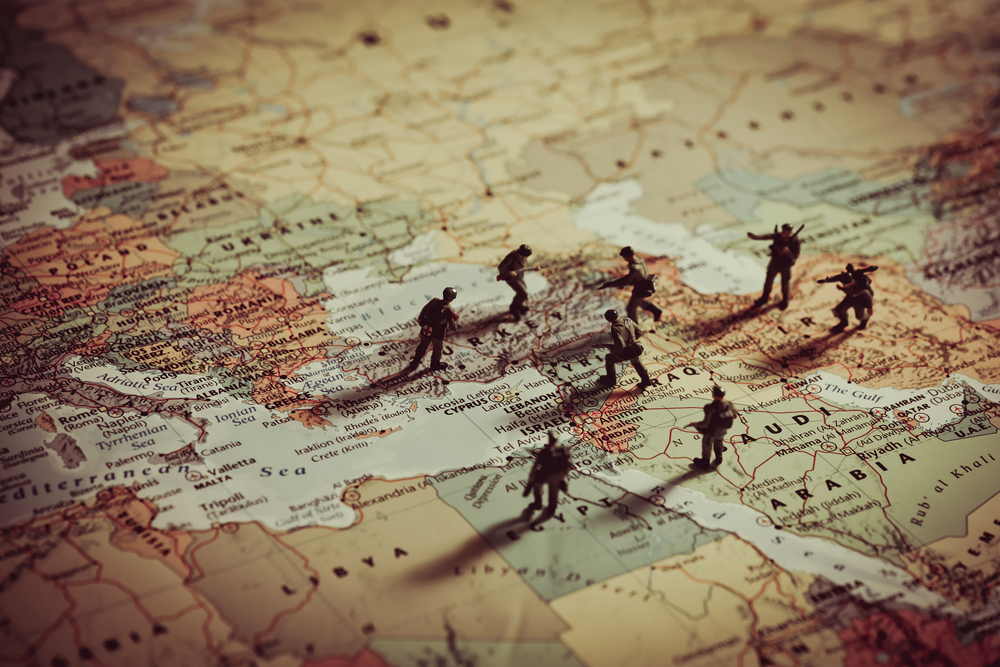
The escalation of conflict in the Middle East following U.S. and Israeli strikes on Iran is exposing the geopolitical vulnerability of Central Asia’s trade diversification strategy. Over the past decade, Kazakhstan and Uzbekistan have invested significant political and financial capital in developing alternative transit corridors including southbound routes through Iran, Afghanistan, and Pakistan to reduce reliance on northern pathways historically oriented toward Russia and to secure access to global maritime markets.
The current crisis is rapidly testing their underlying assumptions. Instability across key transit regions now threatens emerging logistics networks, raising concerns about the reliability of corridors that were intended to enhance economic resilience.
BACKGROUND:
The latest escalation in the Middle East is reverberating well beyond the immediate theatre of conflict, disrupting energy markets, trade routes, and regional economic planning. Oil prices rose sharply following strikes on Iran and subsequent retaliation, reviving concerns about disruption in the Strait of Hormuz, a critical artery through which a significant share of global oil supplies transits daily. For energy-importing economies across Asia, the shock echoes earlier inflationary pressures experienced during previous geopolitical crises.
For Central Asia, the effects are both systemic and immediate. As landlocked economies, states such as Kazakhstan and Uzbekistan have long prioritized the diversification of trade routes as a strategic objective. This has involved developing southbound connectivity through Iran, Afghanistan, and Pakistan, alongside east–west alternatives linking the region to China and Europe.
Iran has played a central role in these plans, offering access to maritime trade via ports such as Chabahar within the framework of the International North-South Transport Corridor (INSTC). Regional initiatives such as the proposed Uzbekistan-Afghanistan-Pakistan railway have likewise aimed to provide direct access to Pakistani ports and shorten transit times to global markets.
These initiatives were conceived well before the current crisis. What the escalation has done is bring into sharper focus the extent to which their viability depends on political stability across multiple transit regions.
At the same time, the conflict is already producing tangible disruptions. Airspace closures and security risks have forced flight cancellations and rerouting, reduced cargo capacity and raising transport costs. Border crossings that serve as key trade arteries are also under pressure, with increased congestion and tighter controls affecting both freight and passenger movement.
In several cases, these disruptions intersect directly with everyday economic activity. Iran’s temporary suspension of selected exports and interruptions in cross-border trade have affected the flow of food and consumer goods into neighbouring Central Asian markets, particularly in countries with strong import dependence. Localized shortages and price increases have already been reported in border regions reliant on Iranian supplies.
IMPLICATIONS:
The unfolding conflicts across Iran and the Afghanistan-Pakistan corridor highlight a structural feature of Central Asia’s connectivity strategy: diversification reduces dependence on any single route, but it also distributes exposure across multiple geopolitical environments.
Southern corridors illustrate this dynamic most clearly under current conditions. Routes passing through Iran now face heightened uncertainty linked to maritime disruption, rising insurance costs, and sanctions-related risks. Even without a formal closure of the Strait of Hormuz, security concerns have slowed tanker traffic and increased freight premiums, costs that are disproportionately borne by landlocked economies.
Overland connectivity through Afghanistan and Pakistan remains constrained by persistent insecurity and fragile political relations. Escalating tensions between Kabul and Islamabad further complicate both the implementation and long-term reliability of projects such as the Uzbekistan-Afghanistan-Pakistan railway. Existing road and rail links are vulnerable to disruption, while transit agreements risk suspension under political pressure, creating uncertainty for trade flows.
Energy and infrastructure initiatives are similarly affected. Projects such as the Turkmenistan-Afghanistan-Pakistan-India (TAPI) natural gas pipeline and the CASA-1000 electricity transmission line depend on stable transit conditions across regions that continue to experience volatility. These risks are not new, but they are in the current environment becoming more acute and more difficult for investors and policymakers to discount.
Beyond infrastructure, the economic transmission mechanisms are already visible. Rising fuel prices are feeding into inflation across import-dependent economies such as Kyrgyzstan and Tajikistan, increasing the cost of food, transport, and basic goods. Disruptions to supply chains-particularly for agricultural products and consumer goods imported via Iran are compounding these pressures. At the same time, any slowdown in major partner economies such as Russia or China would have secondary effects through trade, investment flows, and remittances.
Rather than triggering a shift in strategy, the crisis is reinforcing an existing trend toward hedging. Central Asian states are likely to deepen engagement with alternative corridors perceived as comparatively stable. The Trans-Caspian International Transport Route, linking the region to Europe via the South Caucasus, has gained prominence as an east-west option that avoids both Russian territory and southern conflict zones. Similarly, established rail connections to China provide access to global supply chains through more predictable logistical networks.
This does not signal a retreat from southern connectivity. Instead, it reflects a growing emphasis on redundancy-maintaining multiple routes to manage disruption rather than relying on any single corridor to deliver uninterrupted access.
CONCLUSIONS:
At the core of this challenge is a structural dilemma: while diversification reduces dependence on any single route, it also distributes exposure across multiple geopolitical environments. As a result, Central Asia’s broader transport strategy is increasingly shaped not only by infrastructure development, but by the political and security dynamics of regions far beyond its borders. The current Middle East conflict underscores the extent to which this impacts Central Asia’s economic integration. Connectivity initiatives designed to expand access to global markets are now being evaluated through the lens of geopolitical risk and operational resilience.
The immediate impact is not the abandonment of diversification strategies, but their recalibration. Policymakers are increasingly approaching connectivity not only as an economic objective, but also as a risk management tool, placing greater emphasis on flexibility, redundancy, and continuous reassessment of external exposure.
At the same time, the crisis highlights how quickly geopolitical shocks translate into everyday economic pressures-from rising food and fuel prices to disrupted transport links and constrained trade flows. Even without direct involvement in the conflict, Central Asian states are already absorbing its effects.
Ultimately, the resilience of Central Asia’s trade ambitions will depend not only on infrastructure investment, but on the capacity to navigate an increasingly complex and unpredictable geopolitical environment.
AUTHOR’S BIO:
Saima Afzal is an independent and freelance researcher specializing in South Asian security, counter-terrorism, the Middle East, Afghanistan, and the Indo-Pacific region. Her work focuses on geopolitical developments, strategic affairs, and regional conflict dynamics. She holds an M. Phil in Peace and Conflict Studies from the National Defence University, Islamabad, Pakistan.
Netanyahu's Statement on the Armenian Genocide and Its Implications for the South Caucasus and the Levant
By Vali Kaleji
On August 27, Israeli Prime Minister Benjamin Netanyahu made the unprecedented statement that he recognizes the mass killings of Armenians, Assyrians and Greeks in the early 20th century Ottoman Empire as genocide. Armenia dismissed the gesture as insincere and opportunistic, given Israel’s military cooperation with Azerbaijan and Yerevan’s ongoing normalization talks with Ankara. Netanyahu’s recognition and its aftermath signify the contradictions of the new regional order emerging between the South Caucasus and the Levant.
Credit: Pexels
BACKGROUND: To maintain ties with Türkiye, Israel had long avoided officially recognizing the mass killings of Christians in the early 20th century Ottoman empire as genocide. When asked by Patrick Bet-David on his podcast why Israel does not recognize the Armenian genocide, Netanyahu said, “I think we have. I think the Knesset passed a resolution to that effect.” However, Israel’s parliament has not passed any such legislation into law. When asked why no Israeli prime minister has recognized the genocide, Netanyahu responded, “I just did. Here you go.”
Türkiye condemned and rejected Netanyahu’s statements. On August 29, it announced the complete suspension of all commercial and economic relations with Israel and the closure of its airspace to Israeli aircraft. This decision may be interpreted as a reaction to Israel’s renewed ground operations in Gaza as well as Netanyahu’s recognition of the Armenian genocide. Türkiye’s responses to previous recognitions have consisted of diplomatic tensions, temporary cooling of bilateral relations, the summoning or recall of ambassadors, and critical rhetoric. To date, Türkiye has not severed relations with any of the 33 states recognizing the Armenian genocide.
Internationally, positions taken on the early 20th-century mass killings of Christians can be broadly divided into three categories. The first includes Türkiye and its close ally Azerbaijan, which deny that the events constituted genocide, characterizing them instead as unsystematic outcomes of the turmoil marking the final years of the Ottoman Empire during the First World War. The second category comprises Asian, Middle Eastern, and African states that neither deny the events nor officially recognize them as genocide. Seeking to preserve relations with Türkiye, these countries employ terms such as “massacre,” “mass murder,” “catastrophe,” “human tragedy,” and “inhumane actions.”
The third category comprises the governments and parliaments of 33 states that have formally recognized the Armenian genocide. Following Netanyahu’s recent statement, Israel may now be considered the 34th country to join this group.
IMPLICATIONS: Although no state has ever officially revoked its recognition of the Armenian genocide, the durability of Netanyahu’s stance as an element of Israel’s official policy toward Türkiye remains uncertain. The Knesset has not enacted any legislation formalizing such recognition. It is conceivable that a conclusion of the Gaza war, Netanyahu’s departure from office, changes in the political composition of the Israeli government and Knesset, or a normalization of Israeli–Turkish relations could prompt a reassessment of this position. In that case, Israel’s recognition may remain confined to Netanyahu’s statement amid bilateral tensions with Türkiye, rather than evolving into a permanent state policy.
Syria provides a clear example of how political instability and relations with Türkiye have influenced decisions to recognize the Armenian genocide. For decades, Syria refrained from official recognition, despite its strong ties with the Armenian diaspora and Armenia itself, in order to preserve relations with Türkiye. However, at the height of the Syrian civil war, Syria became the second Arab state, after Lebanon, to recognize the massacres of Armenians as genocide on February 13, 2020. After the fall of the Assad regime, this stance appears to have shifted significantly. The de facto government led by Abu Mohammed al-Golani now maintains close relations with Türkiye. Although it has not yet officially rescinded the earlier recognition, revisions to Syrian school history books, specifically the removal of references to Ottoman-era massacres and Syrian resistance to Ottoman rule, suggest an emerging reorientation in Syria’s approach under the new leadership.
Conversely, the Armenian government’s response to Netanyahu’s statement diverged from its usual reaction to other states’ recognition of the Armenian genocide. Armenian Prime Minister Nikol Pashinyan rejected the Israeli leader’s remarks, emphasizing that Armenia must decide whether it wishes such recognition to become “a geopolitical bargaining chip in the hands of those who have no connection to our reality or the interests of our people.”
There are four key aspects to the Armenian government’s position. First, Yerevan perceives Netanyahu’s statement as lacking sincerity and genuine historical or moral solidarity with the victims of the genocide, particularly at a time when Israel faces intense international criticism over human rights violations over its war in Gaza. Second, Yerevan attributes this declaration primarily to Israel’s escalating dispute with Türkiye, which has deepened following Israel’s decision to impose a total blockade and occupation of Gaza. Consequently, from Yerevan’s perspective, Netanyahu’s remarks function primarily as an instrument of political pressure on Türkiye.
Third, Israel maintains a close partnership with Azerbaijan, and Israeli military assistance played a crucial role in Azerbaijan’s victory during the Second Karabakh War in October–November 2020. This conflict resulted in Azerbaijan’s full capture of Nagorno-Karabakh and the mass displacement of Armenians to Armenia. The legacy of Armenia’s political and military defeats, facilitated in part by Israeli support, renders it difficult for the Armenian government to accept or welcome Netanyahu’s recognition.
Fourth, Pashinyan’s government has actively pursued the normalization of relations with Türkiye in recent years. Following the recent agreement between Armenia and Azerbaijan, mediated by U.S. President Donald Trump, the likelihood of restoring diplomatic relations and reopening the borders between Armenia and Türkiye has significantly increased.
From the perspective of many Armenians, particularly those within the Armenian diaspora who regard themselves as descendants of the survivors of the genocide, Pashinyan’s government is transgressing the “red lines” of Armenian historical claims by seeking normalization with Türkiye without meeting four key preconditions. These include: official recognition of the genocide by the Turkish government; a formal apology from Türkiye, as the Ottoman Empire’s successor state; compensation for the approximately 1.5 million victims; and the restitution of Armenian homes, lands, and churches, especially in eastern Türkiye. Türkiye has consistently rejected these conditions for the past century.
CONCLUSIONS: Ultimately, Netanyahu’s recognition of the Armenian genocide represents the latest manifestation of the contradictions shaping the emerging regional order spanning the South Caucasus and the Levant. This new configuration has arisen in the aftermath of the events of October 7 and the collapse of the Assad regime in Syria, developments that have diminished the influence of Iran, Russia, and while positioning Arab and Western states, along with Türkiye and, as key actors in post-Assad Syria. Armenia lost an international partner in the al-Assad regime, whereas Azerbaijan has sought to build a productive relationship with its successor.
Baku has sought to establish a new coalition with Türkiye, Israel, and Syria, attempting to mediate between Ankara and Tel Aviv, as well as between Damascus and Tel Aviv. However, issues such as the Golan Heights, Israel’s support for Syria’s Druze minority, and its military interventions have rendered rapprochement between Israel and Syria particularly difficult. Furthermore, Netanyahu’s recognition of the Armenian genocide and Türkiye’s subsequent decision to sever all trade and air connections with Israel have severely undermined mediation efforts between Ankara and Tel Aviv. Meanwhile, the divergent political aspirations of Syria’s Kurdish population, perceived as a shared challenge by both Türkiye and Syria’s new leadership, constitute another critical element in the intricate geopolitical landscape of the Levant in the post–October 7 and post-Assad era.
AUTHOR’S BIO: Vali Kaleji, based in Tehran, Iran, holds a Ph.D. in Regional Studies, Central Asian and Caucasian Studies. He has published numerous analytical articles on Eurasian issues for the Eurasia Daily Monitor, the Central Asia-Caucasus Analyst, The Middle East Institute and the Valdai Club. He can be reached at This email address is being protected from spambots. You need JavaScript enabled to view it. .
Russia and Iran Diverge in the South Caucasus
By Vali Kaleji
June 15, 2023
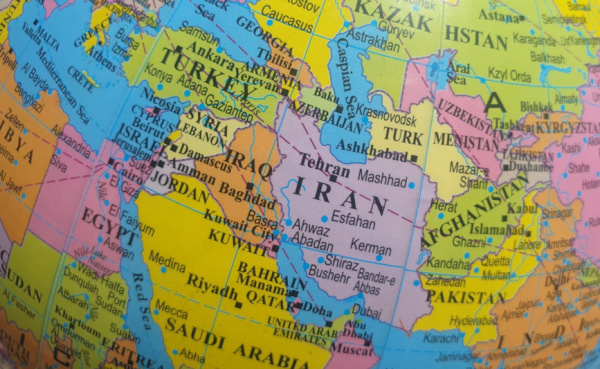
Despite some similarities in Iran’s and Russia’s approaches towards the conflict between Armenia and Azerbaijan since the collapse of the Soviet Union, Tehran and Moscow have diverged in recent years regarding the Zangezur Corridor, its possible effects for Iran’s border with Armenia, and Israel’s relations with Azerbaijan. Russia’s relations with Israel and its need to retain economic ties and transit options with Azerbaijan and Turkey after the Ukraine war, have led Moscow to take a flexible approach to developments in the South Caucasus, which is not favorable to Iran. This has disrupted the unwritten alliance between Iran, Armenia and Russia and has created a security and strategic dilemma for Iran along its northwestern borders.
Israel’s Role in the Second Armenia-Azerbaijan War and Its Implications for the Future
By Brenda Shaffer
September 9, 2022
 For a quarter of a century, Israel and Azerbaijan have maintained deep strategic cooperation that touches on national security issues of the highest importance to both sides. The defense relationship goes far beyond arms sales and technology transfer, including cooperation on the establishment of Azerbaijan’s indigenous defense industry. In the 2020 war, Azerbaijan demonstrated an innovative use of Israeli arms and the integration of Turkish and Israeli unmanned aerial vehicles (UAVs) as well as a novel uses of UAVs. The war set the stage the return of open cooperation between Turkey and Israel and renewal of exchange of ambassadors. Moreover, Israel’s cooperation with Azerbaijan has endowed it with “soft power” among ethnic Azerbaijanis in Iran, who form one-third of the Islamic Republic’s population.
Visit also