
By Lydia Sawatsky
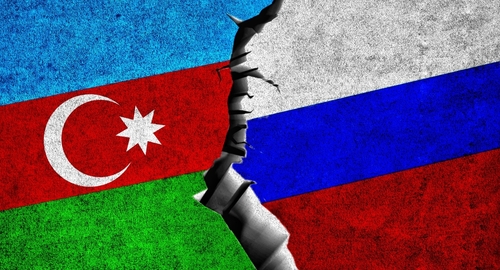
Azerbaijan is increasingly stepping away from Russian influence as Russia’s military dominance in the Caucasus slips due to its involvement in the war in Ukraine. Baku has responded to these changing dynamics through a series of policy measures, including border closures, restrictions on Russian soft power, and surveillance of Russian-aligned organizations. This shift has only grown more visible in recent weeks as Vice President JD Vance made a historic visit to Armenia and Azerbaijan, and President Aliyev met Ukrainian President Zelensky for the third time at the Munich Security Conference. At Munich, Aliyev publicly accused Russia of deliberately striking the Embassy of Azerbaijan in Kyiv on three separate occasions, underscoring just how strained the Baku/Moscow relationship has become.
BACKGROUND:
Historical episodes of Soviet and Russian military intervention in Azerbaijan, including the Soviet Union’s crackdown on Azerbaijani protesters in Baku in January 1990 and Moscow’s long-standing support for Armenia, have reinforced Azerbaijan’s efforts to safeguard its sovereignty. Azerbaijan has often maneuvered around the consequences of openly opposing Kremlin positions by maintaining a cautious and cordial relationship with Moscow despite recurring tensions. Even when differences emerged over regional conflicts or broader geopolitical alignments, Baku prioritized diplomatic stability within the structural constraints imposed by Russia’s dominant role in the South Caucasus.
Azerbaijan gained regional confidence as Turkey stepped into the role of security guarantor. The alliance with Turkey signaled to Baku that it would not face regional threats alone. The Shusha Declaration promised military support against any foreign aggression. Military cooperation with Turkey intensified after Iran’s direct provocation of Azerbaijan by conducting a military exercise on the border simulating a military crossing of the Araz River. In response, Turkish troops, along with the Turkish Chief of the General Staff, participated in a similar joint drill to cross the river. Turkey’s promise of military aid and quick responses to military provocations reinforced Azerbaijan’s sense of security and showed Russia’s declining role as the primary regional power in the Caucasus.
Despite diverging interests, Baku largely accommodated Moscow’s continued involvement in regional security affairs to preserve stability. Following Azerbaijan’s victory in the Second Karabakh War in 2020, Russia rapidly deployed “peacekeeping” forces to the region. Similarly, the 2022 Declaration of Allied Cooperation with Russia, signed two days before the Ukraine war, is most revealing for the reaction it provoked rather than its substance, as it sparked concerns that Azerbaijan was drifting back into Moscow’s sphere of influence. In practice, however, Baku’s foreign policy remained largely unchanged, showing how Azerbaijan used symbolic accommodation to create misleading perceptions of alignment.
Russia’s withdrawal of its peacekeeping forces from Karabakh in 2024, largely driven by mounting military demands in Ukraine, marked a critical turning point in Azerbaijan’s assessment of its regional environment. The redeployment signaled a reduced Russian capacity to sustain its military presence in the region, giving Baku a window to increase its autonomy. While Azerbaijan did not pursue openly anti-Russian policies, Moscow’s growing preoccupation elsewhere encouraged a more assertive approach to Azerbaijani national sovereignty.
Beyond the military realm, Russia’s persecution of ethnic minorities has grown more visible due to widespread social media use, as reports of unlawful arrests of Azerbaijani citizens, beatings across Russia, and Chechnya’s deportation of Azerbaijani nationals to forcibly fight in Ukraine have become increasingly more common. Azerbaijanis have become more vocal in voicing their anger, with one journalist going so far as to call for the destruction of the Embassy of Russia in Baku.
Azerbaijan’s frustration with Russia intensified significantly after Russia shot down Azerbaijan Airlines Flight 8243 over Grozny, the capital of Chechnya, in December 2024, allegedly mistaking the passenger aircraft for a Ukrainian drone. After the plane was hit, Russian authorities denied it permission to land and redirected it to the Kazakh city of Aktau, an action analysts suggest was meant to cover up the incident, possibly hoping the plane would crash into the Caspian Sea. The previously maintained cordial and diplomatic relationship between Chechnya and Azerbaijan devolved so rapidly that when Chechen leader Ramzan Kadyrov tried to call Azerbaijani president Ilham Aliyev on December 30, Aliyev refused his call.
The crash of the Azerbaijani airline and the diplomatic fallout underscore why this matters for Azerbaijan. The incident exposed the risks of non-transparent and highly centralized security structures operating near its border. Azerbaijan’s refusal to allow the issue to be dismissed and its insistence on formal acknowledgment and compensation reinforced Baku’s insistence on formal state accountability rather than relying on informal crisis management.
As Azerbaijani-Russian relations were slowly returning to normal, Azerbaijan agreed to the US-backed TRIPP plan, moving towards closer economic ties with the U.S. and the West. Aliyev further raised the stakes at the February 2026 Munich Security Conference, publicly accusing Russia of deliberately striking Azerbaijan's Kyiv embassy three times in 2025, even after Baku had provided the coordinates of its diplomatic missions. Azerbaijan again directly and publicly criticized Russia, with little of the political cordiality that Azerbaijan has extended towards Russia in the past.
IMPLICATIONS:
These developments have coincided with a broader set of Azerbaijani policy adjustments. Azerbaijan's government is clearly considering the potential instability caused by its policies toward Russia. To mitigate the fallout, Azerbaijan is heavily restricting contact and influence with Russia in numerous ways.
Despite its geographic proximity to Russia, Azerbaijan has separated itself significantly from its neighbor in the last few years. Azerbaijan closed its borders with all neighbors in 2020 during the COVID pandemic and has kept each of them closed for political reasons, severing many regional ties. Citizens who once crossed the border regularly to shop or visit relatives now face near-total separation. There are no longer direct flights from Baku International Airport to the Dagestani cities of Grozny, Makhachkala, or Derbent, forcing travelers to travel instead through Moscow, often with long layovers. This not only makes it more difficult to travel but also significantly raises the financial burden, with an average ticket costing around $500, which is more than the average monthly salary for most Azerbaijanis, especially outside the capital. This means that there is much less flexibility in migration across the border.
Azerbaijani attitudes toward Russification and Kremlin narratives have also shifted dramatically. Leaked Kremlin documents dated to December 2025 acknowledge this reality, noting that Russian-speaking Azerbaijani citizens now face increased security surveillance and that organizations protecting Russian minority interests have been eliminated or restricted to the purpose of promoting interethnic harmony between Russians and Azerbaijanis.
Russia’s inability to pivot away from Ukraine or divert resources to the Caucasus has driven Azerbaijan’s move away from its neighbor and toward greater independence. This strategy will protect Azerbaijan from potential unrest in Russia spilling over into its borders and accelerate Azerbaijan's pivot away from Russian soft power toward diverse global partnerships. The border closures, flight cancellations, and restrictions on Russian influence are more than temporary precautions: they reflect a permanent change.
Azerbaijan has already structurally insulated itself from Russia’s northern periphery, and recent shocks have only revealed how far that decoupling has gone. Recent tensions did not create Azerbaijan’s distancing, but exposed Azerbaijan’s preexisting insulation strategy as it enacted restrictions on cross-border movement, limited soft power influence, and asserted itself diplomatically. Russia is an increasingly unpredictable and unstable partner, and though Azerbaijan remains economically and geographically tied to Russia, it can now better pursue multi-vector diplomacy and diversification. Azerbaijan’s recent actions and diplomatic posture suggest not a geopolitical realignment, but a calculated effort to reduce exposure to instability stemming from Russia while preserving functional interstate relations.
CONCLUSIONS:
Ultimately, Azerbaijan’s response to Russia’s declining power is a policy of calculated insulation. This shift is structural rather than merely reactionary, as the permanent closure of land borders and the dismantling of transport links to the North Caucasus serve as a physical barrier against potential Russian instability and soft power.
Measures such as increased surveillance of Russian-speaking citizens and the removal of pro-Kremlin interest groups indicate a shift away from Russian soft power toward a new era of regional cooperation with Central Asia and Turkey, as well as Western-led global partnerships. Vice President J.D. Vance's February 2026 visit to the South Caucasus signals the kind of high-level Western engagement that Azerbaijan and its neighbors are now actively courting. While the fundamental, pragmatic ties between Baku and Moscow are unlikely to fully rupture, Azerbaijan is working harder than ever to decouple its security from Russia’s influence. While Azerbaijan is unlikely to fully sever its ties with Russia, given enduring geographic and economic constraints, its current diplomatic trajectory marks an unprecedented departure from decades of accommodating Russian regional dominance, opening a timely window for deeper Western engagement and the advancement of a more durable strategic partnership in the South Caucasus.
AUTHOR’S BIO:
Lydia Sawatsky is a researcher with American Foreign Policy Council’s Central Asia-Caucasus Institute. A recent graduate of Wheaton College, she grew up in Sumqayit, Azerbaijan, and has spent extensive time in the Caucasus and Central Asia. She previously worked with International Literacy and Development (ILAD) in Baku, Azerbaijan, researching access to education for Afghan and Pakistani refugees residing in the country.