
By Eldaniz Gusseinov and Rassul Kospanov
Pakistan's declaration of “open war” on Afghanistan in late February 2026, following sustained airstrikes on Kabul, Kandahar, and Bagram airbase under Operation Ghazab Lil Haq, has effectively closed the principal corridor through which Afghan trade reached the sea. While attention has been concentrated to the immediate military dimension, a structurally more consequential process is unfolding in parallel: a reorientation of Afghanistan’s external economic links away from Pakistan and toward Central Asia. This shift was already underway, driven by periodic border disruptions, trade friction, and the steady maturation of northern infrastructure, but the war has compressed its timeline considerably. Three concurrent developments: the collapse of Pakistan-Afghanistan commerce, the ratification of a preferential trade agreement between Uzbekistan and Kabul, and the near-completion of the CASA-1000 power transmission project, suggest that Afghanistan's economic geography is quickly being redrawn.
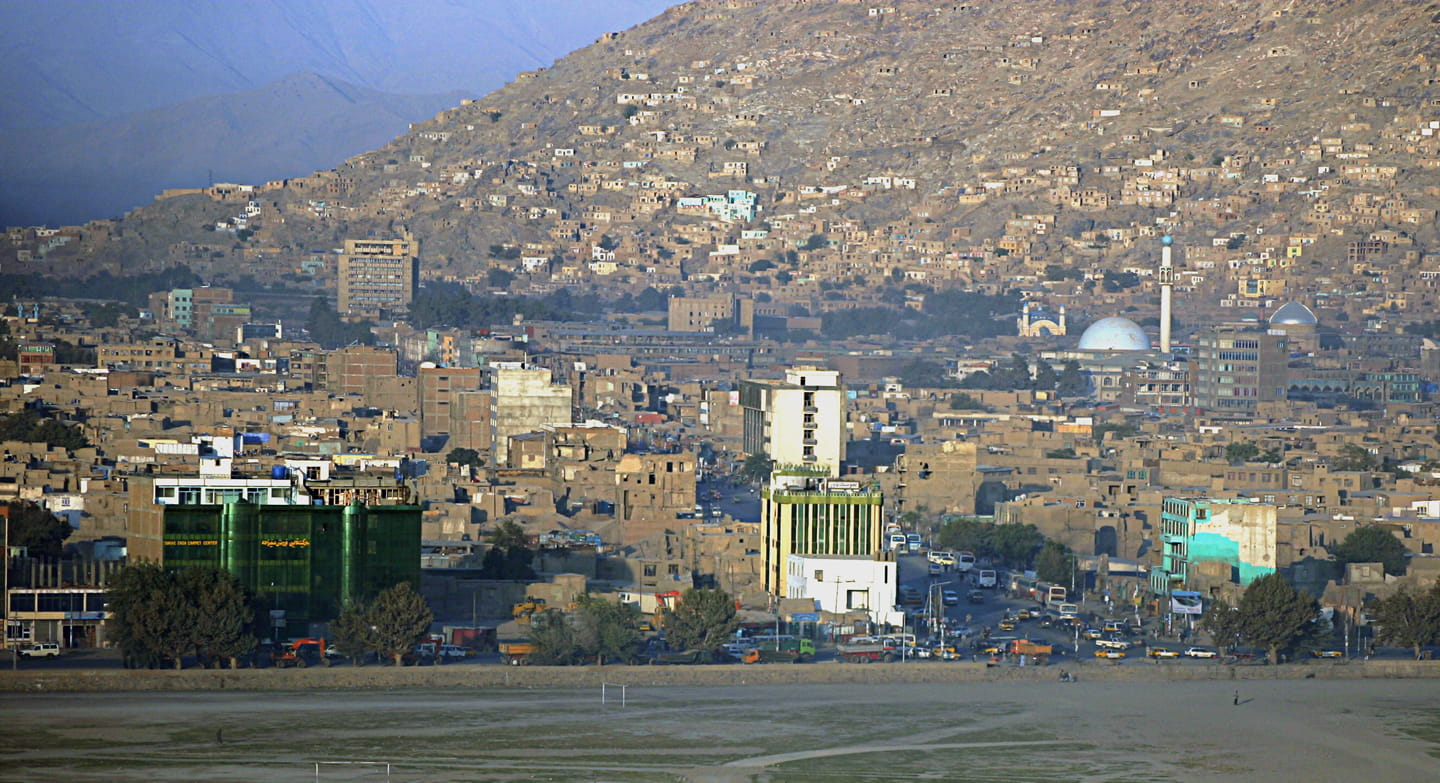
Image Credit: View of the old city of Kabul, Afghanistan, first uploaded on Wikipedia Commons [http://en.wikipedia.org/wiki/User: Casimiri]
BACKGROUND:
Afghanistan’s economic dependence on Pakistan long predated the current escalation. The Torkham and Chaman crossings served as the country’s principal gateways to Karachi and Gwadar, providing access to maritime trade routes that Central Asian landlocked corridors could not replicate. Yet the relationship was structurally vulnerable. Kabul’s refusal to formally recognize the Durand Line as an international border underpinned recurring post‑2001 border closures and trade disruptions, and the Taliban’s return to power in August 2021 added a new layer of friction as Islamabad’s demands that Kabul curb TTP sanctuaries went largely unmet. By 2024, divergence was increasingly visible: Pakistan substituted Afghan coal for sea‑borne coal imports and other suppliers while Afghan exporters faced tightening customs and transit restrictions. Bilateral commerce between Pakistan and Afghanistan contracted from approximately USD 2.46 billion in 2024 to USD 1.77 billion in 2025. At the same time, Afghanistan’s trade with Central Asian countries increased significantly, rising by 77 percent. The main driver of this growth was trade between Uzbekistan and Afghanistan, which expanded by 53 percent, reaching approximately US$ 1.6 billion.
The February 2026 escalation removed whatever residual reliability the southern corridor retained. Pakistani airstrikes under Operation Ghazab Lil Haq targeted Taliban military infrastructure across multiple provinces, a full trade suspension was imposed, and buffer-zone operations along the Durand Line added a physical barrier to the political and commercial obstacles already in place. For Afghan business networks and logistics operators, the southern route shifted from periodically unreliable to operationally closed.
Uzbekistan’s Hairatan border crossing on the Amu Darya handled approximately 76 percent of Afghanistan’s northern freight transit before the current escalation, channeling goods toward Russia, China, and the Caspian. Afghanistan’s dependence on Central Asian electricity suppliers, principally Uzbekistan, Tajikistan, and Turkmenistan, which together provide 80-85 percent of the country's power imports, had established dense operational relationships at the border long before formal trade policy followed. Total transit volumes through Afghanistan reached 5 million tons in 2024, demonstrating that the trans-Afghan corridor had become integral to Central Asian commerce with South Asia. The Central Asian factor in Afghanistan’s economy was already structural; yet the war changed its relative weight.
IMPLICATIONS:
The most immediate institutional development is the Uzbekistan-Afghanistan Preferential Trade Agreement, signed at the Tashkent International Investment Forum on June 10, 2025, and ratified by President Mirziyoyev in March 2026. The agreement eliminates customs tariffs on 14 categories of goods, prioritizing Afghan agricultural exports, streamlines phytosanitary certification for Afghan farm produce, and formalizes 24-hour operations at the Hairatan-Termez border crossing to accommodate increased volumes. Tashkent’s stated ambition is to raise bilateral trade from roughly US$ 1.6 billion toward US$ 5 billion within five years. It is significant not merely as a commercial target but as a political signal. By institutionalizing preferences and creating a structured long-term framework, Uzbekistan has moved well beyond the ad hoc transactional engagement that characterized the immediate post-2021 period.
The CASA-1000 project, which will add approximately 300 megawatts to Afghanistan’s power supply via a transmission line from Kyrgyzstan and Tajikistan, has reached an advanced stage of completion on the Afghan segment, with commissioning targeted for 2027. Uzbekistan has separately committed US$ 1.15 billion in deals for gas-fired generation and transmission infrastructure within Afghanistan, while a 25-year contract for development of the Toti-Maidan gas field deepens the bilateral energy relationship further. In parallel, following the Kazakhstan–Afghanistan business forum held in Shymkent, Astana announced plans to begin geological exploration in Afghanistan’s Laghman province. As part of this initiative, the Kazakh companies Kazatomprom and Kazakhmys conducted two geological missions to assess the potential development of beryllium and lead deposits.
These linkages carry strategic weight beyond their technical specifications: a country that depends on Central Asia for the electricity powering its cities and industries has strong incentives to sustain institutional connectivity with the region, irrespective of the diplomatic nuances in its relations with individual Central Asian capitals.
The Trans-Afghan Railway, whose feasibility framework was signed in July 2025, constitutes the third pillar of this emerging architecture. The corridor, linking Uzbekistan through Mazar-i-Sharif toward South Asian ports, had historically been conceived as a north-south bridge serving Central Asian exporters seeking sea access through Afghanistan.
Kazakhstan does not oppose Uzbekistan’s project but is promoting an alternative corridor through western Afghanistan. The route Turgundi–Herat–Kandahar–Spin Boldak is considered technically simpler due to its largely flat terrain, compared to the Uzbek route that passes through the high-altitude Salang Pass. Kazakhstan plans to invest around US$ 500 million, including the construction of railway segments and the creation of a logistics hub in Herat, which is expected to become a key “dry port” for Kazakh cargo.
If realized, this project would represent the first attempt since the nineteenth century to build a railway corridor in this direction. In 1879, British authorities considered constructing a railway to Kandahar. It was never implemented due to resistance from local tribal elites and the ongoing Anglo-Afghan War. After the Russian Empire captured the Panjdeh area north of Herat in 1885, Russian officials explored but never realized the possibility of extending the Trans-Caspian Railway from Krasnovodsk (now Turkmenbashi) through Merv to Herat. Kazakhstan is now demonstrating political boldness by advancing an ambitious initiative seeking to accomplish what the great empires of the past ultimately failed to achieve.
While the Pakistani military campaign has not eliminated the long-term logic of that corridor, it has introduced a medium-term disruption that reinforces Afghanistan’s own interest in northern connectivity, not merely as a transit function enabling others.
The structural dynamic underlying all three of these processes is that Central Asian states, particularly Uzbekistan, have pursued a consistently pragmatic engagement with the Taliban since 2021. Tashkent, Astana, and Ashgabat have avoided formal recognition while building dense working relationships on trade, border management, energy supply, and security coordination. For the Taliban, whose options have narrowed sharply as a result of the Pakistan conflict, this transactional model is comparatively attractive. Central Asian partners do not demand regime change or condition economic engagement on governance reforms and are geographically indispensable for the country’s energy supply. Tashkent and Kabul are not natural allies but increasingly unavoidable partners.
The risks in this trajectory lie in its structural fragility. Afghanistan’s trade deficit reached approximately US$ 9.4 billion in 2024, its export base remains concentrated in agricultural goods and coal, and its settlement infrastructure relies heavily on informal hawala transfers rather than banking channels. Northern trade growth has been accompanied by a persistent imbalance: Central Asian exports to Afghanistan are growing in volume while narrowing in variety, concentrated in flour, fuel, and electricity, with volatility coefficients suggesting that these supply chains remain sensitive to disruption. A durable transformation will require not merely preferential tariff access but energy and industrial investment capable of shifting Afghanistan from a consumer of basic goods to a contributor of productive capacity. For Central Asian states, this is not merely an altruistic objective: without a functional industrial base in Afghanistan, Central Asian exporters will face continued concentration risk in a market that is simultaneously growing and fragile.
CONCLUSIONS:
The Pakistan-Afghanistan war has accelerated Afghanistan’s northward economic pivot. By severing the southern corridor at precisely the moment that Central Asian infrastructure like CASA-1000, the Hairatan-Termez corridor, and the Trans-Afghan Railway framework are reaching operational maturity, the conflict has compressed a decade-long structural transition into a period of months. Uzbekistan has moved most aggressively to institutionalize this realignment through the Preferential Trade Agreement and its energy investment commitments, but the broader dynamic reflects a regional logic that extends to Kazakhstan, Tajikistan, and Turkmenistan: Central Asian states require a stable Afghanistan as a transit corridor and buffer against militant spillover, while Afghanistan requires Central Asian energy, markets, and institutional connectivity as substitutes for a now-hostile southern partner. Whether this convergence of interests consolidates into durable integration will depend on whether both sides can address structural fragilities such as payment infrastructure, export diversification, and logistics gaps, which continue to constrain the corridor’s full potential. The war has resolved an ambiguity in Afghanistan’s foreign economic orientation; the harder task of building a resilient northern integration architecture now begins.
AUTHOR’S BIO:
Eldaniz Gusseinov is Head of Research and сo-founder at the political foresight agency Nightingale Int. and a non-resident research fellow at Haydar Aliyev Center for Eurasian Studies of the Ibn Haldun University, Istanbul. Rassul Kospanov is a Senior Researcher at the National Analytical Center under Nazarbayev University, where he coordinates socio-political research projects and prepares analytical reports and policy recommendations for central and local government bodies. His work focuses on political processes in Kazakhstan and across Central Asia, as well as issues of regional cooperation.