
By Alpaslan Özerdem and Olesya Vartanyan
After more than three decades of closure, the Türkiye-Armenia border may soon reopen. A string of recent developments, including the launch of Turkish Airlines flights to Yerevan, agreements to simplify visa procedures, and moves toward direct land trade, suggest that normalization is shifting from cautious diplomacy toward practical implementation. If it does, it would mark one of the most consequential geopolitical shifts in the South Caucasus since the end of the Cold War. Yet reopening the border will require careful political management. Without it, renewed contact could generate friction rather than stability.
BACKGROUND:
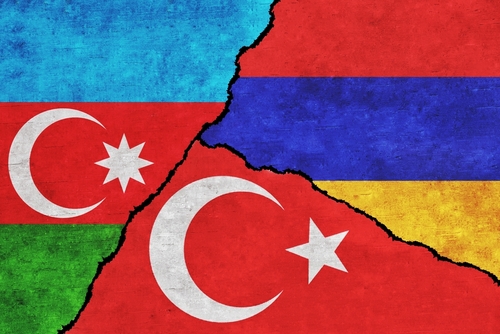
The land border between Türkiye and Armenia has been closed since 1993. Ankara shut the crossing in solidarity with Azerbaijan during the first war over Nagorno-Karabakh. Since then, the border has symbolized one of the most enduring geopolitical divides in the region. For communities on both sides, the closure produced long-term economic and social consequences. Armenia’s access to regional markets has remained constrained, while eastern Turkish border regions have also faced limited cross-border economic opportunities.
Regional dynamics began shifting after the 2020 war between Armenia and Azerbaijan, which altered the political balance in the South Caucasus and created new incentives for diplomatic engagement. In the aftermath of the war, Ankara and Yerevan appointed special envoys in 2021 to explore the possibility of restoring diplomatic relations and reopening the border.
Since then, negotiations have progressed slowly but steadily. Several confidence-building measures have been agreed and some already implemented. These include agreements allowing third-country citizens to cross the border, the resumption of direct flights between Istanbul and Yerevan, and discussions on facilitating trade and travel. In early 2026, the pace of normalization accelerated visibly. In March, Turkish Airlines launched regular scheduled flights on the Istanbul-Yerevan route. The two governments agreed to simplify visa procedures, and reports emerged that direct land trade between Türkiye and Armenia would begin as part of a broader US-led Caucasus peace push. Last December Bloomberg reported that Ankara was weighing a full reopening of the border within six months, while senior Turkish officials publicly expressed optimism, stating that they hoped “everything develops quickly.”
Physical preparations also indicate growing readiness. Armenia has renovated the Margara checkpoint on its side of the border, declaring the facility technically ready for operation. Türkiye has likewise upgraded infrastructure at the Alican crossing. These preparations suggest that the technical conditions for reopening could be met relatively quickly if political decisions align.
Still, reopening the border remains politically sensitive. For Türkiye, the process remains closely linked to the broader relationship between Armenia and Azerbaijan, particularly negotiations over a comprehensive peace agreement following the collapse of the self-declared Nagorno-Karabakh authorities in 2023. Since last August, when the two countries signed several accords at the White House, Baku and Yerevan have taken a number of steps forward, including facilitating transit trade to Armenia through Azerbaijan and Armenia’s recent agreement with the United States on the TRIPP transit route, which will facilitate the operation of a transit route between Azerbaijan and its enclave of Nakhchivan in southern Armenia. These are promising steps, but a final peace agreement is still pending, which Türkiye must take into consideration.
Ankara has long coordinated its approach toward Armenia with Baku. Turkish policymakers have repeatedly emphasized that normalization should not undermine Azerbaijan’s strategic interests, and progress in Türkiye-Armenia relations has often moved in parallel with developments in Armenia-Azerbaijan negotiations. How close are the parties to a final agreement on the border? The string of practical steps in early 2026 suggests the process has crossed a threshold from symbolic confidence-building to operational preparation. Yet the absence of a finalized Armenia-Azerbaijan peace deal means that Ankara retains a political brake on the timeline. A stall or deterioration in those talks could slow or freeze the border track; conversely, a breakthrough could accelerate it rapidly.
Domestic political considerations also matter. In Armenia, normalization with Türkiye remains controversial for segments of society deeply affected by historical grievances, and the issue will feature in the country’s upcoming June parliamentary elections. In Türkiye, policymakers must balance diplomatic engagement with Armenia against their longstanding strategic partnership with Azerbaijan.
IMPLICATIONS:
If and when the border reopens, the effects will extend well beyond bilateral relations. Armenia has long depended on limited transit routes through Georgia and Iran to access external markets. Opening the Turkish border would provide an alternative corridor, linking Armenia more directly to European and Middle Eastern trade networks. It would also reinforce Türkiye’s role as a regional connector between the South Caucasus and broader Eurasian markets. In this context, reopening the border aligns with wider connectivity initiatives such as the Middle Corridor, which aims to strengthen east-west trade routes across the region.
Russia’s influence in the South Caucasus has weakened since the start of the war in Ukraine and the collapse of its peacekeeping mission in Nagorno-Karabakh in 2023. As Moscow’s role recedes, regional actors are increasingly seeking alternative economic and diplomatic partnerships. In parallel, instability in the Middle East, including conflict involving Iran, has heightened uncertainty along key transit routes. For Armenia, which has relied on access through Iranian territory, reopening the Turkish border would reduce dependence on a single corridor and provide greater strategic flexibility.
On the other hand, the expansion of trade and transit routes associated with reopening the Türkiye-Armenia border could deepen regional interdependence and, in turn, support longer-term peace between Armenia and Azerbaijan. Durable reconciliation rarely rests on diplomatic agreements alone; it often emerges when economic cooperation and shared interests make renewed conflict increasingly costly. Expanded trade, transportation links, and cross-border mobility can help create these incentives by encouraging regional actors to view cooperation not as a concession but as mutual gain.
At the local level, decades of closure have left many towns near the frontier economically stagnant. Renewed cross-border access could stimulate transportation links, tourism, and commercial exchange. Armenian producers would gain easier access to Turkish markets, while Turkish businesses could expand trade with Armenia and potentially beyond. However, regions that have been economically isolated for decades may struggle to adjust quickly to new competitive pressures, and if cross-border trade develops unevenly, local communities could perceive the reopening as disruptive rather than beneficial.
The practical challenges of reopening should not be underestimated. Local authorities, customs agencies, border police, and regulatory bodies on both sides have never previously operated together. Communities along the frontier have lived in close geographical proximity but political separation for decades. In the Armenian village of Margara, residents have long lived within sight of the Turkish side of the river without direct contact. Renewed engagement may generate economic and cultural exchange, but it could also expose differences in administrative practices, expectations, and social attitudes that will require careful management on both sides.
CONCLUSIONS:
The reopening of the Türkiye-Armenia border represents more than a bilateral diplomatic milestone. It reflects a broader transformation in the political landscape of the South Caucasus. The rapid accumulation of practical steps in early 2026, from flights to visa agreements to land trade, indicates that the process has moved beyond the realm of aspirational diplomacy. Yet the outcome is not guaranteed. The process remains closely linked to developments in Armenia-Azerbaijan relations, domestic political considerations in both countries, and evolving regional geopolitics. Whether Ankara ultimately opens the border before or after a finalized Armenia-Azerbaijan peace deal will be a critical signal of how much Türkiye is willing to decouple the two tracks. Whether the border ultimately becomes a bridge between the two societies or simply another contested frontier will depend on how effectively these challenges are addressed not only in the coming months, but in the longer term.
AUTHOR’S BIO:
Alpaslan Özerdem is Dean of the Carter School for Peace and Conflict Resolution at George Mason University. Olesya Vartanyan is a conflict analyst specializing in South Caucasus security and peace processes and a PhD student at George Mason University.