
By Emil Avdaliani
Georgia has opted for a multi-investor model to develop the Anaklia port, shifting China from a prospective co-owner to one potential participant among several. This approach reduces the risk of dependence on a single external power while placing greater financial and managerial responsibility on the Georgian state. The geopolitical implications for Georgia, the wider region, and the development of the Middle Corridor could be substantial. First, China’s withdrawal is expected to facilitate the ongoing rapprochement between Tbilisi and Washington. Second, the decision is likely to strengthen Georgia’s growing ties with Central Asian countries, which view Anaklia as both an investment opportunity and an export gateway to the EU.
BACKGROUND:
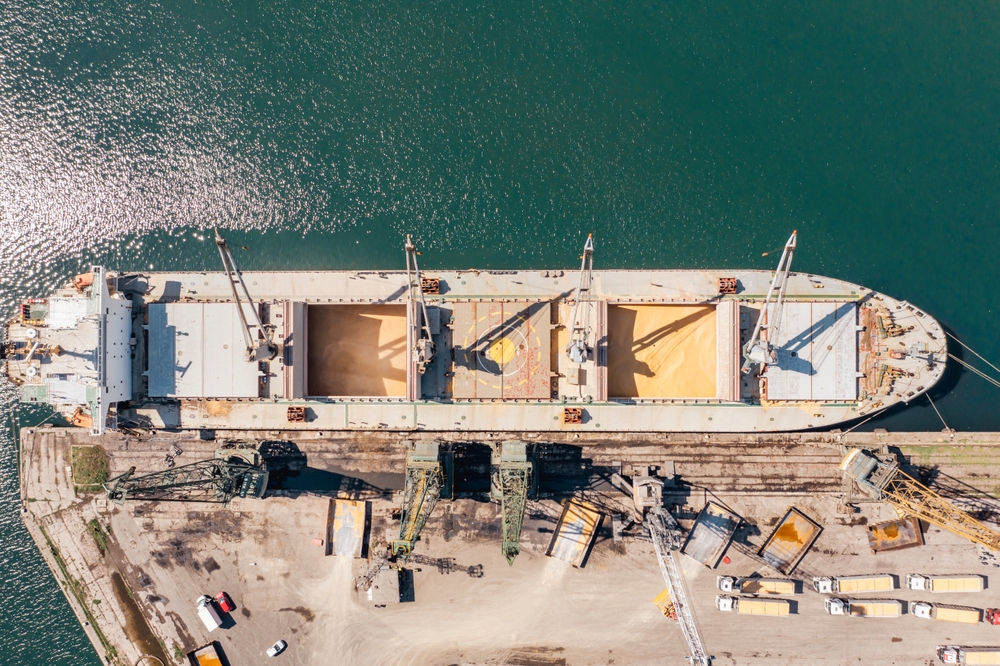
The Anaklia deep-sea port project has become a symbol of Georgia’s transit ambitions. Located near the mouth of the Enguri River and the Russian-occupied region of Abkhazia, the port could accommodate larger vessels than Georgia’s existing facilities and strengthen the country’s role in the Middle Corridor linking China and Central Asia with Europe. However, financing difficulties and geopolitical competition have delayed the project for decades.
The idea predates Georgia’s restoration of independence in 1991. A small pier was built at Anaklia in the 1960s, and plans for a deep-water port were developed during the final years of the Soviet Union but never implemented. The project remained under consideration during Eduard Shevardnadze’s presidency but gained serious attention only after the 2003 Rose Revolution, as part of the proposed city of Lazika.
After Georgian Dream came to power in 2012, the Lazika project was postponed but later revived. In 2016, the government selected the Georgian-U.S. Anaklia Development Consortium, founded by TBC Holding and initially partnered with US-based Conti International, to develop and operate the port. Construction began in 2017, with plans to eventually handle around 100 million tons of cargo annually.
International lenders sought stronger state guarantees, while the government argued that the consortium had failed to secure sufficient financing. Conti International’s withdrawal further undermined the project, prompting the government to terminate the agreement in 2020. The consortium later sought around US$1.5 billion in arbitration, but an International Chamber of Commerce tribunal rejected the claim in July 2024.
In 2022, the government announced a public-private model, retaining 51 percent while allocating 49 percent to an international investor. In May 2024, it selected a Chinese-led group involving China Road and Bridge Corporation and Qingdao Port International as its private partner. The decision reflected Georgia’s deepening strategic partnership with China, signed in 2023 and expanded in 2026, and Beijing’s growing interest in the Middle Corridor following the war in Ukraine. Chinese participation offered construction capacity, access to funding, and connections to Asian cargo owners.
IMPLICATIONS:
Yet the agreement with the Chinese consortium was never finalized. In July 2026, Georgia replaced the single-investor structure with a landlord model, under which the state will own and develop the core maritime infrastructure, road and railway connections, while foreign companies will lease and operate individual terminals. The Georgian government plans to invest about US$1.1 billion and remains open to partners from China, Central Asia, Azerbaijan, and Western countries.
Internationally, the landlord model is widely used for major ports, balancing state control with private-sector efficiency. Governments retain critical infrastructure including dredging, navigation channels, and port land, while specialized operators compete to develop container, bulk, liquid cargo, and logistics facilities.
Anaklia is one of the few locations capable of accommodating vessels significantly larger than those served by Georgia’s existing ports at Poti and Batumi, which face geographic and infrastructural constraints. A deep-sea port at Anaklia could thus transform Georgia’s position within Eurasian logistics, from a transit state dependent on neighboring ports into a regional maritime gateway for direct intercontinental shipping.
Russia’s invasion of Ukraine has increased Anaklia’s importance by shifting Eurasian trade away from routes through Russia and strengthening the Middle Corridor. linking China, Central Asia, the Caspian Sea, the South Caucasus, and Europe. Rising cargo flows through Kazakhstan, Azerbaijan, and the Baku-Tbilisi-Kars railway have increased demand for Black Sea capacity, making Anaklia critical to Georgia’s ability to capitalize on this shift in Eurasian trade.
Anaklia’s development aligns with expanding connectivity across the South Caucasus. The port could complement the Trump Route for International Peace and Prosperity (TRIPP) and Armenia’s efforts to reduce trade dependence on Russia. An Armenia-Azerbaijan peace agreement, partly contingent on a planned 2027 Armenian constitutional amendment addressing Azerbaijani territorial concerns, could deepen regional integration and increase both countries’ interest in Anaklia. Armenian Prime Minister Nikol Pashinyan has shown determination to push for the amendment. Renewed conflict could isolate Armenia and undermine TRIPP, further increasing Anaklia’s importance as the singular pathway through the Caucasus for the U.S. and Europe.
Tbilisi’s decision reflects Georgia’s geopolitical balancing between China and the West. Although Beijing has framed its involvement as commercial, Western governments increasingly view major ports through the lens of strategic competition. Experience from port developments in Piraeus, Gwadar and Hambantota has heightened concerns about long-term political leverage associated with critical infrastructure investments. Chinese involvement in Anaklia therefore added to Georgia’s tensions with the EU and the U.S., already strained since 2022 by Tbilisi’s refusal to join Western sanctions against Russia.
By replacing the concession model with multiple international operators, Georgia has diversified its options for Anaklia while facilitating a potential normalization with the U.S. and the EU. Tbilisi-Washington relations have recently shown signs of improvement, including exchanges of official visits. The Chinese consortium’s removal can be expected to accelerate this process and potentially lead to a bilateral cooperation framework similar to those Washington has pursued with Armenia and Azerbaijan.
China’s withdrawal may also be tacitly welcomed by Moscow, which views Anaklia as a strategic competitor to Novorossiysk, currently the eastern Black Sea’s only deep-sea port. Russia views major Western-supported infrastructure projects in Georgia through a geopolitical prism and Russian analysts have linked Anaklia to NATO logistics, military mobility, and greater Western commercial presence in the region. The landlord model could ease such concerns by preventing control by any single geopolitical actor. Nevertheless, the strategic reality remains unchanged: Anaklia’s contribution to the Middle Corridor would still weaken Russia’s influence over Eurasian trade.
The multiple-investor model is also set to deepen Georgia’s growing engagement with Central Asia. Central Asian states will likely become more engaged in investing in Georgia’s transport and logistics infrastructure with a particular focus on the Anaklia port in the coming months. This trend was reinforced by a series of high-level visits in June–July 2026. Prime Minister Irakli Kobakhidze visited Kazakhstan, Kyrgyzstan, and Tajikistan, while the presidents of Uzbekistan and Turkmenistan visited Georgia. These meetings expanded cooperation in trade, investment, and connectivity, with Anaklia and the Middle Corridor featuring prominently. All meetings emphasized the role of Anaklia and the Middle Corridor, whereas especially Kazakhstan and Uzbekistan expressed interest in investing in the port.
CONCLUSIONS:
Ultimately, the Anaklia port has become a strategic instrument through which Georgia seeks to redefine its geopolitical role between Europe and Asia. The decision to replace the Chinese-led single-investor model with a landlord structure reflects an understanding that strategic infrastructure in today’s geopolitical environment must maximize geopolitical resilience. If implemented successfully, the landlord model could transform Anaklia into more than Georgia’s first deep-sea port. It could become the principal maritime gateway of the Middle Corridor, a logistics hub connecting Europe with Central Asia, and a symbol of Georgia’s ability to leverage geography without becoming strategically dependent on any single external power. In an era increasingly defined by competition over connectivity, supply chains, and transport corridors, that strategic flexibility may prove to be Anaklia’s most valuable asset.
AUTHOR’S BIO:
Emil Avdaliani is a research fellow at the Turan Research Center and a professor of international relations at the European University in Tbilisi, Georgia. His research focuses on the history of silk roads and the interests of great powers in the Middle East and the Caucasus.